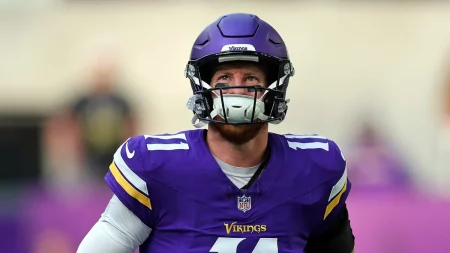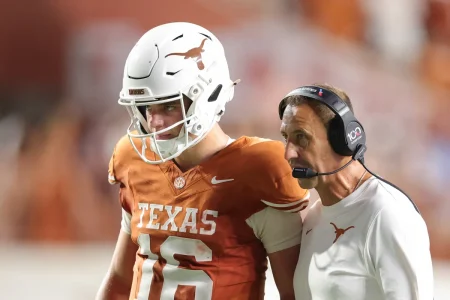




The NFL world collectively did a double take when Adam Schefter of ESPN reported, just before the Denver Broncos and Kansas City Chiefs faced off on Monday Night Football, that the Broncos had been in contact with retired quarterback Drew Brees about a comeback. According to Schefter, the contact happened during the 2024 playoffs, before the Broncos were set to play the New England Patriots in the AFC Championship Game. The entire plan was born out of necessity. Rookie quarterback Bo Nix had gone down with an ankle injury in Denver’s Divisional Round win over the Buffalo Bills, and the team’s coaching staff was suddenly facing the terrifying possibility of having to turn to backup Jarrett Stidham in a title game. Rather than panic, Denver’s offensive brain trust did something audacious—they reached out to a future Hall of Famer who had been retired for years. Drew Brees, the old New Orleans Saints legend, was apparently intrigued enough by the idea to give it a real shot. Joe Lombardi, then the Broncos’ offensive coordinator, and Pete Carmichael, an offensive assistant, both had deep ties to Brees from their days together in New Orleans under Sean Payton. So the phone call wasn’t completely random. It was a bold, perhaps desperate, attempt to stack the deck during a playoff run. But as with so many romantic football stories, reality quickly got in the way. Brees felt discomfort in his wrist during a workout, and just like that, the surreal comeback attempt was over before it ever really began. Still, the damage was done. The report had already sent shockwaves through the league, and it raised a giant legal question mark over the Broncos’ entire organization.
The scene had all the ingredients of a made-for-TV movie. Here was Denver, a team that had been searching for a franchise quarterback since the heyday of Peyton Manning, riding a rookie sensation through the postseason. Nix’s injury was the kind of unlucky break that could end a magical season in one snap. Instead of accepting their fate, the Broncos started thinking creatively. They had a young roster, an elite defense, and a head coach in Sean Payton who had spent years winning with Brees in New Orleans. It was only logical that someone would get the idea to call the old quarterback and ask if he had one more run left in him. Brees had retired after the 2020 season, and while he had largely moved on to broadcasting and business, he had never completely closed the door on football. The thought of stepping back onto the field for a Super Bowl contender was tantalizing. The coaching staff trusted him, the playbook was familiar, and the opportunity was historic. For a guy who had always prided himself on preparation and competitiveness, the chance to come off the couch and win a championship at the end of his career had to be intoxicating. Of course, the physical toll of professional football is unforgiving. Brees was no longer the 30-year-old with a rocket arm. By the time the workout began, it became painfully clear that his wrist wasn’t ready for the violent demands of a playoff game. The discomfort wasn’t just a minor ache; it was a signal that his body had moved past the point of no return. The dream died quietly, and the Broncos were left to pivot to Plan B, which meant Stidham, a backup, and perhaps a very quiet prayer that Nix could somehow play through his injury.
But here’s where the story turns from intriguing to legally complicated. Mike Florio of Pro Football Talk was quick to call the whole thing a “big, fat nothing burger,” but not because he didn’t believe the report. Far from it. Florio pointed out that the NFL has extremely strict rules about retired players and playoff eligibility. According to league rules, any player who has been retired must be reinstated and physically able to play by a certain point in the season—typically the thirteenth week—in order to be eligible for the remainder of the season and the postseason. By the time the AFC Championship Game rolled around in January, that deadline was long gone. Even if Brees had been healthy and eager to play, he wouldn’t have been allowed to take the field under NFL rules unless he had gone through the proper reinstatement process weeks earlier. That alone should have ended the discussion before it started. But there was another, much more serious issue: Brees remained on the New Orleans Saints’ reserve/retired list. That meant the Saints owned his contractual rights. Denver could not simply sign Brees or even negotiate with him unless the Saints gave them permission. In the NFL, tampering rules are taken very seriously. If members of the Broncos talked to Brees about playing for them without the permission of the Saints, they were technically tampering with a player under another team’s control. Even if Brees was retired and had no intention of playing for the Saints again, the league still viewed him as a Saints player as far as contracts were concerned. The Broncos’ only legal path would have been to have the Saints release Brees first, which would have made him a free agent subject to the waiver wire. And that was a gamble no one in Denver could control. Any team in the league could have claimed him, including another contender that might have wanted to block the Broncos or add a veteran quarterback of their own.
So the question quickly became: will the NFL investigate the Broncos for tampering? Florio made the point that the league doesn’t need a formal complaint from the Saints to open an investigation. The NFL can act on its own, especially when the report is public and credible. If the league determines that Joe Lombardi and Pete Carmichael contacted Brees without permission from New Orleans, the Broncos could face serious consequences. Fines, loss of draft picks, and probationary measures are all on the table. The NFL has a long history of punishing teams that cross the line in tampering cases, and they have become even more aggressive in recent years when it comes to player tampering and league discipline. What makes this case particularly interesting is that Sean Payton, the Broncos’ head coach, was reportedly not aware of the plan until after the season had ended. That could work in Denver’s favor because it suggests the contact was not an organizational policy or a coordinated attempt to circumvent the rules. Instead, it looks like a couple of coaches, caught up in the intense pressure of a playoff run, decided to make a desperate phone call on their own. But as Florio noted, ignorance is not always a defense in the NFL. Teams are often held responsible for the actions of their employees, especially when those actions could compromise league integrity. Payton might escape personal punishment, but the franchise could still pay a heavy price for the mistake of its assistants. And if the league gets involved, the story will only grow bigger. There would be interviews, phone records, and perhaps even league-imposed penalties that could haunt the Broncos well beyond next season.
Beyond the legal implications, there is a deeply human side to this story that is worth thinking about. Football players are often remembered for the moments that define their careers—the last pass, the final scramble, the championship that secured their legacy. But there is something poignant about a legend getting one last call to compete, even if it doesn’t work out. Drew Brees spent twenty years in the NFL, winning a Super Bowl with the Saints and breaking nearly every passing record in the book. He didn’t need to come back. He had nothing left to prove in New Orleans or anywhere else. Yet when the Broncos came calling, something inside him must have sparked to life. Maybe it was the memory of playing for Sean Payton, of walking into a huddle with the game on the line and knowing exactly what play to run. Maybe it was the chance to be a hero one more time, the old veteran riding in to save a young team’s season. But football is a brutal game, and time waits for no one. Brees’s wrist, which had absorbed years of hard hits and athletic throws, finally told him the truth: the past cannot be reclaimed. The discomfort he felt in that workout might have been the most honest moment of the entire saga. It was the body of a 40-something former player reminding him that the memories of football are not the same as the reality of playing football. For Brees, it was probably a bittersweet realization. Part of him must have wanted to lace up the cleats one last time. But another part of him, the wiser, older part, understood that a championship doesn’t mean anything if you can’t raise your own glass afterward. The dream died with a twinge of pain, and in that way, it was a very human ending to a very human story.
In the end, the most surprising thing about this entire story might not be that the Broncos tried to sign Drew Brees, but that it takes a story like this one to remind us how odd the NFL can truly be. For a few hours, the league was consumed with the idea of a retired quarterback coming back to play in a conference championship, not because it made sense, but because it would have been great television. The Broncos were desperate, Brees was nostalgic, and the coaching staff was willing to try almost anything to keep a magical season alive. But the rules exist for a reason, and they have a way of crushing even the most romantic plans. As Florio wisely pointed out, this may ultimately be a “nothing burger” because nothing came of it, but that doesn’t mean the Broncos are out of the woods. The NFL could still decide to investigate, and the Saints might not be so forgiving if they feel their rights were violated. More importantly, this incident leaves a mark on Denver’s reputation. Even if no penalty is ever handed down, the image of assistant coaches secretly working out a retired star behind the scenes is not exactly the kind of organizational discipline the front office wants to project. It makes the franchise look a little reckless, a little desperate, and a lot willing to bend the rules in pursuit of a win. For Sean Payton, who worked so hard to build a new culture in Denver, it’s an unwanted distraction. For the league office, it’s another headache. And for the fans, it’s a fascinating window into the lengths teams will go to in the high-stakes world of the NFL postseason. The ball may have never been snapped, but in a way, this story never really ended. It simply changed the conversation about what it takes to win in today’s game. And as the NFL heads into another offseason, you can bet they’ll be keeping a close eye on the Denver Broncos—and maybe even on Drew Brees’s wrist. For more on the Broncos and the NFL, head to Newsweek Sports.