




On a crisp Tuesday morning in Manhattan, the rhythmic hum of New York City was punctuated by a quiet but deeply significant civic ritual, as voters across the borough headed to the polls to decide who would inherit one of the most powerful and storied seats in the United States Congress. The retirement of longtime Democratic Representative Jerry Nadler, a titanic figure in American progressive politics, has left a gaping vacuum in New York’s 12th Congressional District, sparking a fierce, high-stakes battle for the political soul of this deep-blue stronghold. For decades, Nadler served as a reliable bulwark for civil liberties, constitutional integrity, and the localized interests of Manhattanites, making his departure a historic moment of transition. Long lines and quiet conversations formed outside neighborhood public schools, libraries, and community centers as residents prepared to cast their ballots, fully aware that in a district this overwhelmingly liberal, the Democratic primary is not merely a preliminary contest—it is the definitive election. The sheer volume of early participation underscored the gravity of the choice facing the community, with the City’s Board of Elections reporting that roughly 172,700 New Yorkers had already cast early ballots, with more than 67,000 of those votes originating from the highly motivated electorate of Manhattan. As the city’s political machinery hummed into high gear, even local leaders like Mayor Zohran Mamdani, residing at the executive Gracie Mansion within the district, quietly cast their ballots, choosing to keep their personal endorsements private in this specific contest while publicly backing candidates in adjacent races, highlighting the delicate internal diplomacy of local Democratic politics.
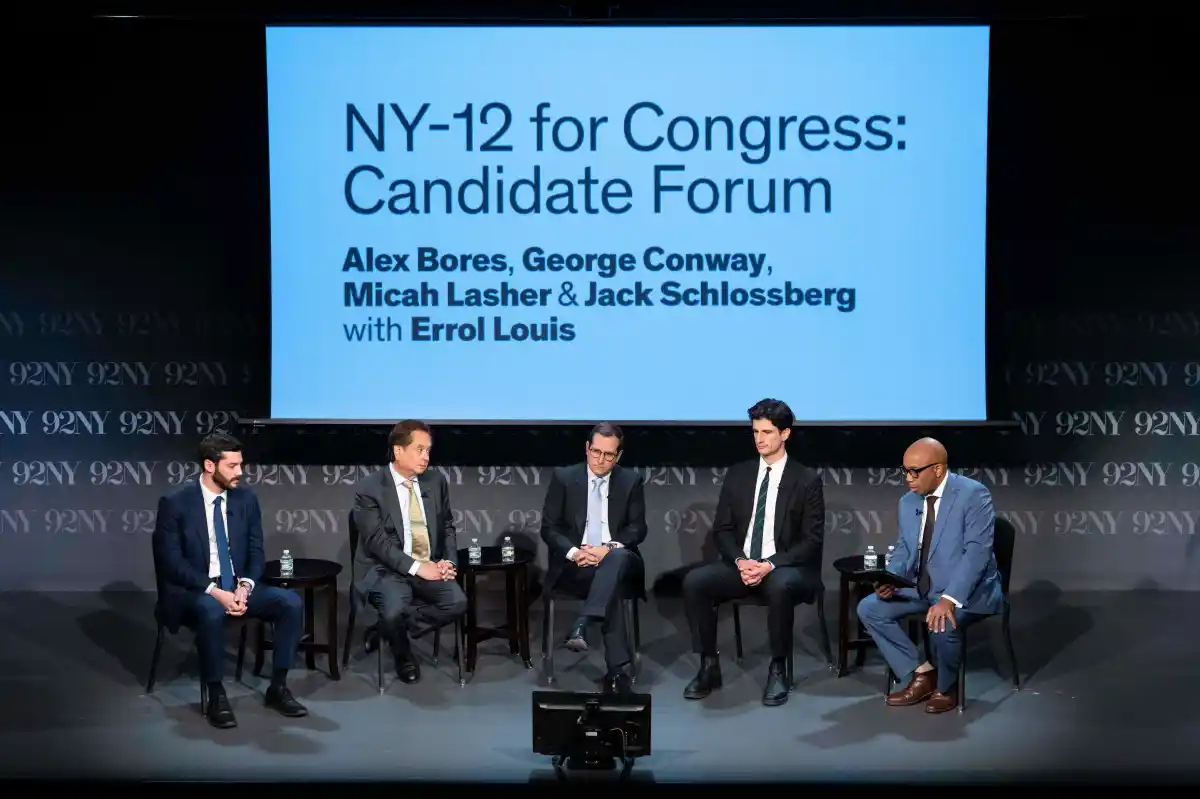
The battle to succeed Nadler has attracted a fascinating, highly eclectic, and competitive field of candidates, transforming a local congressional race into a glittering theater of national political archetypes, generational shifts, and clash of styles. Among the frontrunners are two sitting state assemblymembers, Micah Lasher and Alex Bores, both of whom have built formidable reputations in Albany but represent different visions of governance. Bores, a former employee of the data analytics giant Palantir, brings a modern tech-driven sensibility and a focus on digital-age solutions, while Lasher leans heavily on his deep ties to traditional progressive coalitions, educational reform, and grassroots organization. Adding an unmistakable air of historical romance and star power to the race is Jack Schlossberg, the grandson of former President John F. Kennedy, who entered the arena attempting to revive the legacy of Camelot in the heart of modern Manhattan. The ballot also features George Conway, a prominent and vocal attorney whose public evolution from standard-bearer of conservative legal thought to one of the nation’s most relentless and visible critics of Donald Trump has made him a household name among resistance-era Democrats. Rounding out this crowded field are public health researcher Nina Schwalbe, digital software engineer Chris Diep, and attorneys Laura Dunn and Patrick Timmins. This cast of characters has fueled an incredibly expensive and sensory-flooding campaign, with over $26 million poured into television, digital, and mail advertisements, leaving Manhattan residents to navigate a daily barrage of political flyers, social media ads, and intense debates over their morning coffee.
As New Yorkers marched toward election day, the human complexity of the electorate was laid bare in a series of highly volatile public opinion polls that revealed a deeply divided and anxious voter base struggling to make up its mind. In the final weeks of the campaign, nearly a third of the district’s voters remained stubbornly undecided, reflecting the intellectual rigor and high standards of Manhattanites who refuse to be easily swayed by simple slogans or historical names. Early in the year, Jack Schlossberg commanded a comfortable lead built on high name recognition and national nostalgia, but as the grinding reality of block-by-block campaigning took hold, local assemblymen Lasher and Bores successfully chipped away at his dominance. An Emerson College Polling/PIX 11 survey of 425 likely primary voters highlighted these shifting sands, showing Lasher leading with 22 percent, closely followed by Bores at 20 percent, while Schlossberg slipped to third with 11 percent and Conway trailed at 10 percent. The Emerson poll also uncovered a fascinating gender divide that spoke to the distinct appeals of the top candidates: male voters broke heavily for the tech-focused Bores over Lasher by a margin of 27 to 19 percent, whereas female voters favored the policy-oriented Lasher over Bores by 24 to 15 percent, with Schlossberg capturing 13 percent of the female vote. Subsequent polls, including surveys conducted by Tavern Research, GQR, and the Honan Strategy Group, confirmed this tight, shifting dynamic, consistently showing the race as a neck-and-neck sprint between Lasher and Bores, while Conway and Schlossberg fought to mobilize their respective loyal bases of anti-Trump activists and younger, legacy-minded voters.
While traditional public opinion polls presented a murky, statistically tight race with large swaths of undecided voters, the digital forecasting and prediction markets painted an entirely different, far more decisive story about where the true momentum lay. On platforms like Kalshi and Polymarket, where political junkies, data scientists, and high-stakes bettors put real money behind their electoral intuition, the race was treated not as a toss-up, but as a near-certain victory for Micah Lasher. By Tuesday morning, Kalshi listed Lasher with an impressive 75 percent probability of winning the primary, compared to a modest 26 percent for Alex Bores and a microscopic 1 percent for Jack Schlossberg. Polymarket reflected an almost identical sentiment, pegging Lasher’s chances of securing the nomination at 74 percent, Bores at 27 percent, and Schlossberg at under 1 percent. This stark divergence between neck-and-neck public polling and highly confident betting markets illustrates a fascinating shift in modern political analysis, where market participants often discount raw polling numbers in favor of deeper institutional variables, such as major union endorsements, local political machine alignment, and the proven field operations of established neighborhood organizers. For the ultimate winner, these digital probabilities and exhausting campaign trails are more than just a pathway to a seat in Congress; they represent the keys to a kingdom of unmatched progressive influence on the national stage.
To understand the immense weight of this election is to understand the unique geography, wealth, and cultural fabric of New York’s 12th Congressional District, which serves as the premier economic and intellectual engine of the city. Reshaped during the state’s chaotic 2022 and 2024 redistricting processes, the district now spans the entirety of Manhattan’s east and west sides below Harlem, executing a historic merger of two traditionally rival progressive strongholds: the Upper West Side and the Upper East Side. Walking through the district, one traverses an unparalleled tapestry of urban life, moving from the leafy, brownstone-lined streets of the Upper West Side, populated by old-school liberal intellectuals, to the stately brick co-ops and premier museums of the Upper East Side. The district cascades southward through the towering, neon-lit canyons of Midtown Manhattan and the bustling commercial hubs of Murray Hill and Gramercy, before winding down to the historic creative enclaves of Chelsea, Hell’s Kitchen, Greenwich Village, SoHo, and the Lower East Side. This concentration of world-class universities, major financial institutions, legendary artistic venues, and towering residential high-rises makes the 12th District one of the wealthiest and most densely populated congressional boundaries in the entire United States, where local policy battles over housing, transit, public safety, and public education are debated with the intensity of national emergencies.
As the sun began to set over the Hudson River and the final hours of voting ticked away, the candidates and their supporters prepared for the reality that the victor of this primary would be virtually guaranteed a lifetime appointment to Capitol Hill. New York’s 12th District is widely recognized as one of the safest Democratic seats in the nation—exemplified by Kamala Harris beating Donald Trump here by an astonishing 64 percentage points in the 2024 presidential race—meaning that a Republican victory in November is a mathematical near-impossibility. Indeed, the last time a Republican was elected to represent this general area in Congress was Francis Edwin Dorn, whose final term ended in the distant winter of 1960 during the Eisenhower administration. For the ultimate winner of Tuesday’s primary, the transition from local campaigner to national legislator will begin almost immediately, requiring them to bridge the gap between the affluent co-op boards of Park Avenue, the working-class families of public housing in the Lower East Side, and the activist networks of Greenwich Village. As the voting booths closed and the manual counting of paper ballots commenced, Manhattan stood on the precipice of a new era, ready to send a fresh voice to Washington to carry forward the proud, complex, and unyielding legacy of New York progressive leadership.