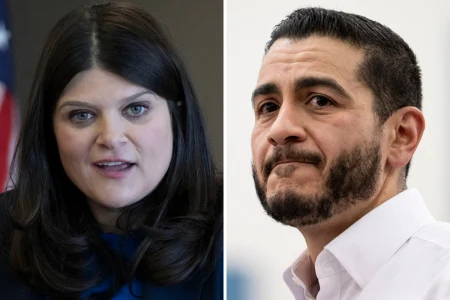






In the sprawling, diverse heart of Houston, Texas, a political drama of Shakespearean proportions recently reached its climax, culminating in a high-stakes Democratic primary runoff on May 26 that officially signaled a dramatic changing of the guard. The stage for this fierce and highly personal battle was set not by the candidates themselves, but by a controversial, Republican-led mid-decade redistricting effort that redrew the traditional boundaries of Texas’ 18th Congressional District, packing two sitting Democratic incumbents into the same geographical slice of Houston and forcing them into a direct, career-altering collision. On one side of this ideological divide stood Representative Al Green, a 78-year-old titan of the House of Representatives who had spent more than two decades representing the interests of his constituents with a fierce, unapologetic brand of progressive advocacy and civil rights activism. On the other side was Christian Menefee, a dynamic 38-year-old freshman congressman who had only recently entered the federal arena after winning a special election earlier in the year. What followed was a rare, painful incumbent-on-incumbent showdown that deeply tested the loyalties of Houston voters, pitted distinct generational perspectives against one another, and served as a vivid demonstration of how structural political maneuvers can disrupt decades of established community leadership. As the initial March primary failed to produce a clear majority for either champion, the political tension simmered for weeks before finally boiling over in the late May runoff. When the final votes were tallied, it was the youthful energy of Menefee that triumphed, handing a bittersweet and surprising defeat to the long-serving Green. This pivotal race was far more than a simple local election; it was a profound human story about the passage of time, the inescapable reality of shifting political boundaries, and the raw, personal consequences of a shifting Democratic party trying to define its modern identity in a rapidly changing American landscape.
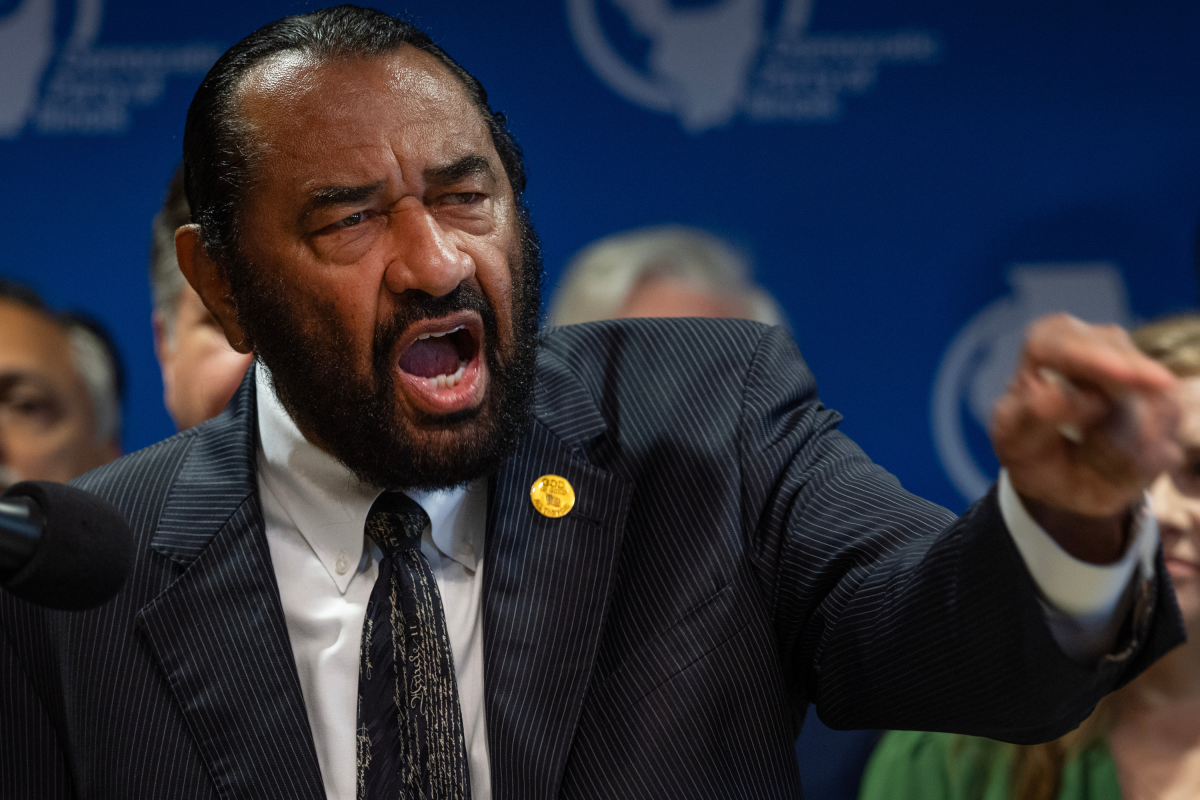
To fully understand the magnitude of this political upset, one must first appreciate the legacy of Al Green, a man who for twenty years had been an immovable fixture of Houston’s political fabric and one of the most recognizable, outspoken civil rights advocates in the United States Congress. First elected in 2005, Green’s long career was defined by his radical willingness to stand up to power, even when it meant standing completely alone in the glaring spotlight of national controversy. Long before the mainstream Democratic establishment coalesced around the idea of impeaching Donald Trump, Green was already standing on the House floor demanding it, repeatedly introducing articles of impeachment and twice suffering the indignity—and, in his eyes, the deep honor—of being physically escorted out of the House chamber during Trump’s joint congressional addresses due to his vocal, disruptive protests. This unyielding, combative spirit earned him both deep admiration from his local base of working-class voters and fierce hostility from his political opponents on the right. In the quiet, reflective aftermath of the May 26 runoff, however, that vocal crusader was forced to confront the silent reality of retirement, as the very voters he had fought for over twelve terms opted for a different path forward. Green’s sudden and unexpected departure from the halls of Congress marks a poignant, deeply human moment of transition, leaving his loyal supporters to grapple with the loss of a historic Black leader who had dedicated his entire adult life to giving voice to the marginalized, and leaving a legacy that, despite its abrupt and painful conclusion, will forever be etched into the history of Texas politics.
In sharp contrast to his predecessor’s long-established and battle-tested tenure, Christian Menefee’s political trajectory represents a meteoric rise that perfectly embodies the aspirations of a new generation of American leaders. At just 38 years old, Menefee stepped into the congressional arena with a protective reputation already burnished by his high-profile work as the Harris County Attorney, where he had built a formidable public profile by filing aggressive, strategic lawsuits against the conservative initiatives of the Trump administration. Throughout his campaign, Menefee successfully framed his relative youth not as a liability of inexperience, but as a vital, necessary energy required to combat the modern, multifaceted threats currently facing American democracy. While both he and Green shared a fierce, foundational opposition to Donald Trump, Menefee presented an altogether different kind of progressive pragmatism, offering Houston voters a forward-looking vision that resonated deeply with a younger, changing demographic in the newly drawn 18th District. The race ultimately devolved into a fascinating referendum on generational change, asking voters whether they wanted to maintain the defensive, battle-hardened strategies of the civil rights vanguard or embrace a new, tech-savvy, and systematically minded legislative champion. By choosing Menefee, the electorate chose to hand the torch to a freshman who promised to build on the progressive achievements of the past while navigating the complex, digital-era challenges of the future, sealing his status as one of the most promising young stars in national politics.
Beneath the lofty rhetoric of progressive ideals and community representation lay the cold, hard realities of modern political warfare, characterized by an unprecedented deluge of outside financial influence that fundamentally reshaped the race’s internal dynamics. The contest quickly became a prime target for a super PAC backed heavily by prominent, hyper-wealthy figures within the cryptocurrency industry, which poured millions of dollars into the campaign to bolster Menefee’s candidacy and amplify his message across the airwaves. This massive influx of specialized capital became a source of intense friction and deep human concern for many longtime residents in the district, who felt that their local election was being bought by outside interests. Al Green spoke out passionately and repeatedly against this tidal wave of external funding, arguing that the true democratic voice of Houston’s working-class families was being drowned out by the deep pockets of anonymous, out-of-district billionaires who had little connection to the daily struggles and histories of the local community. Menefee, while benefiting from the political momentum generated by the substantial media spending, maintained a complex and nuanced stance, historically acknowledging the deep flaws of the current Supreme Court rulings on campaign spending and expressing support for comprehensive campaign finance reform to limit such overwhelming outside influence in future cycles. This financial tug-of-war highlighted a painful, recurring irony of modern American elections: even the most localized, historically Black, and community-driven primaries are now highly susceptible to being co-opted as battlegrounds for national special interest groups, leaving ordinary citizens to wonder who their representatives truly answer to once the television ads stop and the ballots are finally cast.
Beyond the internal debates over local representation and corporate campaign finance, the primary was thrust into the highly charged, emotional arena of global geopolitics, exposing deep, raw divisions within the Democratic Party regarding United States foreign policy in the Middle East. Al Green’s legislative record on Israel had long been a point of pride for his progressive supporters but a source of intense contention for moderate groups; his willingness to vote against specific military aid packages and his public advocacy for Palestinian statehood initiatives drew the ire of powerful pro-Israel lobbying organizations. Following his defeat, the American Israel Public Affairs Committee (AIPAC) wasted absolutely no time in publicly celebrating the outcome, releasing an incendiary post on the social media platform X that amassed hundreds of thousands of views, congratulating Menefee and explicitly branding Green as “one of the most outspoken anti-Israel voices in Congress.” This high-profile, aggressive intervention by AIPAC served as a stark reminder of how local congressional races are increasingly scrutinized and influenced through the lens of international loyalty and lobbying pressure. For many progressive voters, the group’s public celebration added a layer of profound bitterness to Green’s loss, illustrating the intense pressure candidates face to conform to traditional foreign policy orthodoxy and showing how easily global conflicts can cast a long, polarizing shadow over a localized neighborhood election in Southeast Texas.
Perhaps the most unexpected twist in the immediate aftermath of this Democratic primary runoff was the wave of sheer jubilance it triggered among right-wing, pro-Trump commentators online, revealing how deeply Green’s confrontational legacy had rankled his conservative adversaries over his decades of service. Social media platforms erupted with celebratory messages from prominent MAGA figures, many of whom gleefully mocked Green’s past failures to successfully impeach Donald Trump and cheered his ouster as long-overdue political payback for his theatrical legislative protests and disruptive maneuvers. High-profile conservative accounts quickly shared videos of Green being escorted from congressional chambers, framing his defeat as a triumph for their movement and declaring “good riddance” to one of their most persistent legislative thorns. This cross-partisan reaction illuminated the highly nationalized, theatrical nature of modern politics, where a primary loss in a safe Democratic district can be celebrated as a major victory by the opposing party’s base. Yet, as the digital noise fades and the online trolls move on to the next trend, the reality of the 18th Congressional District remains firmly blue, and Christian Menefee now stands as the overwhelming favorite to secure a full term in the upcoming November general election. As he prepares to transition from a freshman swept up in a redistricting storm to an established national voice for Houston, Menefee carries with him not only the hopes of a transitioning district but the immense responsibility of navigating a fractured nation that will be watching his every move.