





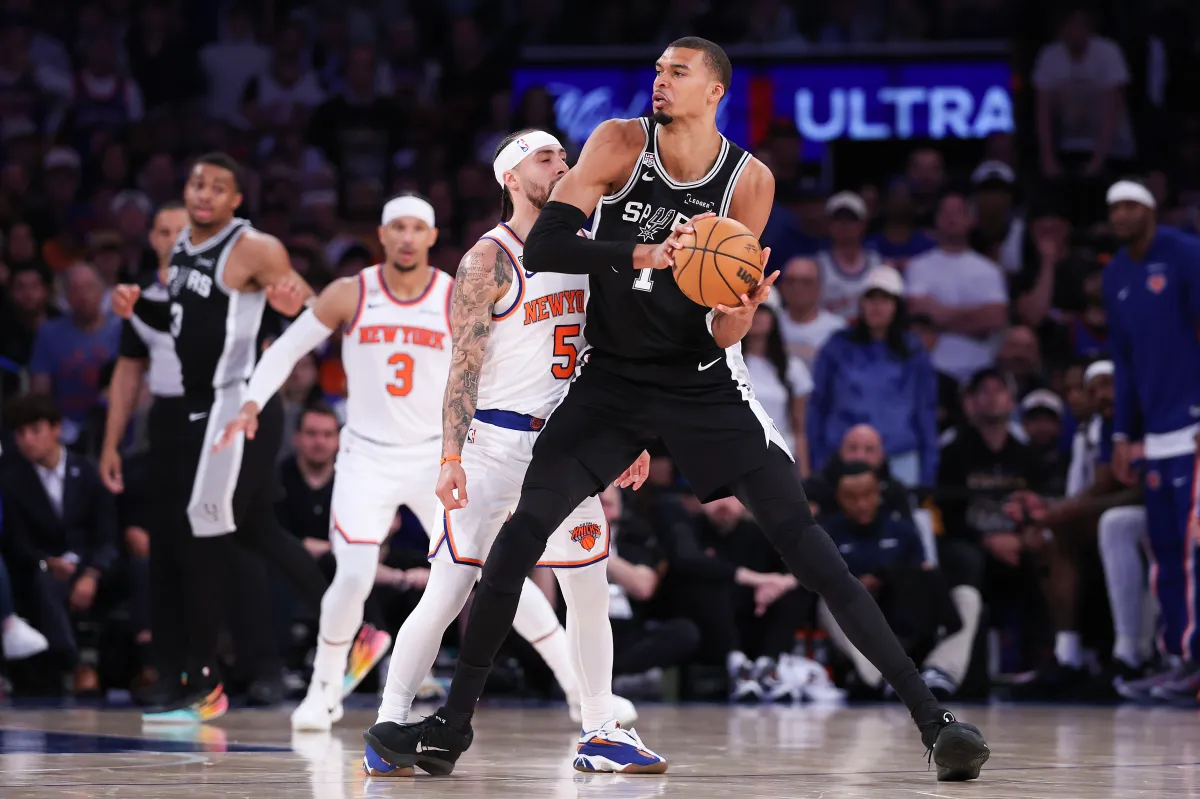
The sports world has always been captivated by the myth of the prodigal savior, a human tower of unlimited potential sent to redefine the boundaries of what is anatomically and athletically possible. For the San Antonio Spurs and the global basketball community, that myth materialized in the towering, fluid form of Victor Wembanyama. His ascent has been nothing short of a cinematic marvel, moving from a highly anticipated French prospect to a dominant force carrying his team to the grandest stage of the NBA Finals in only his third professional season. This rapid trajectory from rookie sensation to postseason centerpiece has been defined by moments of pure athletic genius, most notably a historic, breathtaking double-overtime performance against the formidable Oklahoma City Thunder in Game 1 of the Western Conference Finals. On that night, Wembanyama seemed to bend the legal dimensions of the court to his will, blocking shots at the apex of their flight, driving past nimble guards with the grace of a dancer, and hitting clutch perimeter shots that defied logic. He wasn’t just playing basketball; he was composing an epochal masterpiece that signaled the arrival of a new era. In San Antonio, a city deeply rooted in the quiet, methodical excellence of Tim Duncan, the atmosphere has shifted to electric anticipation, as fans witness a young man carrying the weight of a franchise’s historical legacy and a league’s global future on his unusually broad shoulders. Yet, with this sudden thrust into the stratosphere of ultimate sports superstardom comes an inevitable, crushing pressure. The world is watching his every breath, every minor gesture, and every practical adjustment, transforming his journey from a simple game of hoops into a high-stakes psychological drama played out in front of millions of critical eyes, where every triumph is magnified to mythic proportions, and every mistake is analyzed with microscopic severity under the burning lights of the playoffs.
However, the romanticized narrative of the innocent, wide-eyed prodigy rarely survives the crucible of the NBA postseason intact. As the stakes have elevated, so too has the physical and mental intensity of Wembanyama’s game, revealing a sharper, more combative edge that has taken many casual observers by surprise. Suddenly, the beloved, gentle giant is being viewed through a far more polarizing lens, with critics and opposing fanbases suggesting that a darker, more villainous persona is beginning to surface from beneath his polite exterior. This shift in perception crystallized during a highly physical series against the Minnesota Timberwolves, culminating in Wembanyama’s first career ejection after he delivered a heavy, controversial elbow to the face of Naz Reid. The intensity of playoff basketball demands a level of physical enforcement that regular-season games rarely require, and the French phenom has shown a quick willingness to adapt to these brutal conditions, sometimes crossing the delicate line between competitive fire and downright dangerous play. To some, this transformation is a necessary evolution, the forging of a fierce competitor who refuses to be bullied by veteran enforcers who mock his slender frame. To others, it represents a worrying trend of arrogance, where a young superstar, coddled by media adoration, believes he is above the unwritten rules of on-court etiquette. This duality of character—the otherworldly talent who can orchestrate a beautiful fast break on one possession and initiate a physical altercation on the next—has added a complex, fascinating layer to his identity, leaving the basketball world deeply divided on who Victor Wembanyama truly is when the comforting mask of the gentle rookie is finally stripped away. It raises a poignant question about the psychological cost of greatness: must a young man lose a part of his inherent gentleness to survive and conquer the cutthroat arena of professional sports, or is this aggressive streak simply the natural emergence of a champion’s true, unyielding competitive instinct?
This simmering debate reached a boiling point during the NBA Finals against the New York Knicks, a series already dripping with historical drama, intense media scrutiny, and raw physical theater. In the midst of a fiercely contested battle in San Antonio, Wembanyama found himself at the center of yet another highly controversial sequence when he forcefully shoved Knicks guard Jalen Brunson near the back of his neck and head during a chaotic play. The physical altercation shocked spectators and ignited a firestorm of debate across sports talk shows and social media platforms, with many expressing outrage that such a dangerous action went uncalled by the referees on the floor and was subsequently ignored by the league office during post-game reviews. The controversy deepened when veteran defensive specialist Draymond Green publicly labeled Wembanyama’s play as “a bit dirty,” a critique carrying significant weight coming from a player who has spent his entire career navigating the fuzzy boundary between physical defense and unsportsmanlike behavior. To critics, the Brunson incident was not an isolated physical error, but rather a pattern of unchecked aggression that highlights a growing sense of entitlement in the young superstar’s playing style. It showcased the brutal reality of the NBA Finals, where every possession feels like a battle for survival, and where players are pushed to their absolute physical limits. For Brunson and the Knicks, it was a frustrating reminder of how difficult it is to match up against a player who possesses both an unprecedented physical reach and, seemingly, a unique level of immunity from the referees’ whistle, sparking a conversation about whether the league’s rising star is being held to a different standard than the rest of his peers, turning every game into a referendum on the nature of officiating in the modern era, where the physical safety of some players is seemingly weighed against the marketable stardom of others in a delicate, high-stakes balancing act of corporate interest and athletic integrity.
Amidst this swirling storm of public criticism and heated locker-room debates, NBA Commissioner Adam Silver stepped forward to publicly navigate the narrative, using a high-profile appearance on NBA TV ahead of a critical Game 5 to offer a glowing defense of the young superstar. Rather than addressing the specific on-court controversies or the accusations of dirty play, Silver chose to pivot toward a holistic, deeply humanizing portrait of Wembanyama, emphasizing the young man’s intellectual curiosity, global perspective, and profound dedication to his basketball craft. Silver spoke with a genuine sense of wonder, describing how refreshing it is to engage with a player who possesses such worldly interests off the court while remaining completely devoted to mastering the intricacies of the game. This public commendation was not merely a casual observation from a league executive; it was a calculated effort to protect and nurture the public image of a player who represents the future financial and cultural health of the NBA globally. By framing Wembanyama as a thoughtful, inquisitive intellectual who happens to be a once-in-a-generation athletic marvel, the league office sought to diffuse the growing “villain” narrative and remind the public of the human being behind the physical controversies. This protective stance highlights the unique relationship between the league’s leadership and its elite stars, where the commissioner’s office acts as both a regulatory body and a public relations shield, ensuring that minor controversies do not derail the rise of a player who has the potential to expand the sport’s global footprint to heights not seen in decades. In Silver’s eyes, Victor is not just an athlete to be policed, but a cultural ambassador, a bridge between European sophistication and American sporting theater, whose intellectual depth off the floor makes his occasionally ruthless behavior on it feel more like an anomaly than a defining characteristic of his career.
This protective posture from the league’s top office has led many analysts and fans to voice a more cynical perspective, arguing that Wembanyama has been granted a special “grace” or a protective shield to keep him on the court during an incredibly lucrative and highly watched NBA Finals series. Suspensions or severe disciplinary actions against the league’s brightest young star would undoubtedly impact television ratings, fan engagement, and the overall spectacle of the championship series, making the league’s apparent leniency feel like a calculated business decision rather than impartial officiating. This phenomenon is not new in the annals of professional sports; historical greats from Michael Jordan to LeBron James have often been accused of receiving a “superstar whistle,” an unwritten code where the league’s most market-making talents are afforded a degree of latitude that role players could only dream of. For the NBA, the preservation of Wembanyama’s availability is paramount, especially as they usher in a transitional era where older icons are beginning to fade from the spotlight and new torches must be lit to guide the next generation of fans. While Commissioner Silver and his executives would never openly admit to prioritizing business metrics over strict rule enforcement, the silence from the league office on controversial physical incidents speaks volumes to those who study the business of sports. It places Wembanyama in a complex moral position, where his competitive edge is subsidized by corporate interests, forcing him to navigate the uncomfortable reality that his shielding from consequence may alienate his peers and foster a growing resentment among the very players he must compete against night after night, creating a hostile environment where his peers feel compelled to test his limits even further, eager to see if the league’s golden child can survive a truly physical battle without the comforting safety net of administrative favoritism protecting him from the harsh realities of the hardwood.
As this thrilling season reaches its epic climax, the ultimate trajectory of Victor Wembanyama’s career remains one of the most compelling human dramas in modern sports. Whether he ultimately chooses to embrace the villainous, ruthless role that his physical play suggests, or whether he maintains the heroic, inspiring persona championed by Adam Silver and the Spurs organization, his place in the pantheon of basketball history is already secure. We are witnessing the unfolding of a basketball marvel the likes of which physical dimensions have never recorded, drawing legitimate comparisons to the arrival of LeBron James more than two decades ago in terms of sheer hype, skill, and expectation. Beyond the statistics, the controversial fouls, and the corporate marketing campaigns, there is a very young man living a highly surreal existence, carrying the hopes of two nations while learning how to grow up, compete, and survive under the unrelenting microscope of global stardom. The journey of Wembanyama is a testament to the beautiful, messy reality of human ambition, where the pursuit of greatness requires a delicate balance of physical dominance, emotional maturity, and the resilience to weather both adulation and intense vilification. As the final buzzers sound and the offseason approaches, the world will continue to watch this basketball giant, eager to see how he shapes his destiny, refines his immense gifts, and decides what kind of legend he truly wants to write for himself in the star-studded history books of the NBA. In the end, his legacy will not be defined solely by the championships he wins or the controversies he provokes, but by the profoundly human journey of an extraordinary young player who dared to step onto the world stage and completely redefine what it means to be a modern sporting icon in an era that demands absolute perfection from its heroes.