


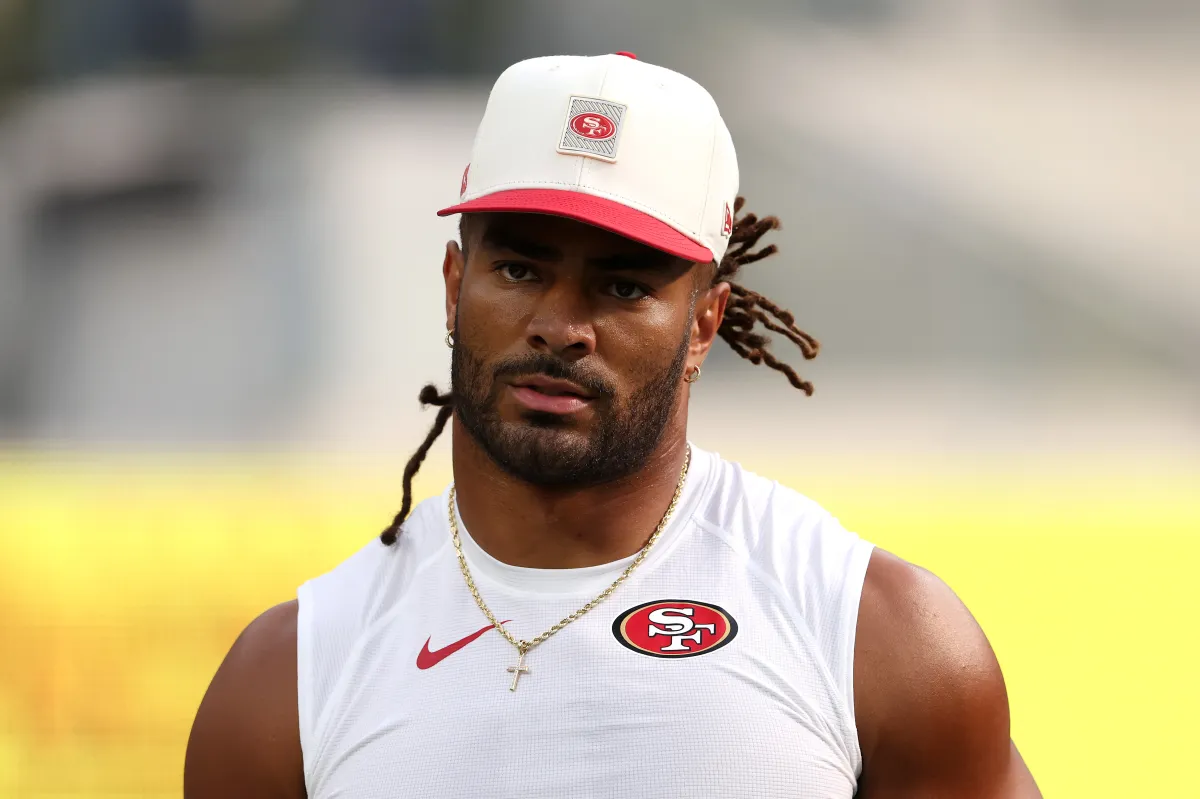
On a sun-baked Arizona afternoon that felt more like a heavyweight prizefight than a football game, Fred Warner was everywhere. The San Francisco 49ers’ All-Pro middle linebacker seemed to have a magnetic pull toward the football, filling running lanes, covering crossing routes, and delivering blows that could be heard from the upper deck. By the time the final whistle blew on the 49ers’ 36–30 victory over the Arizona Cardinals, Warner had racked up a career-high 17 tackles, an eye-popping number that underscored just how central he is to his team’s defensive identity. For a player known for his sideline-to-sideline range and his uncanny ability to read plays before they unfold, it was an afternoon that looked like a line from a highlight reel. But football, as Warner knows all too well, has another side. The same aggressive instincts that made him so effective, the same ferocious desire to impose his will on the game, also ended up landing him in the league office’s disciplinary crosshairs. When the NFL announced its weekly fines and penalties on Saturday, Warner’s name was there, not once but twice, transforming what felt like a defining performance into a complicated moral and financial reckoning. The bright light of his on-field brilliance was suddenly dimmed by the cold reality of the league’s player-safety crackdown, leaving fans, analysts, and Warner himself to wrestle with the fine line between greatness and going too far.
The first and more conspicuous infraction came on a play that had been discussed endlessly in the aftermath of the game. At some point during the frantic back-and-forth contest, Warner made helmet-to-helmet contact with Cardinals tight end Trey McBride. It was a jarring collision, the kind that makes a stadium collectively gasp, and officials on the field immediately threw a flag for unnecessary roughness. Penalties like that carry an extra weight in today’s NFL, where the league has made repeated and much-publicized efforts to reduce the risk of concussion and chronic traumatic encephalopathy. The message from league headquarters has been clear for years: protecting players’ heads is non-negotiable, and those who target or recklessly engage in helmet-to-helmet contact will face consequences. Warner, a player who has built his entire career on smart, physical, and fundamentally sound play, suddenly found himself on the wrong side of that policy. The NFL announced a fine of $23,882 for that specific hit, a figure that seemed simultaneously precise and arbitrary. For a casual fan, it might have been just a number in a news cycle. For Warner, and for anyone who has ever played the sport, it represented the inherent tension inside modern football: how do you stay violent enough to succeed while also adhering to an ever-evolving set of rules that are designed, at least in part, to protect you from yourself? There is no clean answer, and Warner was left to experience that ambiguity firsthand.
But the helmet-to-helmet flag was only the beginning. The NFL, in its relentless pursuit of discipline, also reviewed Warner’s tape from the game with a magnifying glass, and discovered a second incident that had escaped the officials’ attention in real time. On a separate play, Warner executed what the league classified as a hip-drop tackle on the same unfortunate target, Trey McBride. The hip-drop tackle has become one of the most controversial and heavily scrutinized techniques in the sport, because it involves a defender wrapping up a ball carrier from behind and then dropping his own body weight onto the back of the runner’s legs in a way that can cause severe ankle and knee injuries. The NFL has in recent seasons made a point of penalizing and fining this maneuver, viewing it as a dangerous and avoidable violation of player-safety principles. The fact that Warner was not flagged on the play during the game was, in some ways, simply a matter of officiating speed and visibility. The league’s review process, however, does not rely on the live call. It watches the film in slow motion, from multiple angles, and makes its assessment in the sterile quiet of an office. So Warner was hit with a second fine, this one for the hip-drop tackle, and when the two penalties were combined, the total financial punishment came to a staggering $41,793. It is not the largest fine an NFL player has ever received, but it is significant, and the message behind it is just as loud as the dollar amount. The league seems to be saying that even a highly respected, clean-in-reputation player like Warner is not beyond the reach of its enforcement policies. There was no appeal reported, no public outburst from Warner about the fines, which perhaps says something about his character and his understanding of how the league operates. Still, one can imagine the feeling of injustice bubbling beneath the surface, that in the heat of a game, with grown men colliding at full speed in front of eighty thousand screaming fans, the benefit of the doubt rarely exists.
When the fine was announced, many people’s first reaction was to look at Warner’s bank account and shrug. And it’s true, the finances of an NFL superstar are so different from the finances of ordinary people that a $41,000 fine is more like a minor parking ticket to him than a serious financial blow. Fred Warner has made over $100 million in his career. He is currently in the third year of a massive three-year, $63 million contract extension, a deal that keeps him among the highest-paid players at his position. His base salary, signing bonuses, and other compensation amount to millions in a single season, so this fine will not threaten his lifestyle, his ability to support his family, or his long-term financial security. But to treat the fine as meaningless because he is rich would be to miss the point entirely. Football players at Warner’s level are proud, competitive individuals. They take their craft seriously, and they care deeply about how they are perceived. A fine is not just a monetary penalty; it is a statement from the league that they have crossed a line, that their actions were unacceptable, that they are, in effect, being publicly reprimanded. For Warner, who has earned a reputation as one of the smartest and most disciplined defenders in the game, that must sting more than the actual dollar amount. He is a four-time All-Pro, a leader in the locker room, and a player known for his attention to detail. To be cited for dangerous play, especially on the same week he had one of the greatest statistical performances of his career, creates a dissonance. It suggests that even his best game can be tarnished by moments that the league views as mistakes, and for a player who holds himself to an incredibly high standard, that may be the toughest pill to swallow.
Yet amidst the fines and the controversy, there is a larger story that Warner can take comfort in. The 49ers look every bit like the Super Bowl contender they were billed to be. Their victory over the Cardinals was not just a win; it was a statement of offensive firepower, defensive grit, and overall team depth. Across the league, the 49ers are being discussed with the same kind of reverence reserved for the Kansas City Chiefs and Philadelphia Eagles, and a significant part of that conversation is because of Warner’s presence in the middle of the lineup. He is the anchor, the quarterback of the defense, the player who makes sure everyone is aligned, everyone is motivated, and everyone is playing with the relentless energy that defines this team. The fine, as irritating as it may be, is a footnote in what has otherwise been an electrifying start to the season. And now Warner and his teammates, locked in even tighter by the shared experience of a hard-fought road win, will turn their attention to Week 4 and a matchup with the Denver Broncos. The Broncos are a team with their own young quarterback, a new head coach, and the kind of unpredictable energy that always poses a challenge. But the 49ers are playing with the kind of confidence that comes from knowing they can beat you in multiple ways. They can outscore you, they can grind you down, and they can make defensive plays in critical moments. Warner, presumably, will be at the center of all of it, his focus now shifted from fines and penalties to the challenges that lie ahead.
Ultimately, Fred Warner’s Week 3 was a microcosm of the NFL as a whole. It was beautiful, brutal, thrilling, and messy all at once. He played a football game with reckless abandon and total commitment, the way the sport demands, and he was rewarded with the best statistical performance of his professional life. But he also made split-second decisions in the blur of live competition that, when slowed down and scrutinized by the league office, looked dangerous. The $41,793 in fines will come out of his paycheck, but they will not define him. What defines him is the way he gets back up, the way he leads his teammates, and the way he refuses to be distracted by the controversies that swirl around the game he loves. Football has always been a game of collisions, of men pushing their bodies to the absolute limit, and the rules that govern those collisions are constantly shifting. Warner, like every player in the league, must navigate that shifting landscape while keeping his own identity intact. He cannot become tentative. He cannot play scared. If he did, he would lose the very thing that makes him special, that ravenous appetite for contact and that innate ability to be around the ball on every single play. So he will pay his fines, watch the film, learn the lessons, and move forward. There will be more games, more tackles, more hits, and, very likely, more fines at some point in the future. But there will also be more victories, more moments of shared triumph, and more reasons to believe that Warner and the 49ers are on a path to something truly special. The fines are a part of the story, but they are not the whole story. Fred Warner remains one of the best players in the NFL, and the 49ers remain one of the most dangerous teams in football. That, in the end, is what matters most.