


Paragraph 1: The Magic City Classic and the Night Everything Changed
On any other Saturday, the Magic City Classic would have been remembered as a triumph of tradition, pride, and togetherness. The annual football game between Alabama A&M University and Alabama State University is far more than a contest on a scoreboard; it is a cultural cornerstone for Birmingham, Alabama, and for the Black college experience across the South. Families travel for hours to attend. Alumni reunite with classmates they have not seen in years. Grandparents bring grandchildren to experience the pageantry of halftime bands, the thunder of drumlines, and the joyful noise of tailgating in the parking lots around Legion Field. The air is usually filled with the smell of barbecue, the sound of laughter, and the vibrant colors of purple and gold, and blue and white. For one weekend each year, the city becomes a living, breathing celebration of academic achievement, athletic excellence, and community resilience. But this year, the final whistle did not signal joy. It signaled chaos. On Saturday night, shortly after the game ended, gunfire erupted in the 400 block of Graymont Avenue West, just steps from the stadium where so many had gathered in good spirit. By the time the night was over, nine people had been shot, and one person had been killed. The same streets that had been filled with songs of victory were suddenly flooded with flashing lights, ambulance sirens, and the anguished cries of families and friends who had come to cheer, not to grieve.
Paragraph 2: The Chaos, the Response, and the First Horrifying Details
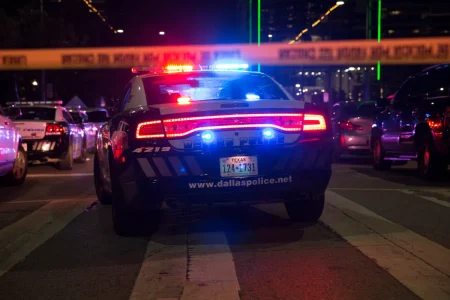
The Birmingham Police Department received the call at approximately 7:50 p.m., and officers arrived to a scene of utter devastation. The 400 block of Graymont Avenue West, normally a modest stretch of road near a historic venue, had become a triage unit. People were running in every direction. Some were screaming for help. Others were kneeling over the wounded, trying to stop the bleeding with whatever they had—jackets, shirts, their own bare hands. When officers arrived, they found multiple people suffering from gunshot wounds. The initial reports were grim. Nine individuals had been struck by bullets. One of them was already dead, a life extinguished in the midst of what should have been a homecoming celebration. The remaining eight victims were rushed to area hospitals, where doctors and nurses fought to stabilize them. Early Sunday morning, police confirmed that one of the victims was in critical condition, clinging to life behind the closed doors of an emergency room. Seven others were listed as stable, but stable is a relative word when a bullet has torn through flesh and bone. At the scene, investigators recovered multiple firearms. One person was detained and taken to police headquarters for questioning, though no immediate charges had been announced. The investigation was only beginning, but the pain was already everywhere. In the hours after the shooting, loved ones waited outside hospitals, staring at phones, begging for updates. The celebration had turned into a nightmare, and the entire city of Birmingham was left to make sense of an act of violence that seemed to come from nowhere and yet was all too familiar.
Paragraph 3: The Deeper Meaning of the Classic and the Weight of the Tragedy
To understand the full weight of this tragedy, one must understand what the Magic City Classic truly represents. It is one of the most anticipated HBCU football games in the country, a rivalry that spans generations and carries with it the history of Black excellence in America. For decades, Legion Field has served as the battleground where Alabama A&M and Alabama State meet not just to compete, but to celebrate a legacy. The game is a homecoming for countless alumni, a rite of passage for students, and an economic engine for Birmingham, bringing millions of dollars in tourism and business to the city. It is also a space of joy and liberation, where Black families can gather in public without fear, where young people can see themselves reflected in the faces of graduates, athletes, and marching band members, and where the community can feel whole. That is why this shooting is so devastating. It did not happen in a dark alley or an abandoned building; it happened in the shadow of a stadium that has housed so many dreams. It happened after a day of fellowship, after grandmothers hugged their grandchildren, after young children watched their heroes in shoulder pads, after alumni sang fight songs with tears in their eyes. The violence did not discriminate. It struck down strangers and friends, visitors and locals, people who had come to the Classic expecting to make memories. Now those memories are stained with blood. The question that hangs over Birmingham is not just who pulled the trigger, but how such a beloved institution could be invaded by such senseless horror. The answer, painfully, is that no place is immune. Not a school. Not a stadium. Not a celebration. And that is what makes the loss so hard to bear.
Paragraph 4: The Human Cost Beyond the Headlines
Behind every statistic is a person. Nine people shot. One killed. Eight wounded. But those numbers cannot capture the reality of what happened on that Birmingham street. They cannot show the mother who received a phone call that no mother should ever receive. They cannot show the father who rushed to the hospital only to be told that his child was gone. They cannot show the siblings, the partners, the childhood friends who now have to navigate a world that no longer includes someone they loved. The one person who died was somebody’s everything—a son or daughter, a brother or sister, a friend who had a future, a laugh, a sense of humor, a set of dreams. And the eight survivors are not just “victims” or “patients.” They are people who will carry this night with them for the rest of their lives. Some will recover physically, their wounds healing into scars that they will bear forever. Others may never fully recover, struggling with the trauma of hearing gunshots, of seeing others fall, of feeling their own blood soak through their clothes. The critical patient’s family spent the night in a state of suspended terror, praying for a miracle, clinging to every word from the doctors. The families of the stable patients were not spared either; they sat in waiting rooms, replaying the nightmare in their minds, wondering how a day that began with excitement could end so terribly. And in the days and weeks ahead, the community will have to grieve together, because this is not just a loss for the immediate families. It is a loss for everyone who loves the Classic, for everyone who believes that football games should end with handshakes and happy bus rides, not with body bags and police tape.
Paragraph 5: The Investigation, the Questions, and the Recurring Nightmare of Gun Violence
As Sunday morning broke over Birmingham, investigators were still at work, combing through evidence, interviewing witnesses, and trying to piece together what exactly happened. Multiple firearms were recovered at the scene, which suggests that this was not a random act but a violent encounter that escalated to the worst possible outcome. One person was detained and taken to police headquarters for questioning, but it remains unclear whether that person will be charged, whether they acted alone, or whether the shooting involved multiple gunmen. The investigation is ongoing, and more details are expected to emerge in the coming days. But for many in Birmingham, the details are less important than the pattern. This is not the first mass shooting to rock the city, and it will not be the last unless something fundamental changes. The United States has a gun violence epidemic that cuts across every boundary of geography, class, and race. Birmingham, like so many American cities, has seen too many funerals for people who died too young. And when violence strikes at an event as cherished as the Magic City Classic, it forces the community to confront an uncomfortable truth: no celebration is safe, no crowd is protected, no tradition is immune from the culture of violence that has gripped the nation. People are asking hard questions. Why did the guns come out on a night meant for unity? What was the argument? Was it a personal dispute that spiraled out of control, or was it a premeditated act? And perhaps most importantly, what can be done to prevent the next shooting, the next funeral, the next round of families left to grieve? Police have urged anyone with information to come forward. Witnesses may hold the key to justice. But even as the investigation moves forward, there is a sense of exhaustion among residents who are tired of hearing the same promises after every tragedy. They want action. They want accountability. They want their city back.
Paragraph 6: Grief, Healing, and the Resolve to Carry On
In the aftermath of such violence, it is natural to feel hopeless. It is natural to wonder whether anything will ever change, whether the sound of gunfire will always echo through American streets, whether the Magic City Classic can ever be the same again. But in Birmingham, there is also a stubborn streak of resilience that runs deep. This is a city that has survived fire hoses and attack dogs, that has marched through the darkness of segregation and emerged into the light of a new day. The people of Birmingham know how to endure. They know how to love one another through the pain. And they know that the best way to honor the dead is not to let fear win. The families of the victims need support, not silence. The witnesses need courage, not intimidation. The community needs leaders who will step up and address the root causes of violence—poverty, trauma, lack of opportunity, easy access to guns—without offering empty platitudes. The Magic City Classic should not be canceled or abandoned; it should be preserved and protected as the beautiful tradition it was meant to be. The game will be played again. The bands will march again. The children will laugh and play again. But this year, there will be an empty chair. There will be a family that no longer feels whole. There will be survivors who flinch at loud noises. And that is why the rest of us must carry the weight. We must be there for the grieving. We must hold the door for the wounded. We must remember the one who was killed, not as a statistic, but as a human being who deserved a life full of ordinary days. The investigation will continue. The story will evolve. But the loss is permanent, and the healing will take time. In the end, the greatest tribute we can offer is not just sadness, but resolve—the determination to build a world where a football game ends with nothing more dangerous than a post-game handshake, and where the streets of Birmingham ring with joy, not sorrow.