






Skopje, the incredibly resilient capital of North Macedonia, serves as a living, breathing monument to human endurance—a city that has spent centuries repeatedly rising like a determined, soot-stained phoenix from the dusty ashes of structural and historical devastation. Nestled precariously upon a restless seismic fault line where the African and Eurasian tectonic plates endlessly collide, this ancient Balkan heartland has been completely razed to the bare earth by catastrophic earthquakes not once, but thrice—first in the year 518, again in 1555, and most devastatingly in modern times, during the fateful summer of 1963. That historic July morning left over eighty percent of the city in smoking ruins, yet from the choking dust emerged an extraordinary, deeply heartwarming display of global unity; seventy-eight diverse nations stepped forward with resources, builders, and medics, facilitating a rare, highly symbolic moment where American and Soviet troops worked side-by-side for the first time since their legendary encounter on Elbe Day in 1945. This incredible outpouring of global love earned Skopje its proud and enduring moniker, the “city of international solidarity,” an identity permanently etched into its towering, raw brutalist monuments, architectural experiments, and the honorary names of its bustling streets which pay tribute to those who helped rebuild it. Decades later, another monumental shock transformed the city—this time entirely manmade—in the form of the highly controversial, state-sponsored “Skopje 2014” grand urban renewal initiative. Supposedly designed under the guise of restoring the city’s pre-earthquake neoclassical charm and national pride, the project instead wrapped historic modernist structures in grandiose historicist facades, littered the plazas with hundreds of colossal bronze monuments, and inexplicably anchored three eccentric wooden galleons in the shallow waters of the Vardar River. Whimsical, confusing, and fiercely debated, this architectural gold rush ultimately earned the capital a far less flattering title: Europe’s “capital of kitsch.” Yet, as Skopje eagerly prepares to step into the prestigious spotlight as one of the European Capitals of Culture in 2028, its magnetic, complex charm continues to beckon worldwide travelers seeking to unearth the complicated, beautiful soul of a city endlessly redefining its place on the map.
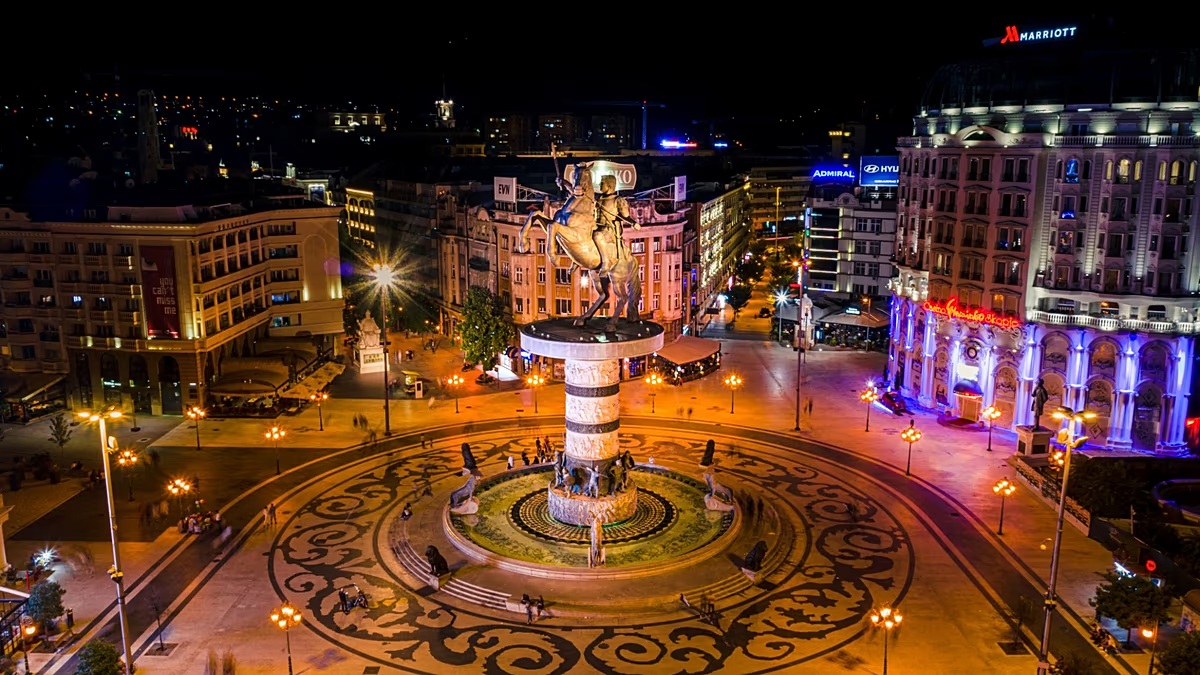
To truly feel the paradoxical, fascinating pulse of Skopje today, one must stand directly in the expansive Macedonia Square, where the sheer grandiosity of the city’s modern identity crisis commandingly unfolds before your eyes. Standing at the absolute center of this grand public square, towering proudly over the banks of the Vardar River, is the staggering, twelve-meter-tall bronze masterpiece officially titled “Warrior on a Horse,” though instantly recognizable to any global onlooker as the legendary conqueror Alexander the Great. Balanced precariously on a monumental ten-meter pedestal adorned with dancing fountains, cascading water, and roaring lions, this statue became the lightning rod of a decades-long, fierce diplomatic tug-of-war with neighboring Greece over historical legacy and heritage. The signing of the historic Prespa Agreement in 2018 settled the dispute by renaming the nation North Macedonia, and today, a quiet bronze plaque sits at the base of the monument, humbly conceding that the legendary conqueror belongs to ancient Hellenic history and civilization. Beyond this monument, the Vardar River acts as a physical and cultural frontier, carving the city cleanly into old and new, connected by a network of bridges that are tourist attractions in their own right. The ancient, iconic Stone Bridge, a graceful, heavy-set stone structure dating back to the height of the Ottoman Empire, stands as a silent witness to centuries of trade, executions, and celebrations. In stark contrast, the nearby Art Bridge and the Bridge of Civilizations in Macedonia—both dazzling products of the Skopje 2014 project—are packed with dozens of bronze statues representing revered Macedonian artists, writers, classical musicians, and historic rulers. Walking across these bridges feels like traversing a crowded, silent theater where the past and the constructed present stare at one another across the rushing waters, offering a surreal, open-air gallery experience that captures the whimsical spirit of a capital caught between honoring its authentic history and desperately writing a new national mythology.
Stepping off the modern bridges and wandering into the labyrinthine, cobbled alleys of the historic Old Bazaar is like stepping through a temporal portal directly into the golden age of the Byzantine and Ottoman Empires. Dating back to at least the twelfth century, this sprawling marketplace has functioned as the vibrant commercial lungs of the city for generations of diverse merchants, craftsmen, and travelers. Its narrow pathways wind past beautifully preserved, domed stone mosques, historic caravanserais designed to shelter dusty trade caravans, and ancient Turkish hammams. Today, many of these grand historic spaces have found creative second lives; the soaring, cavernous vaults of the former Daut Pasha Baths now house the breathtaking permanent art collections of the National Gallery, while the beautifully restored stone courtyard of the Kapan Han caravanserai plays host to lively open-air restaurants. Navigating these narrow streets is a sensory delight of sizzling kebabs, rich coffee, and the metallic ring of copper-smiths at work, offering the perfect hunting ground for traditional hand-woven rugs and local filigree jewelry, though wise travelers must remember to carry physical cash, as traditional card readers remain a rarity among these old-school merchants. For those wishing to contextualize these sights with the turbulent, heroic history of the region, the nearby Museum of the Macedonian Struggle provides a deeply dramatic, immersive journey through the nineteenth and twentieth centuries, using lifelike wax figures and historic relics to paint a picture of relentless resistance. This narrative of survival is perhaps most poignantly reflected in the preserved shell of the Old Railway Station, where the massive exterior clock remains permanently frozen at 5:17 AM, the exact moment the devastating 1963 earthquake struck, standing as a quiet, somber monument that honors the lives lost while sheltering the captivating exhibits of the Museum of the City of Skopje.
While the city’s controversial neoclassical face-lift grabs the headlines, a parallel movement of rough-hewn, dramatic concrete tells an equally compelling story through Skopje’s legendary collection of brutalist architecture. To fully appreciate this striking concrete landscape, which was birthed from the post-earthquake international rebuilding efforts, it is highly recommended to seek out a specialized walking tour led by passionate local experts like Aleksandra Georgieva. These guided excursions lead curious architecture enthusiasts away from the flashy, gilded city center and into the quiet neighborhoods to marvel at the bold, sculptural forms of the Macedonian Academy of Sciences and Arts, or the futuristic, spaceship-like curves of the Central Post Office headquarters. Even for those who traditionally find the raw, unpolished surfaces of brutalism intimidating, these tours reveal the underlying optimism of the era, offering a fascinating window into the socio-political dreams of a socialist Yugoslavia. Afterward, one can ground themselves in the everyday life of the city by visiting the chaotic, vibrant green market, an open-air sensory explosion where local farmers sell towers of sun-ripened tomatoes, blocky sheep cheeses, and aromatic red spices. Here, you can elbow your way to a small counter to savor freshly baked burek pastry or a piping-hot clay pot of tavče gravče, the hearty, traditional baked bean dish that defines Macedonian comfort food. For a scenic escape from the bustling market streets, you can ascend to the ancient Skopje Fortress, a sixth-century stone citadel built using salvaged Roman ruins, which offers a sweeping panoramic view of the red-roofed city and the surrounding mountains without the distraction of tourist signs. Further up on the mountain slopes, the eleventh-century Byzantine Church of Saint Panteleimon awaits, boasting emotional, heartbreakingly expressive frescoes of Christ’s lamentation that predated the Italian Renaissance by centuries, though visitors should remain respectful of local weddings and baptisms that still bring this ancient stone sanctuary to life.
No adventure to this fascinating corner of the Balkans is complete without stepping beyond the urban boundaries to experience the wild, untamed natural beauty that cradles the capital, most notably the majestic Matka Canyon, located less than an hour’s drive from the city center. This breathtaking gorge, carved out by the Treska River, is a haven for outdoor enthusiasts, offering dramatic hiking trails that cling to the sheer limestone cliffs and peaceful, emerald-green boat tours that glide silently through the deep waters. The narrated boat excursions lead visitors straight into the mystical chambers of Vrelo Cave, a subterranean wonderland of ancient stalactites, stalagmites, and deep underwater pools that scientists suspect might be among the deepest cave networks in all of Europe. Returning to the city after a day of rugged wilderness exploration, the appetite is easily sated in the charming bohemian district of Debar Maalo, an leafy residential neighborhood packed with lively traditional taverns called kafanas, where local musicians play acoustic tunes while patrons sip robust, dark glasses of locally produced Vranec red wine. For those craving a break from heavy Balkan stews and roasted meats, Skopje unexpectedly boasts a globally recognized culinary gem in Matto Napoletano, an artisan pizzeria that officially earned a spot on the prestigious list of the top fifty pizza restaurants in the entire world, serving up blistered, wood-fired crusts that rival the very best of Naples. After dark, the city’s social life spills out into cozy craft beer spots and rooftop cocktail bars, though travelers should note that the local nightlife landscape is currently experiencing a period of transition and careful reconfiguration following a tragic nightclub fire, leading to the strict, temporary closure of several popular late-night venues as the municipality prioritizes safety standards.
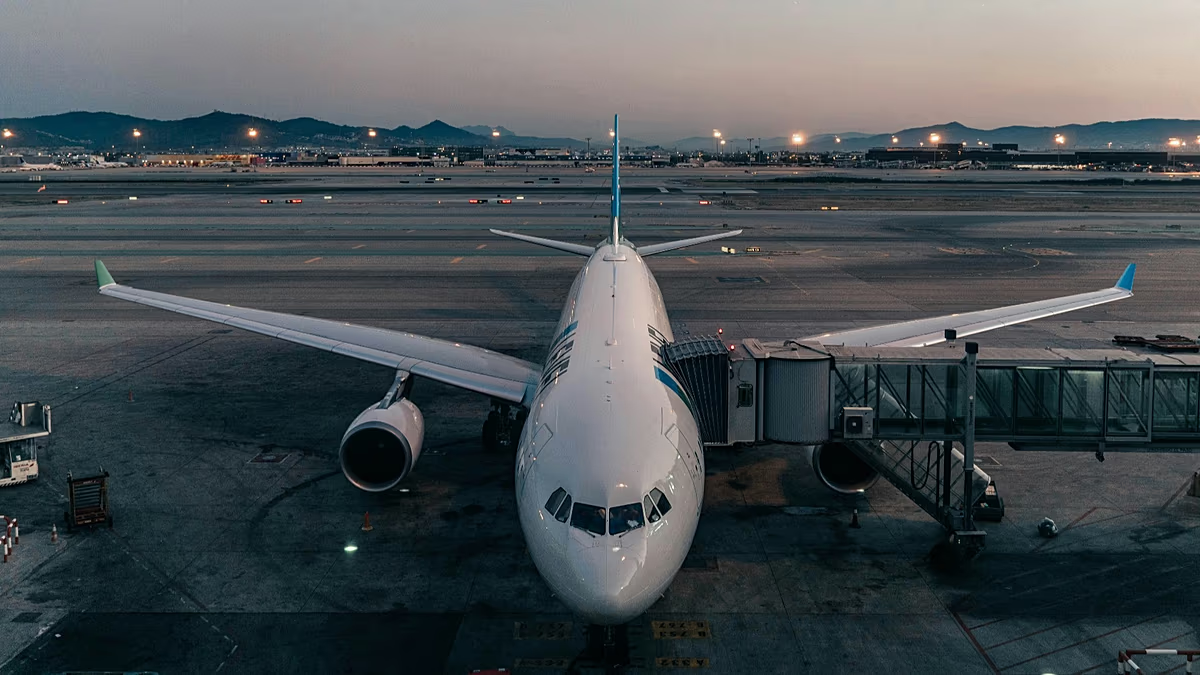
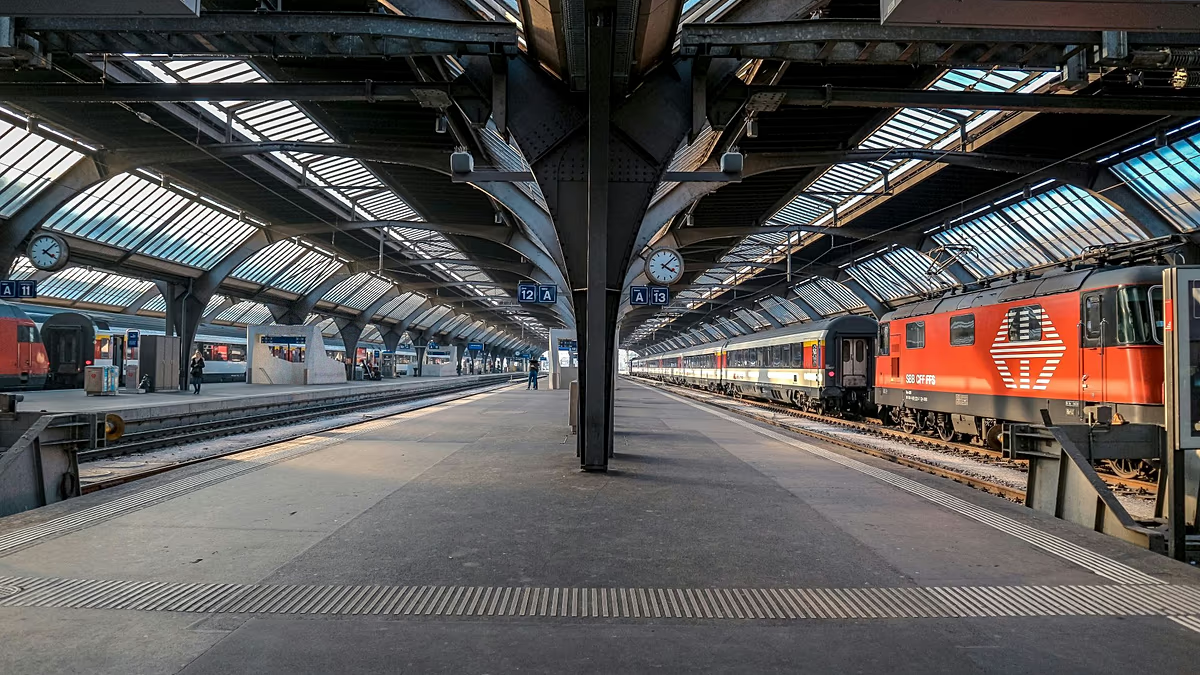
Leaving Skopje after a brief but intense visit inevitably leaves a traveler planning their prompt return, with a growing wishlist of sights left unseen, such as the towering, seventy-six-meter-tall Millennium Cross that sits atop Mount Vodno, celebrating two thousand years of Christianity. Although the scenic cable car leading up to this massive, glowing landmark was temporarily closed during my spring journey, the promise of catching that high-altitude breeze and viewing the vast valley below remains a compelling reason to buy another ticket, perhaps combined with a long, scenic three-hour bus ride south to the legendary, crystal-clear waters of deep Lake Ohrid. Reaching this enigmatic capital has never been easier or more affordable for budget-conscious global travelers, thanks to the extensive network of routes operated by Wizz Air connecting Skopje Airport directly to European hubs like London, Barcelona, Rome, and Berlin, alongside dependable regional bus links that connect the city to neighborly capitals like Sofia, Bulgaria, or Tirana, Albania, in under five hours. Navigating the intercity bus systems of the Balkans does require a touch of old-school patience and street smarts, such as remembering to pay the compulsory, small nominal platform fee of fifty Macedonian denars to security at the gate, even if you have prudently purchased your ticket online through transit sites like FlixBus. Additionally, when taking the local public bus out to the crowded trails of Matka Canyon, a vital piece of advice is to always personally confirm the exact pickup location with your driver, as the narrow, vehicle-choked canyon roads often prevent buses from returning to the original drop-off point. It is precisely these little quirks, combined with the warmth of the locals and the dramatic layers of turbulent history visible on every street corner, that make Skopje a deeply human, unforgettable destination that refuses to be ignored.