





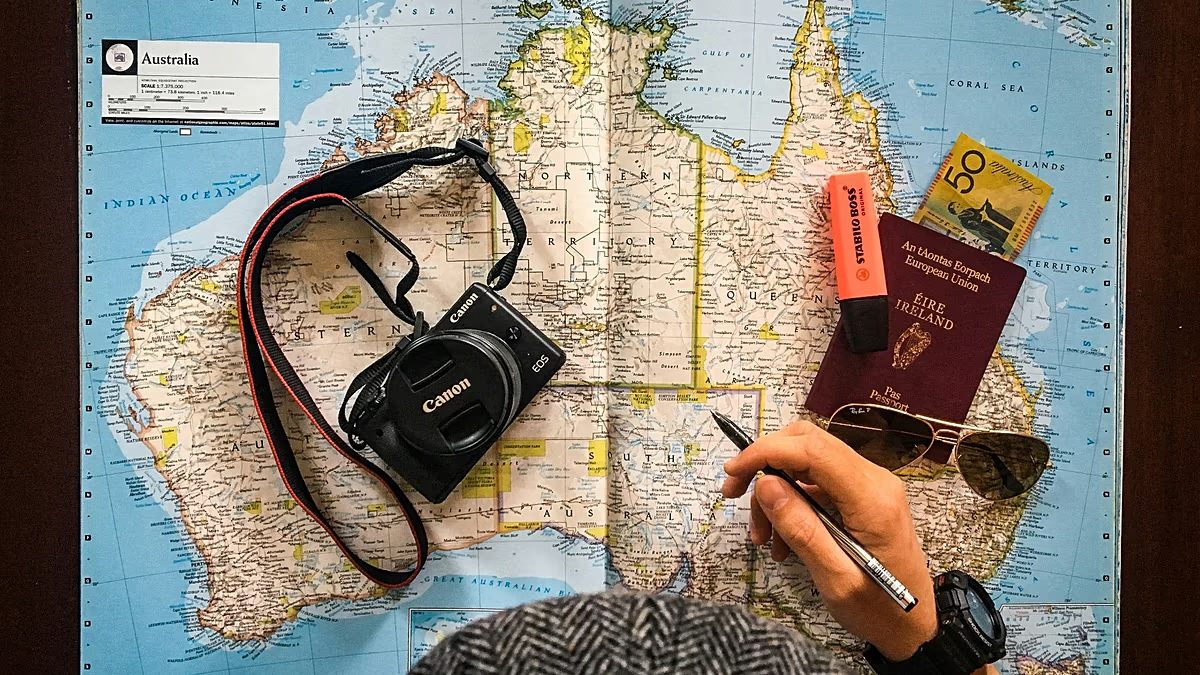
Behind every truly unforgettable group trip, there is usually one person clutching a shared spreadsheet, a colour-coded map, and the patience of a saint. That person is the travel planner. They are the one who juggles conflicting schedules, researches which neighbourhood has the best coffee and the safest streets, books the flights before prices spike, and reminds everyone three times to pack their passports. They are also the one who hears “That was such a good trip!” and never quite receives the credit they deserve. Instead of a toast in their honour, they get a grudging “thanks” before someone starts scrolling through photos. It is a strange and universal irony: the more seamlessly a holiday runs, the less visible the work that made it seamless. Because when everything goes right, friends simply enjoy themselves. When something goes wrong, everyone suddenly remembers who planned it. This is the quiet burden of the travel organiser, a role that combines logistics, psychology, hospitality, crisis management, and perhaps a little bit of unpaid tour-guiding, all without a formal title or a salary.
New research from the booking platform Klook has now quantified what many of us have long suspected: travel planning is one of the least thanked tasks we do for other people. The study, which surveyed 2,725 travellers across ten countries, found that the work of arranging a single trip can take more than ten hours for eight out of ten respondents. Ten hours is not a trivial amount of time. It is the length of an entire workday, or a full season of a television series, or a dozen long lunches with friends. For the travel planner, those ten hours are spent in a swirl of browser tabs, comparison websites, weather forecasts, restaurant menus, and the eternal question of whether to book the apartment with the balcony or the one with the washing machine. And while that effort might be exhausting, what seems to hurt even more is the lack of recognition. The same survey suggests that travel planning sits near the bottom of the gratitude list, below cooking dinner, dog-sitting, and helping someone move apartments. There is something deeply relatable about this. We thank people for bringing a bottle of wine to a party, but we forget to thank the person who made sure the party happens in another country, with trains that connect, rooms that fit four people, and a reservation that doesn’t require anyone to speak fluent Italian unless they want to.
Perhaps even more telling, the research found that the planner’s mind never truly switches off, even when they manage to hand the reins to someone else. Forty-two percent of respondents admitted that if another person takes over planning, they continue to quietly and anxiously monitor from the sidelines, ready to step in at the first sign of trouble. This is the hidden psychology of the travel planner: they cannot enjoy a holiday without checking the hotel’s check-in email, the airline’s gate changes, and the weather forecast for the third day of the trip. They have become permanently wired for contingency. It is not that they do not trust the new organiser; it is that they have spent so many years being the safety net that they no longer know how to fall without one. The result is a strange kind of restlessness. They are physically on the beach, but mentally they are still in the booking portal, comparing transfer times and making sure the restaurant they reserved is open on Mondays. It is as if the travel planning brain has built its own emergency broadcast system, and it only turns off when the plane lands back home. This explains why so many planners say they need a vacation from their vacation. They have been managing expectations, reassuring nervous flyers, and making executive decisions about dinner for so long that they have forgotten what it feels like to be a passenger in their own life.
That is exactly where Klook has decided to step in, by turning appreciation into action. With the launch of its global search for five long-suffering travel planners, the company aims to reward those who have spent too many hours organising trips for friends and family without any recognition. The official contest, called “Thank You Travel Planners,” will send five winners on a seven-day hosted trip to Switzerland in December, with round-trip flights, premium accommodation, and curated activities all preplanned and covered by Klook. Winners can also bring a plus one, which means that after years of being the one who makes everything happen, they can finally sit back and let someone else take care of the logistics. In a statement, Marcus Yong, Vice President of Global Marketing at Klook, articulated the mission simply: “We built Klook to make travel planning simpler so travellers can spend less time on admin and more time on experiences. Now we’re taking that promise one step further with a fully-planned getaway for five travel planners who always get travel right for their friends and families. It’s their turn to take a vacation from planning vacations.” Those words are likely to hit home for anyone who has ever felt that their travel skills are treated as an automatic service rather than a genuine gift.
For those who want to nominate themselves or someone else, the process is refreshingly simple, though it does ask for a little storytelling. Planners are invited to submit a summary of no more than three hundred words detailing a trip they organised and the challenges they overcame in the process. That is not a long space, but it is enough to describe the problem-solving, the negotiations, the booking mishaps, and the moment when everything finally clicked into place. The contest is open to anyone at least twenty-one years old who holds a valid passport, is legally permitted to enter Switzerland, and meets all necessary immigration or visa requirements. There is also a small but important condition: winners must be happy to share their journey on camera as part of Klook’s campaign. After a decade of quietly working in the background, the winners will suddenly find themselves in the foreground, documented and celebrated for the very skills that were once taken for granted. The deadline for submissions is 31 August 2026, which gives travel planners a narrow but hopeful window to gather their memories, laugh about past disasters, and put their own stories into words. Whether someone nominates themselves with a confession of past itinerary stress, or a friend nominates them with gratitude and love, the contest seems designed to make people feel seen.
Ultimately, this campaign is not just about winning a free trip, and that is perhaps its most powerful quality. It is about shifting how we value the labour of care, organisation, and emotional labour that goes into creating shared experiences. Travel planning is not merely admin. It is an act of devotion. It means learning that one friend sleeps badly in shared rooms, that another hates museums, and that someone else is allergic to shellfish. It means building an itinerary that balances everyone’s energy, budget, and patience. It means making decisions when no one else wants to, and then quietly absorbing the blame when a rainy afternoon ruins a planned picnic. In a world that often celebrates individual achievement, travel planning is a reminder that some of the most important work is invisible. It is done not for applause, but for the joy of seeing other people happy, even if that happiness is expressed only in the form of a sleepy nod on the airport shuttle. So, if you have a friend who has just spent three weeks coordinating flights for a ten-person reunion, or a partner who planned an entire anniversary trip without asking for anything in return, perhaps the greatest human gesture is not just to enter them in a contest, but to look at them, sincerely, and say thank you. And if they win that trip to Switzerland, even better. Because after ten hours of spreadsheet wrangling, forty-two percent of anxious monitoring, and a lifetime of being underappreciated, they deserve more than a discount code. They deserve a plane ticket, a window seat, and an entire week of being looked after, at last.