

Becoming a digital nomad is one of those dreams that looks incredible on Instagram and feels incredible in theory. You imagine yourself writing code or designing campaigns from a sun-drenched café in Lisbon, or taking a midday break to explore a temple in Chiang Mai. But the reality of working from abroad is far less glamorous than the hashtags suggest. The moment you arrive, you’re not just a traveler; you’re a temporary resident, a freelancer, a taxpayer, a patient, and a tenant. You need to figure out where you’ll stay, how you’ll get paid, whether you need a local bank account, how to access healthcare, and whether your internet connection can handle a video call without dropping every few minutes. In many countries, these tasks involve a dizzying amount of paperwork, in-person appointments, and waiting in line. That’s the friction the Holafly Digital Nomad Friction Index 2026 is all about. Holafly, an eSIM company, analyzed 17 popular digital nomad destinations and scored them on visa complexity, banking access, healthcare, connectivity, cost of living, and disruption risk. The result is a single friction score that tells you how easy or difficult it is to actually set up your life, not just visit. As Holafly COO Metin Kastro says, “Arriving to a country is usually the easy part. The real burnout happens when remote professionals hit a wall of post-landing bureaucracy, lost work hours, and unstable internet.” That quote should be printed on every digital nomad’s packing list. The study is a wake-up call: the dream of working from anywhere is only sustainable if the “anywhere” you choose doesn’t drown you in administrative chaos.
Let’s break down what these factors actually mean for someone trying to work remotely. Visa complexity is the first hurdle. Some countries have created dedicated digital nomad visas that let you stay for a year or more with minimal fuss. Others force you to hop between tourist visas, leave every 90 days, or apply for a business visa that has nothing to do with remote work. Banking access is just as important. Without a local bank account, you might be stuck paying high transfer fees, waiting days for payments to clear, or relying on prepaid cards that don’t work everywhere. Healthcare is another critical piece. If you get sick or injured, you need to know that you can see a doctor without navigating a confusing system or paying astronomical out-of-pocket costs. Connectivity is the lifeline of any remote worker; a beautiful beach means nothing if the Wi-Fi can’t support a Zoom call. Cost of living determines whether your salary gives you a comfortable lifestyle or a constant source of stress. And disruption risk covers everything from earthquakes and hurricanes to political instability and internet shutdowns. These are the hidden friction points that Kastro mentions. They don’t show up in glossy travel brochures, but they can make or break your experience. A country can be cheap, beautiful, and full of adventure, but if it takes you three weeks to open a bank account and the power goes out every afternoon, you won’t be able to focus on your work. The Holafly index is essentially a reality check for anyone who dreams of working from anywhere. It reminds us that “anywhere” is not an abstract concept—it’s a specific place with specific rules, systems, and quirks. The word “friction” is borrowed from physics, but it fits perfectly: the less friction you face, the more smoothly your life and work can flow.
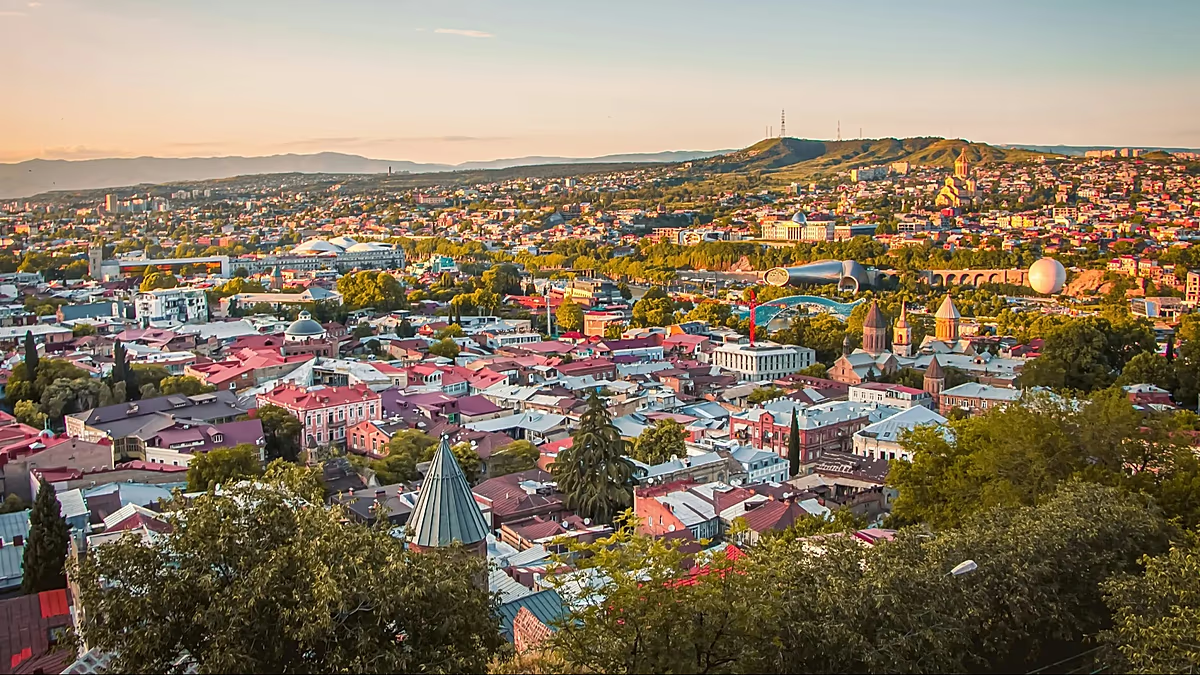
So which countries make the transition easiest? Georgia comes out on top, and it’s not even close. The Caucasus nation has no mandatory residence registration, no tax ID requirement, and you can open a bank account with just a passport within hours. That’s almost unheard of in a world where most countries require multiple documents, proof of address, and a local phone number just to get a bank card. In Georgia, you can land in Tbilisi, grab a coffee, and be fully operational before the day is over. For a digital nomad, that’s the dream. Peru takes second place, thanks to its Rentista residency category, which allows for indefinite permanent residency with a low income threshold. That means you don’t have to constantly renew your visa or worry about your stay expiring. The main downside is Peru’s exposure to earthquakes and El Niño, which drags down its disruption risk score. South Africa comes in third. It has no mandatory address registration and no tax ID requirement for non-residents, which eliminates two of the biggest bureaucratic headaches. However, its healthcare score is below average, which is a serious consideration for anyone planning a long-term stay. Thailand and Malaysia round out the top five. Both have purpose-built digital nomad visa programmes, which show that the government actually wants remote workers to come and stay. Banking friction is only moderate, which is manageable. But both countries are also exposed to natural disasters, and that’s a reminder that the easiest setup isn’t always the safest one. Still, the top five proves that you don’t need to be a wealthy expat in Singapore or a retiree in Costa Rica to make remote work abroad a reality. You just need to pick a country that has made the process less painful.
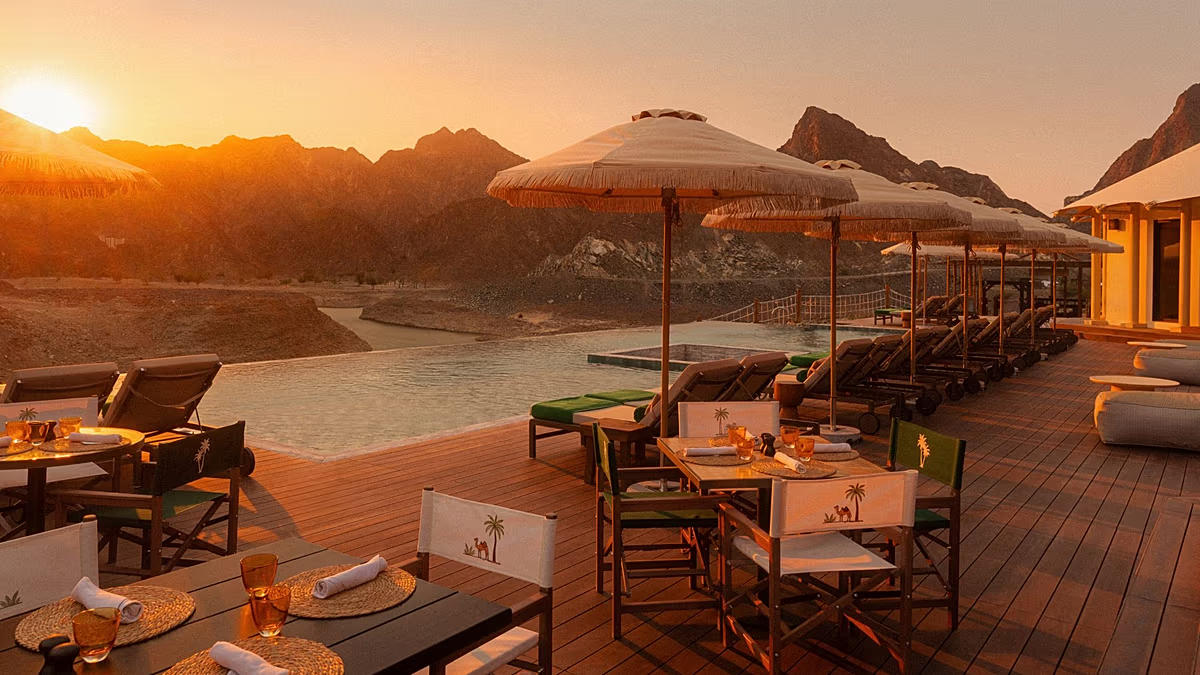
Vietnam takes sixth place, and then the list finally reaches Europe. The only European nations to make the top 10 were Croatia, Hungary, and Portugal—or Poland, depending on which part of the article you read. The text says Poland, but the published list shows Portugal, which is a small editorial inconsistency that doesn’t change the bigger picture. Croatia came in seventh, Hungary eighth, and Portugal ninth, with the UAE rounding out the top 10. All three European countries have dedicated nomad visa programmes, which is a positive sign. They want remote workers, and they’ve created a legal pathway for them. But they also require mandatory registration and tax ID numbers, and that extra paperwork is exactly what held them back from climbing higher in the rankings. Anyone who has ever tried to register an address in a foreign country knows how much friction that creates. You need to find the right office, bring the right documents, fill out the right forms, and often wait in line for hours. It’s not impossible, but it’s time-consuming, and time is money for a remote worker. Portugal, in particular, has become a digital nomad hotspot in recent years, but its popularity has brought challenges like housing shortages and stricter tax enforcement. The UAE, meanwhile, offers a modern, tax-friendly environment and excellent connectivity, but its high cost of living and cultural adjustments can be daunting. What’s striking about the top 10 is how few traditional expat destinations appear. You don’t see Spain, Italy, or France. You don’t see Mexico, Bali, or Costa Rica, despite their popularity in digital nomad circles. That doesn’t mean those places are bad; it just means they have more friction. For someone who values ease over glamour, the list is a goldmine of underrated options.
What should a would-be digital nomad take away from all this? First, ease of setup is not the same as quality of life. Georgia might be a bureaucratic breeze, but you still need to decide if you’ll love living there. Peru’s earthquake risk might not bother you as much as its food and culture excite you. South Africa’s healthcare score might be a dealbreaker if you have a chronic condition, or a non-issue if you’re young and healthy. The index is a tool, not a verdict. Second, the factors that matter most will vary from person to person. A freelance writer needs reliable internet above all. A software engineer might care more about time zones and banking. A parent with kids might prioritize healthcare and safety. The beauty of the friction index is that it forces you to think about the unglamorous details before you commit. It’s easy to romanticize a life of working from cafes and co-working spaces, but the reality is that you need to pay rent, see a doctor, file taxes, and keep your clients happy. If those everyday logistics are a nightmare, your dream life quickly becomes a nightmare too. Kastro’s point about “peace of mind” is crucial. The best destination is not necessarily the cheapest or the most beautiful; it’s the one where you can actually focus on your work and your life without constantly fighting the system. That’s why the index looks at disruption risk, healthcare, and connectivity alongside the more obvious factors like visa complexity. It’s a holistic view of what it means to live somewhere, not just visit. A low friction score means you can spend your energy on the things that matter: your job, your relationships, your adventures. A high friction score means you’ll be spending your energy on paperwork, waiting, and stress. The choice is yours.
Ultimately, the Digital Nomad Friction Index 2026 is a reminder that the world is opening up to remote work, but not all at the same speed. Some countries have figured out that attracting digital nomads means reducing red tape, offering clear visa pathways, and building reliable infrastructure. Others still treat remote workers like temporary nuisances, requiring endless forms and in-person appointments. The good news is that you have choices. If Georgia sounds too off the beaten path, maybe Peru is your speed. If Europe is non-negotiable, Croatia and Hungary are in the top 10. If you’re willing to trade a little healthcare quality for an easy setup, South Africa might surprise you. The key is to do your homework before you go. Look beyond the Instagram photos and the cost-of-living calculators. Ask yourself: How long will it take me to open a bank account? Do I need to register my address? Is the internet stable enough for video calls? What happens if there’s a natural disaster? These questions aren’t glamorous, but they’re the difference between a smooth transition and a stressful one. Holafly’s study provides a starting point, but your own research and priorities will ultimately guide you. The digital nomad lifestyle is more accessible than ever, but it’s not friction-free. The countries that make it easy deserve your attention, and the ones that don’t might still be worth the hassle—if you know what you’re getting into. As Kastro says, long-term mobility works when logistics stop eating into livelihoods and peace of mind. So choose a place that lets you live, work, and breathe. The bureaucracy doesn’t have to be a beast. With the right destination, it can be a minor footnote in an otherwise incredible adventure.