





Every passionate traveler knows the intoxicating, hopeful thrill of planning an upcoming journey to far-flung corners of the globe. We spend countless evenings curation-building our dream itineraries, scrolling through beautifully filtered Instagram photos of misty mountain cliffs, shimmering historic pools, and majestic roller coasters that promise the absolute adrenaline rush of a lifetime. Yet, there is a quiet, collective heartbreak that occurs when we finally arrive at a bucket-list destination only to find that the physical reality of the experience is a far cry from the polished postcard. Instead of feeling a sense of wonder, romance, and escape, we are often met with suffocating crowds, eye-wateringly expensive ticket booths, and run-down facilities that feel more like calculated corporate conveyor belts designed to extract cash than spaces of genuine human connection and cultural discovery. This stark gap between our lofty expectations and the gritty reality is precisely what the global luggage storage network, Radical Storage, sought to analyze and quantify in their detailed, eye-opening study of global travel trends. By systematically digging through a mountain of nearly 100,000 real visitor reviews across some of the most traveled territories on the planet—sourced from EuroMonitor’s Top 100 City Destinations and Mastercard’s Global Cities Index—researchers filtered out the noise, excluding regions currently affected by active conflicts, to analyze pure guest sentiment. Using a sophisticated list of ninety specific negative indicators, keywords, and phrases, while carefully discarding deceptive false positives like “not disappointing,” they searched for telling descriptors such as “boring,” “overpriced,” “inaccessible,” and “needs restoration” to measure actual traveler dissatisfaction. The results were telling: while the baseline disappointment rate for global tourism spots sits at a modest 5.2%, a shocking number of high-profile locations blew right past this average, demonstrating that the higher the pedestal we put an attraction on, the harder and more painful its eventual fall tends to be for the average explorer.
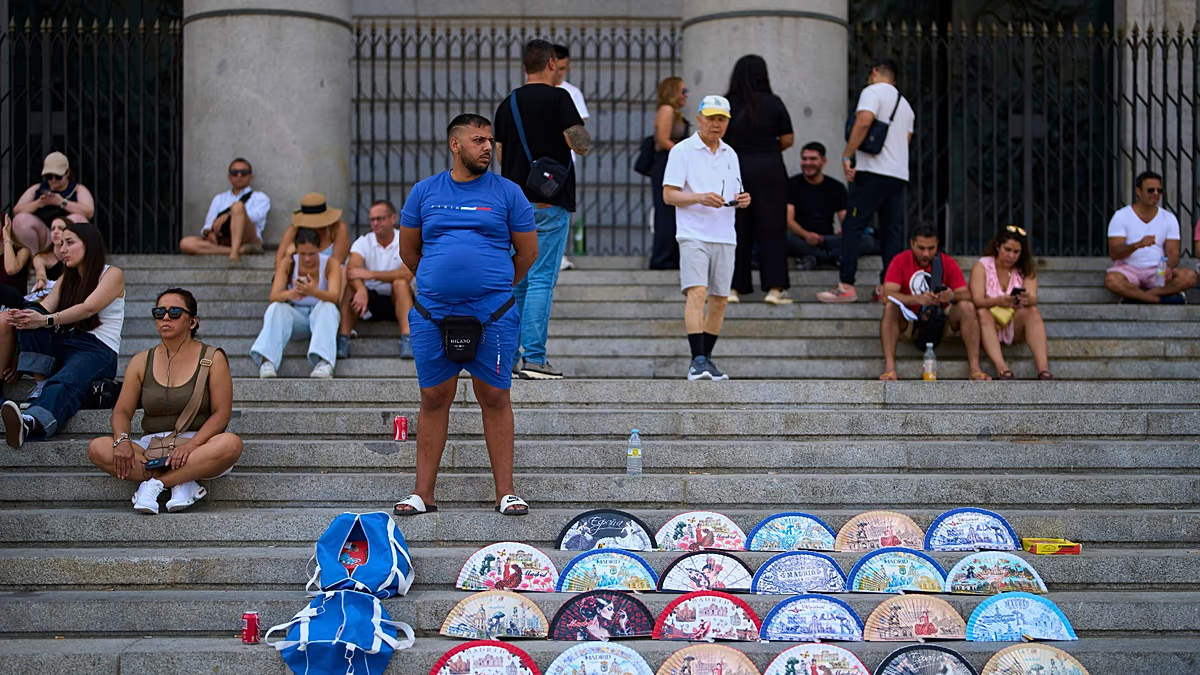
When we zoom out from individual tourist spots and examine the broader geographical landscape of travel disappointment, a fascinating and somewhat sobering pattern emerges regarding which nations and cities struggle the most to live up to their own hype. According to the research, the United Kingdom and Canada share the unenviable crown as the most consistently disappointing countries for travelers, with both nations sporting an overall visitor dissatisfaction rate of 7.9%, closely trailed by the United States at 7.5%. It seems that North America is particularly prone to overpromising and underdelivering, claiming six of the top ten spots for the most disappointing individual landmarks on earth. On a municipal scale, certain iconic cities are proving to be devastating victims of their own wild popularity, where the sheer volume of organic human traffic completely overwhelms the local infrastructure, turning once-magical streets into stressful bottlenecks. Seattle leads the global pack of disappointed cities with a staggering 8.9% negativity rate, followed by the majestic thermal capital of Budapest at 6.3%, and the bustling, historic global hubs of London and Bangkok tied at 6% of all visitor reviews expressing clear frustration, proving that even legendary historic capitals are buckling under the intense pressure of overtourism. When a city becomes far too popular, the unique local magic that made it special in the first place often gets crushed under the weight of millions of selfie sticks and commercial tour groups. Classic local charm is slowly replaced by slick, soul-less commercialization, and authentic cultural experiences are sanitized into high-priced assembly lines. For travelers, navigating these iconic metropolises has increasingly become an exhausting exercise in patience and financial endurance rather than a romantic journey of discovery, leaving many to wonder if the golden age of urban exploration has been commodified to the point of no return for the ordinary family.
Nowhere is this modern travel disillusionment more starkly and heartbreakingly illustrated than at Alton Towers, a massive, historically rich theme park nestled in the rolling green hills of the English countryside of Staffordshire. For the second consecutive year, this heavily hyped British destination holds the dubious honor of being crowned the single most disappointing tourist attraction on the planet. An astonishing 38.2% of all visitors left feeling thoroughly let down, with complaints focusing heavily on the exorbitant cost of admission, hidden add-ons, and atrocious queues that swallow up hours of a visitor’s day just for a few minutes of ride time. While the global average for complaints about value for money sits at a microscopic 1.3%, Alton Towers saw a mind-boggling 15% of its reviewers venting their fury over inflated prices for basic food, drink, and access rights. Visitors frequently noted that instead of feeling like valued guests experiencing world-class thrills, they felt targeted by misleading ticket packages designed to bleed their wallets dry before they even stepped foot on a coaster. If there is any silver lining for the park’s management, it is that this dismal 38.2% figure is actually a massive improvement from the previous year’s catastrophic negative rating of 49.4%, showing they are slowly attempting to steer the ship in a better direction. Not far behind on the scale of global disappointment is the United States’ Georgia Aquarium in Atlanta. Ostensibly home to tens of thousands of jaw-dropping aquatic creatures and touted as an educational marvel, nearly one in five visitors—19.6% to be exact—reported a negative experience, lamenting that the aquarium felt less like a serene, educational window into the deep blue sea and more like a chaotic, claustrophobic stadium overrun by pushy crowds and plagued by severe accessibility issues that made it impossible to appreciate the magnificent marine life. Specifically, 6.2% of people who visited the Georgia attraction believed the experience was far from good value for money, adding financial insult to physical discomfort.
Crossing over into the sun-soaked regions of the American South and the sprawling entertainment hubs of Florida, the theme of high prices and hollow, disappointing experiences continues to dominate traveler reviews, offering a stark look at the corporate commercialization of leisure. Take, for example, the Horseshoe Casino in Louisiana, which sits proudly as the third most disappointing attraction globally with an 18.6% negative review rate. Despite marketing itself as a premier destination for high-stakes gambling, fine dining, and endless entertainment with its signature steakhouse and 24/7 burger bar, visitors frequently expressed that the actual venue feels tired, uninspired, and desperately in need of physical restoration. Nearly 16.6% of reviews used words like “boring,” “broken down,” or “overrated,” portraying an environment that has lost its clinical luster and now feels like a depressing relic of a bygone era rather than an exciting, high-energy escape. A similar crisis of consumer faith exists further southeast at Universal’s Islands of Adventure in Orlando, Florida, which secured the sixth spot on the global disappointment index with a 15.6% negative rating. For decades, Orlando has been marketed to families worldwide as the ultimate kingdom of childhood imagination and cinematic wonder, but modern travelers are increasingly pushing back against the operational reality of this corporate fantasy. Reviewers frequently describe a stressful marathon of standing in blistering Florida heat for hours on end, navigating aggressive upselling for express passes, and paying astronomical prices for subpar meals. The magic of stepping into one’s favorite movie universe is quickly eroded when the dominant sensation of the day is financial exhaustion and physical confinement, illustrating how easily corporate greed can poison even the most meticulously crafted and well-funded dreamscapes of our childhoods.
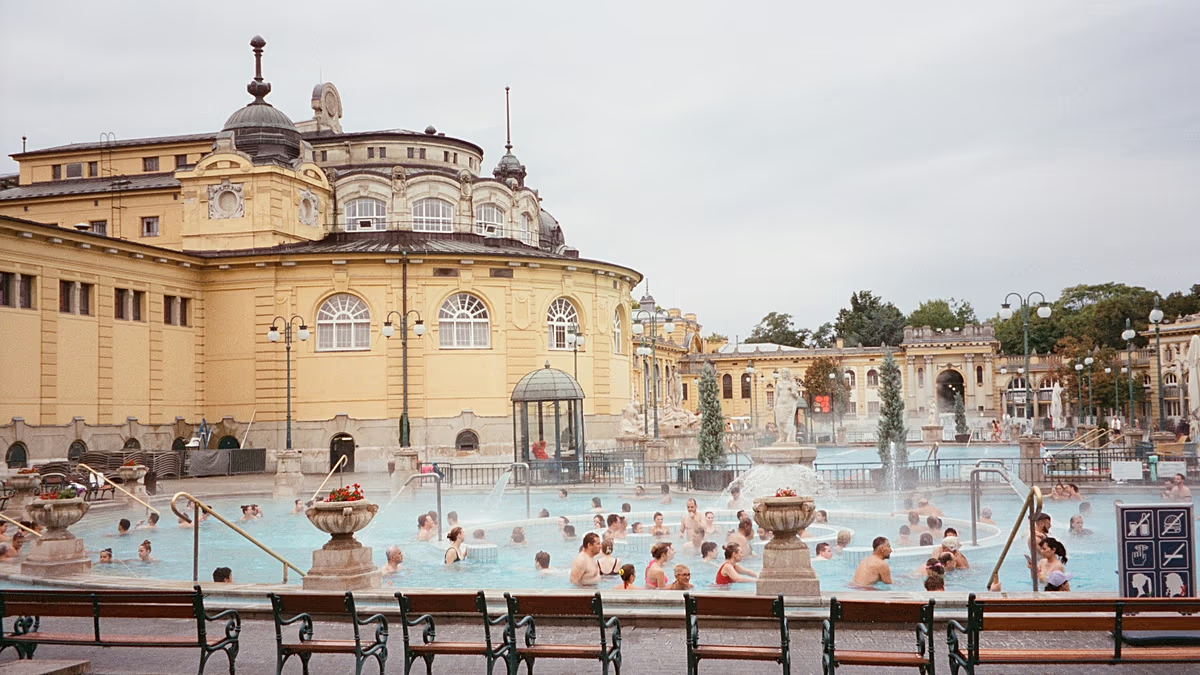
The disappointment trend is not merely restricted to high-octane amusement parks and flashing casino floors; it extends deep into the heart of historic architecture, natural wonders, and cultural sanctuaries that people travel across oceans to witness. In Budapest, the stunning, neo-Baroque Széchenyi Baths and Pool, long considered a holy grail of European wellness and thermal relaxation, left 16.6% of its visitors feeling uniquely stressed out rather than physically rejuvenated. While eager travelers expect a tranquil, curative soak in ancient therapeutic thermal waters, they are instead frequently greeted by what reviews describe as a lukewarm, unhygienic “human soup,” with overcrowded pools, confusing changing room layouts, and frustrating accessibility hurdles that plagued 7.2% of all reviews—nearly triple the study’s average. Across the Atlantic, Ripley’s Aquarium of Canada in Toronto suffers from a remarkably similar fate, where 16% of visitors left disappointed, with nearly 10% specifically complaining about suffocating crowds that make viewing the majestic marine displays almost impossible, and another 5% noting it simply was not worth the expensive ticket price. This tragic pattern of overcrowding and inflated pricing continues down through the rest of the top ten, including Tenerife’s Siam Park at 13.4% dissatisfaction, where long queues for water slides ruin the tropical fun, the iconic Space Needle in Seattle and Elvis Presley’s legendary Graceland home in Memphis tied at 12.6%, and Kyoto’s stunning Fushimi Inari-taisha Shrine at 12%, where overtourism has turned a sacred mountain path into a chaotic selfie runway. When sacred paths of traditional torii gates, historic musical shrines, or architectural milestones are treated as mere backdrops for social media clout rather than places of quiet contemplation, the intrinsic, historical value of the landmark is lost, leaving genuine travelers with a profound sense of physical exhaustion, emptiness, and deep financial regret.
Ultimately, this revelatory data from Radical Storage serves as a powerful, necessary wake-up call for the modern traveler, prompting us to critically reassess how we research, plan, and execute our global adventures in an era of hyper-connectivity and social media distortion. It highlights a widening, uncomfortable chasm in the golden era of tourism: the divide between the carefully curated, algorithmic perfection we see on our digital screens and the gritty, commercialized, and often exhausting reality of physical travel. These negative reviews are not merely the complaints of chronically disgruntled tourists who love to find fault; they are the authentic, deeply frustrated voices of everyday families and explorers who saved their hard-earned money, booked their precious vacation days, and set off with high hopes, only to find themselves treated as mere financial statistics in a high-volume tourism machine. To reclaim the true, life-altering joy of global exploration, perhaps we need to consciously step off the beaten, highly commercialized path and actively seek out the quiet, underrated alternatives that do not require reservation systems months in advance or endless premium upsells. By letting go of the systemic pressure to tick off famous boxes on a standardized bucket list, navigating carefully around peak tourist seasons, and prioritizing authentic local human interactions over mass-produced tourist spectacles, we can protect ourselves from inevitable travel heartbreak. The world is still full of genuine wonder, quiet beauty, and breathtaking, unscripted moments of discovery—we just have to remember that sometimes, the most unforgettable journeys are the ones that never made it onto a top ten list in the first place, hiding peacefully in the quiet spaces where the global hype machine’s influence has not yet reached.