






For thousands of eager holidaymakers, the month of June represents the golden threshold of summer—a time when long-held dreams of escape finally crystallize into plane tickets, packed suitcases, and the warm anticipation of sun-baked cobblestones. Among Europe’s most beloved sanctuaries, Portugal stands as a crown jewel, drawing travelers from every corner of the globe with the promise of the Algarve’s dramatic golden cliffs, the melancholic romance of Lisbon’s historic tramways, and the vintage-scented cellars of Porto. Many of these travelers have spent the long, grey winter months counting down the days, saving their hard-earned money, and coordinating precious time off with loved ones to experience this coastal paradise. Yet, just as the season peaks, a shadow of uncertainty has fallen over these meticulously laid plans. A wave of nationwide industrial action, encompassing cabin crew, rail workers, and metro staff, is poised to sweep across Portugal throughout June. This looming strike threatens to transform what should be a seamless transition into vacation bliss into a gauntlet of delays, cancellations, and logistical headaches. For the average family or solo adventurer, the sudden influx of news alerts warning of gridlocked transport networks and grounded flights doesn’t just represent an inconvenience; it triggers a deep, visceral anxiety about whether their cherished, hard-earned summer escape will happen at all, or if it will simply dissolve into a sea of red text on airport departure boards.
To truly understand this unfolding crisis, we must look beyond the sterile statistics of canceled flights and disrupted timetables and examine the human heartbeat at the center of the dispute. The men and women who keep Portugal moving—the flight attendants who ensure passenger safety at thirty thousand feet, the train drivers navigating the national rail network, and the metro operators managing the subterranean pulse of the major cities—are facing their own acute struggles. The European cost-of-living crisis, marked by soaring inflation, stagnant wages, and an increasingly expensive housing market that has priced many locals out of the very cities they serve, has pushed these workers to a breaking point. Against the backdrop of a booming tourism industry that relies heavily on their relentless labor, these workers feel a profound sense of exhaustion and devaluation. Their decision to strike is not a malicious attempt to ruin the long-awaited holidays of foreign visitors, but rather a collective, desperate plea for dignity, fair compensation, and sustainable working conditions. It is a classic modern paradox: the very travelers seeking refuge and relaxation are caught in the crossfire of a battle fought by locals who are struggling simply to afford a decent life in their own homeland. Recognizing this shared human vulnerability can transform our frustration into empathy, reminding us that the people behind the counters and in the cabins are parents, spouses, and citizens fighting for their own survival.
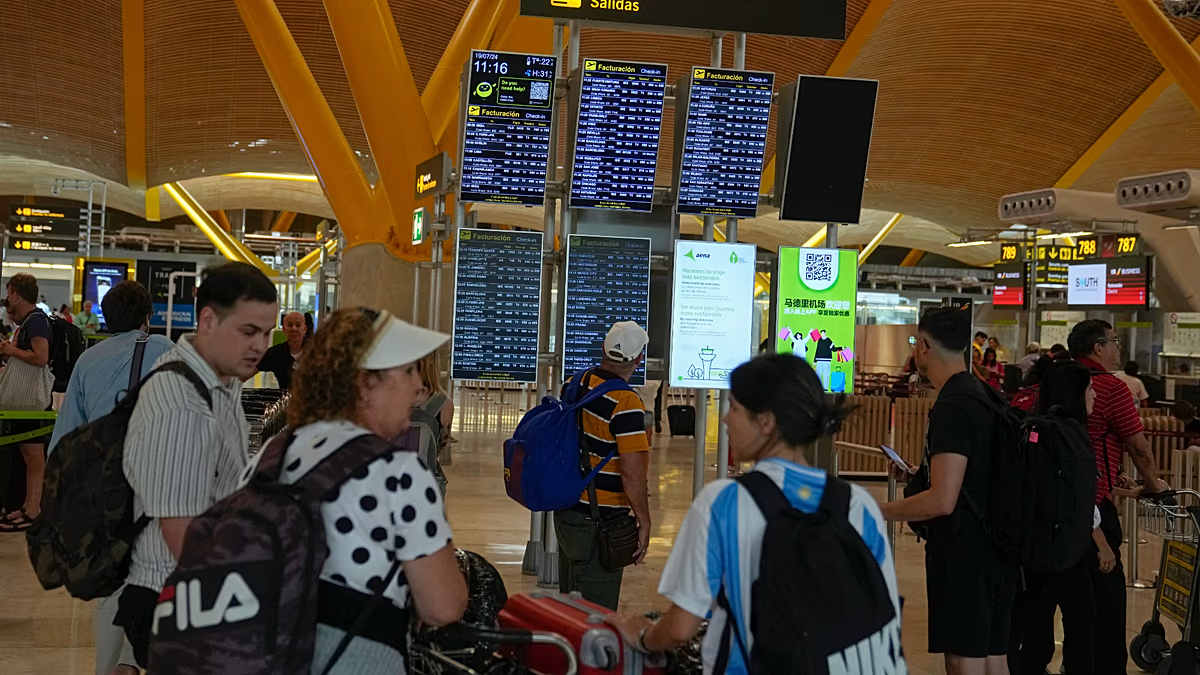
As the strike action manifests, the practical reality for travelers arriving in June will require a masterclass in patience, adaptability, and resilience. Major international gateways like Humberto Delgado Airport in Lisbon and Francisco Sá Carneiro Airport in Porto, which are already strained during the peak summer rush, are expected to bear the brunt of the cabin crew disputes, leading to a domino effect of delayed arrivals and sudden cancellations that could leave passengers stranded for hours, if not days. For those fortunate enough to land successfully, the challenges will continue on the ground, where the usually reliable Comboios de Portugal (CP) national rail network and the metropolitan subway systems face severe operational halts. Imagine the exhausting journey of a family landing after a tiring flight, their small children in tow, only to discover that the train to their seaside resort or the metro to their historic city-center rental is completely out of service, leaving them to navigate a chaotic scramble for incredibly expensive taxis or overwhelmed ride-sharing services. The familiar, rhythmic sounds of the city—the hum of the metro, the clatter of the trains, the cheerful chatter of boarding tourists—will temporarily give way to the tense quiet of empty stations and the anxious murmurings of crowds huddled around customer service desks, desperate for answers and alternative routes.
The ripples of this widespread disruption will inevitably extend far beyond airport terminals and train stations, casting a sober shadow over the local communities and small business owners who form the lifeblood of Portugal’s hospitality industry. In the historic neighborhoods of Alfama and Ribeira, guesthouse owners, passionate local tour guides, and independent restaurateurs watch these developments with a heavy heart, knowing that their livelihoods are intimately tethered to the smooth flow of international transport. A canceled flight does not just mean a disappointed tourist; it means an empty table at a family-run tasca, an unbooked walking tour, and a vacant boutique hotel room that cannot easily be recouped in a highly seasonal economy. These local merchants, famous for their warmth and generous hospitality, find themselves in a painful position, wishing nothing more than to welcome the world with open arms while simultaneously sympathizing with their striking compatriots who are fighting for a livable wage. This interconnectedness highlights the fragile ecosystem of modern global tourism, revealing how a stoppage in one sector of the transport industry can quickly cascade through the economy, affecting the livelihood of a ceramic artisan in a quiet village or a seafood vendor along the coast.
For travelers determined to forge ahead with their Portuguese journeys despite these headwinds, navigating the storm with grace and strategic preparation will be absolutely essential. The first rule of survival in these fluid situations is to replace panic with proactive planning: checking flight statuses multiple times a day, securing comprehensive travel insurance that explicitly covers industrial action, and downloading local transport apps to receive real-time updates. Moreover, this challenging environment calls for a shift in mindset, prompting holidaymakers to treat airline check-in agents, train station staff, and airport workers with profound kindness and civility, bearing in mind that these frontline employees are not responsible for the strikes but are instead absorbing the immense stress of thousands of frustrated customers. Packing light with carry-on luggage to avoid terminal baggage system meldues, keeping essential medications and documents close at hand, and mapping out alternative road trip routes or regional bus transfers can turn a potential vacation disaster into an unexpected adventure. It is often during these unplanned detours—when we are forced to slow down, explore a lesser-known town on foot, or linger over a long lunch in a quiet square while waiting for a train—that we discover the true, unvarnished beauty of a country and its people.
Ultimately, this summer of discontent in Portugal offers a powerful moment of reflection on the delicate relationship between the global traveler and the local host. While the immediate inconvenience of a delayed flight or a canceled train ride is undeniably frustrating, it also serves as a gentle reminder that the destinations we visit are not merely pristine, static postcards designed for our amusement, but living, breathing societies inhabited by people with their own anxieties, dreams, and battles for a better future. When the dust settles and resolutions are eventually reached between unions, airlines, and transport authorities, the enduring spirit of Portugal will remain intact, ready to heal and inspire once more. The sun will still set spectacularly over the Atlantic, the sweet aroma of fresh pastéis de nata will still waft through Lisbon’s morning air, and the soul-stirring notes of Fado will continue to echo through the cobblestone alleyways. By embracing this journey with an open heart, a flexible itinerary, and a deep respect for the vibrant, hardworking people who make our travels possible, we can navigate these temporary disruptions and still experience the profound, unforgettable magic that Portugal has to offer.