





For many, the idea of a safari conjures up images of the African savanna, with the iconic “Big Five” – lion, leopard, elephant, rhino, and buffalo – as the primary goal. It’s a classic adventure, a staple of travel bucket lists for decades. However, the world of wildlife travel has expanded far beyond these famous giants, offering intrepid explorers a chance to witness some of the rarest and most elusive creatures on the planet, often in the most breathtaking and remote corners of the globe. Luxury travel company Bailey Robinson has tapped into this desire for the extraordinary, moving beyond the conventional to curate experiences that are as much about conservation and exclusivity as they are about the animals themselves. Their newly released “Wildlife Experience Index” is a testament to this shift, ranking 30 of the planet’s most remarkable animal encounters based on a combination of factors that go far beyond simple spotting. It’s a guide for the discerning traveler who seeks not just a photo opportunity, but a profound and meaningful connection with the natural world, a journey that feels both deeply personal and globally significant.
The index itself is a fascinating study in what makes a wildlife encounter truly exceptional. Bailey Robinson didn’t simply list famous animals; they developed a sophisticated scoring system that weighs six distinct elements to build a comprehensive picture of each experience. The criteria go beyond the simple probability of seeing an animal, delving into the very essence of the journey. It considers the “rarity” of the species, factoring in its global population and the inherent difficulty of finding it in its natural habitat. Alongside this, “remoteness” is evaluated, measuring how far the traveler must venture from the beaten path of tourism infrastructure to reach the animal’s domain. The index also takes into account the “conservation importance” of the encounter, using data from the International Union for Conservation of Nature (IUCN) Red List of Threatened Species to highlight experiences that directly support vital protection efforts. “Exclusivity” is another key component, assessed by the number of permits issued and visitor limitations in place, ensuring that the encounter remains intimate and unspoiled. Finally, “accessibility” and “encounter potential” round out the criteria, weighing how easy it is to reach the destination against the known opportunities for successful observation. By blending these diverse factors into a score out of 100, the index provides a nuanced ranking that champions both the thrill of the chase and the importance of sustainable, responsible travel.
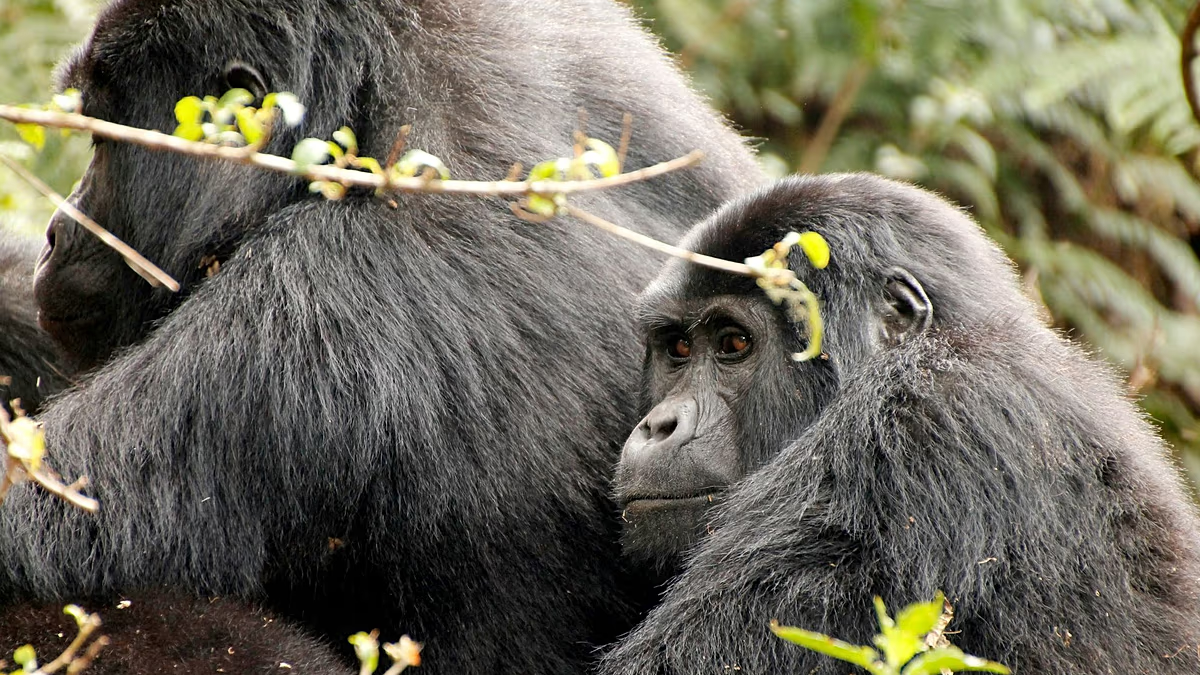
At the pinnacle of this extraordinary list is an experience that perfectly embodies all the index’s values: mountain gorilla trekking in Rwanda or Uganda, achieving a near-perfect score of 90 out of 100. This isn’t just a wildlife viewing trip; it’s a profound privilege. In Rwanda, the experience is meticulously managed with only 96 permits issued each day, ensuring that the encounters are intimate and that the gorillas are not overwhelmed by human presence. This rigorous control has been a cornerstone of the region’s incredible conservation success story. Trekking through the dense, misty slopes of the Virunga Volcanoes, the journey itself is an adventure, a physical challenge that builds anticipation with every step. The moment you finally come face-to-face with a family of these magnificent creatures is nothing short of awe-inspiring. Observing a silverback as he rests, feeds, or interacts with his family, you feel a powerful connection to a species so closely related to our own. The experience is both humbling and exhilarating. Across the border in Uganda’s Bwindi Impenetrable Forest, the experience is similarly incredible, with treks limited to just eight visitors per habituated gorilla family. This careful management allows for an unfettered, deeply personal hour with the gorillas, making it a truly once-in-a-lifetime encounter that has become the gold standard for luxury wildlife travel.
Following closely behind the gorillas, the rest of the top ten reveals a stunning diversity of locations and species, each offering its own unique brand of adventure. Claiming the second spot is an emperor penguin expedition in Antarctica, with an impressive score of 88.5. This is the ultimate journey for those seeking profound isolation and extreme conditions. Getting to the remote colonies deep within the Weddell Sea often requires a specialized expedition ship and even a helicopter flight, a logistical feat that guarantees a sense of discovery. Witnessing thousands of these elegant, resilient birds against a backdrop of endless ice and snow is a truly surreal and majestic spectacle. The third-place ranking goes to the saiga antelope expedition in Kazakhstan, a testament to the index’s focus on rarity. This bizarre, critically endangered antelope, with its distinctive bulbous nose, lives in the vast, open steppes of Central Asia. Spotting a herd of these animals, which have survived dramatic population crashes, is an incredibly special event for any wildlife enthusiast. The list continues with equally remarkable destinations: snow leopard tracking in the high-altitude landscapes of Ladakh or the Himalayas, a challenging search for one of the world’s most ghost-like predators, and Javan rhino tracking in Indonesia, a species so endangered it numbers in the dozens and is found only in a single national park.
The remaining entries in the top ten further cement the index’s global perspective, highlighting a mix of Africcan and Arctic adventures, as well as a foray into Southeast Asia. Black rhino tracking in Namibia or Kenya combines the classic safari feel with the urgency of conserving one of Africa’s most threatened animals. The experience of following these prehistoric-looking creatures on foot or by vehicle is a heart-pounding encounter with raw power. A polar bear expedition in Svalbard, Norway, meanwhile, offers a starkly beautiful and dramatic experience, where travelers view the world’s largest land predator from the safety of a ship amidst the Arctic sea ice. It’s a thrilling, almost eerie experience to see these magnificent animals hunting in their natural, frozen kingdom. The Bornean orangutan encounter in the lush rainforests of Borneo, which ranks eighth, provides a deeply emotional experience, observing our intelligent, gentle cousins swinging through the canopy. The ninth spot returns to Africa with the Eastern lowland gorilla expedition in the Democratic Republic of Congo, an adventure that appeals to the most intrepid travelers willing to venture into one of the continent’s wildest regions. Rounding out the top ten is the African wild dog safari in Botswana or Tanzania. Often overshadowed by the Big Five, these highly social and efficient predators offer some of the most dynamic and exciting viewing in Africa, their hunts and pack interactions providing a raw display of nature’s drama.
Ultimately, what the Bailey Robinson index reveals is a fundamental shift in the philosophy of luxury travel. As Sarah Parker, the company’s sales director, aptly notes, the world’s most extraordinary wildlife encounters are no longer simply about ticking off a list of animals. “What particularly stood out to us was the relationship between rarity and remoteness,” she explains. “The world’s most extraordinary wildlife encounters tend to involve travelling further, going deeper into wilderness and experiencing something that very few travellers will ever have the opportunity to see.” The true luxury, she emphasizes, is not the plush accommodation or fine dining, but the opportunity for something rare, meaningful, and profoundly personal. It is the privilege of witnessing these creatures in their last wild strongholds, while knowing that your visit actively supports the conservation projects that protect them. These top ten experiences are not just vacations; they are a chance to become part of a larger story of preservation, to walk lightly on the earth, and to return home with not just photographs, but a deep and lasting sense of wonder for the natural world and our place within it. They represent the new frontier of travel, where adventure, conservation, and true luxury are inextricably linked.