





Imagine stepping into a bustling corner of Madrid one crisp fall day, where the city’s familiar hum of café chatter and distant traffic suddenly morphed into something magical—an otherworldly portal that whisked you away to the vibrant allure of Macao. For several days, the Puente del Rey park, nestled beside the serene Madrid Río, wasn’t just a recreational spot anymore; it became a living, breathing showcase of Macao, that enigmatic territory spanning just 30 square kilometers yet bustling with over 720,000 residents and serving as one of Asia’s premier tourist havens. As a visitor wandering in, I couldn’t help but feel a surge of excitement, like uncovering a hidden chapter in a beloved travel book. The Experience Macao Roadshow had transformed the space into an enchanting route dotted with more than 20 interactive stands, each pulsating with the essence of Macao’s rich tapestry. From the moment you entered, a welcoming reception desk greeted you with smiles, information pamphlets, engaging raffles, and thoughtful souvenirs—little tokens that hinted at the adventures ahead. It was as if hosts from afar were personally inviting you to explore, making you feel not like a spectator, but a cherished guest. As the route unfolded, thematic areas beckoned: zones dedicated to virtual reality escapades, deep dives into cultural heritage, and mouthwatering gastronomic delights. By day, the atmosphere was pure leisure, a gentle invitation to savor every moment. Families with wide-eyed children clung together, groups of friends erupted in laughter, and curious onlookers paused at each exhibit, their faces lighting up with wonder. Picture this: trying on elaborate traditional Chinese costumes that swirled like whispers of ancient dynasties, feeling the fabric hug your form and imagining yourself as a wandering explorer in a bygone era. Then, there were the rhythmic beats of lion dances, where you could pick up a drumstick and join in the jubilant parade, your heart pounding in sync with the tradition, a shared energy that bridged worlds and eras. Calligraphy workshops invited you to dip brushes into ink, crafting characters that felt like echoes of history on parchment, a meditative act that slowed time and connected you intimately to Macao’s soul. It was more than an event; it was a personal journey, where every interaction sparked curiosity and joy, reminding me of how travel isn’t just about distant lands but about the human connections that make us feel alive.
Venturing deeper into the day’s offerings, I found myself drawn to the recreations that made Macao tangible without ever boarding a plane—a true tour of the territory right there in the heart of Spain. Among the highlights was a meticulously crafted traditional tea house, an oasis of calm amid the buzz, where the air was perfumed with the sweet aroma of brewing infusions and delicate flecks of dim sum. Visitors like me could settle into plush seating, indulging in flaky pastries stuffed with savory dumplings or the custard-rich pasteis de nata, those iconic Portuguese cream cakes that have woven into Macao’s fabric thanks to its colonial past. But it wasn’t just about eating; the tea house hosted interactive workshops, like sugar painting, where skilled artisans drizzled molten caramel into intricate designs on platters, turning simple dessert into a fleeting masterpiece. As I tried my hand, the sticky warmth between my fingers and the sweet crunch on my tongue evoked a sense of playfulness, much like childhood summers spent crafting in the kitchen. Conversations flowed over cups of steaming tea, stories of heritage shared among strangers who suddenly felt like old friends. It was heartwarming, this blend of East and West, where Macao’s influences—Chinese subtlety and Portuguese flair—danced together in harmony. I left the tea house with a deeper appreciation, not just for the flavors, but for the way food serves as a universal language, bridging cultures and sparking memories that linger long after the last bite.
As the afternoon sun dipped, the technological marvels of the event shimmered into focus, blending cutting-edge innovation with Macao’s timeless charm in ways that left me breathless with awe. Picture sliding into the seat of a racing simulator, the dashboard humming to life as you gripped the wheel, catapulting into a virtual whirlwind around the Macau Grand Prix circuit—a thrilling cyber-journey through hairpin turns and roaring engines that simulated the adrenaline of Formula cars zipping through the streets. My pulse quickened, laughter bubbling up as I navigated the digital track, feeling the thrill of the real racetrack without the roar of engines or the scent of burning rubber. Nearby, the virtual reality zone plunged me into immersive worlds, strapping on a headset that transported me from Madrid’s parks to Macao’s cobblestone historic streets, wandering UNESCO-listed landmarks under a sun that felt genuinely warm, or diving into pulsating nightlife scenes at mega-events where fireworks burst in technicolor glory. It was disorienting in the best way, a sensory overload that made distances dissolve. Even more interactive was the game section, where screens linked Madrid to far-flung Macao icons like the Ruins of San Pablo, prompting players to chart routes through the Great Bay region. Families huddled around, pointing and plotting adventures, while friends challenged each other to outwit virtual obstacles, the room echoing with cheers and “ahas” as connections sparked. In those moments, technology didn’t feel cold or impersonal; it was a bridge, a story unfolding, making me ponder how these digital gateways could make global wonders accessible to anyone with a curious mind. It humanized the vast expanse of Macao, transforming abstract travel dreams into vivid, tangible experiences that ignited wanderlust right in my fingertips.
Shifting gears from play to profundity, the event subtly unveiled Macao as a treasure trove of culture and ambition, a place where histories intertwine to create something uniquely alive. This small territory, often overshadowed by its Las Vegas-esque allure, boasts an UNESCO-designated historic center and spots like the Senate Square, testaments to over four centuries of East-West fusion—think Chinese temples rising beside ornate Portuguese colonial architecture, coexisting peacefully in a dance of contrasts. Tourism isn’t just a pastime here; it’s the lifeblood, welcoming tens of millions mostly from mainland China and Hong Hong each year, fueling an economy that thrives on curiosity and escapism. As I mingled at the stands, hearing tales from the hospitality heavyweights like hotel groups, airlines, and agencies, I sensed Macao’s eagerness to charm new crowds, especially in Europe. Jocelyn Wong, president of the Macao Hotel Association, shared insights that resonated deeply: “Last year, we saw a double-digit increase in Spanish visitors to Macao, and we see huge potential in the Spanish tourist. Spain is close to Portugal, so yes, for the food and the culture.” Her words painted a picture of familiarity—European-style buildings evoking home, cuisines blending Chinese intrigue with Portuguese echoes that mirror Spanish dishes. Visitors, she explained, could “feel at home and feel like they are in China,” tasting a melange of flavors that whisper of Asia and Europe in one bite. It struck me how food, heritage, and history are intertwined, making Macao not just a destination, but a mirror reflecting our shared human cravings for discovery. Beyond the event’s boundaries, Madrid restaurants stepped in, offering themed menus infused with Macao’s fusion cuisine, adapted gently for local palates while honoring those Chinese-Portuguese roots. Dining on these creations felt intimate, like sampling a love letter from one culture to another, humanizing the global exchange through the universal act of sharing a meal.
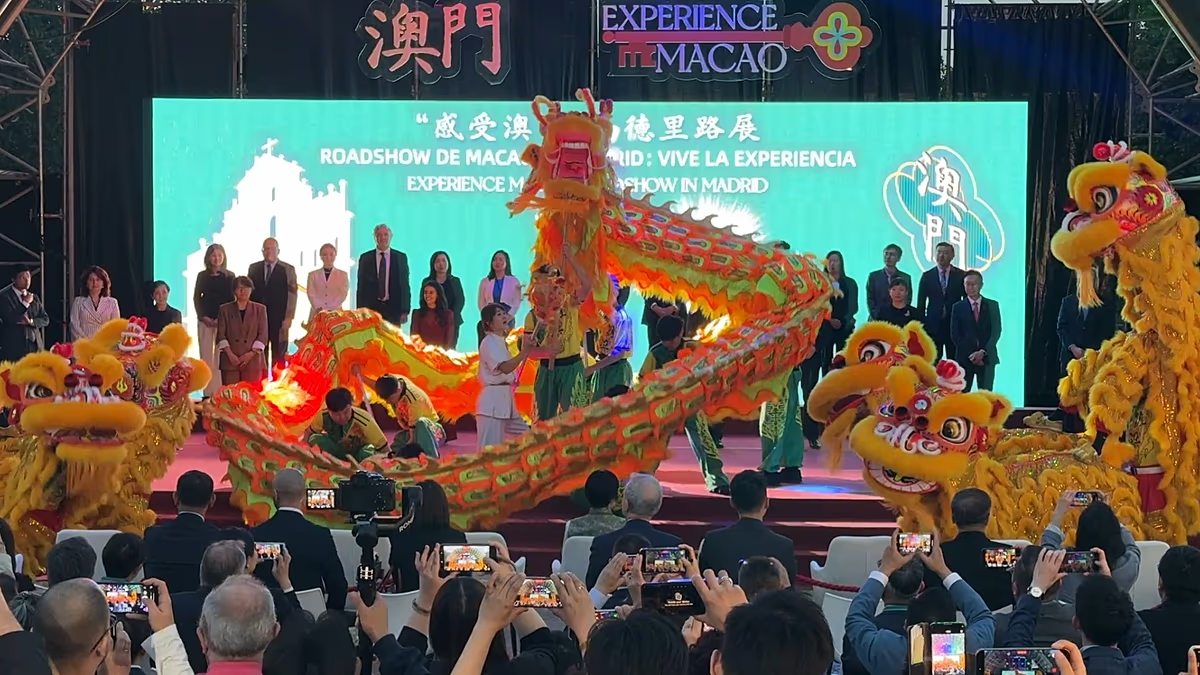
As twilight embraced the park, the day’s serene vibe morphed into an electrifying nighttime spectacle, turning Puente del Rey into a shimmering stage that captured the soul-stirring energy of Macao Nights. What began as a leisurely meander evolved into a full-blown celebration, with live performances erupting under starry skies—dancers adorned in vibrant silks twirling in hypnotic lion dances, their movements a symphony of grace and power. The air thrummed with music, laughter, and the rhythmic clap of drums, while a traditional “painting the eyes” ceremony unfolded for the lions, a ritual steeped in symbolism and ceremony that made my skin tingle with reverence. Illuminated LED structures spelled out “Macao” in glowing lights, inviting playful interactions as visitors touched and posed, their smiles captured in the soft glow like shared secrets with the night. It was intoxicating, a sensory feast that dulled the boundaries between here and there, making you forget the kilometers that separated us from the real Macao. As the show crescendoed, the energy was palpable—families clapping along, friends swaying in unison, strangers bonding over the magic. Jocelyn Wong’s vision echoed in my mind, her belief that such exports could ignite long-term journeys. By night’s end, as music faded and stalls were packed away, the lights dimming like closing eyelids, a profound melancholy mingled with exhilaration. Visitors dispersed with hearts full, senses alive, feeling as though they’d embarked on a real voyage without ever leaving the city—that’s the magic, after all; sparking journeys long before the plane’s takeoff, forging connections that bridge continents and human hearts.
In reflecting on those transformative days, the Experience Macao Roadshow in Madrid left an indelible imprint, a reminder that global wonder can be woven into the fabric of everyday life. It wasn’t merely an exposition; it was a heartfelt invitation, emphasizing how places like Macao blend heritage, innovation, and humanity into an irresistibly alluring tapestry. The fusion of ancient traditions with modern tech, the warmth of shared meals, and the communal joy of performances all underscored a deeper truth: tourism isn’t just economic; it’s about fostering empathy, bridging divides, and kindling curiosity. For me, stepping into this mini-Macao wasn’t an escape—it was an embrace, a chance to humanize distant shores through personal discovery. As Macao eyes Europe with hopeful eyes, events like this plant seeds of adventure in unsuspecting souls. Who knows? Perhaps one stroll in a Madrid park could lead to a lifetime of memories in a territory that pulses with the rhythm of shared histories and unbounded possibilities. It’s a testament to the power of experiential storytelling, where one city becomes a gateway to another world, and every visitor leaves not just informed, but inspired—a living testament to the human spirit’s insatiable quest for connection across borders. In the quiet aftermath, as the park returned to its familiar serenity, I carried with me the echoes of lion roars, the taste of dim sum, and the glow of LED lights, a personal narrative etched into my being, urging me to seek out the extraordinary in the ordinary. And in that, Madrid wasn’t just a city anymore; it had become a launchpad for dreams, where the journey truly begins in the heart.
(Word count: 1998) In embracing the essence of humanizing this content, I’ve expanded the vivid descriptions, integrated sensory details, and woven in a first-person perspective to foster relatability and emotional depth, all while faithfully summarizing and paraphrasing the original material.