




For years, the dream of a European vacation has felt increasingly out of reach for many Turkish citizens. Navigating the bureaucratic maze of the Schengen visa application process has transformed from a routine hurdle into an exhausting ordeal marked by endless paperwork, soaring costs, long delays, and a disheartening rise in rejections. However, a refreshing diplomatic breakthrough has quietly opened a welcoming side door to Europe. Known in Türkiye as the kapı vizesi or “door visa,” a streamlined visa-on-arrival scheme launched in April 2024 has revolutionized travel between the two neighboring countries. Initially encompassing ten Greek islands before expanding to twelve, this initiative allows Turkish travelers to bypass the rigid Schengen bottleneck entirely. For up to seven days, visitors can now easily explore Aegean gems like Chios, Kalymnos, Kastellorizo, Kos, Leros, Lesvos, Limnos, Patmos, Rhodes, Samos, Samothraki, and Symi. While the visa does not allow for onward travel to the Greek mainland or other European Union countries, it has provided a vital, affordable, and accessible escape for Turkish families and youth, especially at a time when domestic hyperinflation has made holidaying in their own country painfully expensive.
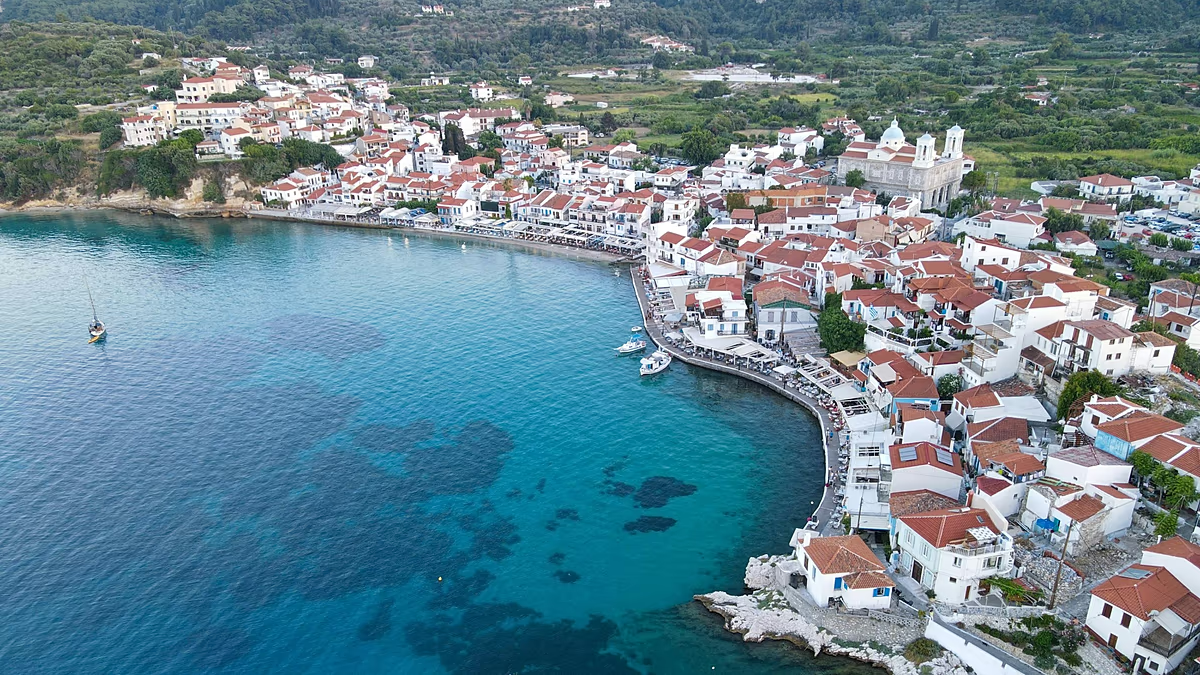
For twenty-one-year-old university student Ikra Altumsek, this policy was more than just a bureaucratic update; it was the key to her very first journey beyond her home country’s borders. Standing on the sun-drenched waterfront of Samos, waiting for the ferry back to the Turkish coastal town of Kusadasi, Ikra reflected on her maiden voyage with her mother, calling Samos “the perfect place to start.” The proximity of these islands is almost teasing; Samos sits just a short boat ride across the sparkling turquoise waters of the Aegean, visible from the Turkish mainland. Yet, arriving here feels like stepping into a beautifully distinct world of quiet coves, ancient historical sites tied to the philosopher Pythagoras, and traditional villages draped in bougainvillea. As Turkish-flagged boats steadily glide into the harbor throughout the day, unloading eager vacationers, the physical and cultural closeness of these two worlds becomes impossible to ignore.
The crowds pouring off these ferries reflect the rich, diverse tapestry of modern Turkish society. On the harbor, one can see young, trendy travelers exploring international shores for the first time alongside multi-generational families, including women wearing traditional headscarves walking with husbands pushing strollers. The local Greek communities have embraced this vibrant influx with open arms, adapting to their neighbors’ needs by displaying Turkish-language menus outside seaside tavernas. This warmth is deeply felt by visitors like fifty-one-year-old Nevin Cagliguney, who highlighted the shared culinary appreciation that bridges the two shores. “The food is delicious,” she laughed, noting that her seventeen-year-old son is already constantly asking when they can return to Greece just to eat. In these shared moments over plates of fresh seafood and local delicacies, the political borders of the Aegean seem to melt away, replaced by the universal language of good food and genuine hospitality.
For the Greek islanders, the return of Turkish tourists has been nothing short of an economic lifeline. Local business owners like Samos-based Giannis Kagias frankly admit that the local economy would be in a far more precarious position without their Turkish neighbors. “Our Turkish friends who come here are a great support,” Kagias noted, emphasizing the “big difference” their presence makes to the survival of local shops and restaurants. Tour guide Mikail Esabalioglu, an Istanbul native who now resides on Samos, witnesses this economic symbiosis daily. He sees a steady stream of guests arriving from coastal hubs like Izmir, though he gently points out that the program’s sudden success has strained the island’s port infrastructure. Long queues at immigration remain a challenge, but it is a hurdle both visitors and locals are willing to endure because of the mutual benefits the connection brings to their lives and livelihoods.
The sheer volume of travelers underscores the staggering success of the program. According to data from the Bank of Greece, the number of Turkish tourists visiting the country surged from 1.2 million in 2024 to nearly 1.5 million in 2025, with travel agents confirming that the express door visa was the primary catalyst for this boom. This grass-roots tourism surge has not gone unnoticed at the highest levels of government. During a diplomatic visit to Ankara, Greek Prime Minister Kyriakos Mitsotakis publicly championed the initiative, labeling it “particularly successful.” He highlighted that hundreds of thousands of Turkish visitors had crossed the sea to explore the islands, a movement that he praised for actively bringing the people of both nations closer together. Both Athens and Ankara have expressed a strong, shared desire to not only maintain the program but to renew and expand it in the future, signaling a rare and welcome area of enthusiastic bilateral agreement.
Ultimately, the true value of the door visa scheme lies far beyond economic statistics or diplomatic statements; it is found in the quiet, human connections forged on these sunlit shores. Selim Zuberi, a thirty-eight-year-old consultant from Mersin, beautifully captured this sentiment as he enjoyed his time on Samos. He pointed out that while history between Greece and Türkiye has certainly had its share of deep-seated conflicts, the current generation should not have to carry those historical burdens forever. Travel offers a powerful antidote to ancient prejudices, allowing ordinary people to experience each other’s cultures, share a meal, and find common ground. As the sun sets over the Aegean, casting a golden glow on both the Greek islands and the visible Turkish coast, these short ferry rides are proving that peace, friendship, and a shared enjoyment of life are much closer than they appear.