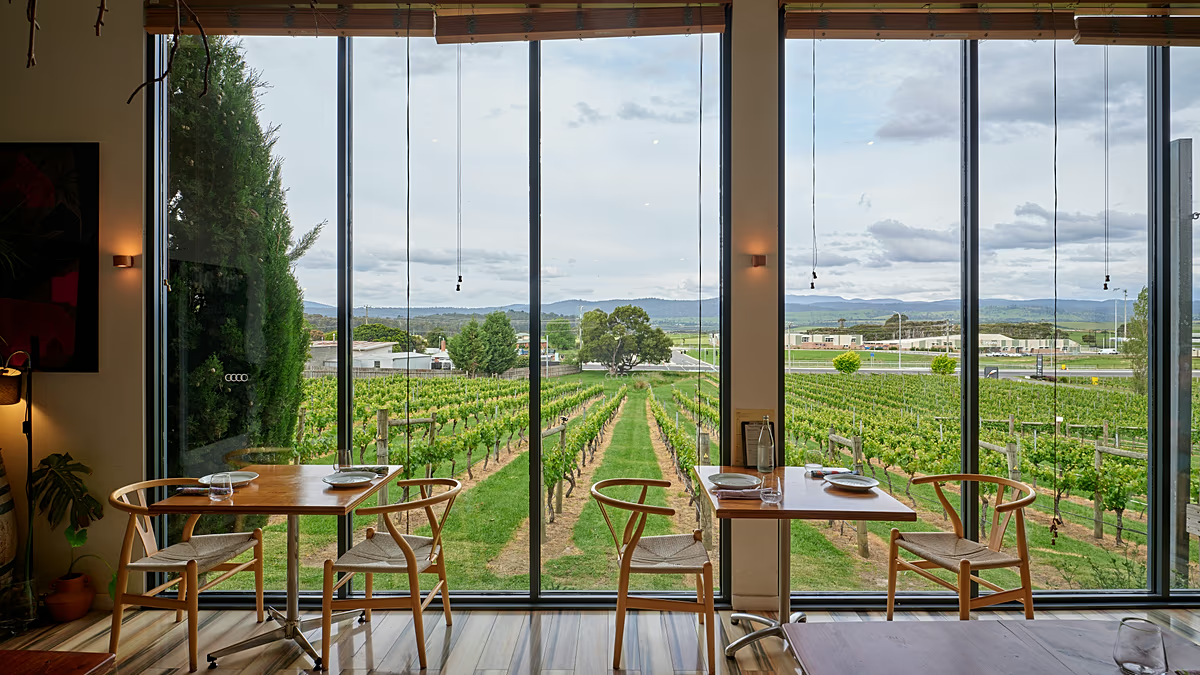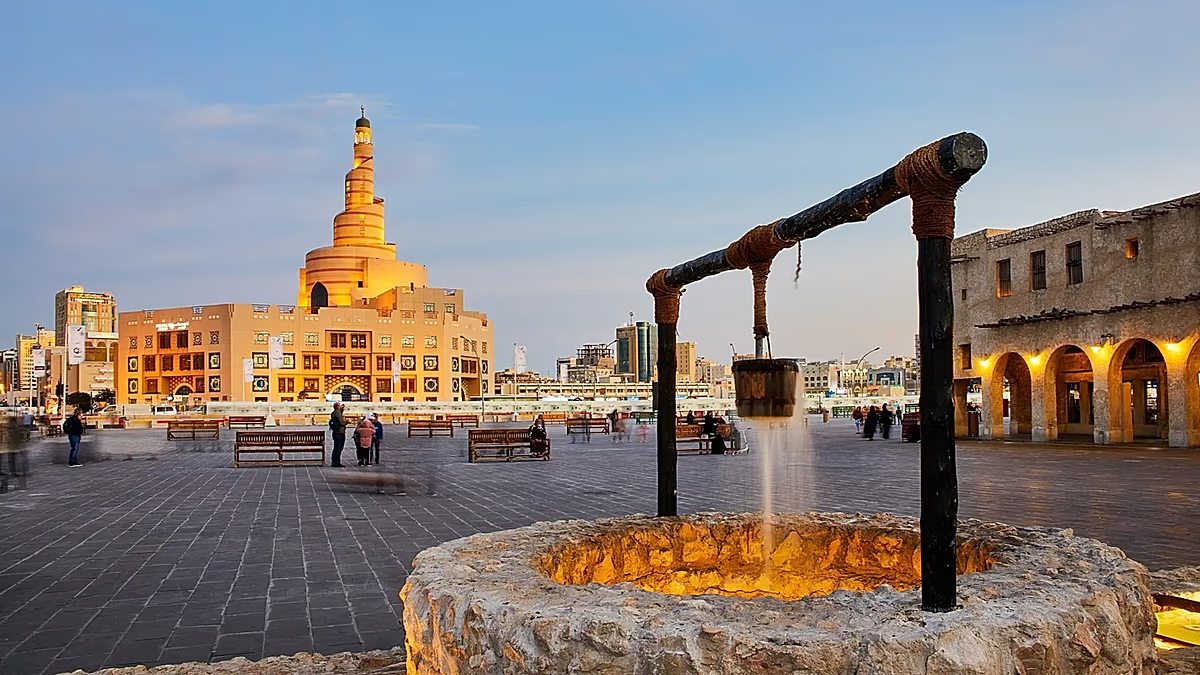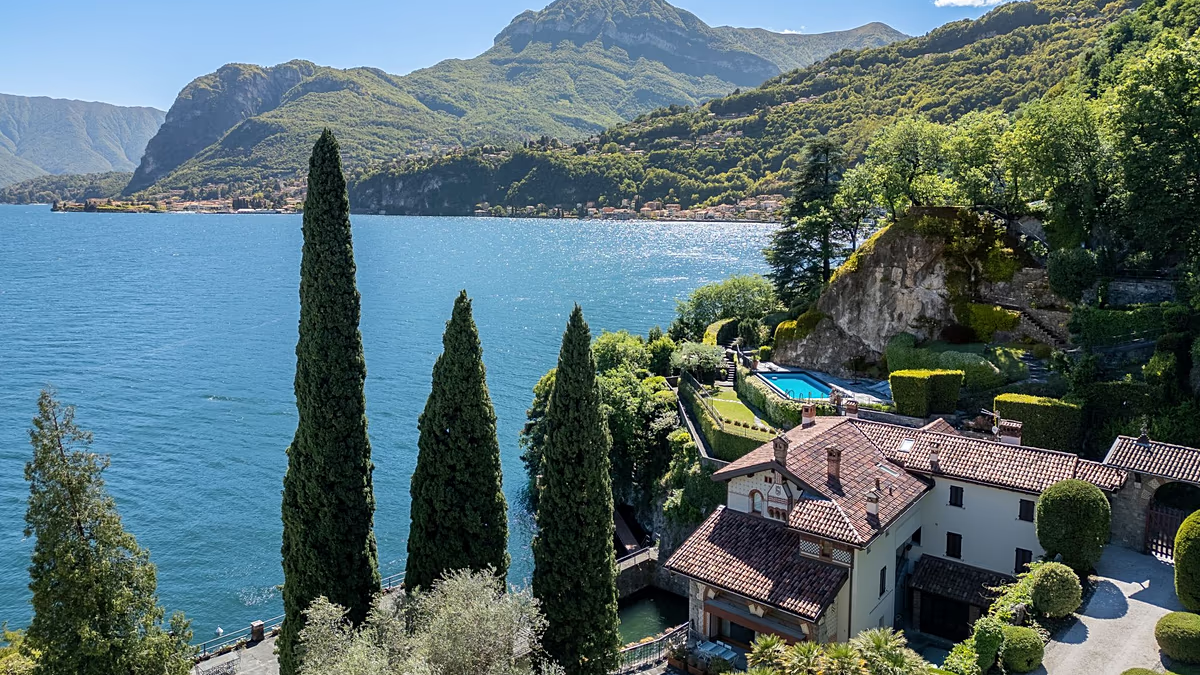




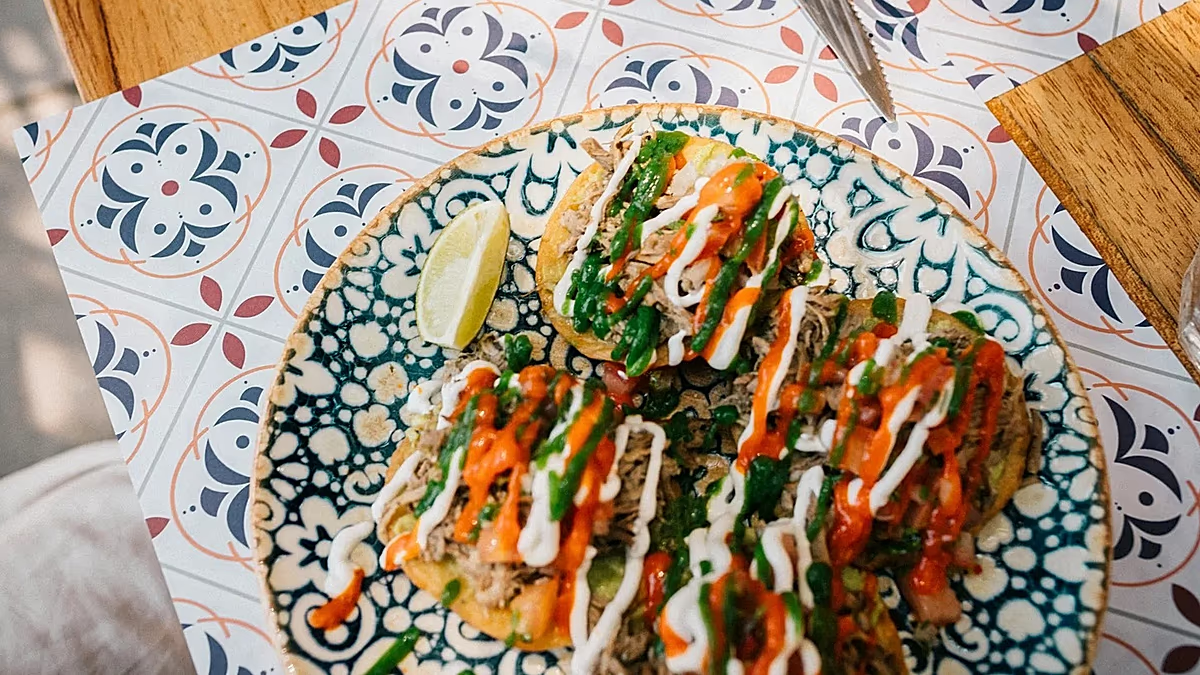
The most profound connections we forge with foreign lands rarely happen while we are rushing through crowded museum corridors or snapping photographs of famous monuments from afar. Instead, they occur in those quiet, golden moments when we slow down, pull up a chair, and break bread over a shared dining table with strangers who quickly become friends. Food is the ultimate cultural conduit, a sensory bridge that instantly collapses geographical distances and linguistic barriers, speaking directly to our shared humanity. Beside the most practical essentials of international travel—the well-worn passport, the boarding passes, a comfortable pair of jeans, and the indispensable universal adapter plug—there is one invisible item that we must never leave behind in our luggage: an insatiable appetite. It is this beautiful truth that beats at the very heart of National Geographic’s highly anticipated “Best of the World 2026” food list, a celebration of global gastronomy. To compile this prestigious guide, the magazine gathered its most seasoned global writers, culinary experts, and regional editors, tasking them with mapping out the fifteen most delicious, vibrant, and intriguing places to eat on the planet right now. Their curated selection goes far beyond showcasing mere trendy eateries, flashy food trucks, or Michelin-starred luxury; instead, it spotlights destinations where flavors are deeply woven into the local identity, soil, and way of life. As the editors beautifully noted, these top culinary spots are much more than simple coordinates on a map. They are living archives that reveal forgotten historical chapters, celebrate passionate rising culinary stars, and introduce travelers to surprising flavor profiles that leave them permanently hungry for deeper cultural exploration. This year, Europe shines particularly bright on the list, calling curious epicureans to embark on a sensory journey where every single meal tells a story of local survival, communal celebration, cultural pride, and ancient culinary tradition.
Chief among these European culinary beacons is the mesmerizing island of Crete, a sun-drenched paradise floating in the azure waters of the Aegean Sea. For the locals, food is never regarded as mere sustenance or a routine daily necessity; it is a sacred philosophy, a way of life, and a joyful communion with the earth itself. Crete is a geological masterpiece where towering, rugged mountains dramatically meet fertile valleys and sparkling coastlines, bathed in near-constant Mediterranean sunshine. This unique geography has fostered a remarkably lush agricultural ecosystem, dominated by an estimated forty million ancient olive trees that stretch across the landscape like a silver-green sea, producing some of the world’s finest, most aromatic extra-virgin olive oil. This liquid gold is the lifeblood of an island that harvest-by-harvest dictates its menus based on the strict, unyielding rhythm of the seasons. When spring arrives, fields burst with crisp peas and wild asparagus; as the warm embrace of May takes hold, farmers gather bountiful beans, cucumbers, and tender aubergines. The blazing summer months bring a vibrant parade of sun-ripened tomatoes, hearty potatoes, and sweet squashes, while the cooler winter months usher in a harvest of sweet carrots, earthy beetroots, and buttery avocados. This seasonal dance is precisely why Crete is celebrated as the foundational blueprint for the scientifically lauded Mediterranean Diet—a lifestyle emphasizing wholesome, plant-based eating, abundant healthy fats, and a complete avoidance of processed foods. Recently honored as one of the European Regions of Gastronomy by the prestigious International Institute of Gastronomy, Culture, Arts and Tourism, the island offers an incredibly rich culinary heritage. Yet, to truly unlock the heart of Cretan gastronomy, travelers must venture away from the tourist-heavy coastal resorts and climb high into the remote mountain villages and rugged inland communities, where ancient recipes are preserved with fierce, generational pride.
Ascending into these remote highland communities reveals a dairy-making tradition that is nothing short of legendary. Cretan shepherds and cheesemakers have spent millennia perfecting their craft, resulting in a dairy arsenal that is incredibly complex and deeply satisfying to the palate. A crown jewel of this tradition is staka, a luxurious, velvety clarified butter made by carefully heating the delicate fat harvested from sheep’s or goat’s milk cream, which is then used to impart an incomparable richness to local dishes. For cheese connoisseurs, stepping into a local Cretan delicatessen or village market is akin to entering a sacred cathedral of flavor, with shelves practically overflowing with indigenous varieties like myzithra, pichtogalo, and xigalo, each offering a distinct texture and tartness. These artisanal cheeses are not merely eaten on their own; they are the structural pillars of the island’s most beloved baked creations. Take, for instance, the legendary boureki, a seasonal specialty closely tied to the historic port city of Chania. This comforting dish is constructed from meticulously arranged layers of thinly sliced potatoes and fresh summer courgettes—or sweet pumpkin during the chilly winter months—nestled alongside heaps of creamy myzithra cheese and a generous scattering of fresh, aromatic mint, all baked to golden perfection. Even more indulgent is kreatotourta, a magnificent, festive meat pie that showcases the island’s carnivore traditions. Traditionally prepared during major celebrations, this savory masterpiece features tender pieces of boiled goat or succulent lamb that are layered within a flaky pastry shell alongside fresh mint, local spices, a lavish helping of staka, and a mixture of local cheeses, creating a rich harmony of flavors that speaks of ancient feasts, mountain hospitality, and a profound reverence for the land’s livestock. Every bite of this savory pie offers a contrast between the crispy, golden dough and the deeply savory, melt-in-your-mouth filling, illustrating the Cretan talent for transforming simple, rustic ingredients into a culinary symphony.
The culinary wonders of Crete stretch back through the mists of time, sharing surprising historical parallels with other famous gastronomic cultures. While France is globally renowned for its love of snails, the people of Crete have actually been harvesting and enjoying these humble molluscs since at least 3000 BCE, as evidenced by archaeological discoveries dating back to the ancient Minoan civilization. On the modern Cretan table, this ancient craving is masterfully satisfied through a beloved dish known as chochlioi boubouristi. In this rustic preparation, plump local snails are pan-fried face-down in a generous pool of sizzling olive oil, infused with fragrant sprigs of wild rosemary, and splashed with sharp red wine vinegar, resulting in a delightful blend of earthy, herbal, and tangy flavors. This dish is traditionally served alongside a mountain of freshly boiled wild greens, known locally as horta, which are drizzled with fresh lemon juice and sea salt. For travelers who prefer their culinary adventures to end on a sweeter note, Cretan gastronomy proves that cheese is just as versatile in desserts as it is in savory dinner pies. The island’s sweet tooth is perfectly encapsulated in kalitsounia lichnarakia, which are delicate, hand-sculpted pastry cups designed to look like tiny oil lamps. These beautiful little pastries are filled to the brim with a sweet, creamy mixture of fresh, unsalted myzithra cheese, heavily infused with warm cinnamon and drizzled with raw, wild thyme honey sourced from the rugged, herb-carpeted hillsides of the island. Baked until just blushing pink on the edges, they are the quintessential offering of warm hospitality when visiting a Cretan home, serving as a sweet, comforting testament to how local cooks beautifully bridge the gap between their agricultural heritage and their love for communal sweet celebration.
To help travelers navigate this vibrant food landscape, prestigious publications have charted the ultimate dining itineraries across the island, outlining establishments that range from refined seaside elegance to rustic tavern experiences. Last year, the UK newspaper The Telegraph compiled a carefully curated guide to the twenty-one absolute best restaurants on Crete, offering options for every budget and lifestyle. For those seeking coastal romance and refined flavor in eastern Crete, the paper enthusiastically recommends La Bouillabaisse, located in the picturesque town of Agios Nikolaos. Overlooking the azure waters of Mirabello Bay, this elegant establishment features a dynamically changing seasonal menu, and savvy travelers are encouraged to reserve a table right at the edge of the terrace to watch the sunset paint the sky while enjoying kleftiko lamb—an incredibly tender portion of succulent meat marinated in garlic, lemon juice, and aromatic olive oil, then slow-cooked in parchment paper to lock in the juices. For an entirely different sensory experience, travelers can wander the historic, cobblestone labyrinth of Chania’s Old Town to find To Pigadi tou Tourkou, a mesmerizing restaurant whose name translates directly to “the well of the Turk.” Here, the menu acts as a culinary bridge across the Mediterranean, serving up a vibrant mosaic of flavors from Morocco, Egypt, Lebanon, and Turkey, offering an enticing alternative to traditional Cretan fare through spiced Turkish pizzas and deeply aromatic lamb dishes. Meanwhile, in the bustling capital city of Heraklion, Thigaterra champions the traditional Greek philosophy of “siga siga,” which translates to “slowly, slowly.” This restaurant is a passionate pioneer of the eco-gastronomy movement, sourcing organically farmed, local ingredients to create beautifully modern interpretations of classic Cretan dishes, reminding guests that great food, much like travel itself, should never be rushed but deeply savored.
While modern innovations and cross-cultural fusions certainly have their place in Crete’s contemporary food scene, it is the timeless, rustic charm of the traditional taverna that truly captured the hearts of National Geographic’s editors. Their absolute standout recommendation on the island is Chrisostomos, an incredibly authentic, family-run taverna tucked away in the historic streets of Chania. This legendary dining spot has earned a deeply loyal following among both locals and international visitors for its unwavering commitment to traditional cooking methods, particularly its defense of clay wood-fired ovens and slow-cooked mountain classics that have survived unchanged for generations. The undisputed star of the menu at Chrisostomos is their celebrated tsigariasto lamb—a deceptively simple dish of incredibly tender meat seasoned with nothing more than coarse organic sea salt and left to simmer slowly in a deep pool of local extra-virgin olive oil over several hours until it practically falls apart at the touch of a fork, concentrating the rich, natural flavors of the high-altitude, pasture-raised lamb. Dining in a setting like this, filled with the comforting warmth of crackling wood fire, the rich aroma of roasting herbs, and the convivial chatter of shared stories, encapsulates the very essence of why culinary travel is so profoundly transformative. As National Geographic’s 2026 list beautifully illustrates, traveling to eat is never just about filling our stomachs; it is about filling our souls with the narratives of the earth, understanding the hard-working hands that feed us, and carrying a piece of that genuine hospitality back home in our hearts. By packing our curiosity alongside our appetite, we allow ourselves to be fully shaped by the destinations we visit, reminding us that the true magic of exploration lies not in the tourist spots we check off a list, but in the unforgettable flavors, timeless traditions, and warm human connections we discover when we simply slow down and pull up a chair.