





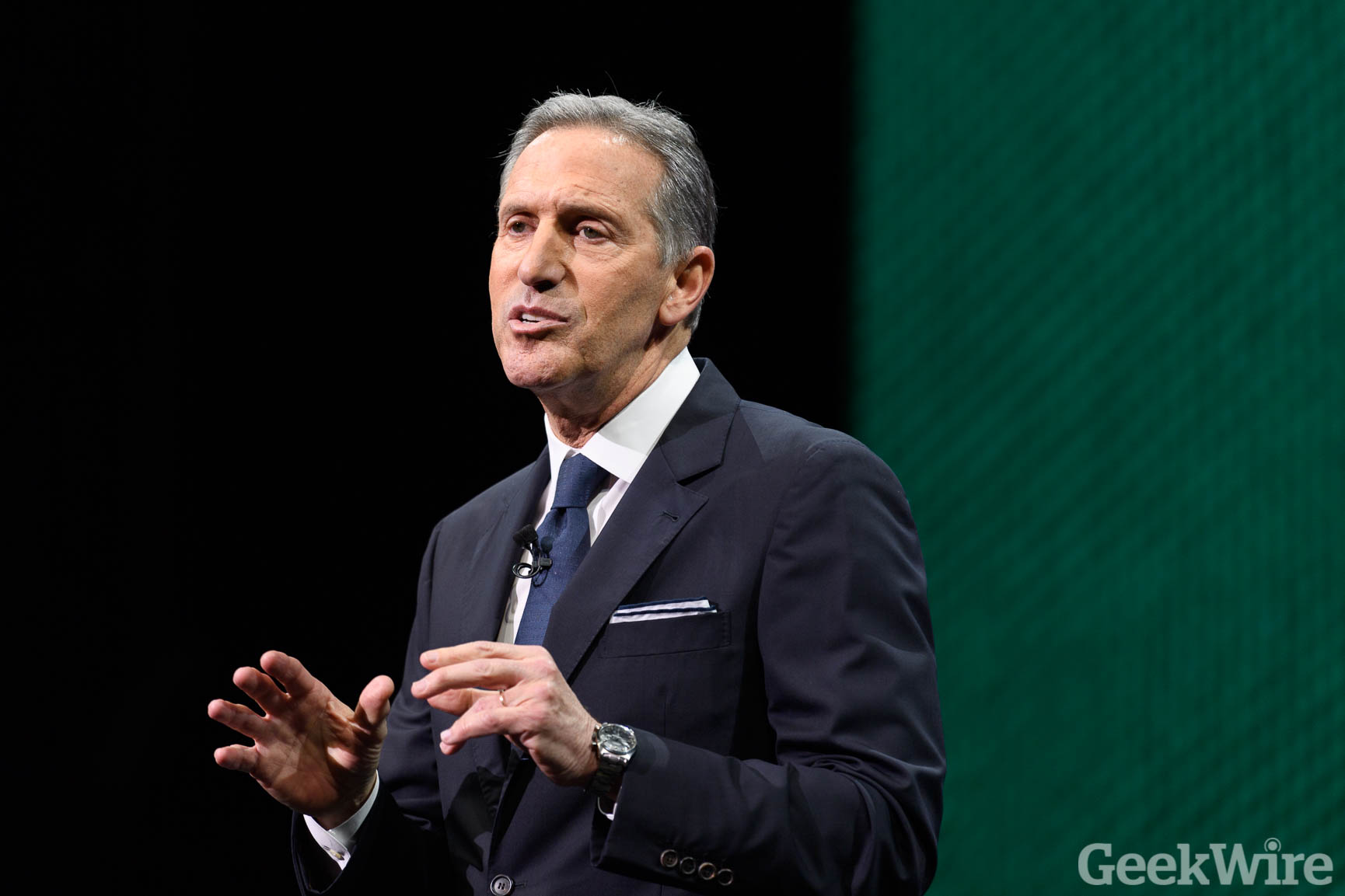
For the second time in just two months, former Starbucks CEO Howard Schultz has taken to the pages of the Wall Street Journal to deliver a stinging critique of Washington state’s political leadership. In his latest op-ed, the coffee tycoon pulls no punches, labeling Seattle Mayor Katie Wilson “inept” and accusing Governor Bob Ferguson of stifling economic growth by repeatedly burying local businesses under a mountain of taxes. Schultz’s public intervention has reignited a fierce debate about the region’s shifting economic priorities, highlighting a growing rift between the state’s legacy business leaders and the progressive politicians currently running the show.
Beyond general grievances over tax policy, Schultz zeros in on a specific, systemic flaw in the state’s current approach to growth: it is failing its future champions. Echoing concerns previously raised by technology commentators, he criticizes Governor Ferguson’s newly formed economic development council for being entirely out of touch with the modern economy. He points out that the council is heavily packed with representatives from monolithic, established institutions while completely lacking representation from the vibrant startup ecosystem. To illustrate his point, Schultz spotlights Stoke Space, a Kent-based reusable rocket startup that has secured nearly $1.2 billion in funding. He argues that companies like Stoke Space—dynamic, high-growth, and forward-looking—are precisely the kind of innovators the state should be fighting tooth and nail to keep, rather than neglecting them in favor of legacy corporations.
Schultz, who recently packed up his life and relocated to Miami, clearly still harbors a deep concern for the future of the Pacific Northwest, even if he now views it from afar. The former presidential hopeful uses his platform to pitch a grand vision for national renewal, suggesting that America’s broader reindustrialization could be triggered by connecting tech-driven entrepreneurs with young people entering hands-on vocational apprenticeships. This follows his equally critical May essay, sharply titled “Seattle Turns Hostile to the Great Businesses It Made.” In many ways, his warnings resonate with a business community that feels increasingly alienated by Seattle’s political climate. Yet, his departure to the tax-friendly shores of Florida has left many wondering whether his move undermines his message, turning what could be a constructive critique into a parting shot.
While Schultz’s complaints might be easy for his detractors to dismiss as billionaire bluster, the underlying data suggests he is pointing to a very real and alarming trend. Washington state’s reputation as an economic powerhouse is slipping. CNBC’s annual business climate rankings recently placed Washington at number eleven—a disappointing drop from its second-place finish just four years ago, and a steep fall from the coveted number-one spot it held back in 2017. Meanwhile, aggressive states like Ohio are actively courting Pacific Northwest businesses, capitalizing on Washington’s rising regulatory burdens and tax hikes to lure away the next generation of industry giants. For local business advocates, the warning signs are blinking red, and there is a shared anxiety that the golden goose of Cascadia’s tech and retail boom is being taken for granted.
Ultimately, while the substance of Schultz’s critique holds water, his role as the messenger remains highly polarizing, leaving many to wonder about his final objective. It is difficult not to notice the irony of a billionaire lecturing his former home on how to fix its broken systemic issues from a beachside mansion in Miami. To many locals and policymakers, his criticisms would carry far more weight, authority, and goodwill had he chosen to stay in the trenches and use his immense wealth and influence to actively help repair the state’s fractured business ecosystem. By choosing flight over fight, his words risk being dismissed by those in power as the grievances of an elite expat rather than the constructive feedback of a committed community stakeholder.
As Washington grapples with how to balance social programs with economic competitiveness, the debate sparked by Schultz’s editorials is unlikely to fade anytime soon. The state stands at a critical crossroads, needing to foster world-class innovation while addressing complex civic issues. Whether the current administration in Olympia will take these warnings seriously and pivot toward a more collaborative relationship with the startup community remains to be seen. In the meantime, as Schultz settles into his new life in the Sunshine State, locals are left wondering if his pen will eventually turn toward his new home. After all, Florida has its own unique share of socio-economic and environmental hurdles, and perhaps his next editorial will focus on solving the crises brewing in his own backyard.