



Here is a humanized and expanded summary of the provided information, crafted into a six-paragraph narrative.
—
It was a classic Seattle moment, the kind that defines the city’s quirky character. As I zipped through the streets on my test ride, I realized I had inadvertently left my turn signal blinking, a harmless but telltale sign of a rider getting lost in the experience. It was a small, human error made all the more ironic because the bike I was riding, the new TM-B (Transcendent Mobility Bike) from the startup Also, is a marvel of modern, software-driven technology. This wasn’t just any e-bike; it was a Class 3, software-defined machine, and my minor mistake felt like a fun nod to the city’s famous “Almost Live” sketch comedy sketches, where the fictional “Ballard Driving Academy” taught its students with a similarly unique, often hilarious, approach to the rules of the road.
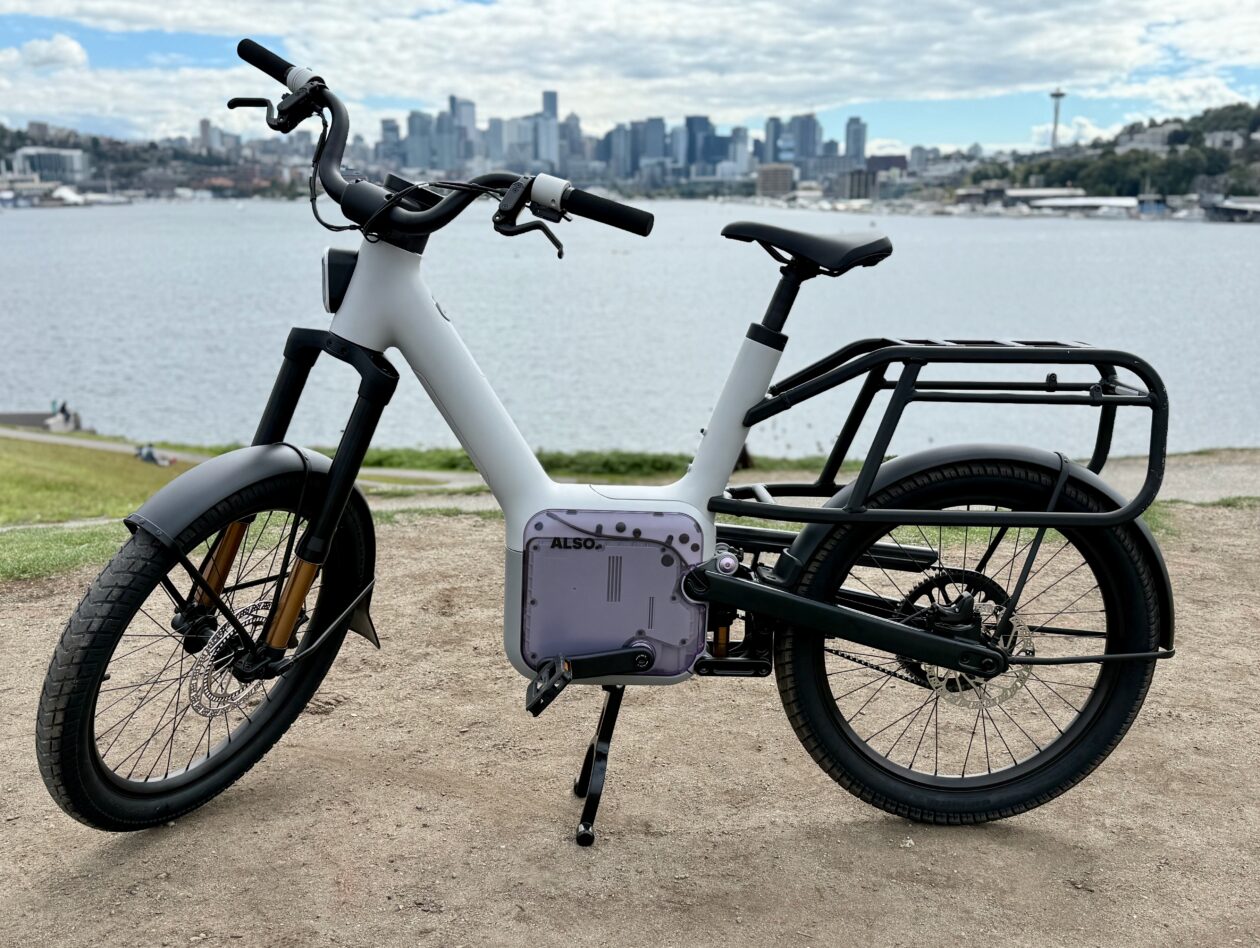
The source of my momentary distraction was the TM-B itself. From the moment I first laid eyes on it, it was clear this was a different kind of animal. It didn’t feel like a traditional bicycle with a motor bolted on; it felt more like a two-wheeled electric vehicle, a close cousin to the sleek EVs coming out of Silicon Valley. This isn’t a coincidence, as Also was spun out of the electric vehicle maker Rivian and carries a hefty $1 billion valuation. The bike’s very essence is built around what the company calls the “Dream Ride” system, which treats everything as software first. The result is an experience that is both intuitive and futuristic, where the hardware is almost secondary to the digital intelligence that controls it.
The most striking departure from the norm is the absence of a physical chain. Instead of a mechanical link between the pedals and the rear wheel, the TM-B uses a “pedal-by-wire” system. When you pedal, you aren’t directly driving a gear; you’re generating a digital signal that tells the bike’s central motor how much power to deliver. This is a bizarre but brilliant sensation. It feels like the bike is reading your mind, anticipating your desire for speed and responding with instant, silent torque. The drivetrain is a clean, enclosed belt, which not only looks great but also reduces maintenance dramatically. It’s a fundamental rethink of how we interact with a bicycle, turning the rider’s input into a command for a sophisticated piece of software rather than a simple mechanical action.
Out on the streets of Seattle, the TM-B’s performance was nothing short of exhilarating. The motor provides a massive 180 Nm of torque, which is roughly double what you find on the most powerful cargo bikes on the market. This translates to a launch off the line that is genuinely startling; a small twist of the throttle and the bike surges forward with a force that nearly lifted me off the saddle. I deliberately sought out the steepest hills in Wallingford, and the bike climbed them with an almost nonchalant ease. Amy Hattemer, the company’s Seattle market manager, described it as like hitting a mushroom in Mario Kart, a perfect analogy for that surge of power that smooths out the urban landscape. Even with a top speed of 28 mph, the handling feels secure, and the regenerative braking brings the bike to a confident, controlled stop.
Beyond the raw speed and power, the TM-B is loaded with smart features designed for modern urban life. The modularity is a key selling point: a single press of an eject button allows you to swap out the entire top frame in about three seconds. You can quickly change from a solo commuter setup to a bench seat for a passenger or even a heavy-duty cargo rack, transforming the bike’s purpose in an instant. This, combined with a large, removable 48V battery offering 60 to 100 miles of range, makes it an incredibly versatile tool. The security is also top-notch, with a fully integrated digital locking system that can immobilize the entire bike via an app, along with GPS tracking and a proximity-based unlock feature. It’s a level of integrated theft protection that gives you peace of mind in a busy city.
The TM-B represents more than just a new e-bike; it’s a sign of how the next generation of urban mobility is being shaped by software and innovation. Also’s decision to open a pop-up shop directly across from its new office in Seattle’s Wallingford neighborhood is a strategic move, allowing the company to tap into the city’s deep pool of tech and retail talent while engaging directly with the cycling community. It’s a chance for people like me to experience the future firsthand. As I returned the bike, my forgotten turn signal still blinking, I realized that this machine has the potential to change how we move through cities. It’s fast, smart, and incredibly fun, and it erases the line between a bicycle and a high-tech vehicle.