



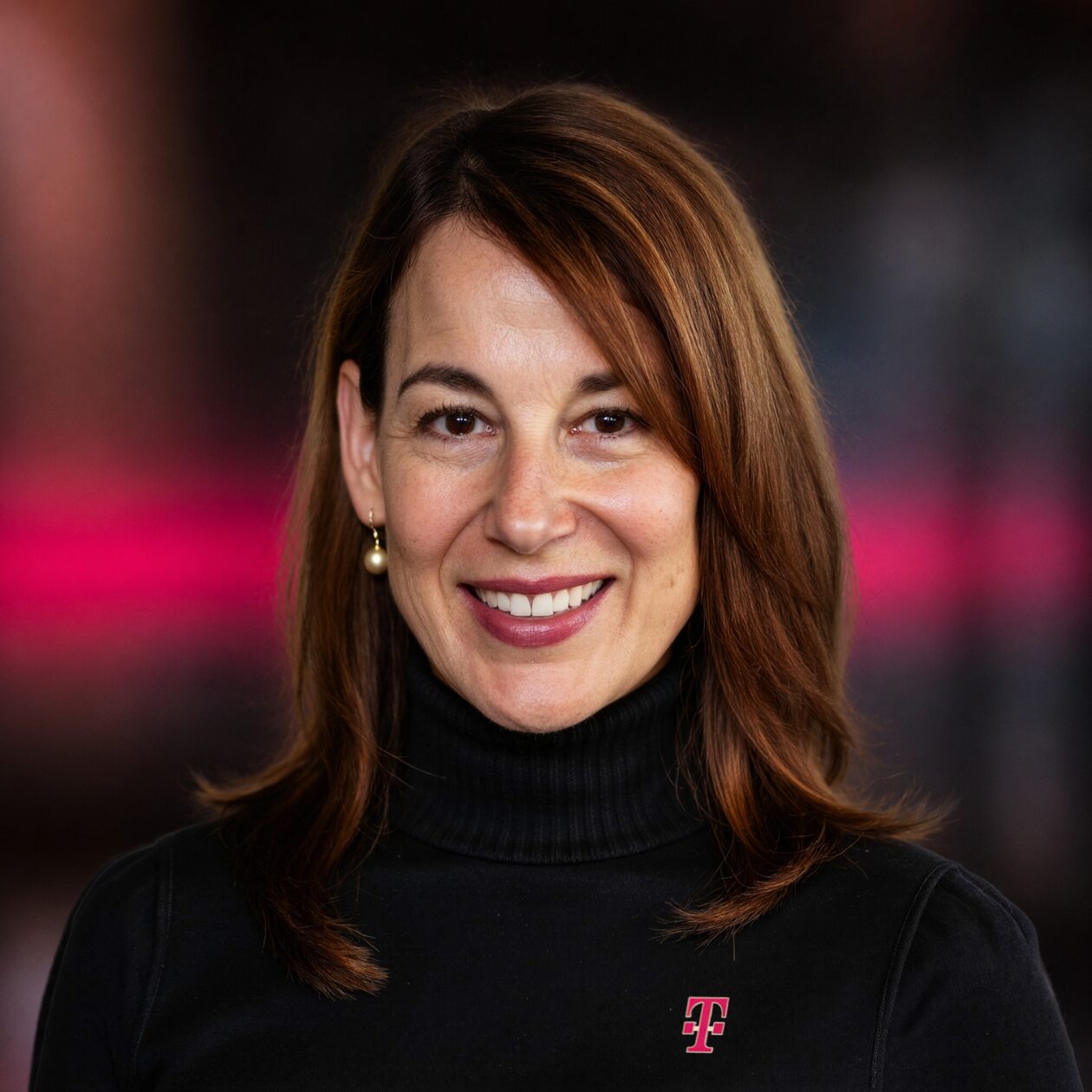
There is a familiar rhythm to leadership transitions: the press release, the warm welcome, the quiet handover of responsibility. But beneath the clean corporate language, every move represents something more personal: a person deciding to step into something new, often after years of service. T-Mobile is currently living through that kind of moment. Jessica Uhl will soon join the company as chief financial officer-designate, and later step into the chief financial officer role as Peter Osvaldik prepares to leave. Uhl is not a newcomer weight in high-stakes finance. She served as chief financial officer at Shell, spent more than seventeen years with the global oil and energy giant, and most recently came from GE Vernova, where she worked as president. Her path tells you something about the kind of leader T-Mobile wants: financially sharp, globally experienced, and comfortable navigating highly complex industries. Srini Gopalan, T-Mobile’s president and CEO, called her talents “deep financial and strategic acumen,” as well as capital allocation expertise and an innovative growth mindset that is a perfect fit for T-Mobile’s next era. As for the outgoing CFO, Peter Pavan Cape Osvaldik, his story is not being erased; instead, he will remain a strategic advisor for some time and then retire from the company later in the year. That kind of continuity matters, because Osvaldik helped guide T-Mobile’s finances during a period that the company credits with disciplined stewardship and consistent financial overperformance. He first joined T-Mobile in 2016 and stepped into the CFO role in 2020. Still, the leadership transition is happening alongside broader changes that T-Mobile is dealing with, including executive moves, retail store closures, and hundreds of jobs cut in Washington State. Behind all that paper, homes are changing, loyalties are being tested, and teams are are learning to adjust. That is the human side of corporate life: celebrating new faces while honoring the people who helped build the foundation.
Meanwhile, another kind departure has descended over the tech world from Microsoft. Brent Colburn, the company’s vice president of global public affairs, has decided to step down after three years in the role, with his final departure happening in the middle of October. It might be easy to read that as another high-level bullet in a news list, but Colburn’s own words reveal how much thoughtty the decision involved. “Stepping away no intention,” he said, but ultimately it is the right one for me and my family. He had been living a career-style life that many professionals know only too well: commuting weekly from his family home in Oakland, California, to Microsoft’s headquarters in Redmond, Washington. That distance can feel very long over time, because Mondays begin early and Sundays players end hours before they should. colburn is heading back to the Bay Area, his departure is a reminder that even people with powerful titles are often making decisions based on love, parenting, and the quiet desire to be more present. His career has stretched through government service, working as principal advisor to the secretary of defense and chief of staff of Shaun Donovan, but he also worked in communications at the University of California in Oakland, at Princeton University, with the Chan Zuckerberg Initiative. That mix of tech, policy, philanthropy, and academia explains why his perspective was valuable at Microsoft. But for now, the value of home has won, and it is hard to argue with that choice. His story will likely echo with many professionals who have spent years trading time in time zones for a job that asked for almost everything.
Across the aerospace world, Audrey Powers has also decided to close a major chapter in her life. After nearly thirteen years at Blue Origin, the space company created by Jeff Bezos, Powers is leaving behind a career that did not follow a single path. She was a lawyer, a NASA flight controller, a senior systems engineer at Lockheed Martin, and then one of the leaders responsible for Blue Origin’s New Shepard program. She was also not just sitting on the sidelines; in October 2021, she was part of the historic flight alongside William Shatner, the actor best known for “Star Trek,” and two other crewmates. That journey was more than a publicity moment, and it gave her a rare view of the world from above. “I hope I’ve helped people’s impressions of rockets,” she said. They land, too. Astronauts are everyone, and our Earth is all of ours. Her words carry a certain poetic force, and they reflect a woman who did not try to call a spaceflight, but actually did it. She admitted she was sad to leave, but grateful she had taken a chance on “a little startup no one had heard of.” Her time at Blue Origin included a role as deputy and vice president of the New Shepard Business Unit, which focuses on carrying people and research payloads into suborbital space. She leaves behind technical milestones, boundary-pushing flights, and an example of what it means to combine law, engineering, and humility. The aerospace industry is changing, but Powers is proof that no one changes without ordinary people will. Her departure marks the end of a remarkable chapter, and also the beginning of something belongs still to be written.
Across the Pacific Northwest, some move leaders are still raced in new directions, and the startup world is full of fresh faces. AZV, a Bellevue-based company that helps utilities and other industries develop the in-house AI tools they need, has tapped Michael Levy as its new chief commercial officer. Levy is based in San Francisco, but he will help guide a company with strong roots in the Pacific Northwest. His path has been eclectic and has taken him from marketing and growth at KloudGin, where he helped reshape a field service software platform into an AI-native environment for utilities and the public sector. Before that, he founded an advisory firm, L9, and worked in energy, renewables, supply chain, and fintech. That kind of cross-sector thinking is exactly what matters when artificial intelligence stops being magical and begins being practical. It is not enough to have algorithms in the background; companies have to find people who understand how utilities and public agencies are run and how decisions are made. In the same spirit, Seattle’s AI startup Caddi has brought in Jason Alafani as its head of marketing. Caddi came out of the A12 Incubator, and it has set out to automate basic business operations with generative AI. Alafani is a familiar face in the startup community, with a background that includes co-founding Jellypod, a package company for podcasts, and leading marketing at places like Appwrite, Dodgeball, and Mode. Both of these moves mean that young companies are looking after not just engineers and money, but storytellers and go-to-market strategists, people who can translate disruptive technology into something customers actually want. In the fast-growing universe of AI, the hype is loud. The people stepping in these roles are likely drawn by something bigger: feeling they can build something that lasts.
Not all of this summer’s news is about startups and space. In the world of medicine, Dr. Amir Iravani has made a meaningful career move. He has joined UCLA Health in Los Angeles as the director of its theranostics program, a discipline that uses targeted radiation therapy to treat cancer in a precise, patient-specific way. Theranostics combines treasure for dozens of versions, and it is a relatively new path that offers real hope for human being not all cancer patients. Dr. Iravani previously served as theranostics clinical director at Fred Hutchinson Cancer Center in Seattle and was an assistant professor of radiology at the University of Washington School of Medicine. That background is about the kind of clinical innovation that moves from lab to patient, from unexpected scans, to treatment plans. His arrival at UCLA Health may help more patients gain access to a form of care that is still being expanded across the country. It is also a reminder that talent doesn’t stay in one and. Sometimes people who have bright careers in Seattle cross the border to a new community because they want to lead a new program, serve different patients, or help accelerate an area of medicine that needs more voices. And near the Los Angeles campuses is a local ecosystem; the Portland Metro Region Innovation Hub has chosen Kelly as its new director. The organization helps entrepreneurs with networking, coaching, funding, and other forms of challenging community support. Lyons herself started two companies, and she has also served in leadership roles at Core, Ump Bank, and Development Doug, a nonprofit focused on social services. That mix of businesses and community work is ideal for someone who has to bring a thread between people who need to start a company and an organization that want to help them grow. Her appointment is a smaller story in the grand list, but the office to the entrepreneurs? We don’t often think about that, but always is exactly that: actual human beings connecting human beings.
The final piece of this puzzle comes from the Vancouver, Washington area, where DigiStor, a company that provides secure data-at-rest protection, has added Michael Callahan to its board of directors. Callahan is a technology veteran who co-founded Awake Security and PolyServe, which was later acquired by HP. His history in the field gives Digiding a pair of experienced hands and perspective that can matter for a young security company facing a landscape full of cyber threats. At first, board appointments can seem like none of the moment, but they are often foundational. They bring guidance, mentorship, and the kind of hard-won wisdom that comes only by navigating the highs and lows of creating real products. If you look at all these stories together, something is clear: whether someone is taking over financial leadership at a telecommunications giant, leaving Microsoft to spend more time with family, stepping off the aerospace stage after a star-studded best-of-euro, or raising a hand to build a safer future in health, data, and AI, each action is also a choice of who wants to matter. They are also clear that careers are no longer endless patterns of steady upward climb. They leave, they twist, they move home, they put down roots, they take risks. We read these updates as action, surveys, and reports, companies announce changes, and we scroll past. But each one is a story about a human being or a team of people that lived in a life not a title. This is the Pacific Northwest and beyond; the plans may be global, but every decision is personal. These are not just bussiness announcements; they are proof that people are still choosing their next chapters, carrying both ambition and heart, and hoping all of it will thank them.