



The journey of an electric vehicle battery is far from over when its service under a car hood concludes. After a decade or two of powering daily commutes, these batteries lose the edge of their performance—range diminishes and acceleration softens—but they retain a remarkable capacity for energy storage. Rather than viewing this stage as the end of the road, a new wave of entrepreneurs is pioneering a second life for these power units, repurposing them for off-grid communities, industrial sites, and data centers. This nascent industry is being led by forward-thinking companies like Canada’s Moment Energy and Nevada-based Redwood Materials, who are seeing a surge in demand for their services as the global supply of used EV batteries is set to explode. Their work challenges the existing paradigms of both battery recycling and waste management, transforming a potential environmental problem into a resource that strengthens energy resilience and enables sustainable growth.
Foremost in this effort is Moment Energy, a company that has championed the energy potential locked within these so-called “degraded” batteries. Mechanical deration immediately caught the interest of many, largely because of the enormous potential within this underused resource. At the heart of Moment’s philosophy is to avoid the premature recycling of energy storage units. The founder and CEO, Eddy Chiang, advocates the life extension of these batteries, explaining, “Why recycle this battery prematurely when there’s over 95% life left?” Under his leadership, they have made a significant stride in manufacturing their repurposed systems. By summer 2025, Moment had moved into a new 100,000-square-foot MegaFactory 1 near Vancouver, a feat accomplished in just six weeks. Currently, they are expanding to Texas with a Gigafactory projected to open in January. The market potential here is nothing short of massive, with the available used batteries being capable of matching Denver’s electricity consumption 20 times over, a figure expected to grow to 90 times over in the next four years.
Moment’s operational strategy is a testament to their innovative spirit that treats every battery pack as a unique system. Good news an effective and simple way for attempting to prevent the loss on one cell is that the systems can be programmed to route energy away from damaged cells and circulate it among the healthy ones, turning a failure into a feature. This process involves extensive diagnostics, careful disassembly, and proprietary software that discourages further degradation. Their largest storage system, named Luna, can deliver one megawatt hour of power, enough to power nearly 49 households for a day, providing clean energy for a quiet remote resort or helping Vancouver International Airport power fast-charging for electric vehicles without drawing from the grid. The startup has diverse clients, but they all share a common goal: reducing dependence on diesel generators and avoiding costly grid upgrades while advancing the cause of green energy.
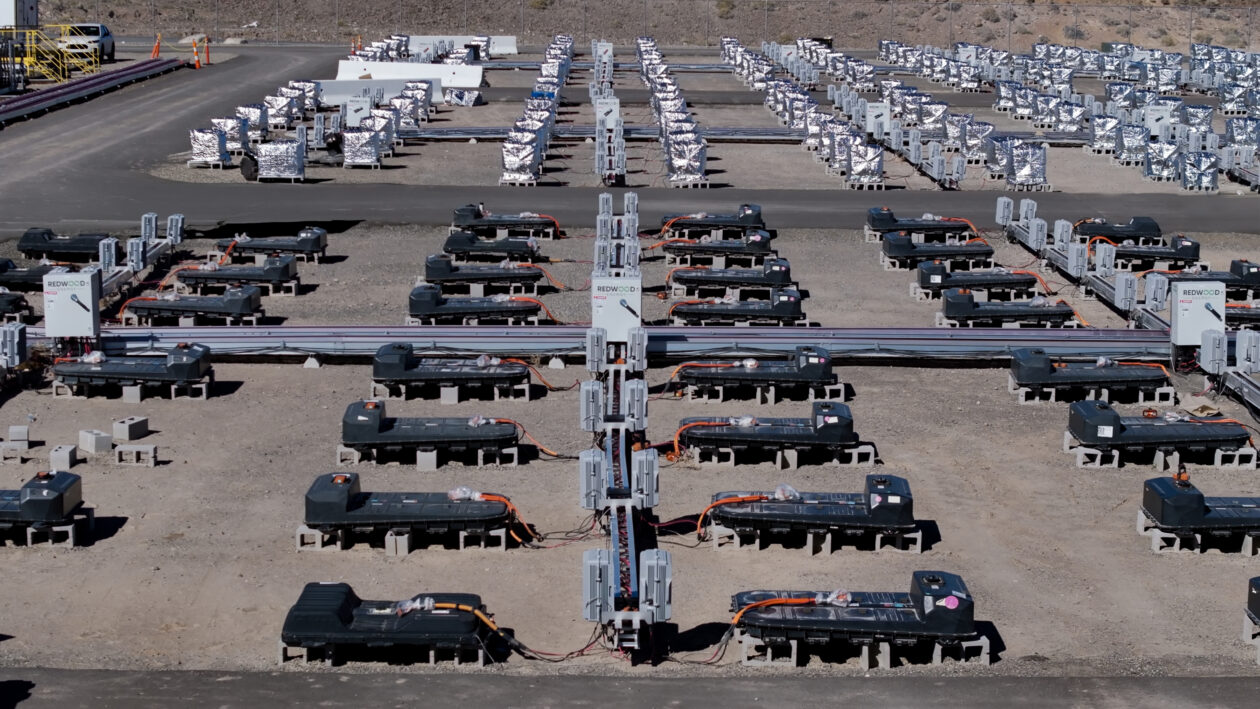
Similarly, Redwood Materials began as a recycler of batteries but transformed into a reuser, recognizing the untapped value in the batteries before they are shredded. The company’s Chief Technology Officer, Colin Campbell, explained the dramatic shift in their mindset: witnessing their own recycling process, they saw the “giant battery packs that we’re going to so much effort to disassemble” and wondered if they could do more with them. This new approach has since revolutionised their process—now, the company reuses 95% of the EV batteries they receive rather than grinding them down for materials. Furthermore, Redwood is not tied to one manufacturer; they have developed a “universal translator” that allows them to integrate batteries with different voltages and various chemistries, making their system applicable to any carmaker’s components. They have even scaled their operations to pair with a Crusoe Energy data center, using the recycled batteries to counter the massive energy demands of AI, bypassing a multi-year grid connection wait, saving money and cutting emissions.
The repurposing process is, in a sense, surprisingly simple, which is central to Redwood’s appeal. “It’s just literally the battery that was in the car. There’s lots of them arranged in a grid together and plugged in,” Campbell explained, reducing their system to an “electric vehicle parking lot with the wheels removed.” This plug-and-play model made it a game changer for Crusoe, an AI data center, where they used the system to create a microgrid that can independently power their operations. Crusoe’s vice president of energy, Scott Williams, says they plan to grow with Redwood by pairing multiple gigawatt hours of modular energy units with their upcoming centers, accelerating the data center buildout. This giant power hub is a proof-of-concept for reliability and quick deployment, tackling the foremost challenge to data center construction—electrical interconnection delays—and proving that renewables can power critical infrastructure.
Despite their forward momentum, the repurposed battery industry faces its own set of hurdles, one of the largest being public fear of fire hazards. High-profile battery storage incidents, like the Moss Landing fire, have caused communities to protest new projects. The startups are proactive in response. They emphasize that EV batteries are built to withstand high-speed crashes, making them inherently safer than other types of stationary storage, and they undergo rigorous UL fire safety tests and maintain high safety certifications. The industry, however, is also navigating a competitive landscape where overbuild recycling capacity and future mandates for recycled content in new batteries pique a competition for the finite resource of used battery packs. Yet, these barriers are alongside the undeniable benefit of repurposing from a climate change perspective, extending the carbon investment made in the battery manufacturing process for decades longer.
In conclusion, these repurposed EV batteries provide a breathtaking circular economy solution that meets the urgent energy requirements of the modern age. A solution is here already, tapping into a resource that is currently and readily available, ensuring clean electricity for private homes and massive server farms. Rather than being viewed as mere sources for raw materials, these batteries hold the potential to power a significant portion of our future. The ventures of Moment Energy and Redwood Materials serve as proof; the system – a company paving the way for an electrified, sustainable future with the batteries that have come to the end of their road but not to the end of their usefulness. The repurposing is more than just good for the environment—it’s an effective, practical, and economical solution to the immediate question of where our next kilowatt will come from.