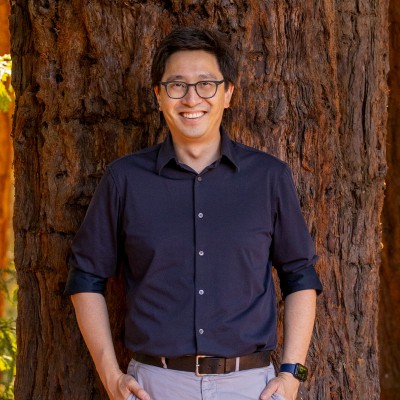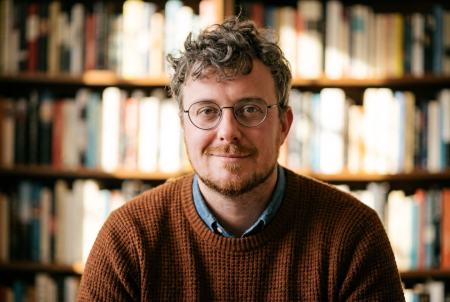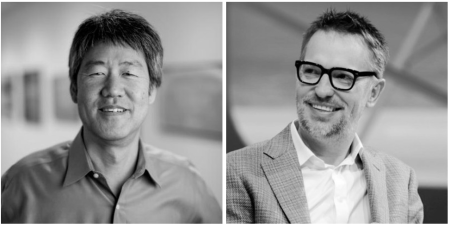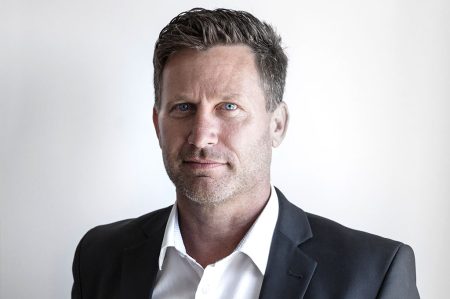





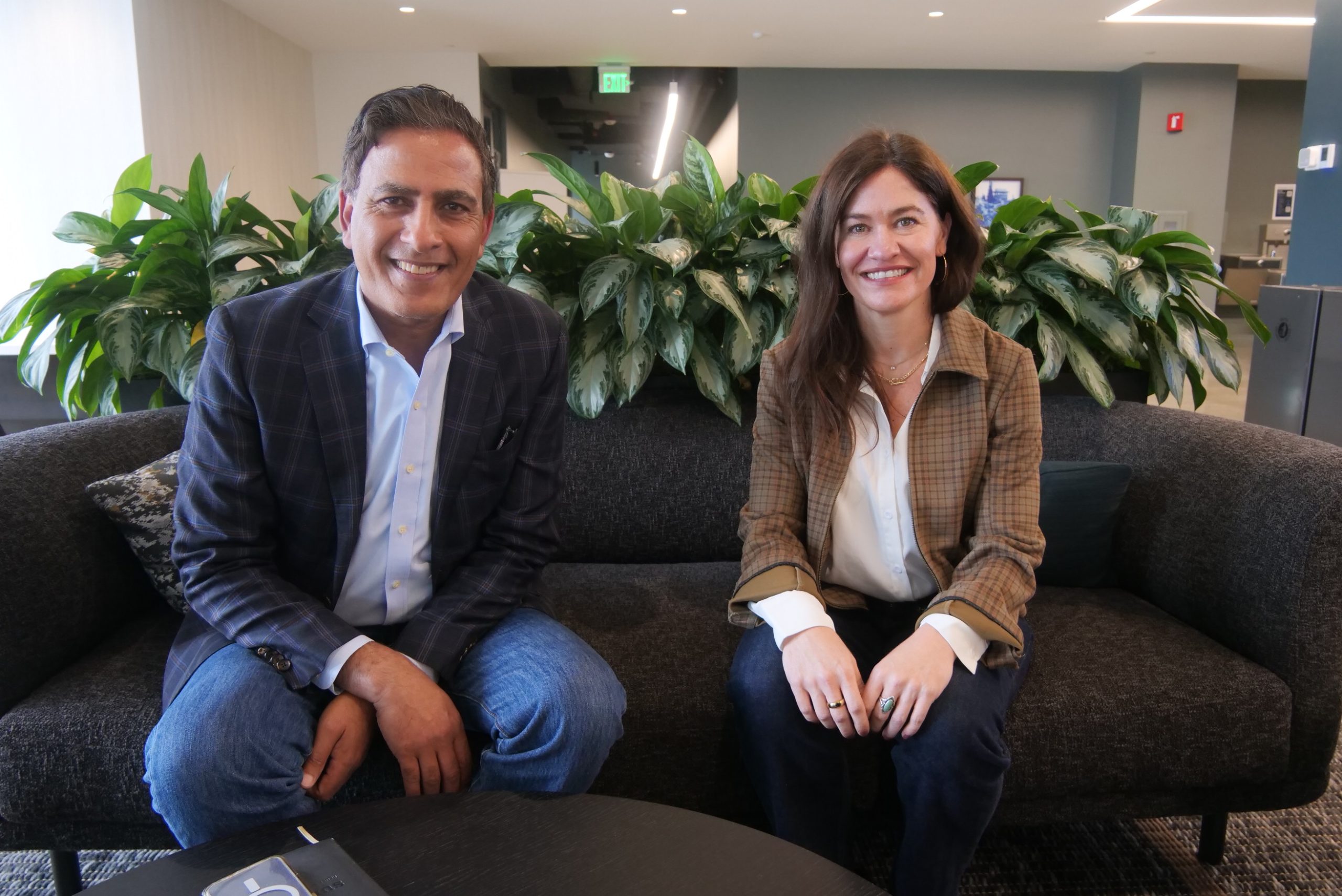
On the fourteenth floor of downtown Seattle’s JPMorganChase Center, Ture Armas—pronounced too-RAY—is trying to prepare a generation of engineers for a world where artificial intelligence does more of the coding. Armas, JPMorganChase’s CTO and head of Commercial Bank Lending Technology, took over leadership of the bank’s Seattle Tech Center in July, succeeding Mamtha Banerjee after she left the bank in March. He still spends about 95% of his time on his lending technology job, while vice president Kristine Baker manages the center day to day. But his mission is bigger than one building. From Seattle to India, he has been telling engineers that AI is rewriting the rules of software development, and the ones who thrive will be those who stop waiting for perfectly written requirements and instead wade into the mess of the business itself. “Things that we in the past referred to as soft skills, they are now the hard skills,” he said. The ability to model a business problem, communicate clearly, and work directly with bankers, traders and clients is no longer a nice-to-have; it is what separates engineers who merely write code from engineers who build the right things. That shift is changing how the bank hires. “You do need to interview for that,” Armas said. For a financial institution with a technology workforce spread across dozens of global centers, this is a significant cultural change. Armas has been part of conversations about the Seattle center since he arrived in 2016, and he now leads a site with more than 400 people and about 50 open positions, mostly in AI, cloud and cybersecurity. In an interview, he made clear that the center’s future depends not on adding more code-monkeys but on cultivating engineers who can think like owners of the business. The city’s deep talent pool, from Amazon veterans to startup founders, makes it an ideal place to build the kind of engineering culture that can keep pace with AI and the bank’s own ambitions.
Armas describes the old way of building software as a production line. A business analyst would interview stakeholders, produce wireframes and acceptance tests, then hand the package to engineers, who would translate it into code. That handoff is disappearing. In its place is what he calls spec-driven development, where engineers themselves write the specifications that AI coding tools use to generate software. That flips the job description. Instead of being the last person to see the requirements, engineers are now among the first to shape them. They have to understand the lending business, the risk exposure, the customer journey, the regulatory constraints. They have to ask good questions, challenge assumptions, and explain technical tradeoffs in plain language. The model, Armas said, is the forward-deployed engineer, a role made famous by AI startups, where developers sit side by side with users and adapt systems to real problems in real time. “We are moving towards that,” he said. He gave the same advice to his teams in India during a recent visit: get embedded in the business and “fall in love with the business problem.” At the Seattle center, most developers now use GitHub Copilot, and smaller teams are experimenting with Anthropic’s Claude Code. These tools are not just accelerators; they are changing the division of labor. If code generation becomes cheaper and faster, the scarce human skill is judgment: deciding what to build, why to build it, and how to know it works. That requires a much closer relationship between technology and the rest of the bank. Engineers who once worked behind a glass wall are being pulled into strategy meetings. They are learning the vocabulary of commercial real estate, leveraged lending and payments. They are also learning to communicate upward, sideways and to nontechnical colleagues. As Armas put it, the hard skills of the future are the interpersonal, analytical and business-modeling abilities that were traditionally dismissed as soft. And because AI is evolving so quickly, those skills matter more than any particular programming language.
Armas’s message is not just theoretical. CEO Jamie Dimon made the stakes clear on the bank’s July 14 earnings call, revealing that JPMorganChase now has almost 1,000 AI use cases, with about 50 of them “significant” in areas such as risk, fraud, marketing and document reading. Dimon acknowledged that AI has already reduced some jobs by 30% or 40% in discrete areas, though most affected employees were offered other positions within the bank. “We are preparing to make sure we can retrain our people,” he said, predicting the current wave of automation will be faster and more dramatic than past ones. That mix of opportunity and disruption is why the Seattle Tech Center’s expansion matters. The team recently moved into expanded space in the downtown skyscraper now known as the JPMorganChase Center, formerly the Russell Investments Center. The bank occupies five floors; technology fills the entire 14th floor, the largest, with more technologists on two other floors. The move returns the center to the building where it first opened in 2018, though the space now has room for hundreds of engineers, data scientists and cybersecurity specialists. There are about 50 open roles, concentrated in the fields that will define the bank’s future: AI, cloud and cybersecurity. Kristine Baker, the vice president who manages the center, said the growth reflects a deliberate strategy to make Seattle one of JPMorganChase’s most important technology hubs. The city’s talent pool, drawn from Amazon, Microsoft and a generation of startups, makes it an ideal place to build the infrastructure that will run the bank’s AI workloads. Lori Beer, the bank’s global CIO, has said Seattle is a key hub for a new AI software infrastructure team that will help the bank manage AI across its own data centers and outside cloud providers, with the goals of controlling costs and avoiding dependence on any single AI vendor. The expansion is also a vote of confidence in downtown Seattle, even as other employers pull back.
The Seattle Tech Center’s journey has been one of steady growth and changing faces. It opened in 2018 on a single floor of what was then the Russell Investments Center, led by Todd Hrycenko, a security executive who came from Salesforce. A year later, with about 100 people, it signed a lease at 1201 Third Ave., the former Washington Mutual Tower across the street. Under Rao Lakkakula, the center grew to more than 320 people by 2023. Lakkakula left for Microsoft, and Mamtha Banerjee took over in early 2025, when the team reached about 380. After Banerjee left in March, Lori Beer named Armas to the site lead role in July. It is a part-time responsibility in some ways—Armas said he spends roughly 95% of his time on his lending technology job—but he has been deeply involved in Seattle since moving to the city in 2016 to lead technology for the bank’s commercial real estate lending business, which has roots in the old Washington Mutual operations. Growing up in British Columbia and studying computer science at the University of British Columbia, Armas spent about 18 years in New York before heading west. He knows the Seattle market, its institutions and its talent. He also knows he cannot run a 400-person tech center alone. That is where Kristine Baker comes in. Baker joined JPMorganChase in 2023 from Amazon Web Services, where she led a program to build AWS teams in new U.S. locations, after 14 years at Western Washington University. She manages the center day to day, provides continuity through leadership changes, and also works with the bank’s global program of about two dozen tech centers. “She shepherds each one of us along,” Armas said. The site lead role typically rotates every couple of years, and Baker has been the steady hand through the transitions. Her job is as much about culture as operations: making sure the space supports collaboration, that hiring stays on track, and that engineers feel connected to the bank’s broader mission.
The competitive landscape for engineers has shifted. During the pandemic hiring rush, JPMorganChase had to fight for every candidate. Now, Armas said, the bank is getting “lots of responses to every position.” That gives it the luxury of being selective, especially for the AI, cloud and cybersecurity roles that are essential to its future. Seattle’s talent pool remains one of the deepest in the world, and Armas noted that veterans from Amazon and other local tech companies have moved into senior technology roles at the bank. They bring a pace and rigor that JPMorganChase is eager to absorb. At the same time, the bank’s presence helps retain talent that might otherwise leave for tech giants. Asked about Seattle’s JumpStart payroll tax, which some business leaders have blamed for discouraging hiring in the city, Armas said the bank has no plans to change course. Its commitment to downtown Seattle is clear: the expanded tech floor, the hundreds of employees, and the investment in a neighborhood that has struggled to find its post-pandemic footing. The technology floor has become something of a destination within the building. Armas said bankers regularly come up to the 14th floor, and when he asked why, they told him the breakout room is the best in the building. There are no assigned desks. Instead, workstations are grouped into “neighborhoods” by line of business, including one for the bank’s AI and data organization, with lockers for personal belongings. Small rooms with doors line the floor for private calls, white noise keeps the open areas quiet, and large windows look out over the city. There is a prayer room and a mother’s room. Behind an easy-to-miss door, a game room with a ping-pong table serves as a release valve; some employees have used it for DJ sessions, strobe lights included. This is not just office design; it is a statement about how work should happen. By creating spaces where engineers can mix with each other and with business colleagues, the bank hopes to break down the barriers that once separated technology from the rest of the enterprise.
Looking ahead, Armas wants to make the Seattle center even more central to the bank’s strategy. The site lead role rotates, so he knows his time is limited, but his goal is to connect the center’s engineers with teams across the entire bank and with the real business problems the bank is trying to solve. That means continuing to push the shift toward spec-driven development, where engineers own requirements and AI tools do more of the heavy lifting. It means building relationships with business leaders in commercial banking, asset management, payments and other divisions. And it means preparing the workforce for a future that will require constant learning. Dimon has predicted that the AI transition will be faster and more dramatic than past waves of automation, and JPMorganChase is trying to get ahead of it. The bank’s almost 1,000 AI use cases are a sign of how deeply the technology is being woven into everything from fraud detection to document processing to marketing. Some jobs will shrink; others will change; new ones will appear. The work of an engineer at JPMorganChase now includes understanding how AI is trained, how it can fail, and how to keep it aligned with the bank’s risk and regulatory obligations. Armas’s message to his teams, from Seattle to India, is that the future belongs to those who embrace the messy, human side of technology. The engineers who succeed will be the ones who can translate a vague business concern into a precise technical spec, who can speak the language of both code and commerce, and who genuinely care about the outcome, not just the algorithm. On the 14th floor of the JPMorganChase Center, with the city stretching out beyond the windows, that vision is taking shape. It is a new kind of bank—one where technology leaders spend less time in server rooms and more time with the people whose problems they are trying to solve. Ture Armas, who prefers to say his name too-RAY, is one of those leaders. He has been part of Seattle’s tech scene for nearly a decade, and he believes the best is still ahead. In an industry being rewritten by AI, the hard skills are the soft ones, and the bank is betting its future on engineers who can do both.