

Microsoft and Nvidia Join Forces to Bring AI Directly to Your PC
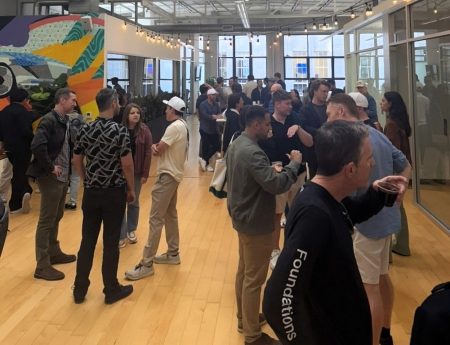
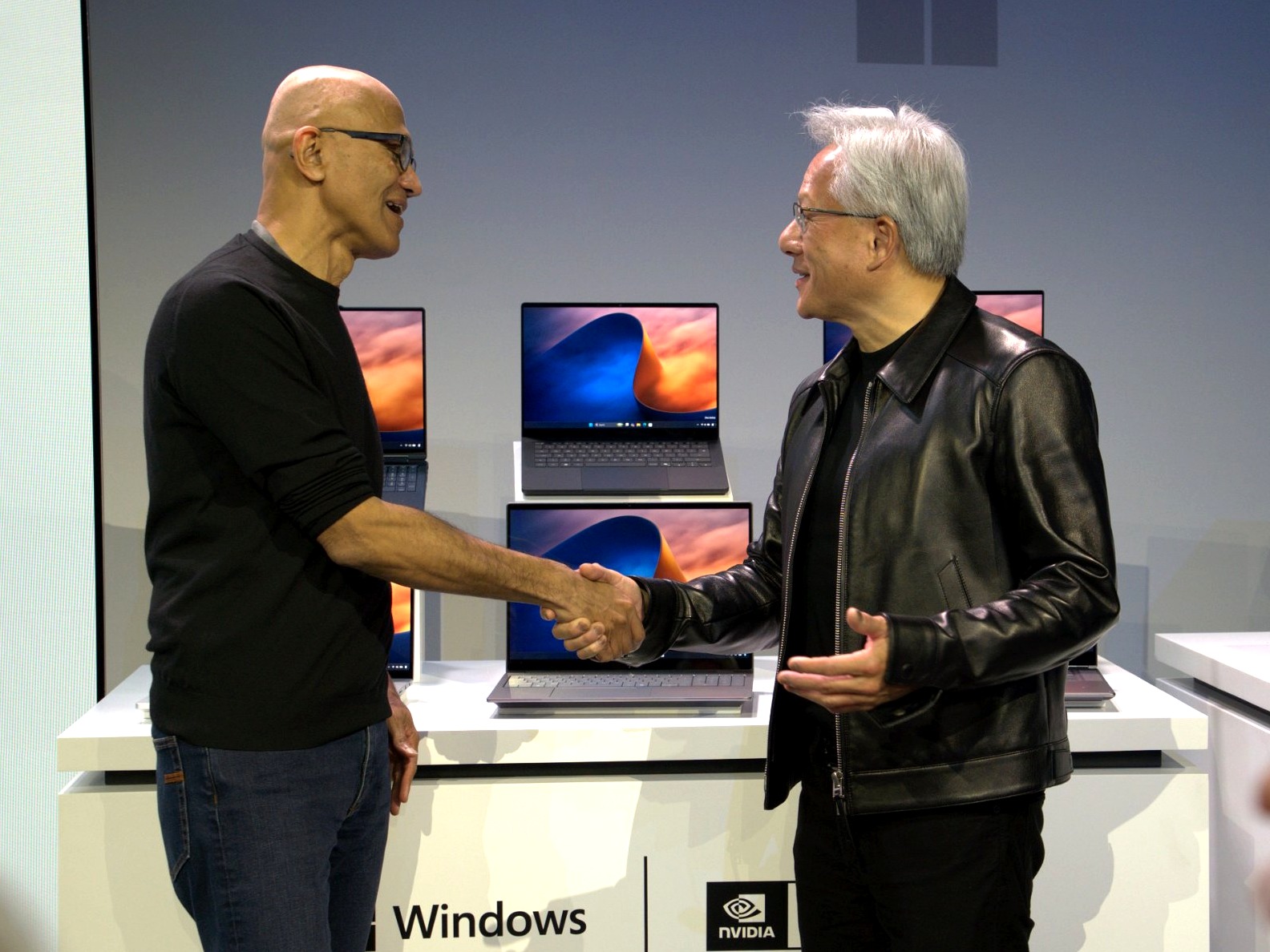
In a move that signals a major shift in how artificial intelligence will be delivered to everyday users, Microsoft and its longtime partner Nvidia have announced a new generation of Windows computers designed to run powerful AI models right on the machine itself, without needing to connect to the cloud. This partnership, unveiled at a joint event in San Francisco, represents Microsoft’s latest attempt to reclaim its position as a leader in the AI race by leveraging its deep roots in personal computing and its decades-long relationship with the world’s most valuable chipmaker. The two companies are betting that the future of AI isn’t just in massive data centers but also in the laptops and desktops that people use every day.
The centerpiece of this announcement is something Microsoft calls “Windows Hybrid Intelligence,” a collection of features that will transform its Copilot assistant from a simple chatbot into a truly personal digital helper that lives right on your computer. Imagine having an assistant that can read every document on your hard drive, understand your email, organize your files, and even perform tasks on your behalf – all while respecting your privacy and keeping sensitive information on your device rather than sending it to the cloud. The demonstration at the event showed Copilot’s “Autopilot” agent finding an email from an accountant, gathering scattered tax documents across a PC, renaming and organizing them into proper folders, compressing them into a zip file, and even drafting a reply email with the files attached – all stopping to get the user’s approval before sending anything. Crucially, the document sorting and organizing happened entirely on the laptop using local AI models, meaning personal financial details never left the computer.
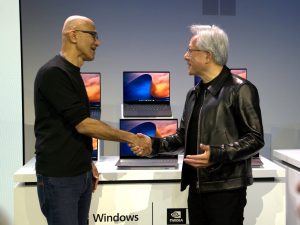
This concept isn’t entirely new – other AI tools like Anthropic’s Claude and Perplexity already offer similar file-access capabilities, and startups like OpenClaw have been experimenting with AI agents that can take actions on a user’s computer. But Microsoft has one enormous advantage that no other company can replicate: it owns Windows itself. Only Microsoft can weave these capabilities directly into the operating system, integrating them seamlessly with security controls that limit exactly what an AI agent can access and maintaining a separate log of everything the AI does on your machine. As Microsoft CEO Satya Nadella noted during his on-stage conversation with Nvidia CEO Jensen Huang, “I think agents are going to be the largest users of the file system.” This integration at the operating system level could prove to be Microsoft’s most powerful weapon in the increasingly competitive AI landscape.
The timing of this announcement reflects both opportunity and necessity. Microsoft got an early lead in AI with its billion-dollar investment in OpenAI back in 2019 and launched GitHub Copilot, its AI coding assistant, in 2021. But since then, the broader Copilot products for consumers and businesses have been overshadowed by OpenAI’s ChatGPT and Anthropic’s Claude, both of which captured the public’s imagination with more advanced capabilities and better user experiences. Both rivals also moved quickly on AI agents that can write code and handle tasks on a user’s computer – the very kind of software Microsoft is now building directly into Windows. In a somewhat telling move, Microsoft’s own Copilot Cowork, introduced in March, actually integrates Anthropic’s Claude into Microsoft’s products, acknowledging the competitive landscape. Microsoft has been restructuring its Copilot teams and releasing updated versions to catch up, and this new hybrid intelligence approach represents its most ambitious attempt yet to differentiate itself by focusing on what makes Windows unique.
The new Copilot capabilities give users three distinct ways to work with AI on their PCs. First, the assistant can draw on and understand all files across the entire computer, creating a searchable index of your digital life. Second, it can take meaningful actions like moving files, changing system settings, and performing multi-step tasks that save time and effort. Third, and perhaps most importantly for privacy-conscious users, it can hand off tasks to AI models running locally on the machine “when cost or privacy matter more,” as Microsoft’s executive vice president of Copilot, Jacob Andreou, explained on stage. The system will still use the cloud for the most complex AI challenges, but it will operate on your PC only with your explicit permission. Microsoft plans to begin rolling out these features in the coming months on Copilot+ PCs, a line of AI-focused Windows machines the company introduced back in 2024. Developers will get access first, with an experimental release this month that will let GitHub Copilot automatically make smart decisions about whether to run coding tasks on the local machine or send them to the cloud.
The practical benefits of this approach extend beyond privacy to cost. Running AI models on your PC eliminates the usage charges that come with cloud-based AI services, potentially making advanced AI assistance much more affordable for individuals and businesses alike. Nadella prominently tweeted that Microsoft is bringing “unmetered intelligence to every desk and every home,” deliberately echoing the company’s original mission of putting “a computer on every desk and in every home” from its founding era. The presentation made this point explicit with a slide showing that local models would handle tasks on the PC “at no extra cost.” This could be a game-changer for users who want powerful AI assistance without worrying about usage limits or subscription fees. Microsoft is also adding thousands of quick actions to the Windows search box, enabling users to do things like switch to dark mode, rearrange windows, or send text messages with simple natural language commands. The company is clearly positioning this as both a practical improvement to daily computing and a philosophical return to its roots of empowering individuals with powerful tools.
Security and user trust are understandably at the forefront of Microsoft’s mind, given past missteps. The company has been here before with mixed results. Recall, a feature announced in 2024 that takes periodic screenshots of everything you do on your computer to make it searchable, drew sharp criticism from security researchers who worried about the potential for abuse and data exposure. Microsoft was forced to delay the feature and make it opt-in before releasing it more widely. While Recall didn’t come up at Wednesday’s event, the company emphasized in its blog post that Copilot’s access to local content – described as “files and recent activity” – will require explicit user permission. Beyond simple permission controls, Microsoft is introducing a technology called Microsoft Execution Containers, now generally available in Windows 11, which addresses what Pavan Davuluri, Microsoft’s executive vice president of Windows and Devices, called the “fundamentally insecure” nature of current AI agents because they have “broad system access.” These containers allow organizations to precisely control which files and networks an AI agent can reach, providing enterprise-grade protection. Notably, OpenAI’s Codex and OpenClaw already support this technology, and Anthropic’s Claude Code and Perplexity plan to implement it, suggesting Microsoft is positioning this as an industry standard for safe AI agent deployment across different platforms and tools.
The hardware side of this announcement is equally impressive. The new machines are built around Nvidia’s RTX Spark chip, a high-performance processor specifically designed for running large AI models locally, and are aimed at developers and creative professionals who need serious computing power. Microsoft’s Surface Laptop Ultra, a 15-inch laptop with up to 128GB of memory, starts at $2,599 and launches October 16th, the same day similar laptops from Asus, Dell, HP, Lenovo, and MSI begin shipping with the same chip. For developers who want even more power, there’s a desktop version called the Surface RTX Spark Dev Box, priced at $5,999 and shipping in the U.S. in November. Microsoft is directly challenging Apple’s dominance in creative computing, claiming that machines with the Nvidia chip produce AI responses up to 2.1 times faster than a 16-inch MacBook Pro with Apple’s M5 Pro chip and generate AI images up to 4.3 times faster, based on tests Microsoft commissioned or that Nvidia conducted on preproduction hardware. The company is even offering up to $1,000 back to customers who trade in their MacBook Pro, a clear shot across Apple’s bow. Huang revealed that the chip took over 4,000 engineering years to develop and began with a conversation he had with Nadella four years ago, underscoring the depth of planning behind this collaboration.
The deeper story here is the remarkable history between Microsoft and Nvidia, a relationship that Huang suggests goes back to the very founding of his company. He shared a favorite memory from late 1992, when Windows 3.1 was new and he and his co-founders – who had worked mostly on workstations – began envisioning a PC with 3D graphics that could run games and design software. They started Nvidia the next year, and Huang was unequivocal about their debt to Microsoft: “If not for Windows, Nvidia wouldn’t have been founded.” He traced a direct line from those early days to the current AI boom, explaining that Windows brought graphics chips to the PC, which led to Nvidia’s GeForce chips and its CUDA software, which ultimately gave AI researchers the computing power they needed for deep learning breakthroughs. The conversation captured the genuine warmth between the two executives, with Nadella joking that Huang was “now going to do a little transfer of market cap back to me” – a playful reference to Nvidia’s staggering $5.8 trillion market value versus Microsoft’s $3.9 trillion. At the end of their conversation, Huang reflected, “Windows has been with me for 34 years. Looks like it’s going to be with me for 34 more,” to which Nadella responded, “There you go.” This moment captured something essential about the enduring partnership and mutual respect between these two technology giants – and their shared vision for a future where AI is not just something you access in the cloud, but something that lives and works right on your desk.