





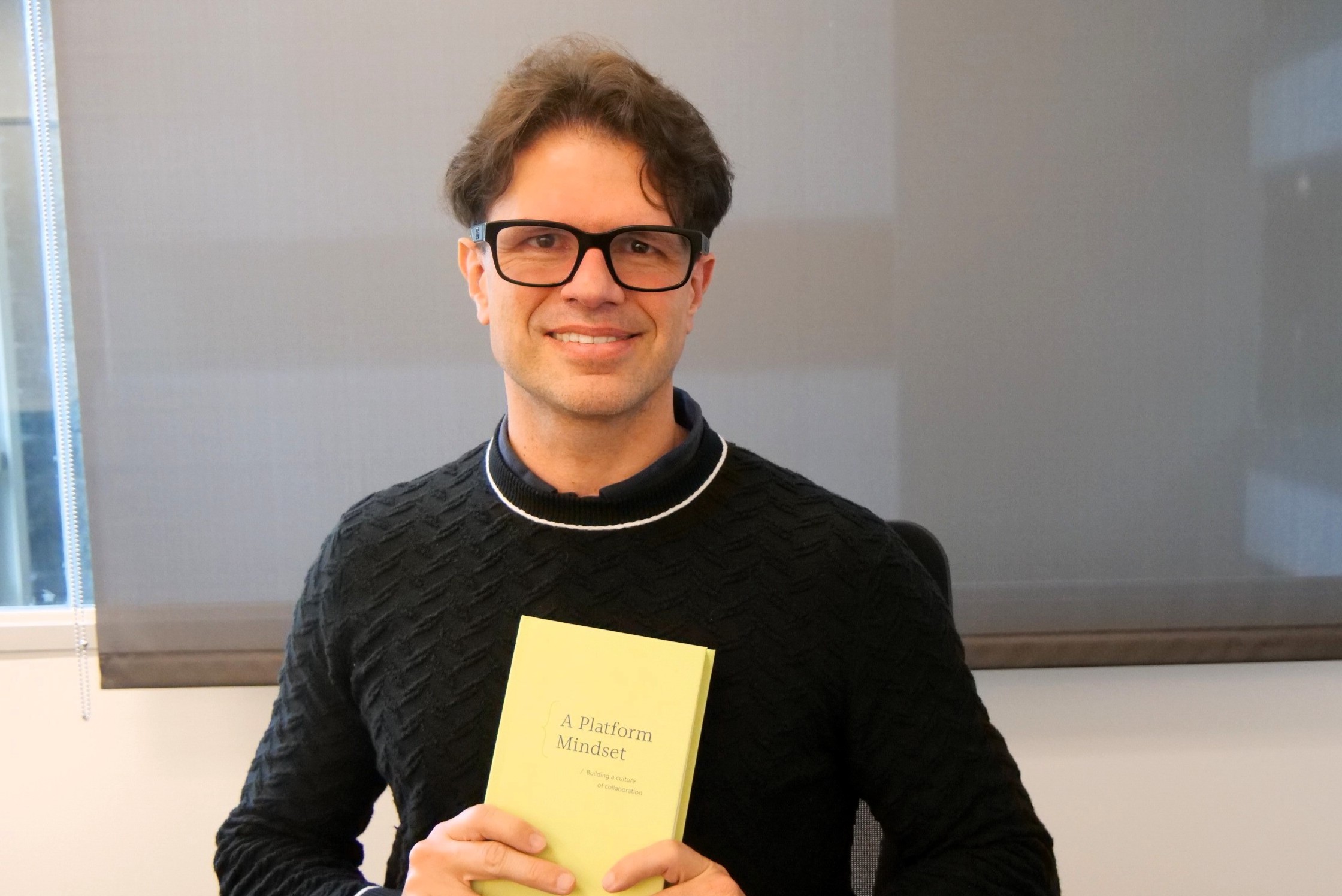
The tech community is witnessing a major transition as Marcus Fontoura, the highly respected Chief Technology Officer for Azure Core and Microsoft Technical Fellow, steps down from his post after more than a year of leading infrastructural innovations. His departure marked a poignant moment for the tech sector, coinciding with the publication of his book, A Platform Mindset, which serves as a guide for building scalable software systems by prioritizing a empathetic approach to organizing human engineering teams. Fontoura’s professional history has spanned major tech players, starting with foundational work at Google, Yahoo, and IBM, followed by an initial eight-year run at Microsoft where he designed critical components for Bing and Azure. In 2022, he departed for a stint as the CTO and Head of Engineering at the Brazilian fintech platform Stone, only to return to Redmond to help guide Azure Core through its modern cloud expansions. Retiring from his role to his home in Boca Raton, Florida, Fontoura shared on LinkedIn his deep gratitude and respect for the collaborative engineering culture that defines Microsoft. His legacy serves as a reminder that the most durable and scalable tech infrastructures are ultimately built on human relationships, empathy, and clear organizational values.
This focus on human-centric technology is mirrored in the digital health sector, where Travis Moore has stepped up as the first-ever Chief Revenue Officer for Xealth, a specialized digital health platform based in Seattle that was acquired last year by Samsung Electronics. Moore’s professional path is a unique journey of empathy, having begun his career twenty-five years ago as a hands-on pediatric nurse before transitioning into the commercial side of health technology across product management, marketing, sales leadership, and executive development. Most recently serving as head of sales at Eleos Health—a behavioral health company based in North Carolina—Moore brings a deep understanding of patient care to his new executive role. He notes that the central hurdle in contemporary medicine is no longer discovering new technologies, but integrating these tools into actual clinical workflows to turn abstract digital products into meaningful care. By viewing healthcare enterprise software through the eyes of the clinicians who use it, Moore’s leadership reflects a growing movement to ensure that digital therapeutics and cloud tools align with human workflows in clinics and hospitals.
Meanwhile, at Microsoft’s headquarters, the internal culture continues to nurture executive talent and cultivate stability in an era of rapid technological change. Judson Althoff, the executive who has served as the CEO of Microsoft’s massive Commercial Business for thirteen years, was recently appointed to the board of directors at GE Aerospace, bringing his cloud expertise to the aviation and defense sectors. Alongside Althoff’s board expansion, Microsoft announced the promotion of Jose Calzada to Vice President of Software Engineering within the company’s AI platform division. Calzada’s ascent is a classic story of career loyalty and internal mentorship; he first joined Microsoft seventeen years ago as a design engineer intern working with the Outlook team before rising through the engineering ranks. Now tasked with guiding the structural development of Microsoft’s flagship artificial intelligence platforms, Calzada represents a generation of home-grown technical leaders who have evolved alongside the company, transitioning from classical productivity software to the complex frontiers of modern cognitive computing.
Beyond Microsoft’s campus, other technology and consulting leaders are taking on new roles to help regional enterprises navigate a rapidly evolving digital landscape. Eric Foster has transitioned to the business and technology consulting firm Slalom, taking over leadership of its Pacific Northwest market in Seattle after a fourteen-year tenure at Accenture, where he worked as a managing director. Simultaneously, Digimarc, a beaverton, Oregon-based pioneer in digital watermarking and data preservation, has named technology veteran Paul Carreiro as its new Chief Executive Officer, effective in early July. Carreiro, who transitions from his role as president and CEO of supply chain solutions provider Elemica, will succeed Riley McCormack, who remains on Digimarc’s board of directors. This leadership change comes at a vital time for Digimarc, as the global boom in generative artificial intelligence has made digital watermarking essential for verifying authentic digital content, protecting intellectual property, and establishing trust as automated systems and human consumers learn to navigate digital ecosystems.
In the public sector and global connectivity markets, leaders are actively shifting their focus to address systemic local and global challenges. In local government, Seattle Mayor Katie Wilson has reshaped her municipal cabinet, appointing Nicole Vallestero Soper as the director of affordability, housing, and economic development. Soper, who previously served as the city’s director of policy and innovation and worked as a principal consultant at Transformative Shifts, steps into this critical role to address the housing crisis and support regional economic health. On the global stage, Japanese IoT connectivity provider Soracom has appointed Richard Halliday as the CEO of its North and South American divisions, based in Bellevue, Washington. Halliday, who has spent over four years scaling Soracom’s operations, will lead the company’s efforts to connect millions of industrial, agricultural, and commercial smart devices across the Americas, showing how local policy decisions and global communication infrastructures are evolving alongside today’s hyper-connected society.
Finally, the spirit of scientific discovery is being celebrated at the Pacific Northwest National Laboratory (PNNL), where Dr. Scott Whalen has been named the Department of Energy’s National Innovator of the Year. Serving as the chief scientist in PNNL’s Applied Materials and Manufacturing group and leading its Thermomechanical Processing team, Whalen holds twenty-three U.S. patents, with thirteen more pending, for his work in transforming metal extrusion and metal-working methods to reduce industrial energy consumption. From Marcus Fontoura’s insights into building collaborative tech platforms to Travis Moore’s transition from bedside nursing to executive sales leadership, and Scott Whalen’s research in sustainable metallurgy, these career movements illustrate that human curiosity and collaboration remain the driving forces of scientific and economic progress. As leadership paths evolve across the public, private, and research sectors, they highlight that behind every technological advancement, there is a dedicated human story of determination, empathy, and innovation.