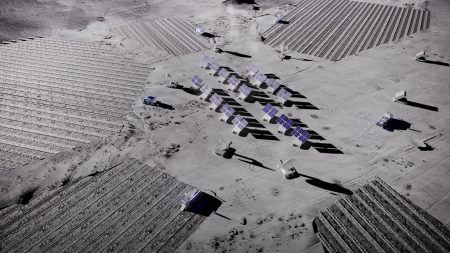






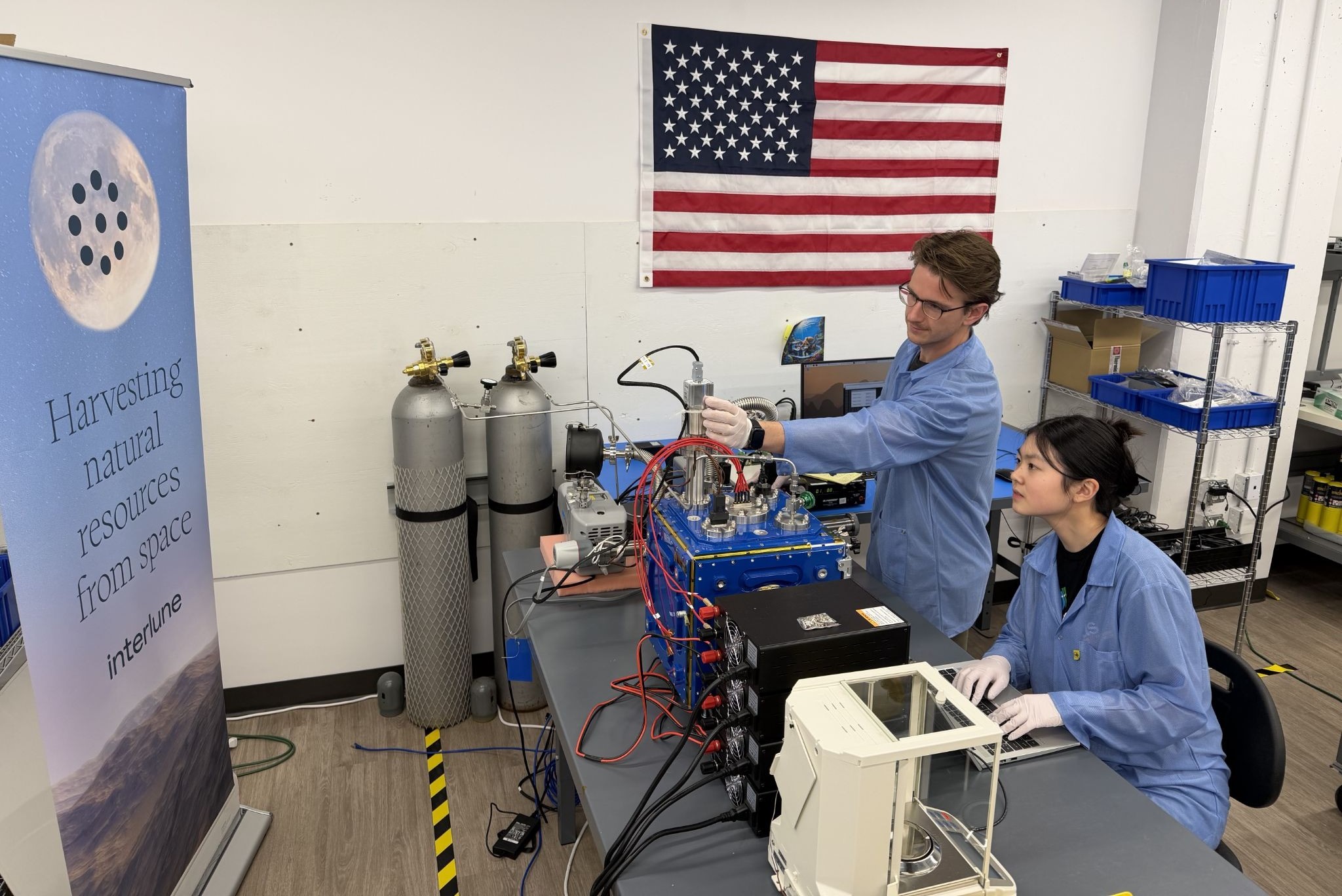
Imagine waking up to a world where the moon isn’t just a distant rock in the sky, but a gleaming treasure trove providing rare fuels and materials to power our future on Earth. That’s the ambitious vision behind Seattle-based Interlune, a startup founded in 2020 by innovators like Rob Meyerson, who dared to dream big about lunar mining. In May 2026, NASA awarded them a substantial $6.9 million contract to develop groundbreaking technology for extracting precious gases like helium-3 and hydrogen directly from the moon’s dusty soil, known as regolith. This isn’t just about science fiction anymore—it’s an 18-month project under NASA’s Small Business Innovation Research Phase III grant, where they’ll design, test, and eventually launch the system to the lunar surface via a commercial robotic lander by 2028. Picture engineers in lab coats huddled over equipment at Interlune’s headquarters, fine-tuning tools that could revolutionize everything from quantum computers that solve unsolvable problems in seconds to medical devices imaging the human body with unprecedented clarity. For Meyerson, the CEO, this isn’t merely a contract; it’s a testament to America’s drive to lead in space economics. As he puts it, “We’re gathering data and advancing technologies that serve multiple purposes across industry and government.” It’s a thrilling leap, blending raw exploration with practical innovation, much like the early gold rush miners who panned for nuggets that changed fortunes. This contract builds on Interlune’s gritty history—starting with seed capital raised in 2024, leading to an additional $5 million investment in January for hitting key milestones. The company’s team, including test engineers like Alex Lewandowski and mechanical wizards like Jessica Wu, buzzes with excitement as they check mass spectrometers and heating hardware in their Regolith Lab. It’s a hands-on endeavor, where parabolic flight tests simulate the moon’s low gravity, mimicking the weightlessness astronauts feel. By 2028, this payload will touch down, not on a one-way errand, but as the first step in a lunar cottage industry. Imagine scuttling rovers scooping up moon dirt, heating it to release trapped gases—volatile elements deposited centuries ago by the relentless solar wind. Interlune’s not stopping at helium-3; they’re eyeing hydrogen for rocket fuel and even industrial metals buried in the regolith. This mission, dubbed Prospect Moon, promises to map these resources like modern cartographers charting forgotten continents. For now, the crew on Earth taps into terrestrial sources for helium-3 deliveries to eager clients like quantum computing firms and the U.S. Department of Energy, who have locked in nearly $500 million in orders. It’s a bridge to the future, where lunar bounty could fuel fusion reactors generating clean energy without carbon footprints, lighting up our world sustainably. The human element shines through in stories like Interlune’s collaboration with Astrolab—a Palo Alto titan of lunar tech—sending a camera to the moon this summer aboard their FLIP rover for a demo called Crescent Moon. In March, they announced integrations for resource-extraction hardware on future rovers, turning solo efforts into a team sport across the Pacific Northwest. Meyerson and his co-founders aren’t lone wolves; they’re building a community of explorers, from Boeing veterans to fresh PhD grads, all chasing that moonshot glow. (497 words)
Diving deeper into the guts of this lunar extractor, the system Interlune is crafting feels like a high-tech alchemist’s toolkit, designed to transform lifeless moon dust into breathable hopes for humanity. At its core is a robotic arm and scoop, practical appendages that deftly gather regolith under the vacuum of space, much like a gardener tending a barren field. Then comes the particle-sorting device, sifting through the gritty lunar soil to isolate valuable bits, ensuring nothing slips through the cracks. Hardware for heating this material—think of it as a cosmic microwave—warms the regolith to release those elusive gases trapped deep within, a process that’s both simple in concept and marvelously complex in execution. Add in a multispectral camera that acts like a superhero’s X-ray vision, scanning for helium-3 concentrations by detecting subtle color shifts in the regolith, guiding the extraction with pinpoint accuracy. And don’t forget the mass spectrometer, a analytical whiz that dissects the harvested gases, revealing their compositions down to the molecular level. It’s a symphony of machines working in harmony, all fueled by solar panels and resilient batteries engineered for the moon’s harsh environment—extreme temperatures swinging from scorching days to frigid nights. Interlune’s chief scientist, Elizabeth Frank, speaks with the passion of a seasoned explorer when she proclaims, “For the first time ever, we will measure volatile gases by heating lunar regolith while on the moon, dramatically advancing the scientific community’s understanding of its properties.” This isn’t just data collection; it’s a revelation that tells us how much energy it’ll take to pluck these resources, informing everything from power budgets to economic feasibility. The team has been honing this tech through Earth-bound tests, where prototypes survive the rollercoaster simulations of parabolic flights, mimicking the one-sixth gravity of the moon. Imagine the g-forces straining components, engineers adjusting designs on the fly, their faces lit by computer screens plotting optimization curves. By 2028, this rig will hitch a ride on a commercial lander, deploying autonomously to scoop, heat, and analyze, beaming back streams of data that could redefine lunar science. It’s reminiscent of the Apollo missions, but instead of foot prints, we’re leaving digital footprints of potential prosperity. The human touch here is the dedication—the late nights troubleshooting leaks, the celebrations when a prototype holds together amid simulated meteor showers. Frank and her colleagues aren’t just building hardware; they’re crafting knowledge, painting a picture of the moon’s volatile riches hidden beneath its pocked surface. Follow-up missions might scale this up, extracting hydrogen to top off rockets for Mars trips or even powering lunar bases with onsite fuel. Yet, the beauty lies in the accessibility: this system could be integrated into rovers, making extraction less like mining magnates’ fantasies and more like everyday utility. As tech evolves, these tools might inspire spin-offs on Earth, perhaps purifying gases from polluted sites or recycling industrial wastes. Interlune’s approach humanizes the cosmos, turning abstract astronomy into tangible benefits—clean energy for hospitals, detectors for security, futures for our children. (512 words)
Interlune’s story begins in a modest Seattle office in 2020, dreamed up by visionaries who saw the moon not as a dead end, but as a launchpad for global innovation. Rob Meyerson, the CEO, embodies the entrepreneurial spirit, cutting his teeth in aerospace before co-founding this venture with a team of ex-Boeing and SpaceX minds, all united by a thirst for untapped frontiers. They raised $18 million in seed capital in 2024, a vote of confidence that fueled their Regolith Lab and prototyping efforts. By January 2026, another $5 million poured in, propelling them toward critical milestones like this NASA contract—a validation that feels like a grandparent’s proud pat on the back after years of hard work. Partners play a starring role too; Astrolab, that Northern California powerhouse, is linking arms with Interlune to blend their rover tech with extraction gizmos, a collab that’s as symbiotic as bees and flowers. This summer, a Crescent Moon demo will send Interlune’s camera to the moon, a low-stakes prelude that builds trust and tweaks designs before the big 2028 launch. Interlune isn’t flying solo—they’re weaving a network of alliances, from government agencies to private firms, each adding layers to their moon-mapping puzzle. Meyerson’s press release shines a light on this camaraderie: “NASA’s continued investment in space technology enables technology development projects like this one to ensure America’s leadership in building the lunar economy.” It’s a community effort, where engineers share war stories over coffee, refining ideas in bull sessions that turn “what if” into “why not.” The company’s culture feels alive, with events celebrating breakthroughs and gatherings for face-to-face brainstorming, fostering that rare spark of collective genius. They’ve got orders in hand—nearly $500 million in binding deals for helium-3 from quantum titans and U.S. defense heavyweights—proving the world is hungry for lunar loot. While they mine Earth’s natural gas for early deliveries, the moon looms as their ultimate quarry, a promise that keeps the team motivated through long hours and setbacks. Humanizing this saga means seeing the faces behind the acronyms: lifelong learners like Elizabeth Frank, whose scientific curiosity mirrors our own childhood wonder at the stars, now channeling expertise into moon soil analyses. It’s not just profit-driven; there’s an altruistic vein, investing in education outreach to inspire the next generation of STEM explorers. Interlune’s evolution from startup to key player mirrors Silicon Valley legends, but with a celestial twist—trading code for cosmos, apps for asteroids. This ethos extends to sustainability, aiming for clean extractions that preserve the moon’s pristine craters. As they gear up, the company taps into global talent pools, diversifying with international experts who bring fresh perspectives. In meetings, you’d hear laughter mixed with serious debates, a human dynamic that grounds their lofty goals. Ultimately, Interlune’s foundation is built on trust—trust in teamwork, in technology, in the dream that moon dust can dust off Earth’s problems. (512 words)
Zooming out, helium-3 stands as Interlune’s crown jewel, a rare isotope with applications that paint a futuristic canvas of possibilities, from revolutionizing quantum computing to enhancing medical diagnostics. Drawn to the moon by solar winds over eons, this gas isn’t native to Earth in abundance, making lunar extraction a game-changer. Interlune envisions marketing it for neutron detectors that sniff out hidden threats like nuclear materials, or fueling clean fusion reactors that generate electricity without radioactive waste, powering cities with minimal environmental toll. For the Department of Energy and Air Force, it’s a strategic asset—imagine fusion plants humming away in deserts, providing limitless energy to a world weaning off fossil fuels. On Earth, quantum computers leveraging helium-3 could crack codes once deemed unbreakable, speeding up drug design or climate modeling. In hospitals, medical imagers use it for clearer scans, potentially saving lives by catching illnesses earlier. Interlune’s plans broaden beyond helium-3, targeting hydrogen for rocket propellants that enable deeper space exploration, reducing reliance on Earth’s dwindling resources. Water extraction could quench lunar habitats, supporting human outposts for science or tourism. Even rarer earth materials and industrial metals await, fueling electronics and batteries here on our planet. This diversification feels organic, like a farmer cultivating multiple crops to hedge against droughts—resilient and forward-thinking. The human angle infuses these ambitions with empathy: these resources could address global inequities, bringing clean energy to developing nations or advanced tech to underserved communities. Follow-up missions under Prospect Moon would map volatile concentrations, building a database that’s openly shared, democratizing lunar knowledge. Interlune’s approach prioritizes sustainability, extracting responsibly to avoid scarring the moon’s delicate surface, much like ecotourism protecting fragile ecosystems. Economically, it’s a multiplier: $500 million in pre-orders signal market readiness, with lunar helium-3 potentially slashing prices compared to scarce terrestrial supplies. Workers at Interlune dream of this impact—families powered by fusion, economies boosted by newfound materials. Yet, challenges loom, from logistical hurdles to regulatory frameworks, but the team’s grit shines through. Meyerson’s leadership feels paternal, guiding a group of dreamers toward tangible outcomes. As they test prototypes, there’s a sense of legacy, contributing to history like the Iron Age miners who shaped civilizations. This isn’t exploitation; it’s symbiosis—moon and Earth in harmony. In chats around the water cooler, employees speculate on helium-3’s ripple effects: could it spark a new Renaissance, where energy abundance frees humanity for arts and exploration? Their optimism is contagious, humanizing the hard tech with real-world warmth. (512 words)
Scientifically, the Prospect Moon mission promises breakthroughs that could rewrite textbooks, unveiling the moon’s hidden geochemical secrets through heat-induced volatile gas analysis. By deploying the system on lunar soil, Interlune will quantify abundances of elements like helium-3 and hydrogen, deposited by solar wind bombardment—a natural cosmic archiving that dates back to the lunar formation. Chief scientist Elizabeth Frank encapsulates the thrill: “The data we collect will also tell us how much power is needed to extract resources like helium-3.” This isn’t mere curiosity; it’s empirical gold, informing energy-efficient extractions that make lunar mining viable. Imagine the moon as a vast experiment, surfaces bombarded by cosmic rays, trapping gases in regolith pores—released through controlled heating, they reveal compositions varying by region, informing maps for future prospectors. Multispectral imaging will visualize helium-3 hotspots, like a treasure map guiding explorers. Mass spectrometry will dissect gases in real-time, building databases that cross-reference with Earth labs, accelerating fusion research or space propulsion tech. The human fascination lies in understanding the moon’s past—its volatile inventory whispering stories of solar system evolution, potentially aiding asteroid mining or even terraforming studies. Beyond gases, broader regolith scans could reveal water ice distributions, crucial for sustaining life off-Earth. Interlune’s work echoes historic precedents, from Viking landers analyzing Mars soil to Curiosity rover findings, blending pure science with applied benefits. Economically, this data fuels business models: knowing concentrations predicts yields, attracting investments for scalable operations. Governments stand to gain too—NASA’s grant fosters tech spillovers for satellites or disaster monitoring. Humanizing this is seeing Frank’s excitement, a scientist at heart who approaches regolith like an archaeologist unearthing pottery shards, each data point a clue to the universe’s narrative. The team’s integrative approach—fusing robotics with AI-driven analysis—feels collaborative, meetings buzzing with hypotheses shared over shared meals. Challenges, like lunar dust clogs or radiation, add heroism, engineers innovating solutions that echo Apollo-era resiliences. Short-term, Earth tests validate methodologies, parabolic flights simulating moonside conditions, where joys of success mix with frustrations of failure. Long-term, this contributes to international efforts, like Artemis missions, positioning the U.S. as a lunar leader. The impact ripples to Earth: improved batteries from rare earths, or safety detectors from helium-3, enhancing daily lives. Interlune’s ethos promotes open science, consulting with universities for peer reviews, fostering a global academy of knowledge. In reflective moments, the team ponders how this moon data might inspire art—poems about stardust or murals depicting fusion-powered skies. It’s science with soul, driving progress ethically. (512 words)
Looking ahead, Interlune’s 2028 lunar debut marks a pivotal dawn, where moon mining transitions from speculation to reality, potentially igniting a sustainable space industry that benefits all humankind. Imagine 2028: robotic landers touch down, Interlune’s procured systems autonomously harvesting regolith, shipping helium-3 back for Earth-bound wonders like fusion power plants lighting cities without emissions, or quantum devices decoding climate change mysteries. The company envisions a lunar economy blossoming, with hydrogen fueling interplanetary travel and water sustaining crews for prolonged missions. From Seattle to the stars, this journey fosters global partnerships, Interlune collaborating on frameworks that share lunar resources equitably, preventing the “wild west” chaos of past races. Meyerson’s forward gaze emphasizes technology’s role in peace, advancing understanding rather than conquest. They’ve nearly $500 million in orders, a foundation for scaling, with natural gas helium-3 bridging to lunar abundance. Human connections abound: families cheering milestones, or job creations in STEM fields sparking local economies. Challenges like space debris or geopolitical tensions loom, yet Interlune’s adaptable spirit tackles them head-on, pilots testing redundancies to ensure safety. The legacy? Inspiring youth through education programs, where kids glimpse a future where the moon fuels Earth. Long-term, this could pave the way for permanent bases, tourism, or even manufacturing in low gravity—dreams interlaced with responsibility. Interlune’s story humanizes space exploration, from lab hustles to lunar leaps, reminding us exploration is about wonder and wisdom. As the world watches, this mission promises not just resources, but unity in the cosmos. (446 words)