






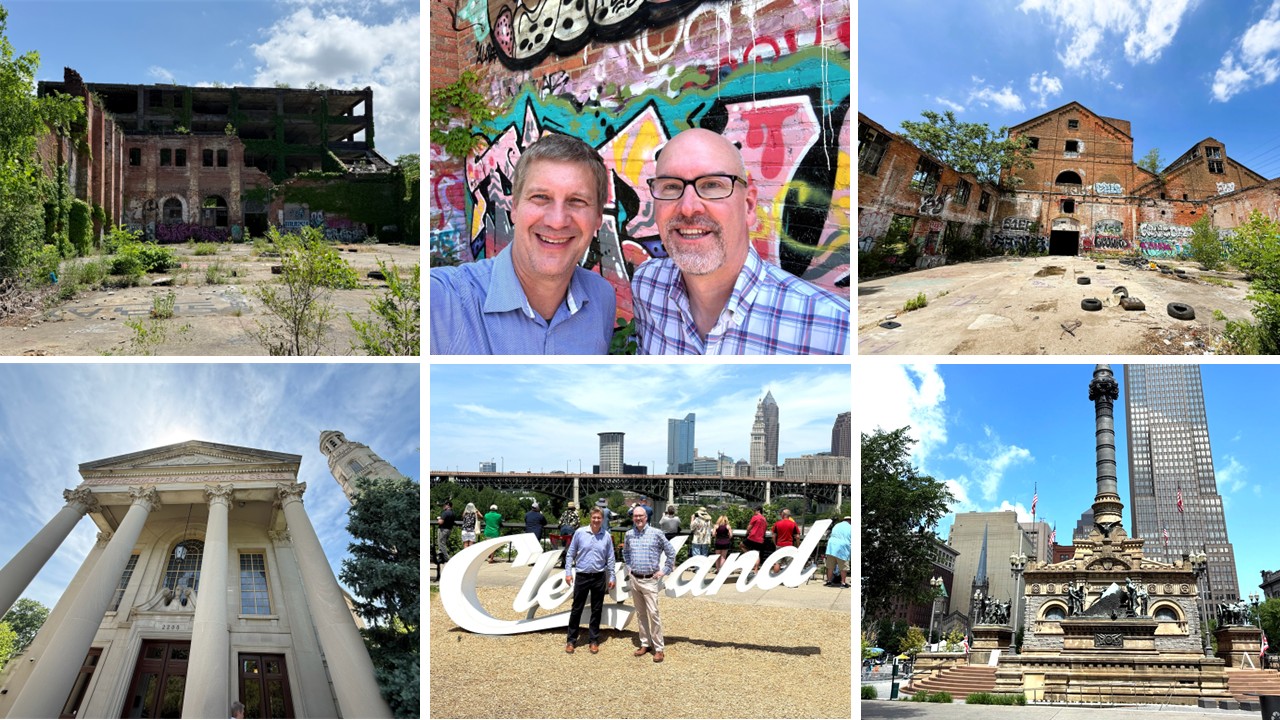
The journey that brought John Cook and Charles Fitzgerald to the shores of Lake Erie began not with a plane ticket, but with a sharp, provocative question that rattled the comfortable tech bubble of the Pacific Northwest. Back in February, Fitzgerald, an angel investor and regular contributor to GeekWire, penned a column that sent shockwaves through the local business community, warning that Seattle was on a dangerous trajectory toward becoming the next post-industrial relic—a modern-day Cleveland. Rather than retreating into defensive political platitudes, Cleveland’s energetic young mayor, Justin Bibb, stepped directly into the spotlight, joining the GeekWire Podcast to defend his city’s honour and challenge the Seattle emissaries to see the reality on the ground. Accepting the invitation, Cook and Fitzgerald traveled east to witness a city actively rewriting its narrative, embarking on a multi-day exploration of Cleveland’s revived neighborhoods, meeting with business leaders, global developers, local entrepreneurs, and political heavyweights. The result of their journey is a masterclass in civic humility, serving as a stark warning to established tech hubs that prosperity is never a permanent birthright, while simultaneously offering a blueprint for how a community can Pull itself up by its bootstraps when everyone decides to work together.
The physical setting for their broadcast could not have been more symbolic of this economic transition: they recorded this week’s podcast from inside the hollowed-out, cathedral-like remains of the abandoned Westinghouse light bulb factory on Cleveland’s near east side. Once a bustling temple of 20th-century American manufacturing, where thousands of workers spun glass and copper to illuminate the nation, the crumbling brick structure now stands as a monument to the painful deindustrialization that hollowed out the Rust Belt decades ago. Yet, the air inside was thick not with defeat, but with anticipation, as the factory sits at the heart of “The Midline,” a massive, forward-thinking district being aggressively redeveloped to house a new generation of high-tech jobs, green industries, and modern housing. Sitting among the dust motes and peeling paint, with the echoes of their voices bouncing off historic iron rafters, the podcasters reflected on the sheer physical grit required to turn a symbol of decay into a platform for future innovation. It was a tangible reminder that cities are living organisms that require constant cultivation, and that the ruins of yesterday’s triumphs can either become a tomb or the foundation for tomorrow’s breakthroughs, depending entirely on the vision of the people who inhabit them.
Throughout their stay, Cook and Fitzgerald observed a profound, culture-wide alignment that left them both inspired and deeply envious on behalf of their home city. From their high-level meetings with Mayor Bibb and Ohio’s pragmatically focused Governor, Mike DeWine, to quiet conversations with grassroots developers and struggling startup founders, they witnessed a singular, collective focus on economic growth and job creation that seems to have vanished from the Pacific Northwest. In Cleveland, the civic friction, partisan infighting, and bureaucratic red tape that often paralyze metropolitan areas have been largely set aside in favor of a shared, desperate hunger to win. The public sector, private enterprises, philanthropic organizations, and academic institutions are all rowing in the strict unison of a crew team, fully aware that they cannot afford the luxury of division if they want to survive. This seamless public-private coordination creates a welcoming red carpet for business development, allowing projects to be greenlit, funded, and built at a rapid pace that makes Seattle’s drawn-out, highly litigious planning processes look painfully obsolete and self-defeatist by comparison.
This sharp contrast formed the basis of a blunt and sobering warning that Cook and Fitzgerald brought back to the West Coast: if Seattle continues to take its massive, tech-driven prosperity for granted, hungry cities like Cleveland are poised to quietly eat its lunch. For the past few decades, Seattle has enjoyed an unprecedented golden era, fueled by the staggering, almost gravity-defying growth of giants like Amazon and Microsoft, which has insulated the region from economic reality and fostered a dangerous sense of civic complacency. It is easy to forget that Cleveland was once the Silicon Valley of its day—the prestigious headquarters of Standard Oil, a global powerhouse of manufacturing, and home to some of the wealthiest, most influential industrial dynasties on the planet—before it slowly succumbed to the stagnation of self-satisfaction. By treating its business community as an adversary to be taxed and regulated without limit, rather than an essential partner in progress, Seattle is creating an environment of friction that could drive away the next generation of innovators. Cleveland, on the other hand, possesses the invaluable assets of affordable land, abundant fresh water, a dramatically lower cost of living, and, most importantly, an aggressive, welcoming attitude that could easily lure away entrepreneurs tired of fighting the headwinds of the Pacific Northwest.
Returning their focus to the local news back home, the podcasters dissected a recent decision by the Seattle City Council that they argue perfectly illustrates this troubling, politically performative approach to governance. The council voted unanimously to enact a one-year moratorium on the construction of new large-scale data centers, ostensibly out of concern for the city’s power grid and long-term environmental goals in the era of artificial intelligence. Fitzgerald pulled no punches in his analysis, dismissed the policy as pure political theater designed to appease activist circles while accomplishing absolutely nothing of practical substance. The massive, energy-gobbling data centers required to power modern AI models were never destined for a dense, high-cost, land-constrained urban center like Seattle anyway, as these operations naturally seek out cheaper acreage and direct grid access in places like Eastern Washington or the rural Midwest. The real damage of the moratorium is not the loss of the physical buildings themselves, but the terrible signal it broadcasts to the global technology sector: a loud confession that Seattle is closed for business, fearful of technological infrastructure, and willing to pass reactionary legislation rather than doing the hard work of modernizing its utilities and partnering with the industries of the future.
The episode concluded with a look at the highly anticipated SpaceX initial public offering, a monumental event in the financial and aerospace worlds that Fitzgerald, despite his background as an active angel investor, has decided to sit out. He explained his caution by diving into the unique, high-stakes economics of the space industry, where massive capital expenditures, intense regulatory scrutiny, and a heavily reliance on government contracts create a highly volatile investment landscape. While Elon Musk’s venture has undoubtedly revolutionized space travel and satellite internet, the astronomical valuations floating around the private markets present a level of risk that requires a healthy dose of skepticism from seasoned investors. This analytical pragmatism brought the entire conversation full circle, linking the sky-high valuations of rocket ships in low-Earth orbit back to the heavy, earthbound realities of revitalizing old brick buildings on the ground in Cleveland. Whether navigating the volatile frontiers of space or the competitive arena of regional economic development, success ultimately demands a grounded commitment to physical reality, tireless collaboration, and a refusal to let past achievements blind us to the grueling work required to build a sustainable future.