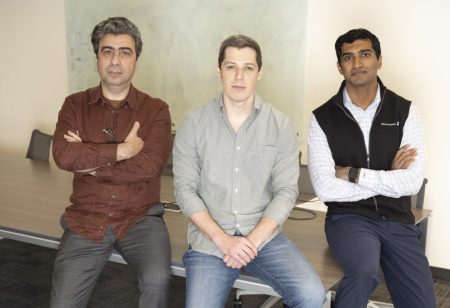




Imagine spending weeks hunched over a screen, wading through dozens of dense, jargon-filled scientific papers just to plan one experiment. That is the daily reality for many biomedical researchers, and it was exactly what Ian Levine lived through as an undergraduate at Virginia Tech and later as a Ph.D. student at the University of Michigan. Levine spent thousands of hours manually combing through publications, trying to piece together how other scientists had designed their preclinical studies, which animal models they used, what doses they gave, and how they measured outcomes. It was grueling, repetitive work, and it often felt surprisingly disconnected from the cutting-edge science it was meant to support. In 2022, Levine decided to do something about it. Along with Colin Small, a fellow graduate student he met online while Small was earning a master’s in biotechnology at Brown University, Levine co-founded ModernVivo, a Seattle-based startup using artificial intelligence to help scientists design better preclinical experiments. The company’s mission is not just to make researchers’ lives easier, although that would be enough. It is to transform the entire early stage of drug discovery so that experiments are faster, cheaper, more reliable, and less dependent on animals. Levine’s motivation is deeply personal: while studying non-opioid pain therapeutics, he watched his own mother live with a chronic pain disorder, and he became acutely aware of how much is at stake when drug development stalls or fails.
The problem ModernVivo is tackling is bigger than most people outside the lab realize. In the pharmaceutical industry, roughly 90 percent of drug candidates that reach human clinical trials ultimately fail. That astonishing failure rate is often blamed on biology or chemistry, but Levine believes a significant part of the problem lies in the way animal experiments are designed in the first place. When scientists plan a preclinical study, they typically type keywords into PubMed or another database and are flooded with hundreds or thousands of results. Then they have to read through each relevant paper—many are thirty pages or more—hunting for details like the strain of mouse, the route of administration, the timing of measurements, or the statistical methods used. It is a manual, error-prone, and astonishingly inefficient process. ModernVivo’s platform changes that. It can analyze millions of peer-reviewed publications, cross-referenced with clinical trial and regulatory data, and return highly detailed results in minutes. Researchers can filter papers by animal model, experimental conditions, author affiliation, publication date, and more. Then they can drill down into more than forty individual variables used in the experiments, pulling out the exact information they need to design a rigorous study of their own. For Levine, the goal is simple: make experiments faster and help get better drugs to the clinic. But the implications are profound, because every poorly designed experiment not only wastes time and money but also sends misleading signals that can derail drug development for years.
ModernVivo occupies a narrow but increasingly important niche in biotech software. Its closest analog is Trials.ai, an AI-driven platform for clinical trial design that was founded in San Diego and acquired in 2023 by the consulting firm ZS. ModernVivo draws on the paper database of Semantic Scholar, a research tool developed by the Allen Institute for Artificial Intelligence, which places it in loose company with general-purpose research tools like Elicit and Consensus. But Levine is careful to distinguish ModernVivo from those products. General AI chatbots can summarize the broad strokes of an experiment, but they tend to return high-level, commonly known approaches. Researchers don’t want a generic answer—they want every relevant data point, including the obscure European study that might be crucial for their specific drug candidate but would never surface in a broad summary. ModernVivo also flags contradictions in the literature. If twenty published studies point one way and five point another, the software surfaces that discrepancy rather than picking a winner. That might seem like a missed opportunity to provide clarity, but Levine sees it as a feature, not a bug. Scientists, he says, don’t want to be told what to do. They’ve earned their expertise through years of grueling training, and they want the evidence laid out transparently so they can make their own informed decisions. “They’re the people who suffer through the Ph.D. to be an expert in their field,” Levine says. This respect for scientific autonomy is woven into the product’s design, and it helps explain why ModernVivo has been warmly received by researchers who might otherwise be skeptical of AI.
The early results have been encouraging. Levine says researchers using ModernVivo report that work that used to take about a month now takes as little as an hour. That speed translates directly into confidence: scientists trust their initial study design more because they know they’ve seen the full landscape of relevant evidence, rather than just the handful of papers that happened to surface in a search. And because they have a clearer picture of what’s already been done, they run fewer duplicate or follow-up animal experiments. That cuts down on animal use, which is ethically significant, and also reduces the cost of housing, feeding, and caring for animals over time. Levine is careful not to overclaim about translational impact, because tracking whether a study ultimately leads to a successful drug takes years. But the signals are positive. ModernVivo has more than twenty customers, ranging from small biotech firms to large pharmaceutical companies. It also offers ModernVivo Scholar, a version aimed at academic researchers that launched in October, with plans ranging from free to fifty dollars per month. The company has been through multiple accelerator programs, including a WTIA founder cohort in 2023, the Creative Destruction Lab’s Seattle program, and the Merck Digital Sciences Studio’s third cohort. It has raised one million dollars in a pre-seed round, and Levine says fundraising is going well as the company looks to expand. The fact that a company with this narrow focus has attracted such varied support suggests that the pain point Levine experienced is widely felt across the industry.
Now ModernVivo is shifting its attention from the design phase of an experiment to the execution phase. Designing a study is one thing, but actually carrying it out presents a second set of challenges. Once a study is designed, researchers often don’t know which vendors have the right supplies, or which contract research organizations are equipped to handle the specific procedures involved. Tracking that down has traditionally meant manual searches, phone calls, emails, and a lot of guesswork. ModernVivo wants to remove that ambiguity. On September 15, the company launched the ModernVivo Marketplace, which matches a finished study design against a network of pre-vetted contract research organizations, analytical labs, and specialist dosing facilities. Suppliers of compounds and animal models are listed as coming soon. The idea is to create a seamless pipeline from study design to study execution, so a scientist can go from a validated protocol straight to a trusted vendor without wasting weeks on procurement. Levine describes the company’s future positioning as helping scientists go from study design to study execution faster than ever before. That vision is both practical and ambitious: not only will researchers be able to design better experiments, they’ll also be able to run them without the administrative friction that has long slowed biomedical research. In an industry where every month of delay can mean millions of dollars in lost opportunity and, more importantly, delayed therapies for patients, that kind of efficiency matters enormously.
At its core, ModernVivo is a human story about the frustration of brilliant people being slowed down by outdated processes. Ian Levine’s journey began with a simple wish to spare himself thousands of hours of tedious literature reviews, but it grew into something larger: a platform that could help change how the pharmaceutical industry learns from the scientific literature. The company is still young, and Levine is cautious about predicting how much of an impact it will ultimately have on drug approval rates. But the early indicators are powerful. Researchers are saving time, gaining confidence, and using fewer animals. They are discovering contradictions in the literature they might have missed, and they are designing experiments with a depth of knowledge that would have been impossible just a few years ago. ModernVivo doesn’t pretend to have all the answers, and it deliberately avoids telling scientists what to do. Instead, it gives them the tools to see the full picture, weigh the evidence, and make their own expert judgments. In a field where lives hang in the balance, that kind of empowerment is exactly what good technology should provide. And at a moment when AI is often presented as a replacement for human expertise, ModernVivo offers a more humane vision: artificial intelligence working in service of human wisdom, helping scientists move faster, fail less, and ultimately bring safer, more effective medicines to the people who need them.