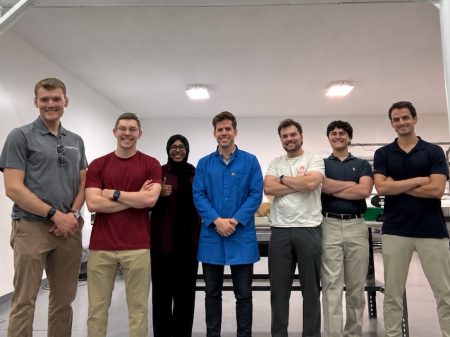






In the damp, evergreen-shadowed landscape of Redmond, Washington, a quiet industrial revolution is unfolding far from the glamorous launchpads of Cape Canaveral. Inside a sprawling, state-of-the-art manufacturing facility, teams of passionate engineers, technicians, and assembly specialists work in synchronized harmony, bathed in the sterile white light of cleanrooms. This is where SpaceX’s Starlink satellites are brought to life—not as bespoke, artisanal marvels of engineering, but as high-volume, mass-produced instruments of global change. Between late 2025 and the spring of 2026, this single factory achieved an almost unbelievable operational rhythm, churning out approximately 70 satellites every single week. For the human hands assembling these complex machines, the work is a grueling but exhilarating tightrope walk between hyper-precise craftsmanship and rapid-fire manufacturing. Each satellite rolling off the line represents a highly sophisticated node of orbital infrastructure, packed with advanced phased-array antennas, custom silicon, and ion thrusters designed to maneuver through the silent vacuum of space. By transforming satellite manufacturing into an efficient, assembly-line process akin to building automobiles, the Redmond workforce has done what was once deemed impossible: they have commoditized the cosmos. The human dedication poured into these metallic frames is tangible, reflecting a shared mission to bridge the digital divide that has isolated billions of people across the globe. As these satellites are boxed up and shipped south to be stacked atop towering Falcon 9 rockets, the people of Redmond are acutely aware that their daily labor is directly underwriting humanity’s next great leap. It is a local effort with a truly universal footprint, showcasing how human ingenuity, collaborative grit, and relentless operational discipline can turn a sci-fi dream into a concrete, weekly reality that reshapes how our species interacts with information. Every solder joint, every solar panel alignment, and every software flash is performed with the profound understanding that a single minor oversight could result in a multi-million-dollar piece of space junk, raising the stakes for every worker on the floor.
The fruits of this Redmond assembly line are doing far more than just beaming high-speed internet to remote corners of the Earth; they are serving as the financial engine powering Elon Musk’s grandest and most expensive technological ambitions. In its historic first earnings report as a newly minted public company, SpaceX revealed that its Starlink connectivity division posted a staggering $1.7 billion in operating income for the second quarter of 2026. This impressive figure solidifies Starlink’s position as the only genuinely profitable business unit within the entire SpaceX empire, acting as a crucial oasis of cash flow in a desert of massive capital expenditures. On the opposite end of the balance sheet lies Musk’s highly anticipated and incredibly resource-heavy artificial intelligence division. Centered around the Grok large language model, the X social media ecosystem, and an army of developing humanoid robots, this bleeding-edge AI segment reported a quarterly loss of $1.3 billion. This deficit was fueled by a mind-boggling $15.8 billion spent on capital projects during the quarter—a sum that is more than three times Starlink’s own quarterly revenue of $4.3 billion, despite the satellite division boasting a phenomenal 66% year-over-year revenue surge. For public investors, this stark financial contrast presents a fascinating psychological dilemma. They are being asked to celebrate the massive, concrete success of a space-based internet monopoly while simultaneously bankrolling a speculative, multi-billion-dollar race to build artificial general intelligence. It is a high-stakes corporate tightrope where the reliable, subscription-based dollars harvested from rural families, maritime shipping fleets, and defense agencies are immediately funneled into high-performance GPUs, massive data centers, and advanced robotic research, blending the physical frontier of space with the digital frontier of the mind. This financial symbiosis reveals a fascinating truth about modern tech conglomerates: the ancient dirt-and-metal mechanics of space flight are now directly funding the ephemeral, software-driven dreams of the digital future.
During the company’s inaugural post-IPO earnings call, Elon Musk made it abundantly clear that he believes the investing public is fundamentally failing to grasp the sheer, untapped scale of the Starlink enterprise. Rather than viewing the satellite network as a mature utility company that has reached its peak, Musk painted a vivid, almost breathless portrait of a network that is only in its infancy. He boldly predicted to analysts that an upcoming generation of larger, more capable satellites—designed to be launched by the company’s massive Starship rocket—could easily increase Starlink’s annual revenue tenfold. In Musk’s vision of the very near future, Starlink will not merely serve as a safety net for those without fiber-optic cables; it will actively deliver “a majority of the world’s internet” in less than a decade. To back up this audacious claim, Musk introduced a fascinating paradigm shift regarding who—or what—will actually be consuming this bandwidth. While human eyes and fingers can only scroll through so much data in a day, the imminent arrival of millions of autonomous vehicles, humanoid robots, and distributed AI agents will create an insatiable, non-human demand for instant data transmission. These intelligent machines will need to constantly upload sensory maps, download software updates, and communicate with cloud-based neural networks in real-time, regardless of whether they are navigating a bustling city street or a remote mining site. According to Musk, a dense, global low-Earth orbit constellation like Starlink is the only infrastructure physically capable of servicing this hyper-connected machine economy, positioning the satellite network as the nervous system for the next generation of artificial intelligence. For the analysts on the line, listening to Musk was an exercise in balancing traditional financial metrics with science-fiction forecasting, highlighting a clash between conservative Wall Street models and an executive who views the entire planet as a single, fully integrated computer system. It is a vision that transforms Starlink from a simple internet service provider into an indispensable cosmic backbone for an impending era of machine intelligence.
This tension between futuristic ambition and immediate fiscal reality was vividly played out on the trading floor following the earnings release, showing how even the most advanced space company is still subject to the earthly anxieties of human emotion and market psychology. Overall, SpaceX delivered a blockbuster quarter that comfortably beat Wall Street’s top-line expectations, pulling in an impressive $7.8 billion in total revenue—a staggering 92% jump from the $4.1 billion recorded during the same period in the previous year. Furthermore, the company demonstrated disciplined operational scaling by successfully narrowing its quarterly net loss to $541 million, down significantly from the painful $1 billion loss reported a year earlier. Investors initially reacted with pure euphoria, driving SpaceX shares up by 9.4% to close the regular trading day at $125.33. However, the subsequent after-hours session revealed the fragile state of investor confidence when the stock abruptly shed nearly 5% of those gains. This sudden, nervous retreat was a clear sign that, despite the spectacular revenue growth, the market remains deeply anxious about the sheer volume of capital being consumed by Musk’s AI and rocket development programs. It highlights a classic human conflict in the world of high-finance: the desire for safe, predictable short-term yields versus the stomach-churning volatility of funding a visionary who is comfortable betting the entire company on unproven, revolutionary technologies. Wall Street wants to see the steady, lucrative subscription profits of Starlink returned to shareholders, but SpaceX’s leadership is stubbornly committed to using every drop of that profit as rocket fuel for their next grand adventure, reminding public investors that they are along for a wild, unpredictable ride where the destination is nothing less than the complete transformation of human civilization. This delicate balance of power between short-term financial pragmatism and long-term evolutionary drive will ultimately decide whether SpaceX can sustain its momentum or collapse under its own weight.
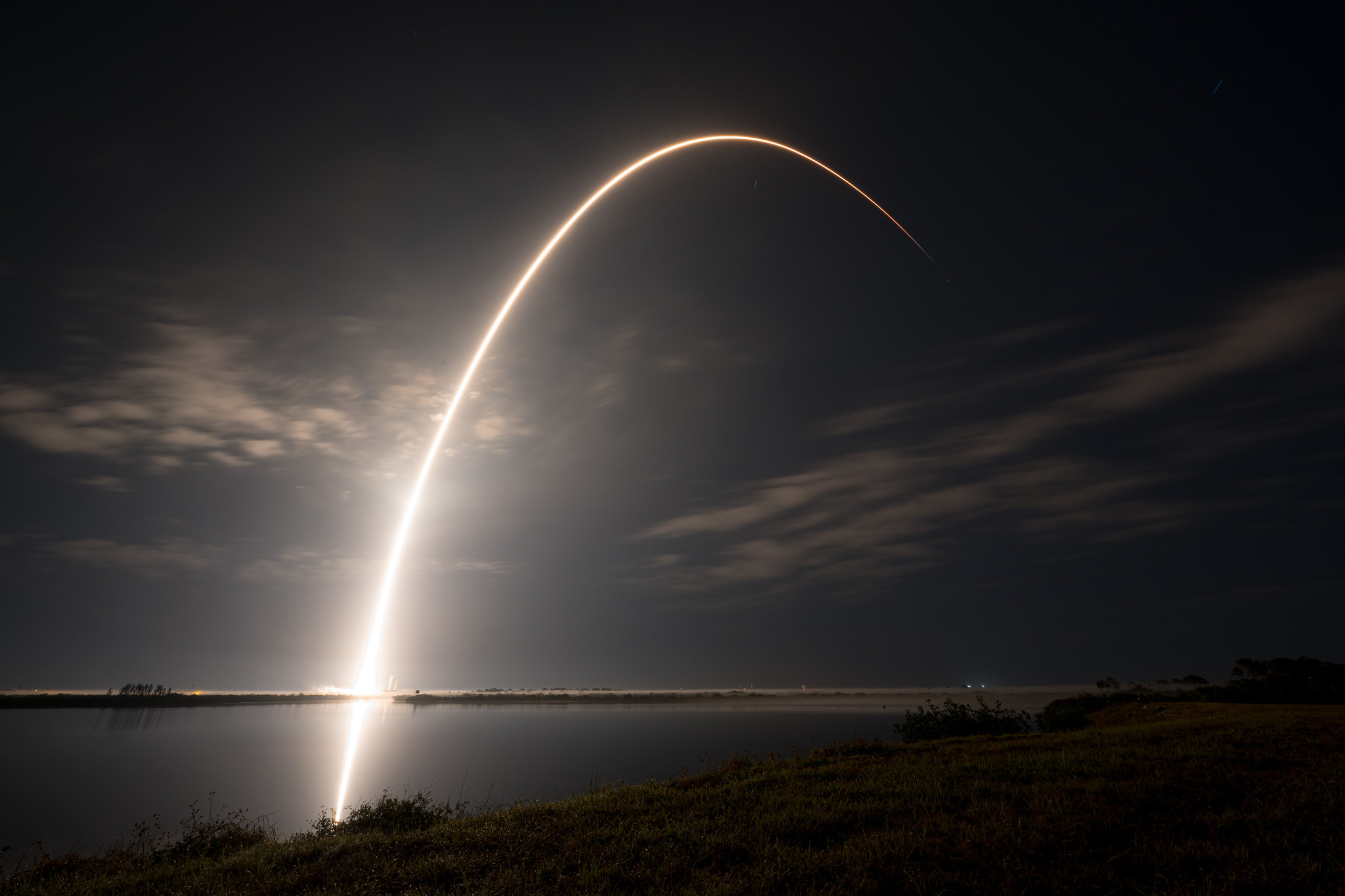
While investors bicker over balance sheets, the physical reality of what SpaceX has built in the night sky is nothing short of breathtaking—and it has sparked an intense, local rivalry right in the Pacific Northwest. Thanks to the relentless output of the Redmond factory, SpaceX has successfully placed approximately 9,600 Starlink satellites into low-Earth orbit. This mind-boggling number represents roughly 75% of all active, maneuverable satellites currently circling our planet, giving SpaceX an unprecedented, near-monopoly over the orbital commons. This dominance has not gone unnoticed by its chief corporate rival, Amazon, which is quietly building its own competing satellite internet network, Project Kuiper, just a few miles away in Kirkland, Washington. The geographical proximity of these two space-tech powerhouses has turned the Seattle suburbs into the epicenter of a modern-day celestial gold rush. Amazon, however, is finding out just how difficult it is to catch up to the SpaceX juggernaut; while Redmond has nearly ten thousand operational satellites in the sky, Amazon’s Kirkland facility has only managed to orbit close to 400 satellites. Although Amazon CEO Andy Jassy remains optimistic, telling analysts that this is enough to begin initial commercial testing later this year, the gap between the two giants is vast. This rivalry is more than just a corporate race; it is a deeply human drama involving thousands of local engineers, software developers, and machinists who live, work, and socialize in the same neighborhoods, often swapping stories over coffee or switching sides in a quiet war for talent. Every single rocket launch is a high-stakes chess move, watched closely not just by Wall Street, but by astronomers worried about the bright trails of metal reflecting the sun, and by ordinary citizens who look up at the night sky and realize that the very nature of our heavens is being rewritten by two tech titans competing in their Pacific Northwest backyard. This high-altitude arms race promises to permanently alter our relationship with the cosmos, transforming the night sky into a canvas of corporate competition.
At the end of the day, the true measure of Starlink’s success is found not in the cold, hard metrics of stock prices or satellite counts, but in the profoundly human stories of the 12 million subscribers who now rely on the service. This subscriber base has doubled over the past year alone, adding 1.7 million new users in the second quarter of 2026 to reach a total that fell just shy of Wall Street’s lofty expectations of 12.19 million. Yet, what Starlink missed in raw subscriber numbers, it more than made up for in revenue, beating segment projections by a massive $460 million. This financial windfall was largely driven by a breathtaking 108% explosion in enterprise and government contracts, which now represent over 40% of Starlink’s total sales. This shift reveals how critical the service has become, not just for rural homeowners wanting to stream video, but for emergency responders battling wildfires, scientific research vessels exploring the high seas, and defense departments operating in active conflict zones. To reach this global audience, SpaceX has had to navigate the delicate economics of international expansion, strategically lowering its average monthly subscriber fee to $66 from $85 a year ago to make the hardware and service affordable in developing nations. Crucially for SpaceX’s long-term sustainability, this price drop has finally stabilized, holding flat from the first quarter despite warnings to IPO investors that it might continue to slide. This stabilization shows a mature, thoughtful approach to global scaling, ensuring that as SpaceX connects a remote school in the Andes or a medical clinic in sub-Saharan Africa, it is doing so on a financially sustainable foundation. By matching human empathy with hard-nosed business logic, SpaceX is proving that the ultimate value of its Redmond-built satellites lies in their ability to draw humanity closer together, transforming a collection of isolated communities into a single, interconnected global family. In doing so, they remind us that the loftiest technologies are ultimately justified not by their complexity, but by their capacity to improve everyday human lives.