





The boundary dividing science fiction from daily industrial reality is rapidly dissolving. In Salem, Oregon, a quiet revolution is taking shape that promises to alter the human workplace forever, as Agility Robotics prepares to make history by becoming the first publicly traded company solely dedicated to the development and commercialization of humanoid robots. Rather than emerging from the typical high-tech corridors of Silicon Valley or the academic bastions of the East Coast, this trailblazing venture is charting its path to Wall Street through an innovative, high-profile merger with a special purpose acquisition company, or SPAC, known as Churchill Capital Corp XI. Masterminded by the veteran financier Michael Klein, this transaction breathes vibrant new life into the SPAC investment model—a financial structure that dominated the pandemic-era markets before cooling under regulatory scrutiny, but which has now found a highly compelling, futuristic flag-bearer. With plans to trade on the prestigious Nasdaq stock exchange under the ticker symbol “AGLT” once the merger formally closes in late 2026, the deal establishes a stunning $2.5 billion valuation for the pioneering enterprise. This transition from a closely held startup to a publicly traded trailblazer marks a critical turning point in the robotics sector, signaling to retail and institutional investors alike that humanoid machines are no longer mere curiosities confined to laboratory demos or viral promotional videos. Instead, they are rapidly maturing into practical, scalable, and highly valuable assets designed to assist a global economy grappling with persistent labor shortages, supply chain bottlenecks, and shifting demographic patterns that threaten output. By stepping onto the public markets ahead of its formidable competitors, Agility Robotics is not just seeking capital; it is claiming its position as the ideological vanguard of a physical automation revolution, demonstrating that the world is ready to welcome bipedal machinery into the heart of modern commerce.
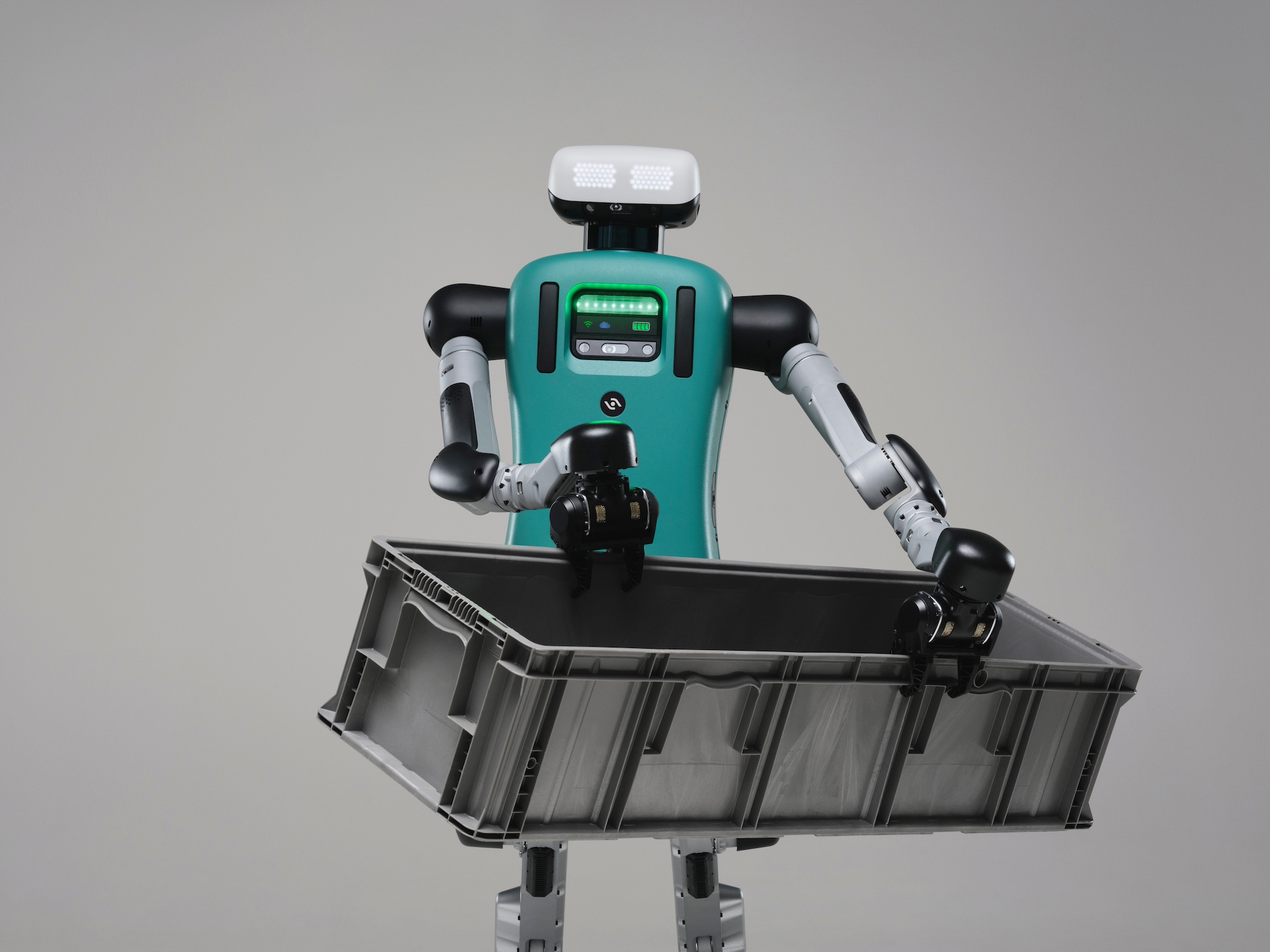
At the physical core of this financial blockbuster is Digit, a sleek, state-of-the-art bipedal robot that stands at a remarkably human-like height of five feet, nine inches. Designed from the ground up to slip seamlessly into industrial environments originally built for flesh-and-blood workers, Digit represents an intentional, thoughtful pivot away from traditional, bulky machinery toward a form factor that mirrors the human body. The logic behind this design is as elegant as it is practical: rather than requiring warehouse operators to completely redesign their physical infrastructure with expensive conveyor belts, tracks, or robotic arms, Digit uses its two legs to navigate stairs, squeeze through narrow, cluttered aisles, and operate in the exact same spaces where humans do. A distinctive feather in Digit’s engineering cap is its unique leg joints, which trace their ancestry back to bipedal studies of ostriches, providing unparalleled stability and a compact physical footprint that allows it to turn on a dime. With the imminent introduction of the upgraded Digit v5 model, Agility Robotics is pushing the boundaries of mechanical capability even further by introducing versatile, swappable hands, elevating its lifting capacity from 35 pounds to a robust 50 pounds, and engineering the unit to run continuously for up to twenty hours a day using rapid-charging, energy-efficient systems. This means that a single machine can reliably tackle repetitive, physically punishing tasks—such as moving heavy plastic totes, lifting heavy materials, and tending to automated warehouse machinery—across multiple shifts, fundamentally changing how facilities manage their workflows. This persistent focus on matching human ergonomics isn’t just about mimicry; it is a highly calculated solution to the chronic, painful injuries and high turnover rates that plague modern logistics centers. By handling the monotonous, back-breaking tasks that humans are increasingly reluctant or physically unable to perform, Digit acts as a vital tool for economic sustainability, walking tall alongside human colleagues to transform warehouse floors from places of grueling physical exhaustion into hubs of highly coordinated, tech-driven productivity.
Guiding Agility Robotics through this high-stakes leap into the public eye is Chief Executive Officer Peggy Johnson, a widely respected technology veteran whose impressive career includes executive leadership roles at Microsoft and serving as the chief executive of the spatial computing pioneer Magic Leap. Johnson brings a rare combination of deeply technical understanding and seasoned corporate governance to a sector that is frequently criticized for prioritizing hyperbolic promises over commercial viability. Under her steady leadership, the $2.5 billion merger is projected to inject a massive financial windfall of more than $620 million in cash directly into the company’s balance sheet, providing a vital cushion of capital to fund its aggressive commercial scaling plans. This substantial war chest includes approximately $420 million raised from public investors through Churchill Capital Corp XI, as well as a strategic, highly significant $200 million investment led by the global manufacturing titan Foxconn, whose expertise in high-volume production will be invaluable as Agility moves from building custom units to mass-producing humanoids on an unprecedented factory scale at its specialized “Robofab” facility. Initial preliminary filings released in connection with the transaction reveal the complex, expensive reality of building deep-tech hardware, showing that the company remains unprofitable and heavily invested in research and development. Agility’s operating expenses climbed significantly to roughly $111 million in 2025 from $71 million the previous year, reflecting a cash burn rate of about $100 million as they refined the Digit v5 design. However, the filings also boast an impressive, forward-looking proof of commercial demand: more than $300 million in “committed” multi-year orders for their next-generation humanoid model, anchored by a prominent, three-year contract for 1,000 units from a massive, unnamed commercial customer. While the company carefully cautions in its fine print that these commitments depend on hitting specific technical milestones and do not represent immediate revenue, they paint a picture of immense, unmet commercial appetite.
What truly sets Agility Robotics apart from many of its peers in the humanoid race is its extensive, verifiable track record of active, real-world deployments in dynamic commercial environments. Rather than keeping its creations safely under watch in sterile R&D facilities, Agility has put Digit to work in the wild, accumulating over 65,000 hours of actual operational experience across several major global industries. Today, Digit is deployed within the operations of automotive manufacturing giant Schaeffler, logistics mastermind GXO, Toyota Motor Manufacturing Canada, and Mercado Libre, the dominant force in Latin American e-commerce, offering these organizations invaluable insights into how humanoid robots perform under the stress of daily production schedules. The most closely watched of all these partnerships, however, is with the Seattle-based e-commerce titan Amazon, which recognized Agility’s potential early on and joined as an anchor investor during their capital raises. Amazon has successfully conducted multiple pilot programs testing Digit’s capabilities, including a highly publicized trial at a massive fulfillment center in Sumner, Washington, where the two-legged robot was observed systematically retrieving, carrying, and sorting yellow plastic inventory totes. While Agility’s leadership team remains disciplined and tight-lipped about the exact timing of Amazon’s next steps, corporate spokespeople have confirmed that the relationship remains incredibly active, with both companies eagerly planning the next phase of deployment around the highly anticipated launch of the Digit v5 model. By maintaining deep, collaborative ties with the world’s largest logistics provider, Agility ensures that its product roadmap is directly informed by the harshest, most demanding operating conditions on the planet, guaranteeing that future versions of Digit are built to solve real-world industrial bottlenecks rather than theoretical engineering puzzles.
To truly integrate humanoid robots into the modern workplace, developers must solve perhaps the most difficult challenge of all: safety. Historically, industrial robotics have been treated as dangerous, lumbering hazards, physically isolated from human staff behind sturdy steel cages, safety barriers, and highly sensitive light curtains to prevent catastrophic workplace accidents. Agility is boldly breaking down these physical barriers by becoming the very first company to adopt NVIDIA’s newly unveiled, state-of-the-art Halos safety system for robotics. This advanced technical integration serves as the brain behind Digit’s “cooperatively safe” operational mode, utilizing real-time computer vision, edge computing, AI algorithms, and spatial awareness sensors to constantly monitor its immediate surroundings. Deeply integrated with NVIDIA’s advanced Thor system-on-a-chip and trained extensively within virtual environments via the Omniverse simulation platform, Digit can anticipate human movements in real-time. If a human colleague walks into Digit’s path, the robot immediately senses the presence, seamlessly adjusting its gait, path, or speed—or stopping entirely—to prevent even the slightest collision. This breakthrough in cooperative safety fundamentally redefines the relationship between humans and machines on the warehouse floor, transforming a once-silent, separated environment into a harmonious, shared workspace where human agility and artificial durability complement one another. Grounding this technological marvel in a deeply human perspective, this collaboration allows businesses to target the severe global labor shortages that continue to strain logistics networks. By allowing Digit to take on the repetitive, ergonomically stressful tasks that humans find exhausting or dangerous, companies can elevate their human workforce to more stimulating, analytical, and highly skilled roles. In this new paradigm, human workers are no longer competitors against machine automation, but rather strategic supervisors who manage fleets of cooperative robotic teammates, multiplying their efficiency while protecting their long-term health and physical well-being.
As Agility Robotics marches toward its landmark public listing, it is effectively executing a brilliant strategic flank maneuver, beating a crowded field of heavily funded, highly publicized rivals to the public markets. These massive competitors include Silicon Valley’s Figure AI, which recently achieved a staggering $39 billion valuation after pulling in more than a billion dollars in funding from global technology giants, and Boston Dynamics, the Hyundai-owned legend renowned for its sensational, acrobatic Atlas humanoid. Meanwhile, tech eccentric Elon Musk continues to loom large over the sector, aggressively developing Tesla’s Optimus robot, although that endeavor remains bundled inside an already-public, multi-industry trillion-dollar automotive giant rather than a pure-play robotics company. By establishing itself as the sole publicly traded, dedicated humanoid robot player under the ticker “AGLT,” Agility offers public market investors a unique, direct pipeline into the explosive growth of the somatic AI and physical robotics industry, a sector previously closed off to everyday retail investors. Currently sitting proud at number five on the GeekWire 200 ranking of the Pacific Northwest’s most promising privately held technology startups, the Salem-based pioneer is poised to formally graduate from this prestigious list of private innovators once the Churchill Capital Corp XI SPAC merger officially closes by the end of 2026. This journey—from a quiet academic spinout at Oregon State University’s Dynamic Robotics Laboratory to a major public corporation commanding a $2.5 billion valuation—is more than just a corporate success story; it is a profound testament to the power of pragmatic, human-centered design. In an era often dominated by ephemeral software and abstract digital realms, Agility Robotics is building a highly tangible, physical future, demonstrating that walking, working humanoid assistants are no longer a distant dream of the twenty-first century, but an active, helpful reality ready to step onto the world stage.