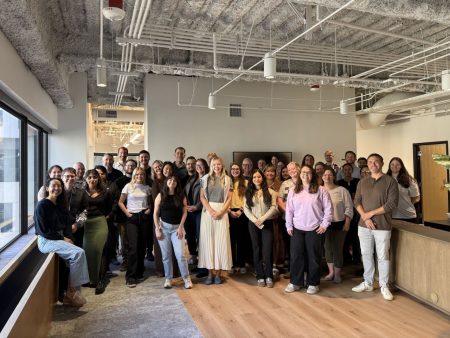







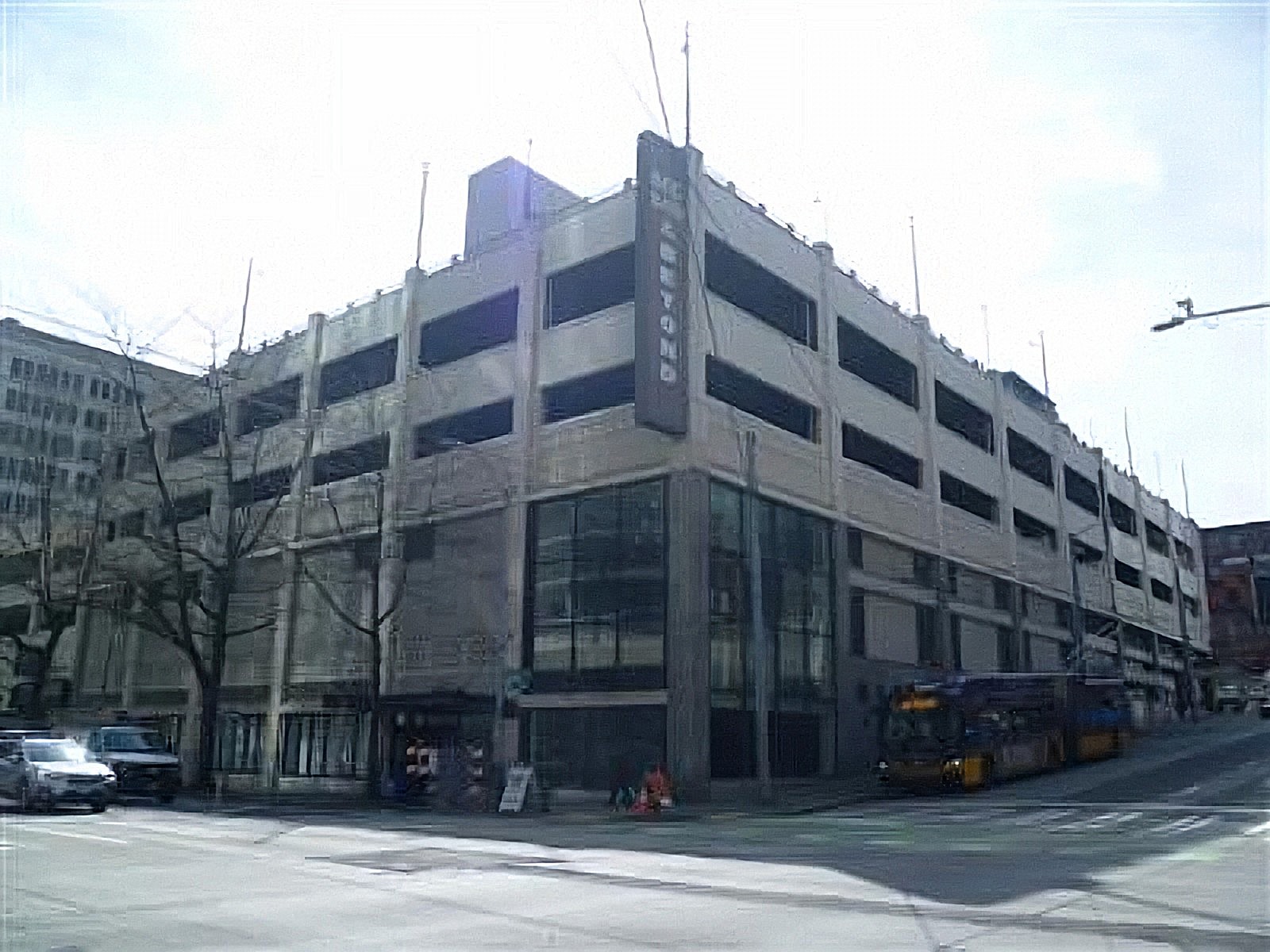
At 301 Virginia Street in the heart of downtown Seattle stands a building that perfectly captures the shifting tides of urban life, consumer culture, and community identity. For years, this address was known to locals as a Bed Bath & Beyond, a bustling, cavernous retail hub where city dwellers bought the mundane domestic goods of everyday life—linens, kitchen gadgets, and home decor that grounded their domestic lives. When the retail giant vacated the space, it did not sit empty; instead, it underwent a vibrant, human-centric transformation, becoming the temporary home of Cannonball Arts. Operated by the creative minds behind the legendary Bumbershoot arts and music festival, the building emerged as a lively sanctuary for local artists, musicians, and performers, echoing with the sounds of live music and showcasing the colorful, messy, and beautiful manifestations of Seattle’s enduring counterculture. It turned into a physical space where people gathered to connect, feel inspired, and assert their shared humanity in an increasingly digital world. Yet, this cultural oasis now faces a quiet but monumental threat, as plans have emerged to demolish this hub of human expression and replace it with a massive, six-story data center. This proposed shift from a lively community gathering space to a block of silent, whirring server racks represents a profound symbolic clash between Seattle’s artistic soul and the insatiable physical infrastructure demands of the modern internet era. It leaves local residents to wonder what is truly lost when we trade human creativity, tangible arts, and local community spaces for the cold, unyielding utility of digital convenience.
The driving force behind this dramatic real estate play is Digital Realty, an Austin, Texas-based real estate investment trust that operates as a global colossus in the digital infrastructure landscape, boasting an expansive portfolio of more than three hundred data centers scattered across multiple continents. Digital Realty’s ambitious proposal for the 301 Virginia St. site involves completely leveling the existing structure to erect a state-of-the-art facility featuring four floors dedicated entirely to data storage, alongside a lab, office space, and a ground-floor retail component designed to pacify street-level aesthetic demands. In an era where public anxiety over the massive energy footprints of artificial intelligence is reaching a boiling point, the company has trodden carefully with its public relations strategy. A spokesperson for Digital Realty sought to soothe local fears by describing the planned project not as an “AI data center,” which has become a lightning rod for environmental criticism, but rather as a “highly connected, network-dense facility” designed to facilitate local network routing and connectivity. Furthermore, the company clarified that it is still in the process of auditing and assessing the overall power needs for the site, attempting to project an image of responsible stewardship. However, to the average citizen, the subtle technical distinction between a network-routing facility and an AI training farm does little to change the physical reality of the proposal, which would replace a vibrant community asset with a towering, industrial concrete fortress slated to rise in a dense, walkable neighborhood, serving as yet another sterile node in the global machine of the virtual world. This corporate reframing highlights the growing tension between developers who view urban properties through the lens of data throughput and local residents who see them as vital community anchors.
This high-stakes development proposal lands directly in the middle of a gathering political storm within Seattle’s civic government, where officials are grappling with the rapid and unpredictable expansion of the tech industry. Prompted by an outpouring of public concern over how the booming artificial intelligence sector is threatening to monopolize clean energy, deplete local water resources, and drive up utility rates for ordinary citizens, the Seattle City Council is seriously considering a sweeping one-year moratorium on all new data centers. In a decisive move that signaled growing legislative urgency, the council’s land use committee recently voted to advance this freeze to the full council for a final vote. The resolution driving this proposed moratorium pulled no punches, explicitly citing the meteoric rise of AI technologies and pointing out that modern data centers require astronomical volumes of electricity to operate, which places immense pressure on local grids. This unprecedented surge in energy consumption forces utilities to invest heavily in costly new infrastructure—infrastructure that is ultimately funded through the monthly utility bills of everyday residents, who receive little to no direct benefit from the giant server farms humming in their backyards. Community members are increasingly voicing their frustration, demanding that public officials prioritize the well-being of local neighborhoods over the infinite scaling demands of multi-national technology corporations that often operate with minimal regard for local ecological boundaries. They argue that a city’s electrical grid should serve the homes, small businesses, and schools of its human inhabitants first, rather than being carved up to feed the escalating appetites of virtual algorithms. This tension has transformed a routine land-use discussion into a passionate debate about civic values, environmental justice, and the right to equitable public utilities.
The unfolding situation has evolved into a tense, bureaucratic race against the clock, highlighting the friction between corporate agility and the slower, deliberative pace of democratic governance. Digital Realty officially submitted its initial permit filings for the 301 Virginia Street project on May 29, 2026, just days before the City Council’s land use committee formalized its push for the moratorium. This precise timing leaves the future of the project hanging in a state of profound legal and administrative limbo, as observers question whether the development will be grandfathered in under older zoning rules or swept up in the incoming regulatory freeze. According to the language drafted in the city’s resolution, the moratorium is designed to stop the city from filing, processing, or approving any applications for new data centers for a full year. This retroactive threat has created a high-stakes chess match between a multi-billion-dollar global corporation trying to establish a physical foothold before the door slams shut, and local policymakers attempting to construct a regulatory shield to protect their city’s resources before the damage is done. This conflict illustrates the intense pressure local governments face when trying to regulate tech giants in real-time, as corporate entities often move with a velocity that outpaces the legal frameworks designed to hold them accountable, leaving citizens in a constant state of defensive anxiety. The outcome of this race will likely set a major precedent for how Seattle—and other tech-centric cities—manages the aggressive expansion of physical digital infrastructure within established municipal borders, demonstrating whether civic willpower can successfully push back against corporate momentum. For local housing advocates and neighborhood planners, the timeline is not just a legal technicality; it represents a crucial window wherein the community can assert its right to shape the physical landscape of downtown Seattle, ensuring that prime urban real estate is used to enrich human lives rather than merely store computer processors.
Seattle’s local struggle is not an isolated incident; rather, it is a micro-climate of a much larger, global backlash as communities around the world begin to rebel against the relentless encroachment of data centers. For years, tech conglomerates successfully sold the public on the illusion of “the cloud” as an ethereal, weightless, and environmentally harmless ecosystem where files, photos, and computer models float effortlessly in the digital ether. Today, that illusion has shattered, revealing the visceral, heavy-industrial reality of the digital age: massive concrete warehouses that consume millions of gallons of fresh water daily just to keep overheating computers cool, while sucking up enough electricity to power entire medium-sized cities. From the rural towns of Ireland and the suburbs of Northern Virginia to the urban cores of major metropolitan cities, everyday people are standing up to demand a halt to this unbridled expansion. They are challenging the narrative that technological progress must come at the expense of local environmental sustainability, refusing to let their rivers, reservoirs, and electrical grids be sacrificed to power resource-heavy algorithmic engines that serve corporate bottom lines far away from the communities bearing the environmental brunt. This growing global resistance emphasizes a fundamental human awakening: that the virtual world, for all its convenience, relies on a finite physical planet, and that the resources required to sustain it must be managed with a sense of collective responsibility and ecological sanity. As droughts worsen and energy grids face unprecedented strain from extreme weather, the choice between powering a local community and powering a global server farm is no longer a hypothetical scenario, but a pressing, everyday reality that is pushing citizens to draw a firm line in the sand.
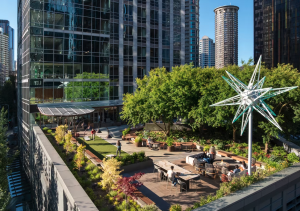
Ultimately, this battle over 301 Virginia Street forces Seattle to confront its own identity and decide what kind of future it wants to build for its citizens. This is a city that has always proudly occupied the intersection of cutting-edge technological innovation and deep environmental consciousness, but balancing those two impulses has never been more difficult. Ironically, Digital Realty is already deeply woven into Seattle’s downtown infrastructure, operating a massive colocation center in the historic 34-story Westin Building just blocks away on Sixth Avenue. In an interesting twist of urban engineering, excess heat from those servers is creatively piped across the street to help warm Amazon’s corporate headquarters, a project developed alongside Clise Properties, who also happens to own the 301 Virginia St. site. While this existing setup demonstrates that digital infrastructure and urban life can sometimes coexist through thoughtful, ecologically minded design, the sheer scale of the new AI-driven expansion threatens to overwhelm such delicate balances. As Seattleites look at the vibrant canvas of Cannonball Arts and contemplate its potential replacement by a silent, heavily guarded citadel of processors, they are asking a fundamental, human question: does a city exist to serve the people who walk its streets, create its art, and breathe its air, or is it destined to become a mere physical host for an insatiable, virtual machine? The final decision on this project and the proposed moratorium will signal to the world whether Seattle values its living, breathing community over the cold calculations of the digital frontier. In a world increasingly dominated by screens, preserving the physical spaces where humans can gather, create, and interact face-to-face is not just an aesthetic preference; it is a vital act of cultural survival that Seattle must decide whether to defend or surrender.