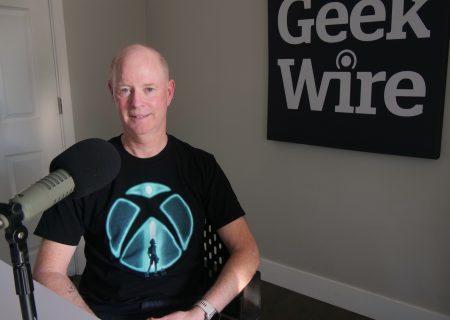



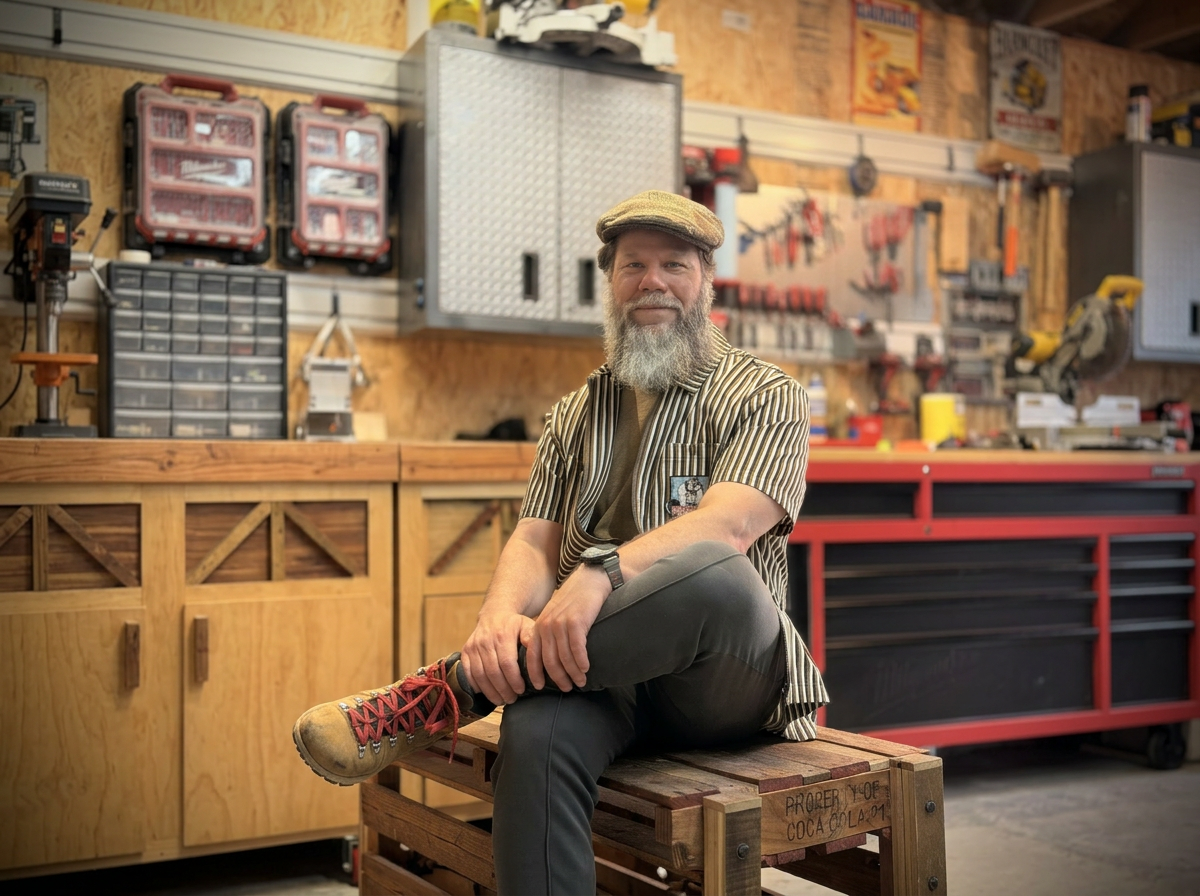
Shawn Mrzena sits comfortably in his workshop, perched upon a sturdy, rustic table of his own creation—a piece of furniture crafted from a discarded wooden pallet he hauled home. For nearly twenty-five years, Mrzena navigated the ever-shifting currents of Microsoft’s corporate landscape, evolving from a roles in sales to a business architect, and ultimately helping establish the company’s critical data-privacy operations. Over a quarter of a century, he watched the tech giant transition from shrink-wrapped, on-premises software to hosted services, then to the cloud, and now into the unyielding, high-speed wilderness of artificial intelligence. While Mrzena carries no bitterness and deeply values his tenure—likening his long Microsoft career to an invaluable, hands-on MBA that money simply could not buy—he reached a point where the relentless velocity of the modern tech sector began to feel more like an exhausting treadmill than an exciting journey. As the company pivoted with frantic intensity toward artificial intelligence, the late-50s veteran realized he no longer felt the desire to chase the industry’s next big disruption. When Microsoft announced its first-ever Voluntary Retirement Program (VRP) in April, Mrzena saw a perfect opportunity to step off the continuous digital treadmill and return to the tangible, physical world of his youth. Trading the intangible, fast-paced stream of AI algorithms for the brilliant, heat-emitting sparks of a welding torch, he plans to attend school for welding and metal fabrication, eagerly anticipating the simple, honest satisfaction of working with raw materials. For Mrzena, the true appeal of the trades lies in the beautiful, grounded simplicity of the physical world: the ability to feel, touch, and directly shape the fruits of his daily physical labor.
On a broader corporate scale, Mrzena is far from alone in his decision to step away; he represents a significant wave of departure, comprising roughly seven percent of Microsoft’s active United States workforce. To be eligible for this historic voluntary retirement initiative, employees had to meet specific criteria, namely holding a position at the senior director level or below, while possessing a combined age and tenure that equaled or exceeded the number seventy. For the estimated 8,750 employees who qualified, the financial incentive was remarkably compelling: a lump-sum severance payout that could reach up to thirty-nine weeks of salary, paired with the highly coveted benefit of fully subsidized health insurance for the first year, with the option to remain on company healthcare plans at standard COBRA rates for up to four additional years. Beneath these practical financial calculations, however, lay a much deeper, more complex set of human emotions. The introduction of the VRP came during a prolonged era of deep anxiety within the tech sector, marked by a steady, demoralizing drumbeat of massive layoffs at Microsoft and its industry peers. For many long-tenured employees, the retirement program was not just a comfortable financial bridge, but a welcome path to agency. Rather than waiting in quiet dread for the next cold corporate restructuring email to land in their inbox, these veterans chose to take complete control of their professional destinies and exit on their own terms. Yet, this mass departure has also sparked quiet, persistent concerns among those remaining on campus, who worry about the sudden, massive loss of institutional memory and historical knowledge as thousands of key builders prepare to surrender their blue badges simultaneously.
For several of these retirees, the transition represents a profound desire to step away from virtual screens and reconnect with the physical world. Justin Long, an engineering manager who spent his entire twenty-eight-year career in Microsoft’s Office and M365 ecosystems, represents the quintessential tech veteran who successfully designed his own exit. Having meticulously tested and shipped every iteration of Office since the turn of the millennium, Long worked closely with a financial planner to arrange a comfortable retirement at age fifty-five. When the VRP occurred ahead of schedule, it transformed his mindset from “a few more years of grinding” to an immediate, joyful realization that his retirement was finally at hand. Backed by a payout that guarantees he will not need to touch his retirement savings for nearly a decade, Long plans to embrace a traditional, active retirement, beginning with scuba diving lessons in the pristine waters of Kauai, alongside dedicated time for photography, gardening, and creative 3D printing. Similarly, Briand Sanderson, who began his Microsoft journey in 1998 by helping build pioneering browsers like Internet Explorer 5 and 6, viewed the offer as a beautiful opportunity to leave corporate technology on a high note before the onset of burnout. At fifty-nine, Sanderson is trading the pursuit of digital windows for the physical lens of a camera, focusing his creative energy on photography, travel, and cultivating his garden. Having spent a long, distinguished career building the conceptual windows through which millions of everyday users view the world, he is looking forward to finally stepping back, picking up his camera, and framing life’s brilliant views for himself.
For other tech veterans, the voluntary retirement program was not an invitation to stop working entirely, but rather a valuable catalyst for self-determination and professional reinvention. James Whelan, who immigrated from England and joined Microsoft just before his twenty-fourth birthday, found himself eligible for early retirement at the remarkably young age of forty-nine. Having spent exactly half of his life working within the massive Redmond ecosystem—advancing from enterprise messaging support to identity engineering within the Azure and Entra organizations—Whelan describes his early exit as a direct way to reclaim complete control over his daily schedule. Although his payout is not quite enough to fund a lifetime of leisure, it provides a secure buffer that allows him to pause, take a deep breath, and carefully select his next professional adventure without feeling the pressure of everyday financial survival. A similar drive for creative freedom led J.P. Szambelan to embrace the corporate departure package. For sixteen years, Szambelan navigated Microsoft’s consulting, Windows, Surface, and cyber-security businesses, building a wealth of enterprise experience while working with a financial advisor to secure what he calls “vocational freedom.” When Microsoft generously rounded up his age and tenure metrics to grant him VRP eligibility, Szambelan felt a profound sense of closure and completion. Far from ready to retire to a quiet life of leisure, the fifty-something security professional is immediately funneling his experience into a dynamic, fast-paced startup, motivated by the classic entrepreneurial desire to build something fresh, raw, and high-stakes from the ground up without the weight of corporate bureaucracy.
This deep desire for autonomy and self-preservation also resonates strongly among female leaders who chose to leave the corporate tech world behind. Aileen Hannah dedicated twenty-four years of her life to Microsoft, moving from the company’s United Kingdom subsidiary to Redmond, raising a daughter as a single mother, and building deep, lasting friendships along the way. Now in her mid-fifties, with her daughter grown and living in London, Hannah has long nurtured a quiet, passionate desire to transition away from corporate marketing and into global wildlife conservation work. The generous financial of the VRP allowed her to make this leap years ahead of schedule, proving that a secure transition plan was worth far more than squeezing out a few more corporate paychecks. Looking ahead, Hannah refuses to use the word “retirement” to describe her path, choosing instead to view the transition as Microsoft playfully releasing her back into the wild, leaving her with an open horizon and endless possibilities. This sense of liberation is shared by Denise Hazlick, a former journalist who spent three decades tied to the Microsoft ecosystem, including seventeen years at MSNBC and a decade leading marketing and partner communications through the company’s continuous moves to the cloud. At sixty-one, having recently relocated to Texas under a flexible hybrid-work model, Hazlick was already planning her exit when the program was announced. Reflecting on the relentless pace of the industry, she notes that as technology pivots rapidly toward AI, she no longer feedback she has the exhausting energy required to reinvent her professional identity yet again. For Hazlick, a quiet six-month period of absolute rest serves as the perfect antidote to decades of corporate high-wire pressure.
Perhaps no one captures the transition between Microsoft’s foundational past and its future quite like Scott Thurlow, an industry veteran who originally joined the company in 1993 as a program manager for the very first versions of Microsoft Outlook. After a brief hiatus, Thurlow returned to Redmond to work on Bing, the backend infrastructure for Microsoft Teams, and eventually, the cutting-edge Copilot AI team. In recent years, Thurlow has spent his spare hours working toward a doctorate degree, transforming his retirement decision into a race between finishing his academic studies and leaving the corporate world. The VRP provided the perfect off-ramp, offering a reliable healthcare cushion that allows him to pursue his academic research full-time without navigating the complexities of public health insurance marketplaces. His doctoral research is incredibly timely, focusing on how large organizations can maintain critical human oversight as automated artificial intelligence takes on more software engineering work. Free from the constraints of his Microsoft employee badge, Thurlow can now interview direct competitors like Google, Meta, and Amazon without any corporate bias. Ultimately, the personal stories of Shawn, Aileen, Justin, James, Denise, J.P., Briand, and Scott demonstrate that this voluntary retirement program is far more than a corporate cost-cutting exercise or a routine workforce restructuring. Instead, it represents a deeply human narrative about the courage to say “enough,” to step away from the glowing screens that dominate modern life, and to rediscover the beautiful, unpredictable world that lies waiting just beyond the digital horizon.