



As the summer of 2026 reaches a boiling point, the entire technology sector finds itself hovering on the edge of a collective, anxious intake of breath, waiting to see whether the promise of artificial intelligence is a generational economic miracle or the most expensive mirage in modern business history. At the center of this brewing storm stands Amazon, which is scheduled to report its quarterly earnings this Thursday afternoon under a microscope of unprecedented intensity. Wall Street, having grown increasingly impatient with lofty executive narratives of future automation, is demanding cold, hard proof that these gargantuan investments are translating into real-world revenue and sustainable operating margins. Analysts have set a high bar, projecting revenues of approximately $196.4 billion—a notable 17 percent climb from the previous year—alongside quarterly earnings of $1.82 per share. On paper, these figures rest comfortably at the midpoint of Amazon’s own internal guidance, but the math behind them is somewhat complicated by a strategic calendar shift. By hosting its signature Prime Day extravaganza between June 23 and 26, well within the boundary lines of the second quarter, Amazon effectively pulled forward a multi-billion-dollar retail engine that, in 2025, sat snugly in the third quarter. While this temporal reshuffling guarantees a dazzling spectacle for the company’s traditional retail ledger, it also sets up a potential smoke-and-mirrors scenario that clever analysts are already working to parse, trying to determine if consumer spending is genuinely robust or simply being bolstered by clever scheduling. Underneath the cardboard boxes, delivery vans, and consumer transactions, however, lies the real story: a high-stakes, nerve-wracking gamble on the digital infrastructure of tomorrow, where every dollar earned in the physical world is being funneled directly into the insatiable furnaces of artificial intelligence development.
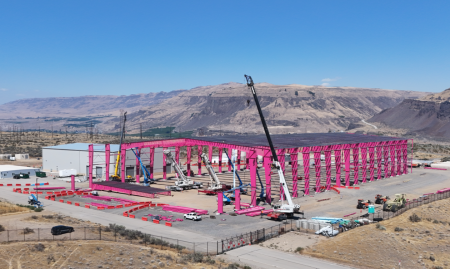
This monumental strategic repositioning is starkly reflected in Amazon’s eye-popping financial blueprint, which reveals an unprecedented, record-setting commitment of $200 billion in capital expenditures for the year 2026. Visually and logistically, this budget is not merely a collection of numbers on a spreadsheet; it represents a massive, physical restructuring of the global landscape, as Amazon pours billions into pouring concrete for gargantuan data centers, securing rare electrical grid access, and purchasing mountains of high-end silicon processors and specialized servers capable of training the next generation of artificial intelligence. Yet, this aggressive spending has triggered a profound sense of anxiety among investors, who are watching the company’s operating cash vanish beneath their feet. In a sobering testament to the immense cost of this technology race, Amazon’s trailing twelve-month free cash flow has utterly cratered, plummeting from a comforting and robust $25.9 billion just one year ago to a razor-thin, almost microscopic $1.2 billion today. This dramatic cash burn has left the market deeply unsettled, drawing uncomfortable parallels to the dot-com bubble of yesteryear and sparking open debates about whether the tech giant is overbuilding. Investors are beginning to lose their appetite for the “spend now, profit later” methodology, a shifting sentiment that was brutally demonstrated just last week when Google’s parent company, Alphabet, posted stellar, expectation-beating earnings only to watch its stock slide in response to its own ballooning $205 billion capital expenditure forecast. It is against this backdrop of skepticism that Amazon’s CEO, Andy Jassy, must defend his strategy, leaning heavily on the assertive thesis he laid out in his annual shareholder letter, where he boldly proclaimed that these investments are not a shot in the dark or a speculative hunch, but a calculated response to an unprecedented, foundational shift in how humanity processes information.
Fortunately for Jassy and his leadership team, Amazon’s cloud computing crown jewel, Amazon Web Services (AWS), continues to serve as an incredibly powerful engine of growth and validation in this chaotic climate. Having posted an impressive 28 percent revenue acceleration in the previous quarter—its swiftest growth rate in nearly four long years—AWS is expected by Wall Street to maintain its blistering forward momentum, with analysts projecting second-quarter cloud revenues to reach approximately $40.5 billion, representing a staggering 31 percent year-over-year increase. This remarkable resurgence is driven in large part by AWS acting as the crucial, structural landlord to the world’s most prominent and resource-intensive AI start-ups. In a series of breathtaking corporate alliances, industry pioneers like OpenAI and Anthropic have signed astronomical cloud hosting agreements with AWS, valued at a jaw-dropping $138 billion and $100 billion respectively over the coming years. These contracts ensure that as long as the global arms race to achieve artificial general intelligence continues, Amazon’s digital real estate will remain occupied, throwing off billions of dollars in recurring hosting fees. This dynamic positions AWS not just as a service provider, but as the literal scaffolding upon which the entire modern AI ecosystem is being erected. For human onlookers, this dynamic reveals a profound tension: while public markets fret over the long-term profitability of AI apps, the basic infrastructure required to build them remains a goldmine, transforming AWS into a crucial stabilizer that keeps the broader Amazon ship steady even as traditional retail margins face inflationary pressures and intensifying global competition.
Perhaps the most intriguing and potentially revolutionary weapon in Amazon’s arsenal is its rapidly maturing custom silicon business, which is quietly re-engineering the economics of cloud computing and freeing the company from the monopolistic grip of traditional semiconductor giants. Built upon proprietary architectures known as Graviton, Trainium, and Nitro, this custom chip division has quietly defied expectations and is now celebrating a monumental milestone, surpassing a $20 billion annual revenue run rate in the most recent quarter. The significance of this achievement cannot be overstated; it represents a massive paradigm shift that recently prompted Amazon’s legendary founder, Jeff Bezos, to publicly declare custom silicon as the company’s “fourth pillar,” elevated to the same sacred tier of long-term corporate identity as the core E-commerce Marketplace, the ubiquitous Prime subscription service, and the cloud empire of AWS. By designing its own microchips precisely tailored for intensive machine learning training and day-to-day model inference, Amazon is pulling off a brilliant double-play: it is drastically reducing its own operational reliance on expensive external hardware providers like Nvidia, while simultaneously offering its cloud clients a significantly cheaper, more power-efficient alternative to build and scale their own AI portfolios. For the everyday software engineers and cash-strapped tech startups trying to navigate the high costs of computational power, these custom chips are a vital lifeline, transforming what was once an elite, prohibitively expensive luxury into a democratic utility accessible to any developer with a keyboard and a credit card, further cementing Amazon’s role as the indispensable backbone of the digital age.
Yet, beneath this polished exterior of financial forecasts and hardware triumphs lies a much more turbulent, human story of internal upheaval, shifting corporate strategy, and the harsh realities of corporate restructuring. In recent weeks, Amazon has enacted a sweeping, highly confidential overhaul of its internal artificial intelligence model development teams, signaling a dramatic shift away from its previous broad-brushed approaches. Reports have emerged indicating that the company is quietly sunsetting and winding down the development of its in-house “Nova” models, which were once heralded as the company’s answers to the industry’s leading generative AI platforms. Instead, Amazon is making the tough executive decision to consolidate its vast army of engineers, pivoting their focus entirely toward a singular, high-stakes “frontier model” initiative designed to deliver a flagship, state-of-the-art model in time for its massive re:Invent developer conference this coming autumn. This frantic course correction has not been without its human casualties; just last week, Amazon initiated painful layoffs within its highly regarded AGI (Artificial General Intelligence) organization and shuttered its prominent San Francisco AI research facility. For the highly skilled scientists and researchers who suddenly found their projects canceled and their badges deactivated, these closures serve as a cold, sobering reminder of the brutal volatility underlying the AI boom, showing how quickly corporate enthusiasm can turn to ruthless optimization when the pressure to produce marketable, monetizable enterprise-grade results becomes too overwhelming to ignore.
Ultimately, Amazon’s grand strategy is shifting away from merely inventing abstract algorithm models in pristine academic silos and moving decisively toward the practical, messy, and deeply collaborative work of real-world implementation. This human-focused transition was vividly illustrated on the ground at the end of June, when AWS committed an astonishing $1 billion to establish a hands-on task force, literally embedding its own elite systems engineers and consultants directly into the workspaces of their corporate clients to co-create advanced “agentic systems.” These specialized systems, which go beyond simple text chatbots to act as autonomous digital agents capable of executing complex multi-step workflows, represent the true operational frontier of institutional productivity. By physically sending human experts to sit shoulder-to-shoulder with enterprise clients, Amazon is acknowledging a fundamental truth that many tech utopians often forget: that the ultimate success of any technological revolution does not depend on the raw speed of a microchip or the sheer scale of a server farm, but on the human bonds, direct collaborations, and customized solutions that make those tools useful to everyday people in their daily working lives. As the financial community tunes in to Thursday afternoon’s earnings call, they will certainly be parsing numbers, discussing capital expenditures, and debating margins. However, the true story of Amazon in 2026 is one of a giant corporate entity striving to construct a bridge between the dizzying, mathematical heights of artificial intelligence and the practical, grounded realities of human commerce, attempting to prove once and for all that its $200 billion bet on the future is not just a dream, but a practical blueprint for the next century.