

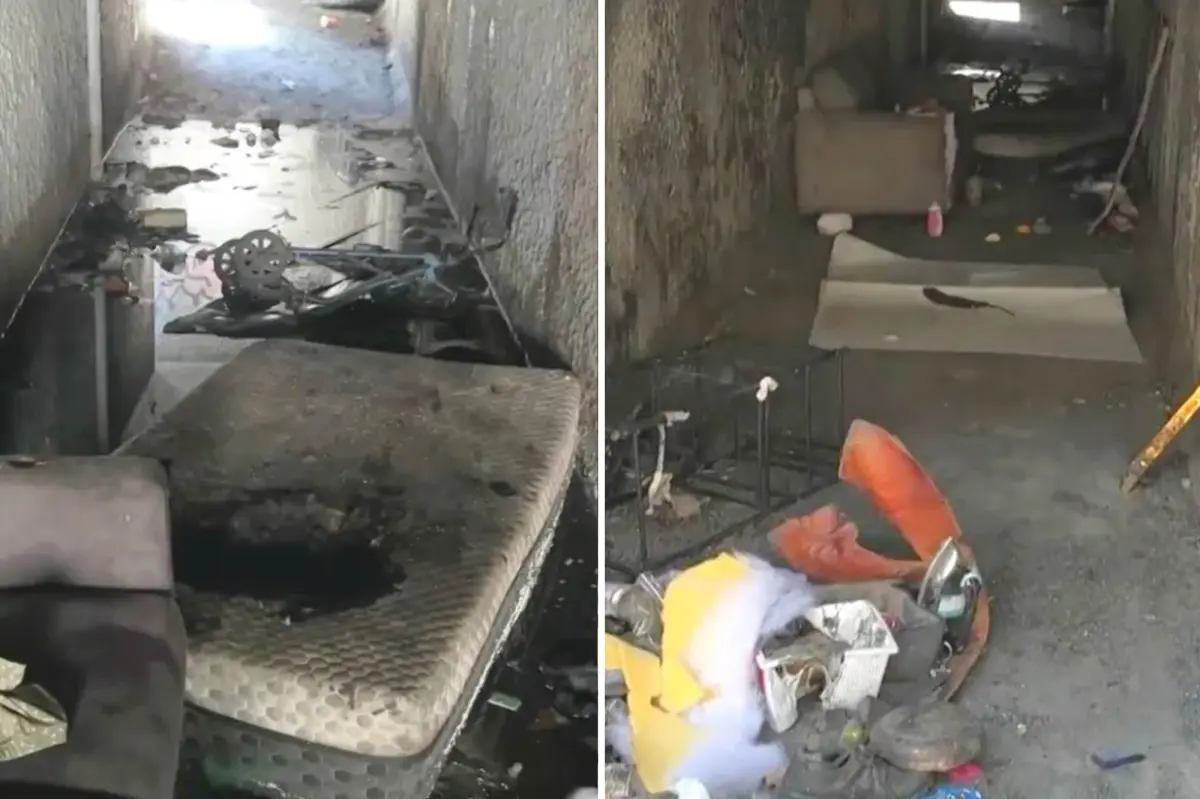
Beneath the sun-drenched, fast-paced streets of modern Los Angeles lies a forgotten, subterranean labyrinth of concrete and shadow, originally built nearly a century ago to safeguard the city’s youngest and most vulnerable residents. In the optimistic, forward-looking decades of the 1920s and 1930s, as the automobile rapidly transformed Southern California’s landscape into a sprawling grid of high-speed thoroughfares, civic leaders envisioned a progressive subterranean solution to keep school children safe from the dangers of roaring traffic. Backed by over a million dollars in voter-approved bond measures—a staggering sum at the time—the city constructed approximately 220 pedestrian underpasses. These tunnels were designed to allow eager young students to seamlessly bypass the chaotic asphalt above, walking beneath the streets to reach their classrooms in peace. For several generations, these corridors echoed with the bright chatter of childhood, the scuffling of school shoes, and the comforting promise of neighborhood safety. However, as the decades rolled on and urban dynamics shifted, this optimistic architectural dream slowly decayed into a dark, neglected network of isolation. Today, these aging tunnels have transitioned from proud symbols of civic protection into harrowing voids of human despair, public neglect, and structural deterioration. Nowhere is this tragic evolution more painfully apparent than in the historic neighborhood of Boyle Heights. Beneath the pavement near Soto Street Elementary School, one such underpass has completely lost its original purpose, morphing instead into a dangerous, contaminated cavern that highlights the deep, intersecting crises of homelessness, drug addiction, and urban abandonment facing the city today.
Step inside this subterranean passage today, and the stark reality of LA’s modern housing and mental health crises immediately confronts the senses. What was once a bright, tile-lined walkway built to shield children from harm has been transformed into a harrowing, lightless vault choked with human misery and environmental hazards. Despite repeated efforts by local authorities to seal the entrances with heavy-duty chain-link fences and locked metal gates, desperate squatters and individuals struggling with severe addiction continuously breach these barriers to seek shelter from the elements. Deep within the damp, unforgiving belly of the tunnel, the concrete floor is littered with a heartbreaking mosaic of discarded lives: piles of saturated clothing, broken pieces of furniture, decaying food wrappers, bodily waste, and drug paraphernalia, including used needles and empty vials. There are even more intimate, unsettling artifacts of human degradation, such as discarded sex toys, scattered amidst the filth, underlining the lawless and predatory environment that thrives in these unmonitored spaces. For the young students, dedicated educators, and anxious parents of Soto Street Elementary School, walking past these breached, foul-smelling subterranean portals has become a daily exercise in fear and anxiety. Parents are forced to tightly grip their children’s hands, guiding them past gated entrances from which the unmistakable odors of urine, feces, and chemical smoke regularly waft, turning what should be a peaceful morning commute to school into a stressful reminder of the surrounding neighborhood’s vulnerability.
The persistent degradation of these pathways has sparked a fierce legislative push to reclaim the streets for local families, spearheaded by District 14 City Councilmember Ysabel Jurado, who represents the vibrant but historically underserved community of Boyle Heights. Recognizing that simple patches and temporary fences are no longer enough to curb the deep-seated public health and safety emergencies festering beneath her constituents’ feet, Jurado has taken a firm, proactive stand. She emphasizes that the tunnel near Soto Street Elementary School has long acted as a hazardous focal point for accumulating trash, debris, and criminal activity, which not only threatens the safety of children but also presents severe environmental risks, including flooding and dangerous debris-flow hazards during Los Angeles’s increasingly intense seasonal storms. To address this ongoing crisis, Jurado filed a decisive motion in February 2026, demanding that the city permanently decommission and fill the passageway. However, in a metropolis bound by complex layers of local government, actualizing such a solution is far from straightforward. As Jurado explained to local media outlets, achieving a permanent closure is a painstaking bureaucratic process that requires comprehensive engineering evaluations, close coordination across multiple municipal departments, the allocation of scarce public funds, and eventual legislative approval through the City Council. The sluggish nature of this administrative machinery has left residents frustrated, as they watch municipal departments debate structural feasibility while local children continue to navigate the daily hazards of a broken urban landscape.
This urgent push for closure is not a sudden epiphany but the culmination of years of community outcry and political efforts that have spanned successive administrations. Before Councilmember Jurado took office, her predecessor, Kevin De León, also recognized the severe community detriment posed by the Soto Street tunnel and introduced a highly similar motion in 2024 to address the same crisis. De León argued passionately at the time that instead of providing a safe sanctuary for the local elementary school students and their parents, the subterranean passageway had unfortunately become a lawless harbor for illicit activity, unsanitary conditions, and unpredictable violence. The striking similarity between these successive motions underscores a frustrating, multi-year cycle of political intention struggling to overcome systemic inertia. Residents of Boyle Heights, a tight-knit and historically working-class neighborhood, feel trapped in a perpetual state of waiting as generations of politicians acknowledge the danger but struggle to implement lasting physical remediation. For the teachers at Soto Street Elementary, who strive to build a nurturing and secure educational environment for their pupils, the adjacent tunnel represents an ongoing, external breach of that security, forcing educators to remain hyper-vigilant during drop-off and dismissal times. The community’s ongoing advocacy serves as a powerful reminder that behind the dry language of city council agendas and motions lie the real, lived experiences of families who simply want the basic dignity of clean, safe streets where their children can walk without witnessing the harrowing effects of systemic neglect.
To understand how these tunnels deteriorated into such severe liabilities, one must examine the shifting tides of Los Angeles’s mid-century urban development and the historical policy decisions that followed. According to archives preserved by the Los Angeles Times, the vast majority of these 220 underpasses were constructed during a period of intense civic optimism, financed by a massive public bond initiative that local voters overwhelmingly supported to protect pedestrians from the rising tide of automobile ownership. Yet, as the city grew and its transit patterns changed, the pedestrian tunnels quickly began to fall out of favor, eventually becoming victims of their own isolation. By the late 1960s, these underground walkways, initially celebrated as triumphs of public safety, were increasingly recognized as dark, unpoliced corridors that invited the very dangers they were built to avoid. In 1968, following a series of alarming reports from the Los Angeles Board of Education regarding rampant unsanitary conditions, vandalism, and criminal predation within the passageways, public works officials officially adopted a formal, standardized policy designed to evaluate and systematically close the city’s pedestrian tunnels. This historical turning point marked a quiet admission by city planners that the underground pedestrian model was a failed experiment. While the 1968 policy successfully resulted in the closure, decommissioning, and filling of many trouble spots across the sprawling metropolis, dozens of these historical tunnels were left intact, creating a ticking time bomb of urban decay that continues to threaten local neighborhoods decades later.
Looking ahead, the dilemma of the Boyle Heights pedestrian tunnel serves as a microcosm of the broader challenges confronting contemporary Los Angeles—a city forced to balance the urgent preservation of public safety with a compassionate, systemic response to its devastating humanitarian crises. Closing these historical tunnels permanently is not merely an engineering task of pouring concrete and sealing entrances; it is a symbolic reclaiming of public space for the safety of families, educators, and working-class communities who deserve to live free from environmental and physical threats. At the same time, the humanization of this issue requires acknowledging that the individuals seeking refuge in these filthy, damp passages are victims of a severe regional housing shortage and a lack of accessible mental health and addiction resources. Sealing the tunnels, while absolutely necessary to protect school children and clean up local neighborhoods, only shifts the unhoused population to other public areas unless accompanied by robust, municipal support systems. As the city council coordinates the necessary funding and engineering steps to finally shutter the Soto Street tunnel for good, local advocates hope this moment serves as a catalyst for more comprehensive urban renewal efforts that prioritize both safe pathways for children and genuine assistance for the unhoused. Ultimately, the resolution of this century-old urban planning challenge will be measured not just by the concrete poured to seal the past, but by the empathy, safety, and community resilience built on the streets above.