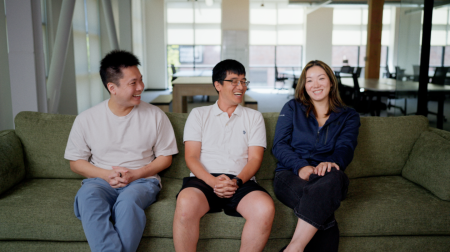






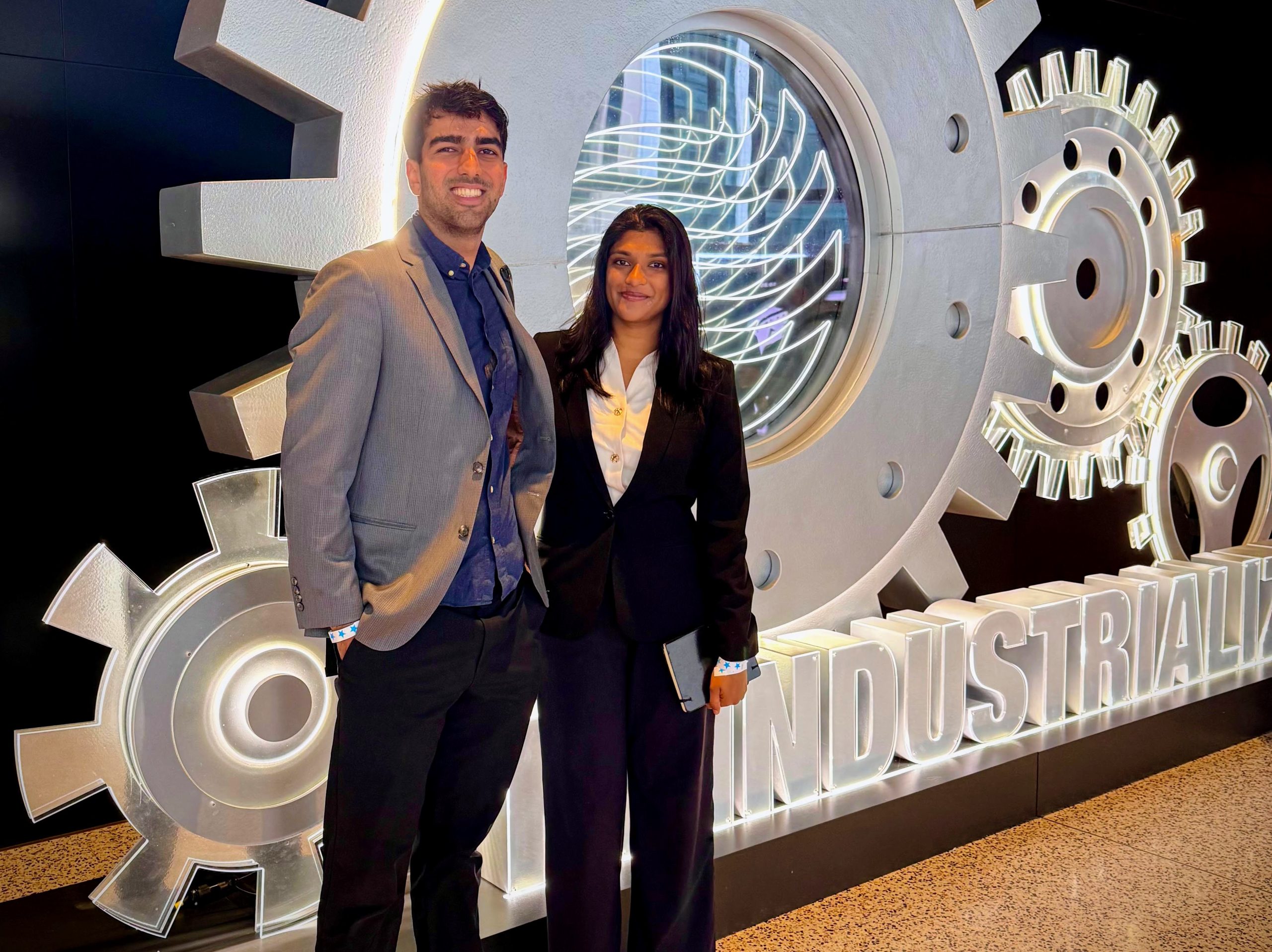
There is a particular kind of knowledge that lives in the hands and instincts of a skilled machinist, and it rarely gets written down. It is the knowledge that tells you how metal will behave when it meets a spinning cutting tool at a certain speed, how a part will warp when heat builds up, or why a seemingly perfect design needs one extra pass to avoid a costly failure. For decades, that knowledge was built slowly through experience, through scrapped parts and expensive mistakes, through watching a supervisor adjust a dial and understanding why. But when the machinists who carry this knowledge retire, that wisdom too often walks out the door with them. That is the problem Neuramill, a startup founded last year by two young founders in their twenties, is trying to solve. Nistha Mitra, the CEO, and Nick Khormaei, the COO, met in the Seattle area and have spent the past year immersed in machine shops, watching machinists work, and building what they call an intelligence layer for high-precision manufacturing. Their goal is not to replace these craftspeople, but to capture their expertise before it disappears, and to make it available to the next generation of makers who will need to build the complex parts that keep airplanes flying, satellites orbiting, and defense systems running. At the Reindustrialize summit in Detroit, the two founders stood alongside their growing company as a reminder that the future of manufacturing may depend on respecting its past.
Neuramill’s software sits at a stage of manufacturing that has remained oddly manual. After a design file arrives, and before a machinist or programmer opens computer-aided manufacturing software to generate the toolpaths that tell a machine exactly what to do, someone has to make a series of high-stakes decisions. Which tools should be used? Which machine should handle the job? In what order should the operations happen? For now, this is a task that relies heavily on the judgment of experienced machinists. Neuramill is building software that reads the design file and works through those questions on its own, proposing a complete manufacturing plan before a machinist reviews and approves it. The human remains essential. Every plan is checked, adjusted, and ultimately signed off by someone who knows the craft. Mitra emphasizes that this is not about removing people from the equation. She points out that machinists who know how to build complex jet engine parts are retiring, and their knowledge is leaving with them. By capturing the patterns and reasoning behind their decisions in software, Neuramill helps retain that expertise for the future. Khormaei says the founders spent much of the past year visiting machine shops, not to pitch a product but to learn. The craft, he says, is deeply impressive. Machinists look at drawings and models and immediately know how to build them, almost as if they are running real-time physics simulations in their heads. Neuramill is trying to build a digital version of that intuition, while always keeping the machinist in the loop.
The company has already begun to earn trust from serious customers. Neuramill says it has closed a six-figure contract with a major defense contractor, one of the large companies known in the industry as a prime. The company declined to name the contractor, but the fact that a defense prime is willing to pay a two-year-old startup is a meaningful vote of confidence. Two machine shops currently using the software are Diamond Machine Works, a Seattle precision machining company founded in 1959, and VTN Manufacturing in San Jose, California. Satellite maker Astranis is a design partner. Mitra says Neuramill is not yet selling broadly, but the early customers who are testing the software have actually paid for it, which is a strong signal for a startup at this stage. The defense contractor contract is especially notable, because defense and aerospace are sectors where the cost of error is enormous and the tolerance for uncertainty is low. The fact that these customers are willing to try Neuramill’s software, and to pay for it, suggests that the problem it solves is real and urgent. It also speaks to the way the founders have approached the market. Rather than building in a vacuum, they went out to machine shops, talked to machinists, watched them work, and developed a product that fits naturally into existing workflows. That kind of humility and willingness to listen is often the difference between a technology that feels like a threat and one that feels like a tool.
The founders themselves come from paths that help explain why they are the right people to take on this challenge. Mitra, 26, studied computer science at the University of Maryland and spent three years at Oracle, where she worked as an AI applied scientist in Seattle. There she worked on multimodal models, systems that reason across several kinds of data at once, which is exactly the kind of technology that might one day reason across geometry, materials, and machine behavior. Khormaei, 24, holds bachelor’s and master’s degrees in electrical engineering from the University of Washington. His experience includes working as a propulsion engineer at Boeing in Everett, where he worked on the 777X fuel system electrical certification, and later as an integration and test engineer at SpaceX, working on Starlink manufacturing in Redmond. But Khormaei also has a more personal connection to manufacturing. He grew up around machining because his father, Ron Khormaei, co-founded FINEX Cast Iron Cookware in Portland in 2012 and later sold it to Lodge in 2019. As a teenager, Khormaei worked production there, so he understands the physical reality of making things, the rhythm of the shop floor, the discipline required, and the value of practical skill. That combination of hands-on experience and advanced engineering training is rare. It gives the two founders both the technical credibility and the cultural sensitivity to build technology for an industry that is often skeptical of software that claims to understand what machinists do. They are not outsiders looking in; they are people who have seen the craft from the inside and want to preserve it.
Neuramill is also careful not to position itself as a threat to established software companies. Rather than competing with Siemens or Mastercam, the company is building technology that plugs into those systems. Mitra explains that Neuramill is very collaborative with the established vendors, who are themselves looking for new technology. The company recently joined Siemens’ Frontier Partner Program, which gives startups access to Siemens’ software tools, an important step for integrating with the larger manufacturing ecosystem. The software works in the space after a design file arrives and before a programmer opens computer-aided manufacturing software. That is a narrow but crucial part of the process, and by focusing there, Neuramill can improve the entire workflow without requiring companies to abandon the tools they already know. The startup has roots in Seattle, where both founders worked before moving to San Francisco. They return to Seattle every four or five weeks to work out of Foundations, the founder hub. Mitra says they love the Seattle ecosystem and that it gave birth to Neuramill. They keep coming back partly because of the customers, but also because the region is a booming ecosystem for space and aerospace. The company has raised an undisclosed amount from investors including Ascend, Breakwater Ventures, Schema Ventures, Creative Destruction Lab, Acequia Capital, and Correlation Ventures. The team is small: six people plus a contractor. There are the two founders, a chief research scientist who worked with Mitra at Oracle, and three engineers, one of whom is a machinist. That last detail matters. Having a machinist on the engineering team means the software is being built with direct feedback from someone who knows what machinists need and what they will tolerate.
Looking ahead, Mitra describes the long-term goal as a “world model” for manufacturing, a system that can reason across geometry, materials, and machine behavior at any level of complexity. That is an ambitious vision. It suggests a future where software understands manufacturing the way a master machinist does, but at a scale no single human could ever achieve. Yet even with that vision, Mitra is clear that humans should not be extracted from the industry. There is a beauty to the craft of manufacturing that should be respected. Some places, she says, are not better when people are removed, and manufacturing is one of them. This is a nuanced and humane view of technology, one that recognizes the limits of automation and the value of human judgment, skill, and pride in work. It is also practical. The shortage of skilled machinists is not going to be solved by software alone. It will be solved by making the knowledge of older workers available to younger ones, by honoring the craft, and by building tools that help people learn and do their jobs better. Neuramill is young, its team is small, and there is a long road ahead. But the problem it is tackling is one of the quiet challenges of modern manufacturing, a challenge that will only grow as more experienced machinists retire. By combining artificial intelligence with a deep respect for the people who make things, Neuramill is trying to ensure that their expertise does not disappear, but instead becomes part of the foundation for the next generation. It is a mission that is both technological and deeply human, and it is exactly the kind of work that deserves attention.