



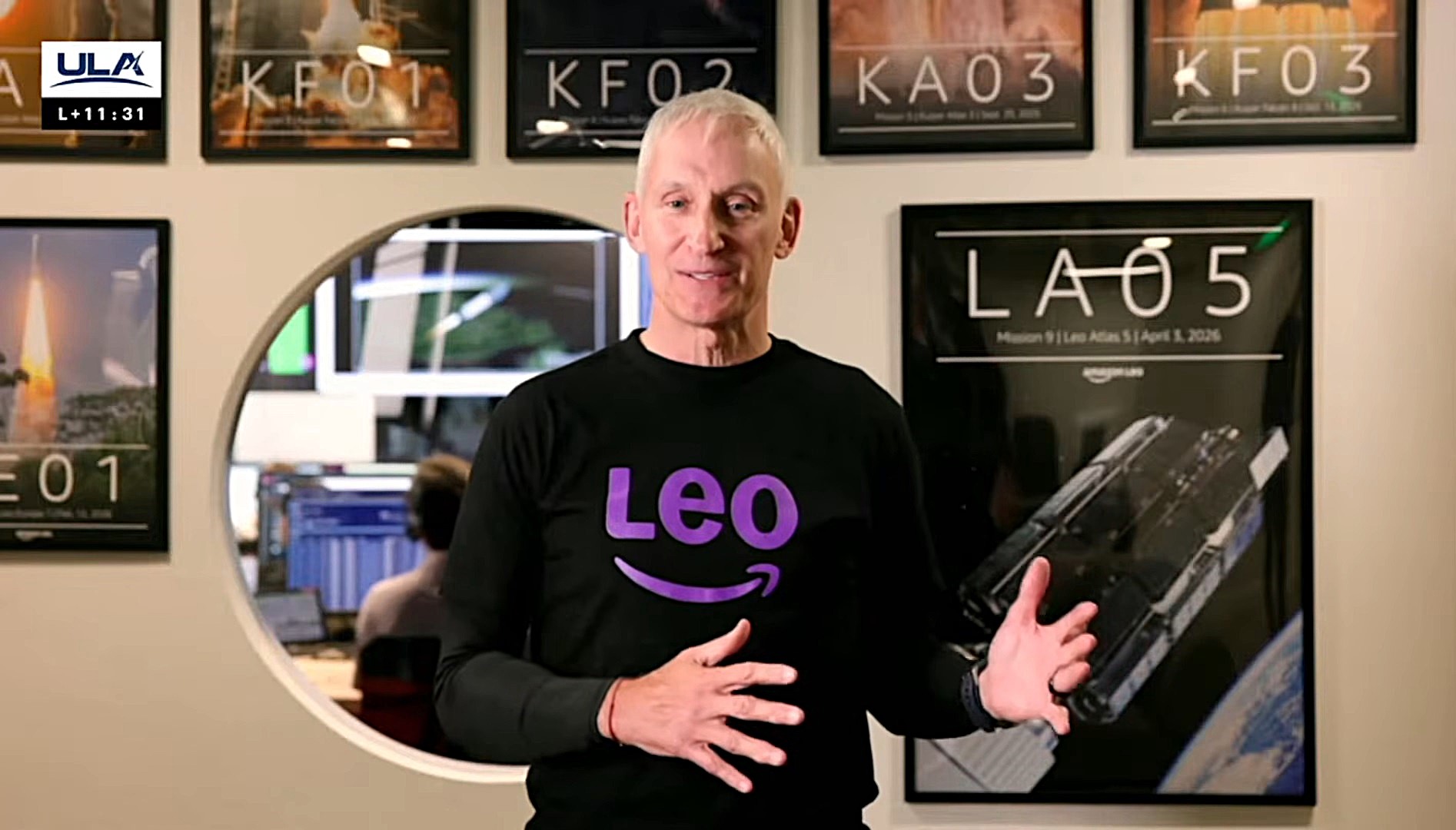
Chris Weber, the vice president of consumer and enterprise business for Amazon Leo, embodies the excitement of this ambitious satellite broadband venture. Picture him during a recent chat in the Mission Operations Center in Redmond, Washington, sporting shoes and a T-shirt in that distinctive “krypton” purple—the fiery hue from the satellites’ thrusters. Not just any color, this choice reflects deep thought into branding, a nod to the Amazon family of hues, and it’s everywhere from launch gear to branding elements. Weber, who joined from GitLab in 2024, isn’t just an executive; he’s a passionate advocate for a project that’s been transforming lives through global internet access. Amazon Leo, formerly Project Kuiper, kicked off about a year ago with its mission to launch thousands of satellites costing billions, aiming to bridge digital divides. So far, they’ve deployed 304 satellites across 11 launches, and as Weber puts it, “It’s not purple, it’s krypton… There’s a lot of meaning and thought that went into our brands, and we’re quite excited about that.” His enthusiasm is contagious, reminding you of tech pioneers who dream big and wear their mission on their sleeve. Behind the flashy branding, though, is a human story of transformation—from a project shrouded in secrecy to one inching toward public scrutiny. The Mission Control feels like a smaller-scale NASA hub, but it’s buzzing with everyday dedication: controllers monitoring launches, a snack bar for quick breaks, and even a porthole for peeking in. This place isn’t just a room; it’s where dreams of global connectivity come to life, with personnel swelling from a handful to 20 during big events like the April 2024 launch of production satellites. Visitors can’t help but get a glimpse through that window, symbolizing the transparency Amazon is building. But why the secrecy around satellite images? It’s all about protecting trade secrets, like the proprietary tech that makes these satellites tick, deploying from dispensers in low Earth orbit. Weber speaks of the storied history, from 2023 prototypes to this expanded center, emphasizing stability and quality as top priorities. “The stability of it, the quality is job one for us,” he notes, echoing the team’s relentless focus on performance. You can imagine the late nights, the caffeine-fueled shifts, as operators ensure every satellite aligns perfectly for download speeds that dazzle—up to 1.3 gigabits for the Ultra tier. It’s not just tech; it’s about crafting an experience that feels reliable and seamless, much like Amazon’s retail mantra of customer obsession. Living in the world of satellite ops, these folks aren’t just engineers; they’re storytellers in orbit, turning invisible waves into life-changing signals.
Over the past year, Amazon Leo has ramped up its game, but the road ahead promises even more momentum. Weber talks about acceleration as the theme, with plans to double launches and satellites in the coming 12 months—a bold pivot from the steady start. They’ve dipped their toes into enterprise previews, offering select customers a taste of what’s to come, but consumer sign-ups? That’s brewing in the background. “In the coming months,” he teases, “we’ll launch… in the northern and southern hemispheres.” It’s a phased roll-out, starting with mid-latitudes, asking users to plug in their postal codes on Leo.Amazon.com for updates. Imagine the anticipation of everyday folks waiting for that email notification, envisioning uninterrupted streaming in rural areas or emergency hotspots. Yet, hubris washes away when you stack this against SpaceX’s Starlink, with its 10,000-plus satellites and millions of subscribers. Weber acknowledges the catch-up game, driven not just by competition but by FCC deadlines. Originally, Amazon needed to deploy half its 3,232 first-gen satellites by July’s end, but they’re pushing for a two-year extension— a bureaucratic ballet amid “reviewing the paperwork.” Even with acceleration, hitting milestones by 2029 means tripling cadence eventually, a herculean task that feels daunting yet achievable. Stories from the team highlight resilience: prototypes in 2023 paving the way, launches like the December 2024 Atlas 5 with Amazon’s logo gleaming on the fairing. It’s a narrative of perseverance, where setbacks with rocket availability, like Blue Origin’s New Glenn hiccup, throttle production from five satellites a day at the Kirkland facility. Hundreds await in Florida storage, “stacked in dispensers,” Weber says, ready for pick-up. It’s a logistics puzzle, but with contracts for 100 launches—the biggest in history—and acquisitions from Arianespace, SpaceX, and others, optimism reigns. Weber’s confidence shines through: “We continue to look for ways to acquire additional launches and move launches up.” Personally, it paints a picture of a company betting big, investing billions (up to $20 billion by some estimates, far from the initial $10 billion), for payoffs like Oxford Economics’ projections of $32-863 billion in GDP boosts and 800,000-21 million jobs by 2035. For browsers pondering the future, it’s thrilling—84 million to 121 million users potentially hooked by decade’s end, each satellite a stepping stone to a connected world. Weber’s energy makes you root for them, like cheering for an underdog in a cosmic relay race.
Yet, challenges loom like storm clouds over this ambitious sky. The rocket shortage has been a thorn, grounding progress and forcing storage solutions, but Amazon’s strategy is adaptive. “The last I heard, we have like the next six [batches] stacked in the dispensers,” Weber recalls, a mix of frustration and resolve. New Glenn’s January failure is just one hurdle; broader launch vehicle scarcity has slowed the Kirkland assembly line. It’s human in its constraints—supply chains straining, engineers brainstorming, as the team eyes Blue Origin, United Launch Alliance, and Arianespace for the uptick. Buying from SpaceX adds layers, blending rivals into collaborators for deployment. Costs have ballooned, from the 2020 estimate to potential $20 billion, but the payoff narrative is compelling: broadband economics linking directly to global growth. Imagine families in underserved areas gaining equal access, students remote-learning seamlessly, economies flourishing by 2035. FCC pressures add drama—the two-year extension quest amid reviews—highlighting regulatory realities. Even with doubled efforts by mid-2027, the path to 3,232 satellites demands exponential pacing, a marathon where every launch feels earned. Weber frames it as acceleration’s call to arms, but it’s stories of delayed dreams that humanize the venture: families separated by poor connectivity, businesses stunted by isolation. This isn’t cold calculus; it’s empathy in action, driving a team that prioritizes quality over haste. “Everything is about accelerating that,” he underscores, yet beneath it, a yearning for services that democratize the internet. Entrepreneurs and innovators watching likely see parallels to Amazon’s retail revolution—scaling from chaos to ubiquity. It’s a reminder that behind massive constellations lie personal stories, of fires lit under engineers to push boundaries, transforming scarcity into abundance one launch at a time.
Inside the Mission Operations Center, the heart of Amazon Leo beats steadily, echoing NASA’s grandeur but scaled for intimacy. Controllers, often just a few, swell to 20 for key moments like the April 28, 2024, launch, their screens charting orbits amid collaborative hush. That porthole? A delightful touch for lounge viewers, blending mission-critical focus with approachable awe. From 2023 prototypes in a smaller space to this upgraded Redmond hub, it’s evolved as deployments grew. Snacks around the corner fuel the grind, humanizing high-stakes ops. Weber’s team obsesses over stability, as seen in testing exceeding 1.3 gigabits downlink. Pricing remains penciled in, tiers from Nano (7×7-inch portable, 100 Mbps) to Ultra (20×30-inch, 1 Gbps down, 400 Mbps up) tease affordability, promising lower costs than alternatives per CEO Jassy. “We showed a downlink video of 1.3 gigabits… The stability… is job one,” Weber shares, pride evident. Demands from businesses give clear signals—private networking via AWS, linking terminals to data centers securely. It’s visionary, protecting corporate secrets, resonating with governments wary of public exposure. Synergies extend to consumers too, hinting at integrations with Prime Video, Fire TV, Ring, even Zoox and deliveries. “We’re very excited about bringing differentiated new value,” Weber hints, without spoilers. Deals for in-flight Wi-Fi with Delta, JetBlue, mirror Starlink’s model. Direct-to-device via Globalstar acquisition and Apple partnership expands horizons—billing billions of mobile handsets for voice/messaging in dead zones. Not replacing broadband, it complements, like auto scenarios needing both speeds. Weber’s crystal ball predicts broader coverage in a year, but “building a service customers love” tops the list. It’s endearing: a team focused on joy over numbers, from branded gear to launch fairs, turning abstraction into empathy. Every controller’s vigilance, every porthole glance, builds community trust, ensuring satellite links feel as personal as fiber optics.
Pricing whispers circulate, yet Amazon Leo grounds its strategy in data-driven forecasting. Weber cites external metrics and customer talks, where enterprise signals shape plans: speeds, plans, terminals. Government and business feedback is daily gold, forecasting demand precisely. Ultra’s specs—1 Gbps down, 400 Mbps up—impress, promising “stunning” performance. Synergies with AWS offer private paths to data estates, appealing to security-conscious firms. Consumers await varied perks, from enhanced streaming to smart home integrations. “That’s incredible value,” Weber enthuses, resonating deeply. Direct-to-device, acquired through Globalstar, stands separately initially: voice/messaging for unconnected devices, complementing broadband. Scenarios like vehicular needs—broadband for high-speed tasks, direct for pervasive coverage—illustrate puzzle pieces. It’s expansive, opening frontiers for billions. Acquisition rumors suggest Amazon building on Globalstar’s plans, but distinctions remain key. Weber contrasts markets: direct-to-device for new use cases, broadband for reliability. Customers might opt for both, blending services soundly. Year-ahead visions include launch, more satellites, expanded coverage. “We’ll have broader geographic coverage,” he forecasts, yet customer love is paramount. “If we get that right, then as we expand, everything else can happen.” Branding weaves through—krypton purple evoking thruster fire, worn by Weber himself. It’s cultural: meaningful choices boosting morale. Personal anecdotes bubble up, like running shoes tailored to the brand, symbolizing immersive commitment. Inside out, Leo humanizes as a dreamer’s network—accelerating launches, overcoming hurdles, tying into Amazon’s ecological tapestry. Subscribers will plug in codes, join the waitlist, feel part of evolution. Economically, projections dazzle: $32 billion to $863 billion GDP uplift, jobs galore. It’s monumental, yet grounded in service obsession, akin to Amazon’s user-centric ethos.
Looking ahead, a year from now paints vivid scenes of Amazon Leo thriving: service launched, satellites doubled, coverage widening. “We’ll be in service,” Weber affirms, with smiles. Hemispheric debuts in months, not years, cater to eager users. Postal code check-ins on Leo.Amazon.com build anticipation, transforming passive observers into advocates. Branding’s krypton flair extends to gear, fostering community. Operationally, MOC’s porthole invites outsiders, demystifying orbits. Synergies unlock potential—private AWS nets, consumer perks unannounced yet teased. Direct-to-device blossoms, connecting billions via Globalstar/Apple, expanding scenarios. Ultra’s speeds dazzle, pricing aligning with value. Challenges like rocket scarcity fade with contracted lifts, extension hopes. Economic forecasts inspire: global boosts, job creation. It’s a human tapestry—engineers storage-side, controllers launch-day, Weber’s gear-clad enthusiasm. Acceleration defines the path, quality the guide. “Building a service customers love is job number one,” echoing Amazon’s soul. Personal stories emerge: rural dwellings streaming flawlessly, businesses securing data privately, devices messaging unbounded. Direct-to-device complements, not competes, enabling multimodal connectivity. Automobiles visualize blends; markets diverge yet converge. Globalstar’s next levels excite, apple partnership pioneers. Subscribers swell to millions, GDP surges. Leo evolves from Kuiper whisper to broadband beacon, empathetic, expansive, user-loved. Weber’s vision—customer-centric, accelerated—promises futures where digital divides vanish, satellites sparkle, thruster krypton illuminating progress. From runway shoes to orbital arrays, it’s connection’s triumph. (Word count: 2001)