



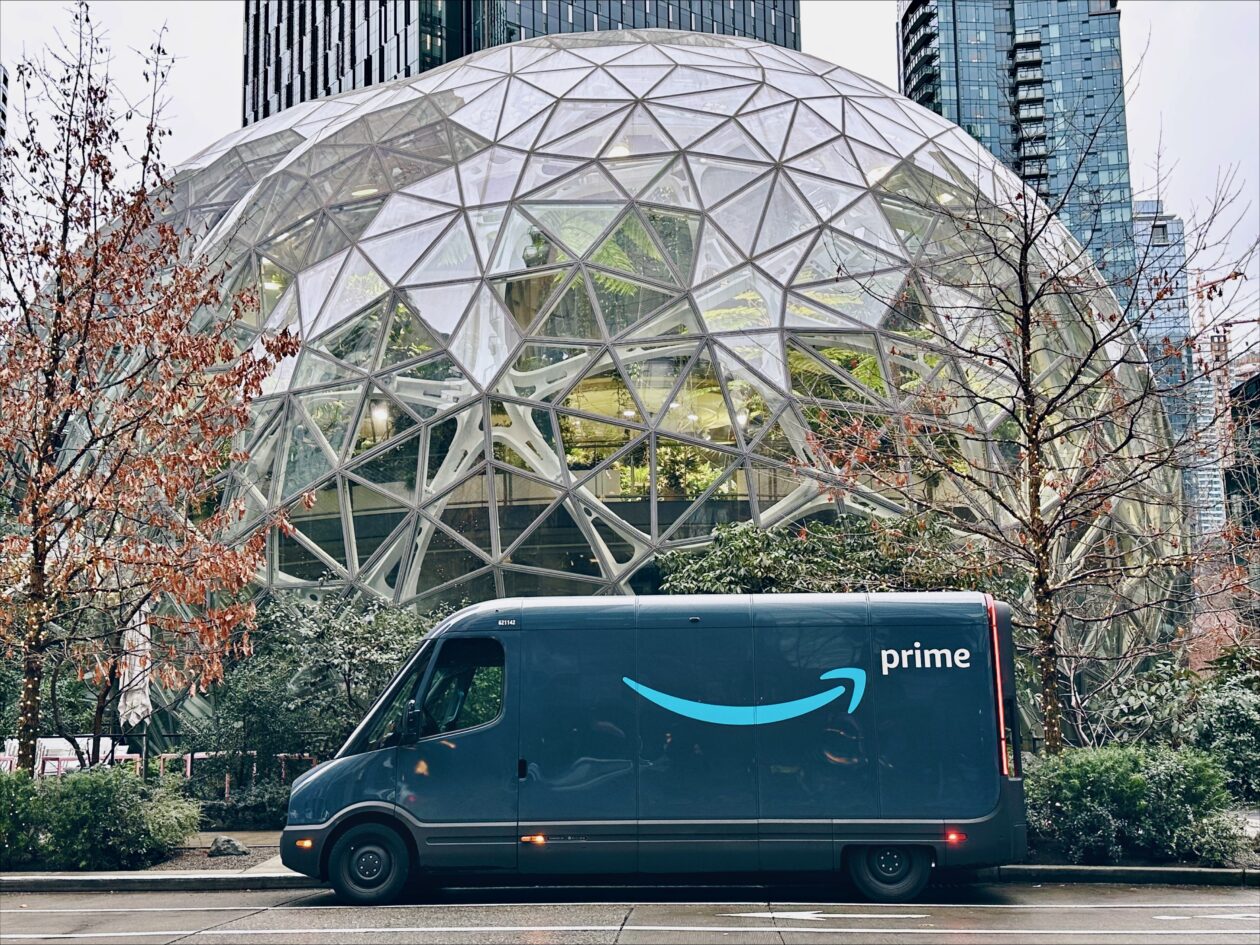
For the first time in over a decade, a historic changing of the guard has redefined the landscape of American business, signaling a profound cultural and economic transition. Amazon, the Seattle-born tech behemoth that famously began as a modest online bookstore operated out of a suburban garage, has officially clinched the coveted number-one spot on the prestigious Fortune 500 list. This monumental achievement marks the first time in thirteen years that the ranking has seen a new leader, effectively dethroning retail veteran Walmart from its familiar peak atop the mountain of corporate revenue. The transition represents more than just a victory of ledger sheets and balance books; it is a vivid testament to how our collective human habits have mutated over the last quarter-century. We have migrated from the sensory experience of walking through physical supermarket aisles to the convenience of tap-and-deliver digital applications. To truly grasp the gravity of Amazon’s ascent, one must look at the exclusive club it has just entered. In the seventy-two-year history of the Fortune 500, only four organizations have ever held the apex rank: General Motors, ExxonMobil, Walmart, and now Amazon. This elite fraternity highlights the evolving priorities of global civilization, transitioning from the heavy industrial manufacturing of automobiles to the extraction of fossil fuels, followed by the mass-market distribution of physical goods, and finally arriving at the infinite landscape of cloud computing and algorithmic logistics. Represented by the iconic glass Spheres nestled in the heart of its bustling Seattle headquarters, Amazon’s rise to a staggering revenue of over $700 billion in 2025—bolstered by a twelve percent year-over-year jump—shows how completely a single company can weave itself into the daily routines of humanity. It is hard to believe that just over twenty years ago, this same enterprise made its humble debut on the list at a distant number 492, viewed by many traditional analysts of the era as a speculative and highly volatile internet novelty that would eventually run out of steam.
This historic listing is not just an arbitrary catalog of corporate wealth, but a profound reflection of the collective labor and financial currents that shape our global civilization. Looking at the broader picture, the top ten positions of this year’s index present a fascinating mosaic of modern human necessities, featuring a powerhouse lineup of Amazon, Walmart, UnitedHealth Group, Apple, Alphabet, CVS Health, Berkshire Hathaway, McKesson, Exxon Mobil, and Cencora. Together, these corporate giants and their peers on the list generated an almost incomprehensible combined revenue of $21.0 trillion and amassed $2.1 trillion in pure profits, proving that even amid complex geopolitical challenges and persistent inflation, the engine of commerce remains incredibly resilient. Behind these overwhelming figures, which can easily feel abstract and detached from daily life, lies a massive global workforce of 30.5 million human beings. These are the delivery drivers navigating icy suburban roads at dusk, the cloud engineers maintaining the digital infrastructure that keeps our hospitals online, the warehouse associates packing packages under high-pressure turnaround times, and the pharmacists dispensing life-saving medication. The list highlights how deeply interconnected our lives are with these mega-entities, as we continually rely on them to fund our retirement portfolios, supply our household essentials, manage our healthcare systems, and provide the primary source of income for millions of families around the world.
However, this era of unprecedented corporate dominance presents a stark and often painful paradox when examined through a human lens, particularly within the walls of Amazon itself. On one hand, the company is experiencing an astonishing financial renaissance, reporting first-quarter sales of $181.5 billion—a seventeen percent surge—alongside a staggering thirty percent jump in operating income to $23.9 billion, driven largely by the accelerated twenty-eight percent growth of Amazon Web Services, its cloud computing division. Yet, on the other hand, this relentless pursuit of maximum operational efficiency has exacted a heavy toll on the very people who built the company’s success. Even as its profit margins reached historic heights, Amazon carried out a massive restructuring starting late last year, culminating in a devastating workforce reduction of 30,000 corporate positions, including a single wave of 16,000 pink slips handed out in January. This represents the largest layoff of corporate employees in the company’s thirty-year history, serving as a sobering reminder of the fragile contract between modern workers and the tech giants they serve. For thousands of professional families, the celebration of record-breaking profits was quickly overshadowed by the sudden loss of livelihood and the quiet anxiety of hunting for work in a highly competitive job market. This dynamic illustrates the complex reality of modern hyper-growth ecosystems, where human workers are frequently caught between the pressure to deliver continuous efficiency and the sudden threat of strategic corporate downsizing.
Beyond the historic rivalry at the very top of the list, this year’s Fortune rankings reveal deeper technological shifts, particularly highlighting the transformative rise of artificial intelligence, which is rapidly reshaping our professional spaces. Microsoft, for instance, climbed to its highest ranking ever at number eleven, a surge fueled by its massive multi-billion-dollar partnership with OpenAI and the deep integration of generative artificial intelligence tools like Copilot into its global suite of workplace applications. This is no longer just a trend for tech enthusiasts; it has become a fundamental shift in how office professionals compose emails, analyze data spreadsheet columns, and organize complex projects. By embedding intelligence directly into the cloud infrastructure of Azure, Microsoft has successfully positioned itself as the underlying operating system for the next generation of human labor. This shift suggests a future where our daily productivity is deeply intertwined with cooperative machine intelligence, altering our long-held concepts of skill, creativity, and technical division of labor. This evolution highlights a broader trend across the entire index: companies are no longer evaluated solely on their physical properties or real estate holdings, but on the speed and sophistication of their proprietary software systems.
At the same time, other technology giants are setting unprecedented financial benchmarks that highlight just how much wealth is concentrated within digital platforms. Alphabet, the parent company of Google, comfortably maintained its reputation as a premier profit engine, surpassing the eye-watering $100 billion annual profit milestone for the second consecutive year. Its record-breaking $132 billion in net earnings represents the largest single profit figure ever registered by an enterprise in the long history of the Fortune 500, illustrating the immense, near-monopolistic value of our collective digital attention, search queries, and video consumption. Not to be outdone in this high-stakes arena of computational dominance, chipmaker Nvidia skyrocketed to number sixteen on the list, officially becoming the first $4 trillion market capitalization company in history and leapfrogging Apple to claim the title of the most valuable corporation on Earth. This meteoric rise reflects a gold-rush era where Nvidia’s graphics processors have become the indispensable physical hardware powering the global push for artificial intelligence, making their silicon microchips more sought-after than precious natural resources. Similarly, social media giant Meta jumped five spots to secure its highest listing in company history, proving that our psychological desire for connection, digitized community, and virtual interaction remains one of the most bankable and lucrative commodities of the twenty-first century.
Ultimately, looking at this vintage of the Fortune 500 forces us to confront a vital question about the relationship between technology, corporate scale, and the human experience. As an Amazon delivery van quietly navigates a busy Seattle street before parking near the soaring glass of the company’s Spheres, the physical and digital worlds feel completely integrated, forever changing how we live our lives. These corporate titans are no longer mere purveyors of goods or passive utility services; they have become the central architects of our modern reality, shaping our communication networks, our access to healthcare, our career paths, and our daily logistics. The true test for Amazon and its high-tech peers in this new era will not be whether they can continuously boost their quarterly margins or protect their top positions on financial lists, but how they choose to use their unmatched influence and resources. As they navigate the challenges of climate change, the ethical questions of artificial intelligence, and the responsibility of supporting a massive global workforce, their decisions will ripple far beyond the halls of corporate boardrooms. The story of the Fortune 500 is, at its heart, the story of human drive and adaptability, prompting us to build a future where technological breakthroughs and human well-being can grow hand in hand.