





The landscape of artificial intelligence is undergoing a profound and necessary shift away from superficial novelty and toward deep, practical integration. At the forefront of this evolution is Trase, a promising startup that recently stepped out of the shadows with a staggering $107 million seed funding round led by Arch Venture Partners. Originally incubated within the forward-thinking ecosystem of Red Cell Partners, the Virginia-based company is rapidly expanding its footprint into the Pacific Northwest, establishing the Seattle region as its primary engineering engine. This expansion is designed to scale Trase’s local workforce from a modest team of about 20 specialists to upwards of 100 engineers and developers in the coming months. This aggressive growth strategy is not merely a bid for market share, but a calculated effort to humanize and solve the incredibly complex administrative crises plaguing the country’s most essential, heavily regulated industries. By focusing on highly secure, compliant, and deeply integrated technologies, Trase is moving past the generic promises of Silicon Valley to address the actual, daily struggles of organizations that keep society running, from healthcare systems to national security agencies.
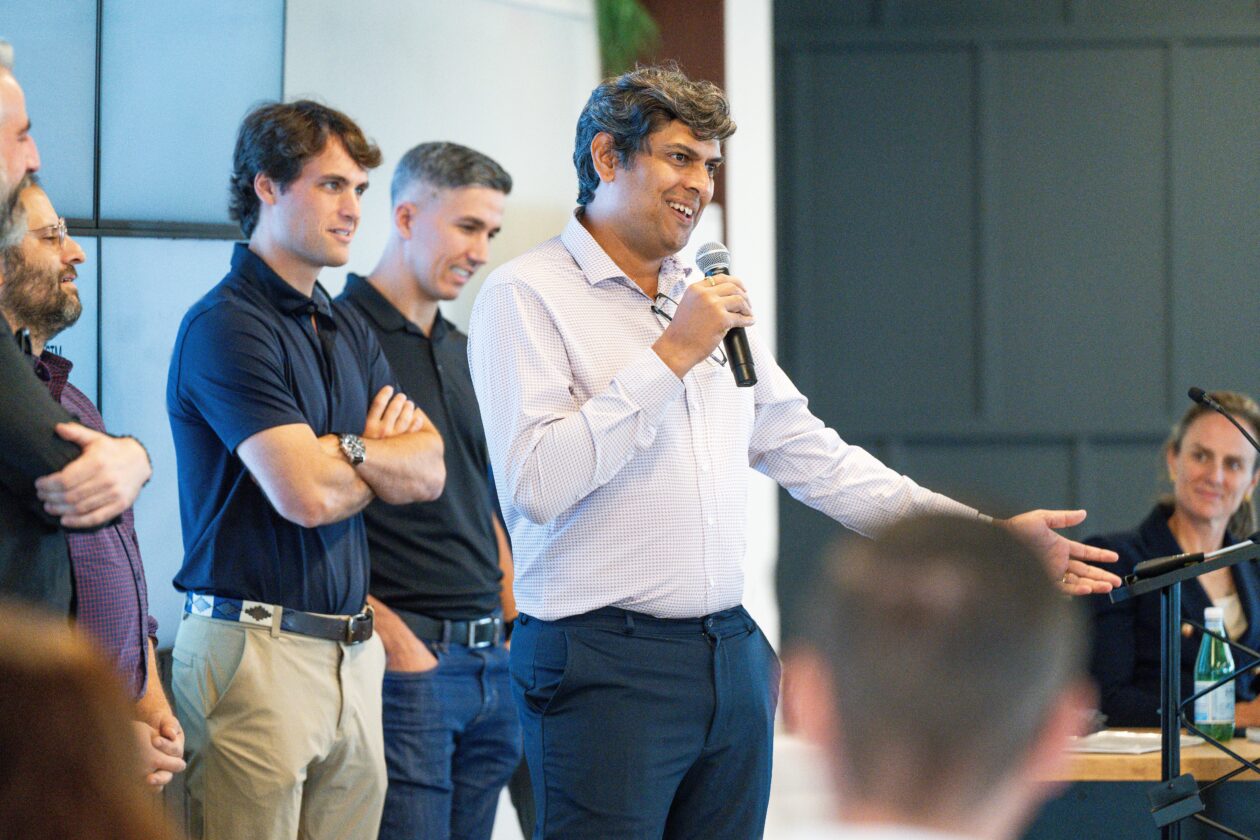
This migration of master-class talent is epitomized by Trase’s recent executive recruits, individuals who are leaving comfortable, highly lucrative positions at legacy tech giants to build something of lasting utility. At the helm of this technical expansion is Baskar Sridharan, who has taken on the role of president after a legendary tenure in the tech corridor. Sridharan brings with him nearly sixteen years of foundational experience at Microsoft, where he was instrumental in architecting Azure’s core storage systems, followed by an impactful tenure as vice president of engineering for Google Cloud, and most recently, a role as vice president of AI, machine learning services, and infrastructure at Amazon Web Services. Joining him is Srirama Koneru, another titan of cloud infrastructure who previously served as the general manager of Bedrock Agentic AI Infrastructure and GenAI Services at AWS, following elite engineering leadership roles at both Google and Salesforce. For these seasoned executives, the move to a nimble startup like Trase represents a desire to escape the slow-moving bureaucracy of trillion-dollar tech conglomerates. By establishing a dedicated, state-of-the-art office hub in Seattle, Sridharan and his team are leveraging their deep institutional knowledge of cloud computing to build an environment where engineers can directly witness the real-world impact of their labor, transforming Seattle from a corporate playground into a laboratory for compassionate, high-impact engineering.
Sridharan’s motivation stems from a stark, sobering truth about the current state of artificial intelligence: despite the billions of dollars poured into model development, the technology is failing to make an impact where it is needed most. He argues that AI adoption has stalled within highly regulated, complex enterprises that are utterly suffocated by administrative overhead, not because of a lack of imaginative algorithms, but due to a fundamental failure in execution. While clean, consumer-facing chatbots can easily assist with creative writing or scheduling social media posts, they are entirely unequipped to navigate the strict compliance mandates, data privacy laws, and security protocols of hospitals, defense networks, and utility grids. These sectors cannot risk the “hallucinations” or data leaks inherent in standard consumer models. Consequently, the professionals working in these fields—doctors, security analysts, and energy technicians—remain buried under grueling, spirit-crushing paperwork. Trase’s philosophical core is built on the belief that the next paradigm of technology will not be defined by those who build the largest models, but by those who are willing to roll up their sleeves and solve the messy, frustrating details of real-world implementation within existing infrastructure.
Nowhere is the human cost of this administrative burden more apparent than in modern healthcare, where highly trained medical professionals spend more time interacting with screens and paper than with patients. To illustrate the tangible relief that Trase’s platform aims to offer, one needs to look no further than its partnership with the Duke University Health System’s Division of Cardiology. In an era dominated by digital advancement, this specialized clinic is still inundated with more than 5,000 physical faxes every month—a chaotic influx of vital patient histories, diagnostic reports, and referral requests that must be manually verified, sorted, and inputted into electronic medical records. By deploying specialized, autonomous AI agents tailored specifically for the clinical environment, Trase acts as a silent digital administrative assistant. The system quietly and securely processes, categorizes, and logs these documents in real time. This single application of agentic technology does not replace the human touch of a physician or nurse; rather, it restores it, liberating cardiologists and clinical staff from hours of daily clerical work and allowing them to dedicate their focus, empathy, and expertise directly to the hearts of the human beings in their care.
Under the guidance of CEO Grant Verstandig, who also serves as the founder and CEO of Red Cell Partners, Trase is designing an “agentic” platform that fundamentally redefines how humans and machines collaborate. Unlike traditional generative AI, which remains passive until prompted by a human user, agentic AI is capable of understanding complex end-to-end workflows, making informed decisions, and completing multi-step tasks autonomously within strict, pre-defined boundaries. Crucially, Trase’s platform is built to integrate seamlessly with an organization’s existing legacy systems rather than forcing painful, expensive, and risky overhauls of their IT environments. This approach respects the established protocols of sensitive industries, offering a sophisticated middle ground where data never leaves secure networks and human-in-the-loop oversight is maintained. By cultivating a deep, empathetic understanding of how security-sensitive organizations function, Trase is proving that advanced automation does not have to feel like a cold, invasive force. Instead, it can be implemented as a protective, intuitive layer that effortlessly absorbs the friction of compliance and data management.
As Trase secures its new physical offices and accelerates its recruiting efforts, its rapid expansion highlights Seattle’s growing status as the definitive global capital for enterprise AI and cloud infrastructure talent. The region is already home to a vibrant ecosystem of over 100 engineering centers, many established by major players seeking to draft off the gravitational pull of Microsoft and Amazon. However, startups like Trase are shifting the cultural narrative, proving that the most exciting and meaningful work in artificial intelligence is no longer happening inside corporate campuses, but in agile, mission-driven environments. By bringing together veteran cloud pioneers to solve the unglamorous, highly essential problems of society’s most critical sectors, Trase is modeling a healthier, more balanced relationship with technology. The story of Trase’s growth is a powerful reminder that the true value of innovation is measured by the human hours it saves, the cognitive fatigue it prevents, and the dignity it restores to the workplace.