





The shortstop position for the New York Yankees is not merely a spot on a baseball scorecard; it is a sacred mantle, a heavily guarded throne once occupied by legendary figures who defined generations of greatness. For the past four seasons, Anthony Volpe was championed as the heir apparent to this storied legacy, a local kid who carried the monumental weight of the Bronx on his young shoulders with the promise of becoming the franchise’s next franchise icon. Yet, the brutal reality of Major League Baseball is that the blinding lights of Yankee Stadium can swallow even the most promising stars, and Volpe’s ongoing battle to find offensive and defensive consistency became an agonizing storyline for fans and coaches alike. Slashing a meager .240/.325/.322 over a frustrating fifty-six-game stretch, the young shortstop found himself trapped in a mental and physical slump that eventually forced the Yankees’ front office to make a difficult decision. In a flurry of roster moves, Volpe was optioned back to Triple-A Scranton/Wilkes-Barre to rediscover his mechanics and rebuild his shattered confidence. This demotion served as a stark, humanizing reminder of the cold, uncompromising nature of professional sports, where yesterday’s savior can quickly become today’s roster casualty, setting a dramatic and pressure-cooked stage for a new face to step into the spotlight.
Enter twenty-one-year-old George Lombard Jr., the top prospect in the Yankees’ farm system, who was suddenly summoned to the majors to fill the void and carry the hopes of a demanding fanbase. Baseball runs deep in Lombard’s veins; as the son of former major leaguer and current Detroit Tigers bench coach George Lombard, he spent his childhood running around big-league clubhouses, learning the subtle nuances of the game from men who had mastered it. This lifetime of preparation instilled in him a quiet composure that belied his young age, making him the perfect candidate to step into the pressure cooker of New York. For months, Yankees fans had been whispering his name, watching his rapid ascent through the minor leagues and dreaming of the day his elite athleticism and smooth infield instincts would grace the diamond in the Bronx. When the news broke that he was officially being called up, the anticipation reached a fever pitch, creating an electric atmosphere of curiosity and hope as fans wondered if this young legacy could truly be the shortstop of the future they had been praying for.
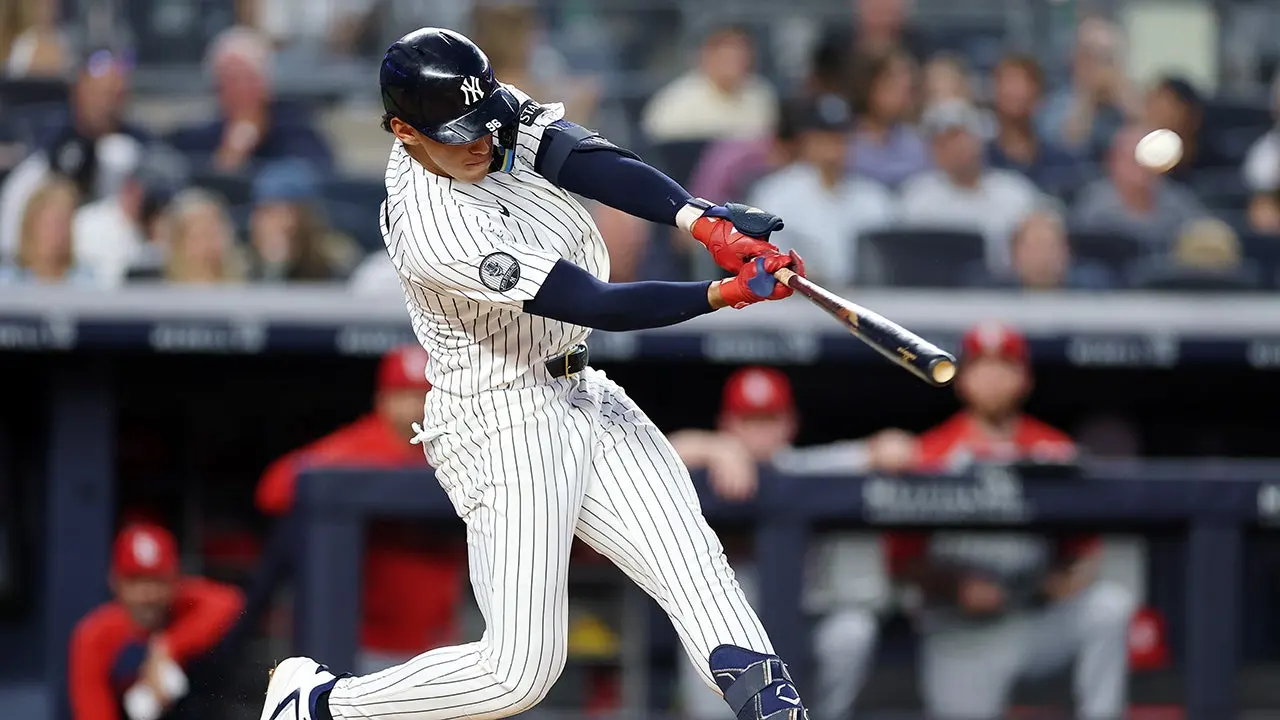
Under the brilliant, towering lights of Yankee Stadium on Tuesday night, Lombard’s major league debut unfolded like a cinematic masterpiece, instantly validating the immense hype surrounding his arrival. After grounding out in his very first career plate appearance—a moment that surely carried a lifetime of nervous energy—the young rookie showed the veteran-like adaptability that scouts had raved about. Facing St. Louis Cardinals starter Hunter Dobbins in his second at-bat, Lombard found himself in a daunting 0-2 count, a situation where most rookies would succumb to the pressure and chase a pitch out of the zone. Instead, he remained remarkably poised, recognizing a hanging breaking ball and unleashing a beautifully fluid, powerful swing that connected with absolute perfection. The ball soared majestically through the cool night air, clearing the left-field wall for a solo home run to put the Yankees up 2-0, sending the stadium crowd into an absolute frenzy of pure joy. In the dugout, Yankees captain Aaron Judge and the rest of the team erupted in celebration, their faces lit with genuine excitement as Lombard rounded the bases, letting out a triumphant shout of pure, unadulterated happiness that marked the realization of his lifelong dream.
Beyond the offensive fireworks, what truly endeared Lombard to the Bronx faithful on Tuesday night was his flawless, mesmerizing performance in the field, a stark contrast to the defensive inconsistencies that had plagued the team in recent months. For years, fans had grown accustomed to holding their breath during routine plays at shortstop, where Volpe’s spectacular athletic leaps were too often offset by head-scratching errors on basic grounders. Lombard, however, moved with a fluid, effortless grace that made the incredibly difficult tasks look entirely mundane, demonstrating a defensive maturity that immediately put his pitchers and coaches at ease. His first major test came on a sharply hit ball to his right; without a moment of hesitation, he ranged deep, backhanded the grounder with soft hands, and fired a perfect, sweeping throw to second baseman Jazz Chisholm Jr. to initiate a dazzling double play. Later in the game, he showcased his high-level baseball IQ by snaring a hard-hit ball up the middle, stepping directly on second base himself, and firing a laser to first in one continuous, seamless motion to end a dangerous inning, proving that his defensive prowess was just as lethal as his bat.
Lombard’s historic night concluded with a stat line of 1-for-2 with a crucial walk, helping secure a tense 2-0 victory for the Yankees while etching his name into the franchise’s legendary history books. By launching that ball over the left-field fence, he became only the fourteenth player in the long, illustrious history of the New York Yankees to hit a home run for his very first major league hit, joining an exclusive brotherhood of players who started their pinstripe careers with magic. While the statistical achievements are impressive on paper, the true beauty of the evening lay in the profound human emotions tied to the accomplishment—the collective sigh of relief from a fanbase desperate for stability, the pride of a father watching his son conquer the grandest stage in sports, and the sheer ecstasy of a young man proving he belongs. It was a night of pure storytelling, where the burdens of a long, grueling baseball season were temporarily forgotten, replaced by the sheer wonder of watching a young athlete perform at the absolute peak of his capabilities when the world was watching closest.
Of course, seasoned baseball fans understand that one spectacular night does not make a career, and the road ahead for George Lombard Jr. will undoubtedly be filled with grueling adjustments, cold streaks, and the relentless scrutiny of the New York media. The game of baseball is a marathon of failure, and the league will soon develop a scouting report on the young rookie, challenging him to adapt just as his predecessor was forced to do. Yet, for one magical Tuesday night in late summer, none of those future worries mattered; the present belonged entirely to a twenty-one-year-old kid who walked onto the most famous field in sports and made it his own playground. As the stadium lights slowly faded and the echoes of the cheering crowd died down into the New York night, there was a renewed sense of hope lingering in the air, a collective feeling that perhaps, just perhaps, the Yankees had finally found the anchor for their infield and the heartbeat of their future.