




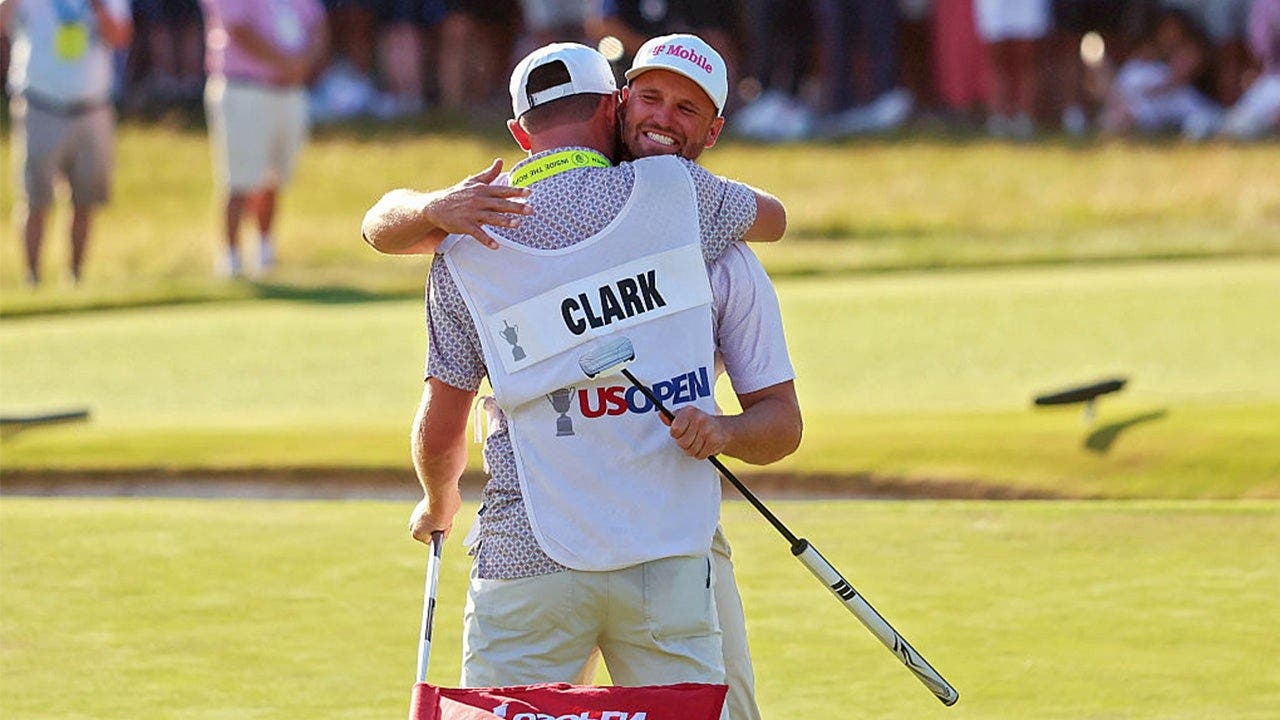
To stand atop the golfing world once is an extraordinary achievement, but to scale that peak a second time requires a rare collision of physical mastery and psychological resilience. At the historic, wind-swept expanses of Shinnecock Hills, Wyndham Clark did exactly that, cementing his place in sports history by claiming his second U.S. Open title. By outlasting a relentless field and holding off fellow American Sam Burns by a single, agonizing stroke, the thirty-two-year-old Colorado native became one of only twenty-four players in the history of the sport to win multiple U.S. Opens. His wire-to-wire victory at Shinnecock was a masterclass in pressure management, drawing natural comparisons to his breakthrough major victory in 2023 at the Los Angeles Country Club, where he similarly edged out Rory McIlroy. Yet, while his first major triumph was characterized by the boundless joy of an underdog realizing a lifelong dream, this second victory was forged in the fires of personal struggle, self-doubt, and a grueling emotional journey that proved to be far more difficult than the golf course itself.
Behind the glittering trophy and the celebratory photos lay a raw, intensely human narrative of an athlete who had spent the previous year wandering through a professional and emotional wilderness. Shortly after securing his historic victory, Clark took to social media to share an unusually candid, deeply vulnerable message that pulled back the curtain on the crushing isolation of professional sports. He admitted that the months leading up to his triumph were defined not by confidence, but by a paralyzing lack of answers, characterized by relentless frustration and moments that pushed his self-belief to absolute breaking points. In a sport where athletes are conditioned to project unwavering certainty, Clark’s willingness to confess his fragility resonated deeply with fans and commentators alike. He spoke philosophically about how the game of golf has a unique, almost cruel ability to humble even its greatest practitioners, offering no guarantees or debts owed, regardless of how much effort is poured into the dirt. For Clark, conquering Shinnecock Hills was not merely about hitting precise iron shots or navigating lightning-fast greens; it was a deeply personal validation of his decision to keep showing up, day after day, when his mind was urging him to give up.
This emotional triumph was made even more remarkable by the hostile, high-pressure environment in which it was achieved, as Clark had to conquer not only the course but also the notoriously raucous New York gallery. Throughout Sunday’s grueling final round on Long Island, it was glaringly obvious that Clark was not the crowd’s preferred champion. Instead of receiving the respectful applause typically reserved for a tournament leader, he was met with a wall of vocal opposition from spectators who openly cheered for his ball to find the devastating fairway bunkers and erupted in minor celebrations whenever he carded any of his five bogeys. Playing professional golf under such conditions is akin to walking a tightrope while the audience actively shakes the cable, yet Clark chose to view this adversity through a lens of profound gratitude. Rather than harbor resentment toward the intensely passionate crowd, he thanked them in his post-victory address, acknowledging that their demands and unfiltered honesty created an unforgettable, electric atmosphere that ultimately forced him to elevate his game to a level he did not know he possessed.
To truly appreciate the magnitude of Clark’s redemption at Shinnecock Hills, one must also confront the darker, more turbulent chapters of his career that painted him as a highly polarized figure in the sport. During the 2025 PGA Tour season, Clark’s frustrations boiled over into highly publicized outbursts that threatened to overshadow his immense talent and tarnish his reputation. At the PGA Championship, overwhelmed by the pressure of the final round, he famously threw his driver directly through an advertising sign located behind a tee box, drawing widespread criticism for his lack of decorum. Just a month later, after a devastating missed cut at the historic Oakmont Country Club during the U.S. Open, his anger reached a fever pitch as he destroyed two locker room lockers, resulting in a temporary ban from the prestigious club. These incidents did not depict a polished corporate athlete, but rather a deeply flawed, hyper-competitive human being buckling under the immense weight of expected perfection. By acknowledging these low moments, Clark’s victory at Shinnecock becomes a powerful story of behavioral reformation, showing that true sportsmanship is not about never failing, but about learning how to channel supreme frustration into fierce concentration.
No athlete reaches such heights entirely on their own, and Clark was quick to redirect the spotlight toward the vital ecosystem of support that kept him anchored during his darkest competitive moments. In his emotional reflections, he lavished praise on his family, friends, coaches, and sponsors, thanking them for remaining steadfastly in his corner when believing in him was a difficult, seemingly thankless task. The solitary nature of golf often masks the collaborative effort required to keep a player mentally and physically prepared to compete, and Clark’s public display of gratitude illuminated the heavy burden carried by an athlete’s inner circle during prolonged slumps. He recognized that the setbacks, the sleepless nights, and the quiet moments of despair shared with his loved ones were the very elements that gave the shiny silver trophy its weight and meaning. This championship was as much a victory for the team of people who managed his emotional outbursts, rebuilt his fragile confidence, and kept him grounded as it was for the man who physically struck the golf ball.
Ultimately, Wyndham Clark’s second U.S. Open championship will be remembered as a victory for the beautifully messy, resilient nature of the human spirit over the sterile expectation of athletic perfection. By surviving the relentless challenges of Shinnecock Hills, enduring the vocal skepticism of the New York crowds, and overcoming his own volatile temperament, Clark proved that he belongs in the upper echelon of modern golf history. His journey serves as a powerful reminder that elite athletes are not invulnerable machines, but complex individuals who struggle, make mistakes, and must continuously rebuild themselves from the inside out. As his name is permanently joined with the legends of Shinnecock, Clark stands not only as a formidable two-time major champion but as an inspiring symbol of perseverance. His triumph proves that the sweetest victories in life are not the ones that come easily, but those hard-fought battles won on the other side of personal doubt, public scrutiny, and deep self-reflection.