






Baseball has an uncanny, almost poetic ability to humble even its most promising and revered figures in the brief span of a single afternoon, turning a routine game into a profound test of human character. For Will Venable, the rookie manager of the Chicago White Sox, his first season at the helm of the storied franchise had largely been a masterclass in poise, strategic foresight, and steady leadership. Having transitioned from a respected major league outfielder to a cerebral dugout leader, Venable had quickly earned the respect of both his clubhouse and the passionate South Side fan base by navigating the relentless, daily grind of the Major League Baseball schedule with the grace of a seasoned veteran. Yet, the beautiful cruelty of this sport lies in its absolute refusal to grant immunity to anyone, regardless of how sterling their reputation, how sharp their baseball IQ, or how careful their preparation might be. On a seemingly routine Friday night at Rate Field, as the White Sox prepared to battle their fierce American League Central division rivals, the Cleveland Guardians, Venable found himself at the epicenter of a bizarre, self-inflicted storm that would serve as a stark reminder of how quickly the best-laid plans can unravel. In the high-stakes theater of professional baseball, where every single pitch is meticulously analyzed and every strategic decision is dissected under the microscopic glare of high-definition television cameras, a momentary lapse in concentration can reverberate through an entire organization. What should have been a standard series opener quickly transformed into an agonizing, public lesson in administrative vigilance, proving that in the big leagues, the official rulebook can sometimes be a far more formidable opponent than the lineup standing in the opposing batter’s box. It was a night defined not by a spectacular physical error on the field or a calculated tactical gamble gone wrong, but by a simple, deeply human oversight that would cost the White Sox dearly and push their roster to its absolute physical limits.
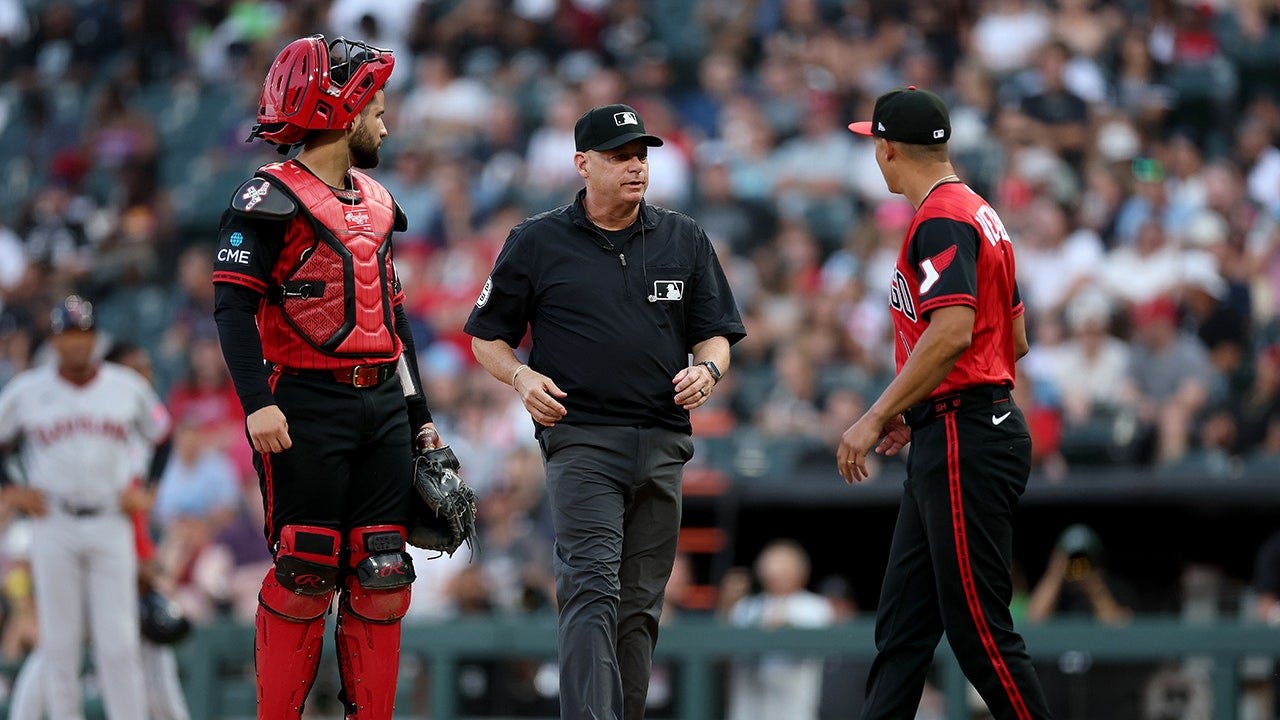
The trouble began almost immediately after the game’s opening pitch, as young starting pitcher Noah Schultz struggled visibly to find his rhythm against a highly disciplined and aggressive Cleveland lineup. With the bases quickly loaded after just four batters, the atmosphere in the dugout grew incredibly tense, prompting pitching coach Zach Bove to make a calculated, standard mound visit in an attempt to settle his young starter, calm his nerves, and reset the defensive strategy for the inning. When play resumed, left fielder Angel Martinez managed to rip a sharp, two-run single into the outfield, further deflating the home crowd and putting the White Sox on their heels. It was at this critical, high-stress juncture that Venable, driven by an intense competitive instinct to advocate for his team, spotted a potential appeal play that he desperately wanted to execute on the field. Urgently stepping out of the dugout, Venable marched toward the pitcher’s mound to discuss the play with his defense, entirely forgetting in the heat of the moment that Bove had just occupied their single permitted visit for that inning. Under Major League Baseball’s strict Rule 5.10(l), a manager or coach is allowed only one mound visit per pitcher in a single inning without penalty; a second visit by any staff member in the same inning requires the immediate and mandatory removal of the pitcher from the game. As the devastating realization of the rule infraction swept over the field and the umpires stepped in to enforce the law of the game, Venable was forced to make the agonizing walk to remove Schultz after just five batters—not because of the young pitcher’s performance, but because of his own administrative blunder, leaving the entire stadium in a state of stunned disbelief.
The timing of Venable’s mistake could not have been more disastrous for a White Sox team already teetering on the edge of complete physical and mental exhaustion. Just twenty-four hours earlier, Chicago had endured a grueling, thirteen-inning marathon against their opponents, a contest that had thoroughly depleted and taxed their bullpen, leaving their relief pitchers running on empty and desperately hoping for a lengthy, stabilizing start from Schultz. Instead, because of the unexpected managerial gaffe, the White Sox found themselves needing to cover eight and two-thirds innings of relief on a night when every extra pitch felt like a monumental physical burden on the pitching staff. The emergency call fell upon David Sandlin, a young pitcher who had only recently been called up from Triple-A and had barely settled into the rhythm of the major league clubhouse. When Venable’s second mound visit triggered the forced ejection of Schultz, Sandlin had not even begun his formal warm-up routine in the bullpen; he was merely stretching and performing basic loose-up exercises on the grass. The sudden, chaotic transition from a relaxed spectator to an emergency savior required Sandlin to bypass the highly structured psychological and physical preparation that professional pitchers rely on to prevent career-threatening injuries and find their competitive groove. Thrust into the high-intensity environment of a Major League game with virtually no warning, Sandlin was forced to jog onto the field and finish his warm-up tosses on the game mound, carrying the immense weight of an entire bullpen’s survival on his young shoulders as he prepared to face elite major league hitters with a cold arm.
In the immediate aftermath of the disheartening 8-2 defeat, the true measure of Will Venable’s character and leadership was put on display during a highly anticipated post-game press conference. In a modern sports culture where public figures frequently hide behind public relations filters, deflect blame onto subordinates, or offer vague, non-committal explanations to protect their reputations, the forty-three-year-old manager chose a courageous path of absolute and uncompromising accountability. Facing a room of eager reporters, Venable did not attempt to minimize the gravity of his mistake, nor did he make excuses about the chaotic nature of the first inning or the pressure of the divisional race. Instead, he openly confessed to the blunder, describing it as an “inexcusable mistake” born out of the frantic urgency to execute the appeal play, which caused him to completely lose track of the previous mound visit. This raw, unvarnished honesty humanized Venable in a way that tactical victories never could, revealing a leader who was willing to stand before his players, the organization, and the entire fanbase to shoulder the entire burden of a costly defeat. By taking full, unconditional responsibility for the gaffe, Venable not only shielded his young players from unfair criticism but also established a powerful cultural standard of accountability within his clubhouse, demonstrating that even those in positions of supreme authority are susceptible to human error and must answer for their missteps. It was a deeply humbling moment for a manager who had otherwise performed admirably, illustrating the heavy psychological toll of leadership in a sport where every split-second decision is subject to intense public scrutiny.
While the manager grappled with his conscience in the clubhouse, David Sandlin’s heroic and gritty effort on the mound emerged as the inspiring silver lining of an otherwise disappointing evening. Showing a level of poise and maturity that far exceeded his rookie status, the young call-up delivered a performance that single-handedly saved the White Sox bullpen from absolute catastrophe. Sandlin tossed five and a third spectacular innings, throwing ninety-six pitches under the most stressful, chaotic, and unconventional circumstances a pitcher could ever face in their major league career. Reflecting on his sudden, dramatic entry into the game, Sandlin refused to make any excuses for his lack of proper preparation, expressing a refreshing, blue-collar mentality by noting that he simply had to adapt, get to work, and perform his job regardless of the situation. His incredible resilience on the mound prevented a bad situation from becoming an absolute disaster, allowing the rest of the exhausted bullpen to get some much-needed rest despite the eventual 8-2 loss on the scoreboard. Sandlin’s ability to completely compartmentalize the surrounding chaos and focus entirely on the batter in front of him earned him immense respect from his veteran teammates and the coaching staff alike. His performance served as a powerful, humanizing reminder of the unpredictable nature of baseball, where a career-defining moment of reliability and heroism can often be born out of a chaotic, administrative mistake made by the very person running the team.
This painful loss marked a frustrating and historic milestone for the White Sox, representing their fourth consecutive defeat and marking the first time all season that the club had suffered a four-game losing streak. Prior to Friday’s game, the team had displayed an impressive resilience and mental toughness, never allowing their periodic skids to exceed three games—a testament to their overall consistency and Venable’s steady hand at the helm throughout the year. Now sitting at a 59-56 record, the White Sox must quickly shake off the disappointment of this self-inflicted wound as they continue their intense three-game series against the Cleveland Guardians, who sit just a game behind them at 58-59 in the highly competitive American League Central division. As they prepare for the next critical matchup at Rate Field, Venable and his squad will undoubtedly use this humbling experience as a catalyst for collective growth, understanding that the road to a championship is inevitably paved with both brilliant tactical triumphs and deeply human setbacks. In the grand, sweeping narrative of a grueling one-hundred-and-sixty-two-game season, a single managerial mistake is rarely fatal, but the manner in which a team responds to such adversity often defines their ultimate destiny. For Venable and the White Sox, the challenge now is to transform the embarrassment of Friday night into the fuel needed to secure a postseason berth, proving that true leaders are defined not by their occasional errors, but by their capacity to rebuild, adapt, and confidently lead their team forward into the future.