


Paragraph 1
There’s a special kind of whiplash that only an athlete can understand: the feeling of being told yes, then being told no, then being told maybe, all before the season even starts. For a group of college football and basketball players across the country, that whiplash became a harsh reality on a single Friday in October. The summer had been full of promise. Courts had stepped in and handed out fifth years of eligibility like golden tickets, offering players who had seen their careers disrupted a chance to keep playing, keep chasing, keep believing. Then the fall came, and with it a pair of rulings in Ohio and Kentucky that yanked that promise away — at least for now. The decisions were temporary, not final, but they landed with the weight of a final whistle. Multiple athletes were suddenly ineligible for the 2026-27 season, their lives and futures thrown back into a confusing legal fog. It’s easy to read about these cases in bureaucratic terms: injunctions, eligibility waivers, court orders. But behind every phrase is a young person who has spent years pouring sweat into a sport, only to find that their ability to play is no longer determined by their performance on the court or field, but by the shifting opinions of judges and the complicated, ever-changing rules of the NCAA. These players didn’t stop being talented. They didn’t stop being committed. They just woke up one morning to find that the ground beneath them had moved, and no one could tell them exactly why.
Paragraph 2
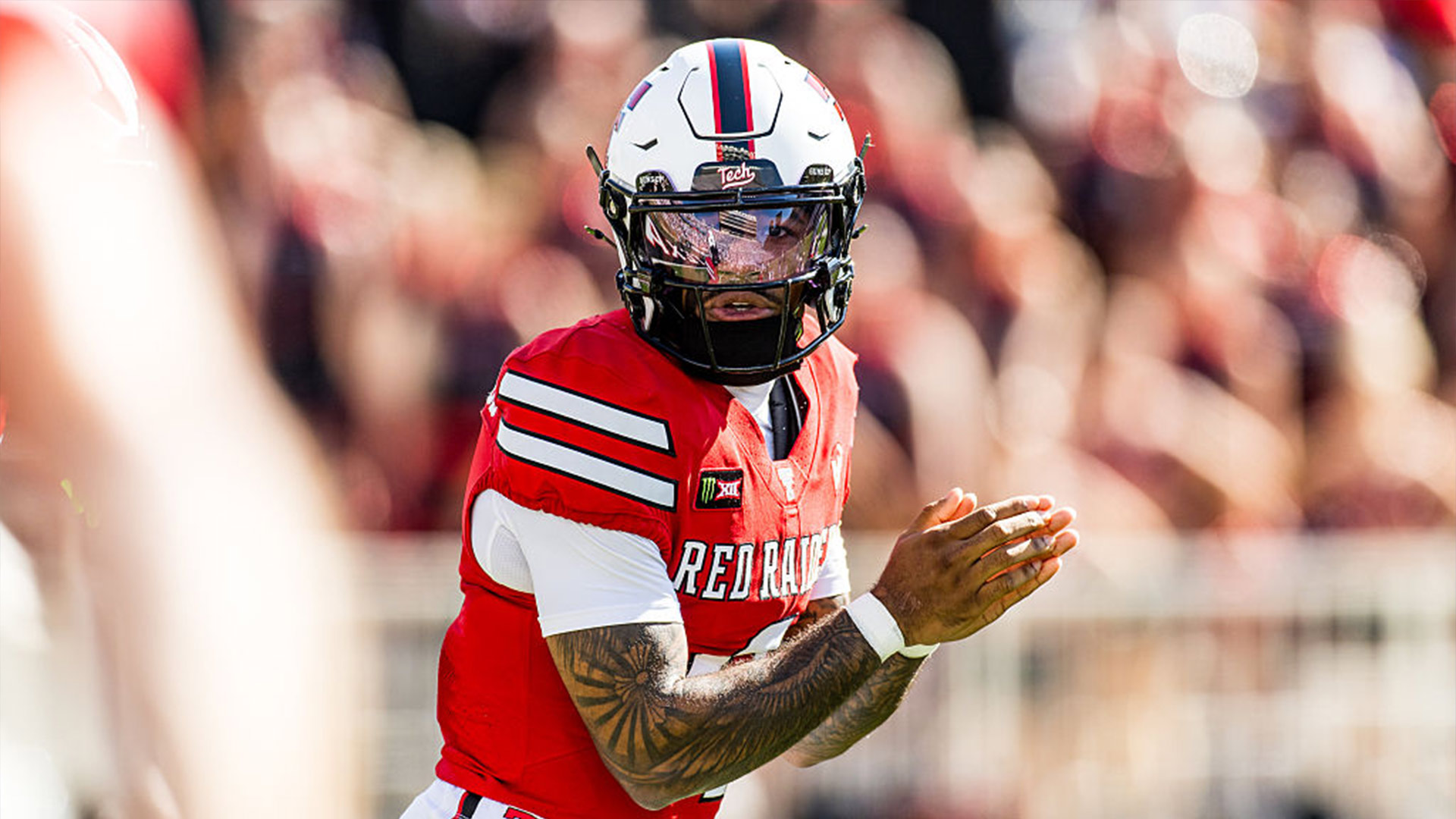
The most visible impact on the football side of things hit Texas Tech, where quarterback Thomas Castellanos was ruled out for Saturday’s game against Colorado. Castellanos had been serving as the backup to starter Will Hammond during the Red Raiders’ perfect 4-0 start, a role that required patience and preparation as much as talent. He had transferred to Lubbock from Florida State, arriving after receiving a temporary restraining order on July 31st that allowed him to pursue a fresh start. His path to Texas Tech wasn’t a simple transfer portal decision; it was tangled in a larger, messier story involving the NCAA’s ruling that former Texas Tech quarterback Brendan Sorsby was ineligible for the 2026 season following a gambling scandal. That ruling created a need, and Castellanos filled it, uprooting his life to join a program with serious ambitions. Texas Tech is trying to return to the College Football Playoff and defend its Big 12 title, and having a proven quarterback on the roster was supposed to be part of that security. Instead, Castellanos watched from the sideline in a different way than he expected. He’d already been standing on the sideline as a backup, but now he was standing there without eligibility, unable to suit up at all. No amount of film study or practice reps could fix this. It wasn’t a sprained ankle or a bad game. It was a court order, read aloud in a courtroom miles away from the roar of the stadium, that took away his chance to be part of the team on game day.
Paragraph 3
The basketball world felt the sting just as sharply. In Cincinnati, MJ Collins was deemed ineligible by a ruling in Ohio. Collins had followed coach Jerrod Calhoun from Utah State, where he had finished fourth among all Mountain West players in scoring last season with 17.5 points per game. That kind of production doesn’t happen by accident; it comes from hours in the gym, trust in a system, and a relationship with a coach who believes in you. Collins put his faith in Calhoun, transferring to Cincinnati to continue that partnership. Now that faith was put on hold by legal language he likely never expected to have to understand. Meanwhile, a ruling in Kentucky hit a wave of players across multiple programs. Mark Mitchell, who had returned to Missouri, suddenly found his status unclear. Seth Trimble, who had transferred to Louisville after four seasons at ACC rival North Carolina, was caught in the same storm. And Skyy Clark, who was hoping to play at a fourth school in five seasons, saw his latest chapter threatened before it could truly begin. Each of these players had a different story, but they shared the same underlying hope: that a change of scenery, a familiar coach, or another chance would be enough to write a happy ending. Instead, they were left to wait, to wonder, and to hope that the judges who had taken away their eligibility would someday give it back. For players like Trimble, leaving behind a place like North Carolina wasn’t easy; it was a calculated risk born of wanting more playing time, a bigger role, a final chance to shine. Now that risk looked less like courage and more like a cruel twist of fate.
Paragraph 4
To understand why Friday matters so much, you have to remember what happened earlier in the year. The summer was defined by a wave of court victories that seemed to herald a new era for college athletes — an era where a fifth year of eligibility was no longer a luxury reserved for a few, but a right available to many. These rulings were seen as small rebellions against the NCAA’s rigid authority, a way for players to reclaim control over their own timelines. A fifth year means another chance to finish a degree while competing, another season to impress professional scouts, another year of wearing the jersey you love in front of the fans who cheer your name. It can mean the difference between leaving school with debt and leaving with hope. But the fall revealed how fragile those victories were. The same courts that had opened doors in the summer closed them again in October, reminding everyone that legal rulings are not permanent, that injunctions can be reversed, and that the lives of young athletes can be swept up in appeals and arguments that have nothing to do with their own performance. It’s a strange system where a player can go from eligible to ineligible without committing a single violation, without failing a single class, without doing anything wrong at all. They are simply collateral damage in an ongoing fight between the NCAA and the courts, caught in the middle of a rulebook that seems to rewrite itself with every ruling.
Paragraph 5
What gets lost in the legal analysis is the human cost of all this uncertainty. These are not just names in a court filing or entries in a transfer portal database. They are young men who have spent most of their lives learning how to be teammates, how to handle pressure, how to sacrifice personal glory for the good of the group. They have learned to deal with coaches leaving, teammates transferring, seasons being canceled, and injuries that come without warning. But nothing in their athletic training prepared them for the feeling of being told that their eligibility, the very foundation of their college career, is suddenly gone. Coaches have to have difficult conversations with players they recruited and promised a future. Teammates have to go to practice without someone who has been part of the family. Families have to watch from afar, unable to fix the problem with a hug or a pep talk. For the Red Raiders, the goal remains a Big 12 title and a spot in the College Football Playoff. For the basketball programs, the season ahead is full of potential. But those goals now feel less certain when the roster you planned on is no longer stable. And for the players themselves, the emotional toll can’t be overstated. There’s the shame of feeling like you did something wrong when you didn’t, the anger of being treated like a casualtrade, and the sadness of wondering whether your dream is over just because a court in another state made a decision. No amount of NIL money or scholarship support can fix that kind of heartbreak.
Paragraph 6
Yet if there’s one thing these athletes have shown over and over again, it’s that they don’t give up easily. The rulings in Ohio and Kentucky were temporary, which means the fight isn’t finished. There will be more hearings, more arguments, more lawyers, and perhaps, eventually, a ruling that swings the pendulum back in favor of the players. The games on Saturday and in the months ahead will go on, with altered rosters and disappointed faces, but the story is far from over. Castellanos may be out for the Colorado game, but he remains a quarterback with talent and value, a player who has already overcome more than most to reach this point. Collins, Mitchell, Trimble, and Clark have all been through transitions before, and they know how to adapt. The hope is that the courts will see what the players already know: that eligibility isn’t just a legal status, it’s a chance to grow, to finish something, to prove yourself. The NCAA has long claimed to care about the well-being of athletes, and perhaps this moment will force a more thoughtful conversation about how rules are made and how they are enforced. Until then, the players wait. They practice. They study. They keep showing up. Because that’s what athletes do. They don’t control the judges, the rulings, or the rulebooks. But they do control their effort, their attitude, and their belief that somehow, someday, the door will open again. For now, the summer’s promise feels distant, but it hasn’t disappeared entirely. It has simply become another test, another obstacle, another challenge to overcome. And if anyone knows how to overcome challenges, it’s the young men who have dedicated their lives to the game.