




As the relentless march of time continues to claim the careers of his peers, LeBron James stands defiantly against the biological clock, embarking on an unprecedented twenty-fourth season in the National Basketball Association. His journey has taken a dramatic, legacy-defining turn with his recent decision to sign a lucrative two-year contract with the Philadelphia 76ers. In joining forces with the newly acquired, battle-tested Jaylen Brown, the dominant former league MVP Joel Embiid, and the explosive young scoring guard Tyrese Maxey, James has instantly transformed the City of Brotherly Love into the epicenter of championship expectations in the Eastern Conference. This historic transition marks the fourth distinct franchise of LeBron’s storied career. Should he successfully guide this newly assembled powerhouse to an NBA title—a feat Philadelphia fans have desperately craved since their last parade in 1983—James would achieve something no other player in the history of the sport has ever accomplished by winning championships with four separate organizations. While legendary figures like John Salley, Robert Horry, and Danny Green have earned championship rings with three different franchises, none of them carried the immense burden of being the primary engine of their teams in the way LeBron has. This audacious move to Philadelphia is not merely a search for another ring; it is a profound, high-stakes human gamble designed to push the absolute boundaries of what is possible in professional sports, cementing an athletic legacy that may never be replicated.
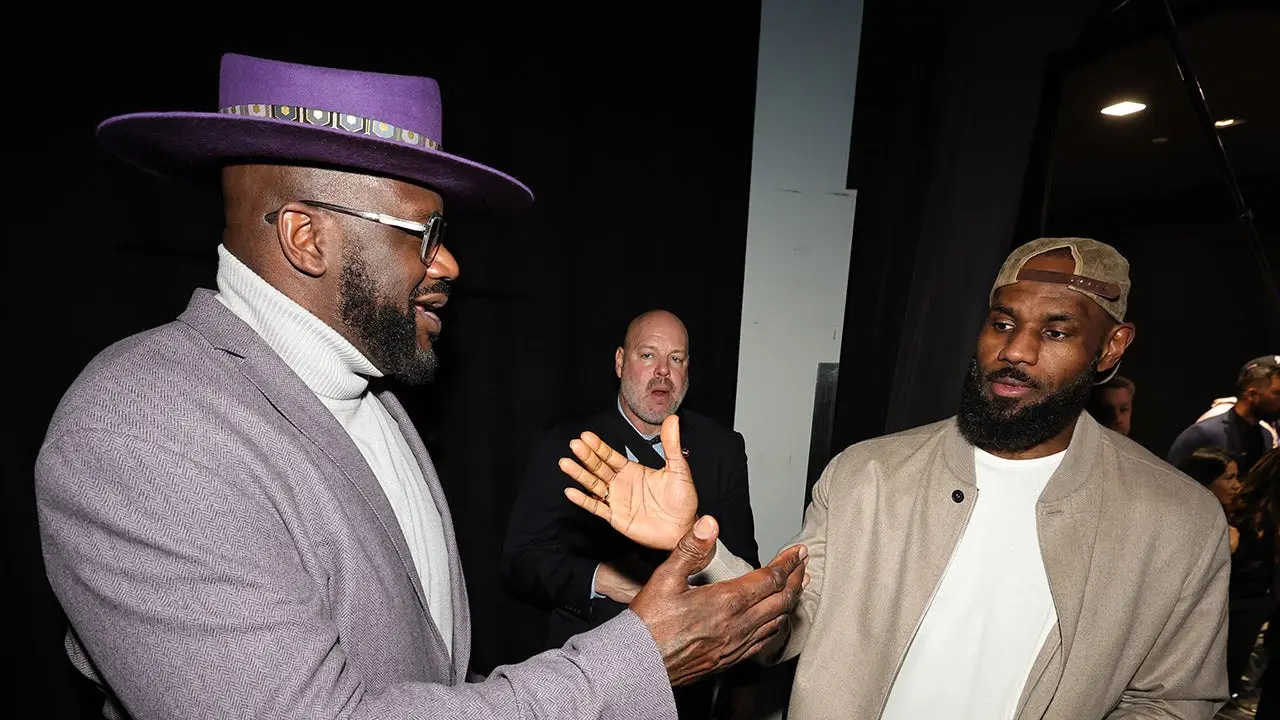
Yet, before the first whistle blows in Philadelphia, the debate surrounding what LeBron left behind in Southern California continues to burn fiercely across the basketball world. His six-year tenure with the Los Angeles Lakers was capped by a historic, emotionally charged championship in 2020, played under the bizarre, pressure-cooker conditions of the Disney “bubble” during the height of the global pandemic. For many, delivering a seventeenth banner to the rafters of Crypto.com Arena, while earning his fourth Finals MVP trophy, is more than enough to immortalize him as a Lakers immortal. Hall of Fame center Shaquille O’Neal, a man who knows a thing or two about the heavy weight of purple-and-gold expectations, recently shared his candid thoughts on where James fits into the grand hierarchy of Lakers lore. O’Neal readily acknowledged that LeBron’s championship pedigree and his ability to rise to the occasion in the biggest games earned him an undeniable spot “in the building” of Lakers greatness. However, with the characteristic bluntness and pride that defined his own playing career, O’Neal stopped short of granting LeBron access to the franchise’s most exclusive penthouse. In Shaq’s eyes, the “top floor” of the Lakers pantheon is a sacred space reserved strictly for Magic Johnson, Kobe Bryant, and Kareem Abdul-Jabbar—icons who spent the vast majority of their legendary careers defining the very identity of the franchise. For Shaq, LeBron comfortably occupies the “second floor” alongside himself, a position of immense honor that nevertheless recognizes the deeper, generational roots planted by those who wore the purple and gold for the long haul.
This fascinating intersection of legacy, aging, and the relentless pursuit of greatness reveals a deeply human side to these larger-than-life basketball giants, a theme that Shaquille O’Neal warmheartedly embraced when discussing his life away from the hardwood. Despite his imposing seven-foot-one frame and his reputation as one of the most dominant, terrifying forces in sports history, the fifty-four-year-old O’Neal remains, at his core, an incredibly relatable and joyful kid at heart. This youthful spirit is perhaps best illustrated by his self-proclaimed status as a cereal connoisseur and his recent partnership with General Mills to promote a campaign celebrating the simple, nostalgic joy of a morning favorite. Shaq spoke with infectious enthusiasm about his lifelong love for Lucky Charms, painting a vivid picture of his late-night routine that strips away all the glamour of his worldwide fame. He described a recent evening where, while engrossed in an episode of Stranger Things, he was hit with an overwhelming craving that forced him to pause the screen, venture into the kitchen, and pour himself a massive, ice-cold bowl of cereal. To recreate the magic of his childhood, Shaq even turned down his air conditioner to chill the room, recapturing the exact sensory feeling of sneaking downstairs past his sleeping parents at nine or ten years old to enjoy a secret snack. It is a wonderfully grounding image: a multi-millionaire global icon and sports analyst, sitting in the quiet dark of his home, finding pure peace and comforting nostalgia in a bowl of marshmallow shapes and milk, reminding us that no matter how old or successful we become, we all carry a piece of our childhood selves with us.
However, the cozy comfort of nostalgia quickly gives way to the cold, analytical reality of the upcoming NBA season, where Shaquille O’Neal’s basketball mind remains as sharp and critical as ever. Looking ahead to the Philadelphia 76ers’ ambitious experiment, Shaq voiced significant, highly practical concerns regarding how this collection of superstar talent will coexist on the court. The fundamental dilemma of any newly constructed superteam is as old as the game itself: there is, after all, only one basketball to go around. Philadelphia’s roster is undeniably spectacular on paper, possessing a lethal combination of veteran wisdom, physical dominance, and youthful speed, but the structural fit presents a delicate puzzle. O’Neal pointed out that Joel Embiid’s dominant post-up game requires significant time and space to operate, while LeBron James has spent more than two decades orchestrating offenses with the ball firmly in his hands. This leaves Jaylen Brown and Tyrese Maxey—two dynamic, high-volume scorers who are accustomed to breaking down defenses deep into the shot clock—in a potentially precarious position. If James and Embiid dominate the possession time, Brown and Maxey may find themselves operating under intense time constraints, forced to make hurried decisions with only a few seconds remaining on the shot clock. This represents a drastic and potentially frustrating departure from their natural styles of play, raising the critical question of whether these elite athletes can successfully suppress their individual instincts for the greater good of the collective.
This tactical puzzle highlights the complex human and psychological dynamics that define modern professional sports, where managing egos is often far more challenging than designing plays on a whiteboard. For the Philadelphia 76ers to transform their immense potential into a championship reality, each of these four stars must embark on a difficult journey of personal sacrifice and emotional adaptation. LeBron James, even as he fights the inevitable decline of age, must learn to share the marquee and trust his younger teammates in crucial moments. Joel Embiid must balance his desire for individual MVP validation with the physical preservation required to survive a grueling postseason run alongside his new co-stars. Meanwhile, Jaylen Brown, coming off his own championship success, and Tyrese Maxey, a rising star entering his prime, must find ways to maintain their aggressive edge while playing complementary roles in an offense dominated by two first-ballot Hall of Famers. This delicate dance will take place under the intense, unforgiving spotlight of the Philadelphia sports landscape, a passionate and demanding community that expects nothing less than absolute effort and ultimate victory. The success of this grand experiment will ultimately hinge not on their physical talents, which are undeniable, but on their collective capacity to communicate, build trust, and sacrifice personal glory in pursuit of a shared, historic goal.
Ultimately, this upcoming NBA season serves as a compelling testament to the beautiful, unpredictable drama of human ambition and the enduring pursuit of greatness. LeBron James’ daring leap into the unknown with the Philadelphia 76ers reminds us that the true champions are never content with past achievements; they are constantly driven by the thrill of the next mountain to climb, the next history-making milestone to conquer. At the same time, Shaquille O’Neal’s endearing reflections on his late-night cereal cravings offer a gentle, grounding counterweight to the intense pressure of professional sports, illustrating that true happiness often lies in the simplest, most familiar pleasures of our youth. Whether we are watching a legendary athlete push the limits of longevity on the hardwood of Philadelphia, or smiling at the image of a beloved giant enjoying a bowl of Lucky Charms in the quiet of his living room, we are witnessing the rich, multifaceted nature of the human spirit. As the basketball world prepares for a season filled with high-stakes drama, tactical intrigue, and potential history, we are reminded that sports are at their absolute best when they reflect our own human struggles, our shared vulnerabilities, and our relentless desire to achieve something truly extraordinary.