


The night air in Seattle felt heavy with nostalgia as the Seahawks and Broncos rolled out in their retro AFC West threads, a visual nod to the fiery rivalry that defined a generation of football in the 1980s. For a few hours, it seemed as though the old ghosts might take over, but when the clock finally expired in overtime, the modern reality was stark: the defending Super Bowl champions look like a team that has lost its edge. The Broncos, playing with a poise that belied their recent close calls, escaped with a 17–14 victory, a win that felt far more consequential than the scoreline suggested. Denver improved to 4–2 on the year and extended their remarkable home dominance, now 17–3 since the start of 2024, while Seattle slumped to 3–3, their worst mark this season and their third loss in four games. Yet the real story wasn’t in the standings—it was in the way both teams carried themselves. The Broncos, once again, found a way to win in the margins, but they needed every last ounce of resilience to overcome a Seahawks team that refused to fade, even as their offense sputtered and their quarterback continued to struggle under the bright primetime lights.
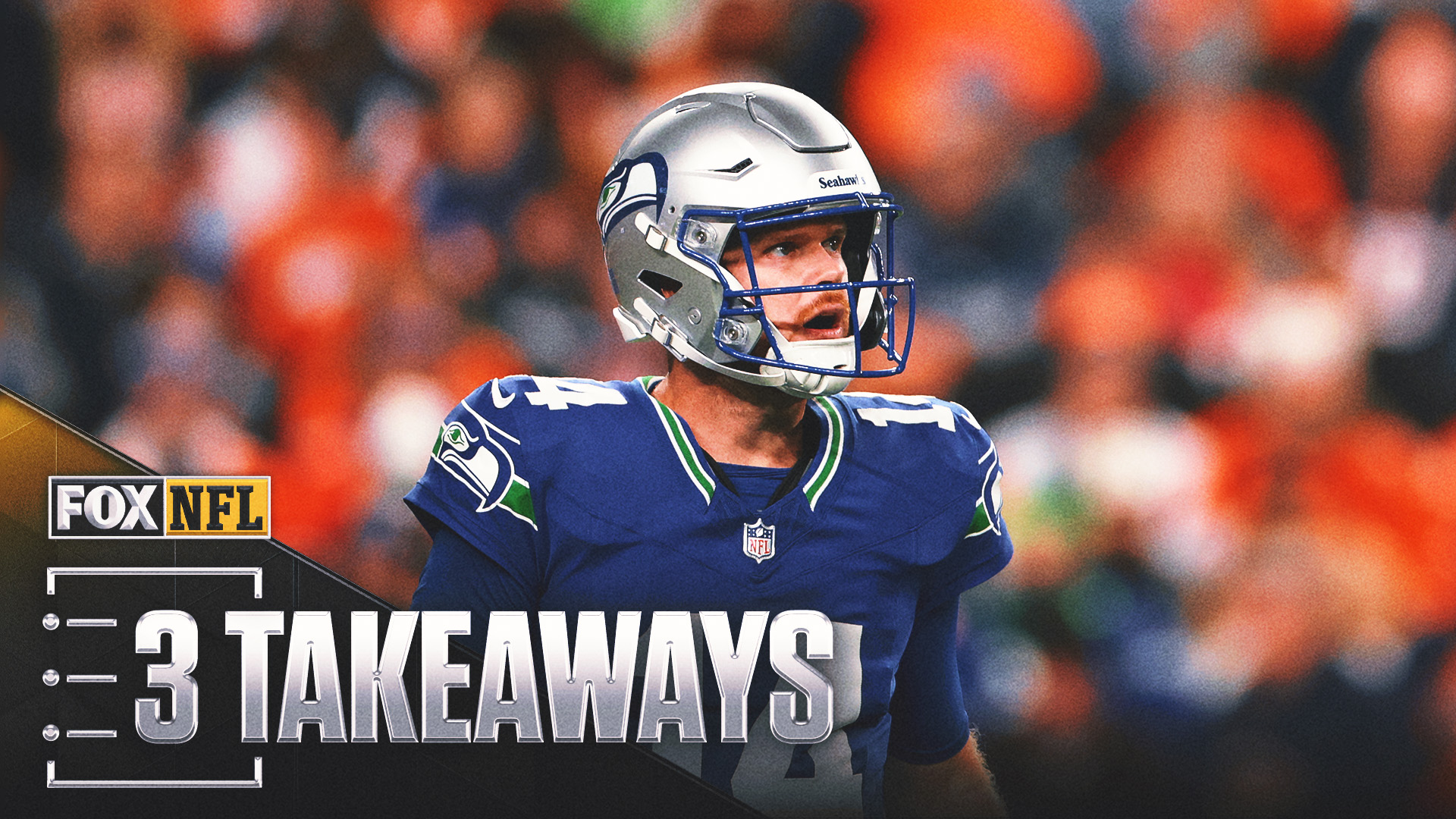
For Sam Darnold, Thursday night was another chapter in what has become a troubling saga since his return from a glute injury. The numbers were unkind: 27 of 51 for 278 yards, no touchdowns, and two interceptions that came at the most painful moments. The first pick killed a potential scoring drive late in the fourth quarter, a throw that sailed high and into the waiting arms of a Broncos defender, turning what could have been a go-ahead score into a sigh of despair for the home crowd. The second was even more devastating—an overtime interception that practically sealed Seattle’s fate, sending the Seahawks faithful home with a bitter taste in their mouths. Darnold has now thrown seven interceptions this season, and Thursday night underscored why. The pressure got to him relentlessly; the Broncos sacked him five times and harassed him on nearly every dropback. When he wasn’t flat on his back, he was rushing throws, his accuracy crumbling under the weight of a defense that smelled blood. According to Next Gen Stats, he completed just 6 of 19 passes for 47 yards and both interceptions when pressured—a statistic that paints a vivid picture of a quarterback who can’t seem to find his footing. The whispers are growing louder, especially with Drew Lock sitting on the bench, a player who stepped in admirably during Darnold’s absence and who now represents a glimmer of hope for a fanbase desperate for a spark. But the decision isn’t simple, and head coach Mike Macdonald has to weigh the veteran’s promise against the reality that Darnold’s funk is becoming a pattern. For now, the quarterback’s body language tells the story: slumped shoulders, shaking head, the agony of a player who knows he’s letting his team down.
On the other side of the field, Bo Nix looked more comfortable than he had all season, at least for a half. Sean Payton, who had reclaimed playcalling duties from offensive coordinator Davis Webb two games ago, clearly had a plan: lean on the run, get the ball out quick, and let his young quarterback play with rhythm and confidence. That plan worked to perfection in the first half. The Broncos marched downfield on two touchdown drives, covering 153 yards on 25 plays, and Nix was an efficient 17-of-27 for 107 yards, with no touchdowns but more importantly no turnovers. He wasn’t asked to do too much, but he managed the game beautifully, hitting short passes over the middle and letting his receivers do the work. The crowd, so loud in the first half, began to quiet as Denver took a 14–3 lead into the break. But then came the second-half collapse—a bridge too far for a team that still hasn’t figured out how to close opponents out. The Broncos managed just 30 yards and punted on six consecutive possessions, three of them three-and-outs. Nix, who had looked so poised early, suddenly seemed to shrink, and the offense lost all its momentum. The defense, meanwhile, was put on its heels, and Seattle clawed back into the game. It was a maddening display of inconsistency, and yet, when the game hung in the balance, Denver’s defense made the stops that mattered. Payton will take the win, but he knows his offense is a second-half ghost. The good news? Nix didn’t turn the ball over, and he showed flashes of the confidence that made him a first-round pick. The bad news? He didn’t have to face the full fury of a Seattle pass rush that was missing its best interior rusher, and he still couldn’t generate any sustained production in the final 30 minutes. The next four weeks will test whether this offense can evolve, or if they’ll continue to rely on the heroics of their defense to scrape out wins.
Seattle’s defense, despite the loss, deserves a gold star for their second-half performance. The unit, which has been a source of pride for this team, got off to a shaky start, allowing Denver to bully them with the run and dictate the tempo. But after halftime, something clicked. The Seahawks flipped a switch, hounding Nix, stuffing the run, and forcing punts like clockwork. They gave up just 30 yards in the second half, a number that would be laughable if it weren’t so impressive given how dominant the Broncos had looked early. Defensive coordinator Aden Durde made adjustments, and the players responded with a fury that seemed to emanate from the sideline. Linebackers flew to the ball, the secondary tightened its coverage, and the pass rush, which had been dormant, suddenly came alive. They even kept the explosive Jaxon Smith-Njigba in check for most of the night—though the reigning Offensive Player of the Year eventually broke through with 12 catches for 134 yards, most of that damage coming in the fourth quarter and overtime. It was a classic tale of two halves, and while the defense ultimately didn’t get the win, they gave their team every chance to steal it. The bigger issue is the team’s overall inconsistency. Seattle allowed 30+ points in two of their previous three games, and they’ve been a Jekyll-and-Hyde unit all season. Thursday night, the second half proved they have the talent to dominate any offense in the league. The first half, though, revealed the same old vulnerabilities: missed tackles, blown assignments, and an inability to stop the run. If the Seahawks are to turn their season around, they’ll need that second-half version of the defense to show up for all 60 minutes. Because right now, their offense can’t sustain drives, and the defense is the only reason they’re still in games.
The throwback jerseys did more than just add visual flair—they reignited memories of a bitter AFC West feud that once defined the NFL landscape. In that era, games between Seattle and Denver were slugfests, marked by hard hits, bitter rivalries, and a gritty style that favored defense over flash. Thursday night felt like a throwback in more ways than one. The game was a defensive struggle, with two offenses that struggled to move the ball consistently. It was a testament to the old-school philosophy that games are won in the trenches, with field position and turnovers often proving more important than highlight-reel passes. The rivalry may have faded over the years, but the intensity remained, and the overtime thriller capped off a night that felt both nostalgic and entirely modern. For the Seahawks, though, the loss carries weight beyond the standings. They’ve now lost three of four, and with the NFC West loaded with talent, every game is a must-win. The team’s identity is in question—are they the team that blew out opponents early in the season, or the team that has looked lost since? For Denver, the win continues an improbable streak of close-game victories. They’ve now won their last 14 regular-season games decided by a single score, a level of clutch performance that defies logic. But relying on that luck is a dangerous game, especially with the playoffs approaching. Both teams have questions to answer, and for now, the football world will be watching to see which version of these squads shows up in the coming weeks.
As the lights dimmed over Lumen Field, the takeaway was clear: this is a league of fine margins, where a single play can alter the narrative of an entire season. For the Broncos, the win was another ugly jewel in a crown built on resilience. For the Seahawks, it was a heartbreak that feels all too familiar. Sam Darnold’s struggles are no longer a footnote—they’re a headline, and the questions about his future in Seattle are only going to grow louder. The defense, meanwhile, deserves praise for their resilience but must find a way to play with that fire from the opening kickoff. And in Denver, Bo Nix’s growth is a work in progress, hampered by an offense that disappears in the second half. Payton will need to find a way to keep his rookie quarterback in his comfort zone for four quarters, not just two. The rivalry between these two franchises may be a relic of a bygone era, but the intensity and drama of Thursday night proved that even in a modern NFL dominated by offense, the old-school battles still have a place. And for the fans, both in Seattle and Denver, the emotional rollercoaster of this game was a reminder of why we love football: it’s not just about the stats or the final score, but about the grit, the heart, and the way a team responds when everything is on the line.