





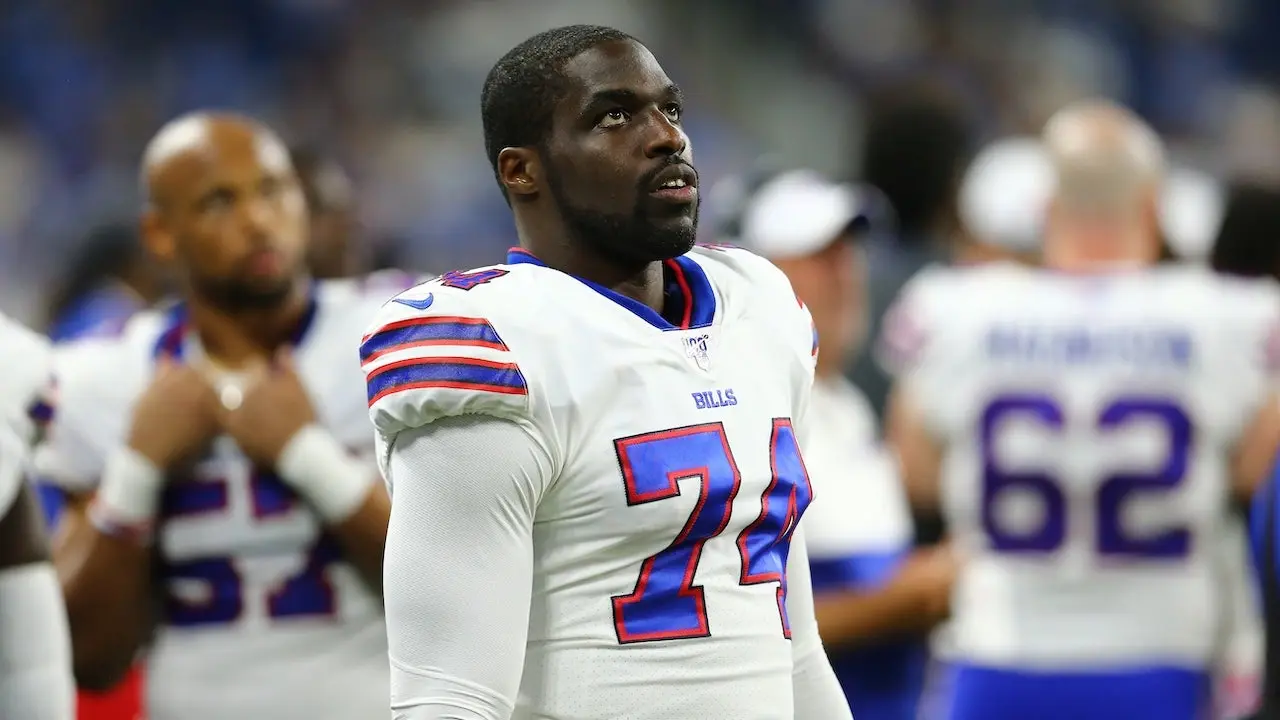
At the inaugural Reagan Civility & Democracy Forum hosted by the Ronald Reagan Foundation Center on Civility & Democracy, former NFL player and current ESPN analyst Sam Acho stepped forward to advocate for a cultural shift in how Americans interact. Acho believes that the playing field holds a powerful blueprint for restoring grace to our fractured public square. In an era where political polarized shouting matches often drown out constructive debate, Acho argues that the fundamental tenets of sportsmanship—respecting a shared set of rules, accepting victory and defeat with dignity, and valuing the opponent—are directly transferable to our broader democratic experiment. Just as football teams can passionately disagree on whether a 3-4 or 4-3 defensive alignment is the superior strategy while pursuing the exact same goal of winning the game, citizens and political leaders can hold vastly different philosophies on governance while sharing the ultimate objective of improving their country. By reframing our national disagreements not as existential battles between good and evil, but as differing strategies to solve common challenges, we can begin to rebuild the foundational trust necessary for a healthy, functioning society.
This perspective is not merely theoretical for Acho; it was forged in the highly diverse and pressured environment of the professional locker room. Far from being insulated bubbles where players only discuss sports, NFL locker rooms are vibrant, organic melting pots of cultural, social, and political discourse. Acho recalls teammates engaging in fierce, open debates about everything from tax laws and governor policies to national controversies, such as Colin Kaepernick’s decision to protest during the national anthem. Because locker rooms house individuals from wildly different socioeconomic, racial, and geographic backgrounds, friction is inevitable, and boundaries are occasionally crossed. However, unlike the modern digital landscape where people easily retreat into ideological echo chambers or permanently cut ties over a disagreement, the relentless schedule of professional football forces reconciliation. Players cannot simply walk away when conversations become tense; they have practice in fifteen minutes, meetings in two hours, and must sit next to each other at lunch the following day. This enforced proximity teaches athletes to apologize, forgive, shake hands, and find a way to move forward together, offering a powerful, real-world lesson in community resilience that our broader culture desperately needs to replicate.
To truly foster this level of mutual respect, Acho asserts that we must first change how we view athletes, politicians, and indeed ourselves, moving away from flat, one-dimensional caricatures toward a recognition of our shared, complex humanity. In the high-stakes world of professional sports, players are often told that they are defined solely by what they “put on tape”—reduced entirely to their physical output, statistics, and performance on game day. Acho strongly rejects this reductionist mindset, urging athletes to recognize that they possess physical, human, and intellectual capital that extends far beyond the boundaries of the playing field. This same principle applies directly to the political arena, where public servants often lose sight of their core humanity in the pursuit of power, reducing their entire existence to the acquisition of the next vote or the preservation of an office. When leaders and citizens alike begin to ask who they are becoming through their decisions—rather than focusing merely on the immediate transaction of winning an election or securing a political victory—they open the door to more ethical, introspective, and civil leadership that values the long-term health of the community over short-term personal gain.
This holistic self-view places a profound responsibility on those who hold a public platform, a theme Acho emphasizes when discussing the roles of both active athletes and prominent sports media figures. High-profile athletes like WNBA star Sophie Cunningham have a unique opportunity to steward their influence to champion meaningful causes, even if doing so carries the inherent risk of public backlash or losing followers. Acho believes that fear of controversy should not silence voices, but rather inspire a commitment to deep self-education so that when athletes do speak, they do so from a place of informed perspective. This responsibility is magnified for former athletes who have transitioned into sports media, such as ESPN’s Pat McAfee, who command massive audiences daily. These media giants are not merely entertainers; they are stewards of public attention. True stewardship means resisting the temptation to use a platform as a weapon to amass raw personal power or chase cheap sensationalism, and instead using it to model intellectual honesty, elevate the quality of public discourse, and guide audiences toward constructive engagement rather than outrage.
To illustrate the dangers of failing to steward influence responsibly, Acho points to a sobering incident during a high-stakes college football matchup between Texas and Georgia. When a controversial refereeing decision went against the home team, frustrated Texas fans began throwing plastic bottles and trash onto the field, successfully delaying the game until the officials ultimately reversed their call. While the immediate outcome of the play shifted in their favor, Acho argues that the behavior was a profound moral failure that damaged the integrity of the game, begging the critical question: what did they actually win? This incident serves as a powerful metaphor for our current political landscape, where individuals and groups increasingly feel justified in throwing metaphorical trash, breaking established rules, and abandoning civility simply to force an outcome that favors their side. When we validate “out of bounds” behavior just because it achieves a desired short-term result, we erode the very foundations of the systems that protect us all, trading long-term institutional trust for fleeting, hollow victories.
Ultimately, Sam Acho’s call for civility is a reminder that the true measure of a society is found not in the absence of conflict, but in the manner in which we navigate our differences. The athletic arena teaches us that the opponent is not an enemy to be eradicated, but a necessary partner in the pursuit of excellence; without someone to compete against, the game itself cannot exist. By embracing sportsmanship, learning to lose with dignity, and recognizing that our shared democratic rules are more important than any single political victory, we can begin to heal our cultural divides. Achieving this requires us to step out of our comfortable silos, embrace the discomfort of proximity, and commit to the ongoing, messy work of listening and understanding. If we can carry the lessons of the locker room into our neighborhood councils, digital spaces, and legislative halls, we can move closer to a nation where disagreement is no longer a source of division, but a catalyst for growth, unity, and a stronger collective future.