






The Long Road to Glory: Rhea Ripley’s Triumphant Return
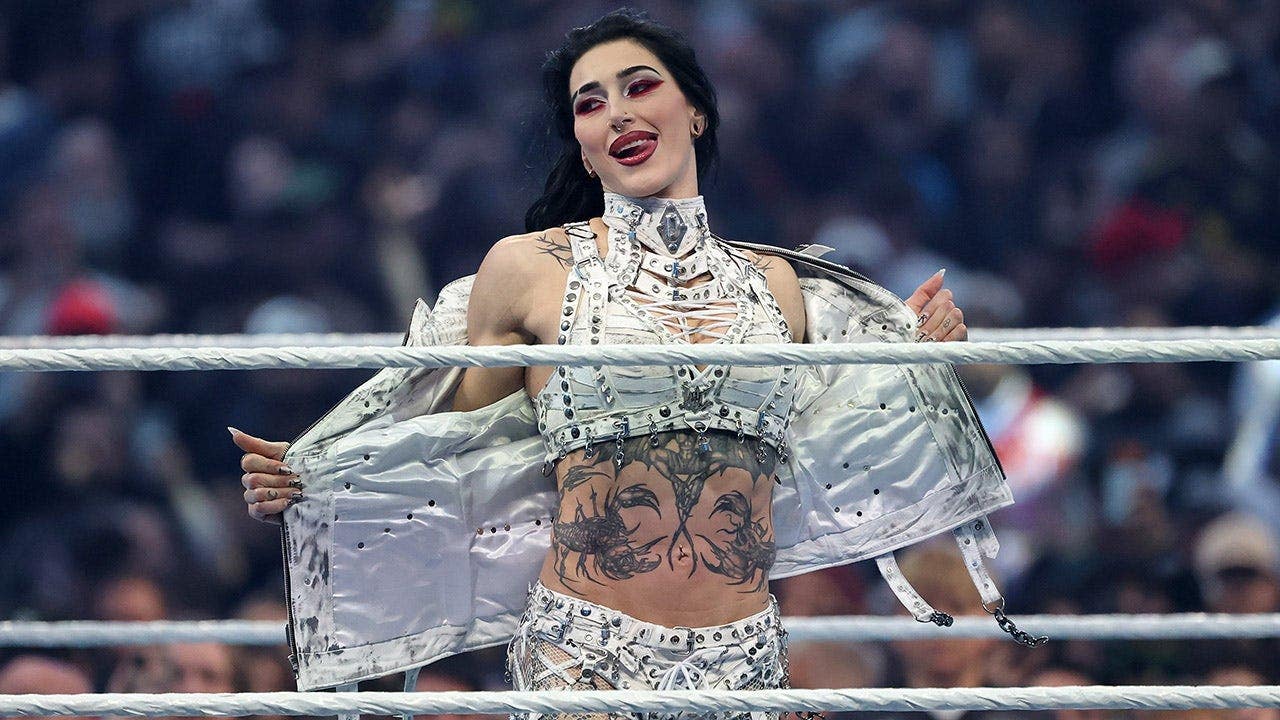
Imagine starting at the bottom, clawing your way through chaos, sweat, and setbacks, only to emerge not just victorious, but as a living legend. That’s the story of Rhea Ripley, the fierce Australian powerhouse who, after years of battling giants in the wrestling world, finally reclaimed her throne at WrestleMania 42 in Las Vegas. It wasn’t handed to her on a silver platter—no, this was a grueling journey marked by heartbreaks, comebacks, and that unshakable fire in her eyes that says, “I’m not done yet.” From her early days in WWE, where she shoved aside champions with a mix of raw aggression and unfiltered charisma, Rhea became a symbol of toughness for fans craving a hero who looks like she could bench-press a dump truck. But life in the squared circle isn’t just about muscles; it’s about resilience. After loses that would’ve crushed lesser athletes, Rhea channeled her inner demon—aptly named “Mami”—to evolve into a terror in the ring. Her path to the top was paved with blood, sweat, and beers, as she fought elbow-to-elbow with the best, proving that strength isn’t genetic, it’s forged. By February of this year, she exploded back into the spotlight by dominating the Women’s Elimination Chamber match, a brutal gauntlet where six women wage war inside a steel cage with pods ready to unleash fresh hell. Rhea emerged not just as the winner, but as the conqueror, earning a coveted championship opportunity. It felt like destiny calling, a chance to rewrite her legacy and remind everyone why she’s not just a wrestler, but a force of nature. This win wasn’t just a ticket; it was validation for the countless fans who cheered her on through tear-stained nights and triumphant roars. Rhea chose to target Jade Cargill’s WWE Women’s Championship, setting up a showdown that promised to be legendary. Fans buzzed with excitement, imagining the clash of two titans: Ripley’s rugged edge against Cargill’s polished dominance. It was personal now—Rhea had carried her scars into this war, each one a badge of honor from battles past. The road to WrestleMania was long, yes, but for Rhea, it was the perfect storm of redemption. She trained harder, visualized that gold belt draped over her shoulder, and connected with her audience on a human level, sharing snippets of her real-life grit off-screen. Behind the scenes, Rhea’s story is one of overcoming odds, from her wrestling roots in Australia to staring down giants in the biggest stage. Her journey mirrored the struggles of everyday warriors—people who fail, regroup, and charge back stronger. At WrestleMania, it wasn’t just about winning; it was about closure, about showing that even after the darkest nights, the sun rises for those who refuse to quit.
The Build-Up: Feuds, Betrayals, and High-Stakes Drama
As the weeks leading to WrestleMania 42 ticked by, the tension between Rhea Ripley and Jade Cargill escalated from rivalry to full-blown warfare, captivating fans and turning casual viewers into die-hard wrestling addicts. It all started with verbal volleys that felt like Shakespearean drama meets street brawl. Cargill, the self-proclaimed “EST” or “Estonian Shiest,” arrogantly dismissed Rhea as beneath her, vowing to “bring the disrespect” in a way that hit deep. These weren’t just trash-talk promos; they were psychological chess games, designed to break spirits before the bell even rang. Rhea, with her signature black leather vest and tattoos that tell a story of rebellion, fired back with icy stares and promises of pain, refusing to back down from Cargill’s crew. The intrigue deepened when Cargill turned B-Fab and Michin—two formidable allies who had Rhea’s back—against her through a web of manipulation and alliances. It was like watching a family feud explode on national TV, where loyalty crumbles under pressure. Fans felt the betrayal; social media erupted with memes and debates, turning this into more than a match—it became a cultural phenomenon. People shared their own stories of backstabbers in their lives, drawing parallels to Rhea’s isolation. For Rhea, this feud tapped into her human side: the frustration of losing friends, the sting of betrayal, and the drive to prove doubters wrong. She poured her heart into training, lifting weights until her muscles screamed, sparring with partners who pushed her limits, all while maintaining that tough exterior. Off-camera, Rhea opened up about the real emotions bubbling beneath the surface—the anxiety of facing off against not one, but a trio determined to derail her comeback. Yet, she humanized the ordeal, posting behind-the-scenes clips of her prepping gear, laughing with friends, and even joking about her fears. It wasn’t just about wrestling; it was about connecting with fans who saw themselves in her struggle against the odds. The buildup added layers to the story, making the impending clash at WrestleMania feel like an epic saga of underdog versus the establishment, where every promo, every stare-down, built anticipation to fever pitch.
The Unexpected Twists: Interference and Cinderella Moments
WrestleMania 42 was billed as a straightforward one-on-one showdown between Rhea Ripley and Jade Cargill, a pure test of skill and willpower under the bright lights of Allegiant Stadium in Las Vegas. But wrestling, much like life, rarely sticks to the script. Just as fans settled in for what promised to be an intense blur of slams and submissions, chaos erupted when B-Fab and Michin—those once-trusted tag team partners—interjected themselves into the fray. It was a shocking betrayal that mirrored real-world dramas where friends turn foes at the worst possible moment. The crowd’s gasp was audible; hearts sank for Rhea, who had fought so hard to earn this moment solo. Michin and B-Fab’s involvement turned the match from a duel into a gang war, ganging up on Rhea with cheap shots and distractions that tested her limits. Referees scrambled to regain control, warning the interlopers to back off, but the damage was done—emotions ran high, and the stakes felt even grimmer. Yet, in the spirit of fairy tales and come-from-behind miracles, help arrived in the form of Iyo Sky, the enigmatic speedster who had refused to join Cargill’s clique. Her arrival was cinematic, like a superhero swooping in to save the day. Sky exploded onto the scene with a gravity-defying springboard moonsault, a move that crashed down on B-Fab and Michin like a thunderbolt, flattening them and clearing the path for Rhea. Fans erupted in cheers, feeling that rush of justice served, the underdog getting a break. This moment humanized the match, showing how alliances shift and heroes emerge from unlikely places. For Rhea, it must’ve been a wave of relief, a reminder that amidst betrayals, kindness persists. Wrestlers often talk about the backstage bonds—late-night talks, shared meals, and mutual support—that make these rivalries feel real. Iyo’s intervention wasn’t just a plot twist; it was a testament to the friendships forged in the trenches of training camps and locker rooms. Rhea, in interviews post-match, credited Iyo for keeping her dream alive, sharing how grateful she was for that lifeline. It turned a potentially one-sided beatdown into a thrilling rollercoaster, reminding everyone that in wrestling—and in life—unexpected allies can change everything.
The Match Unfolds: A Symphony of Sweat and Strategy
As the Women’s Championship match raged on, it became a masterclass in endurance, strategy, and sheer willpower, with Rhea Ripley and Jade Cargill trading blows like seasoned warriors in a coliseum duel. Cargill, known for her athletic prowess and gymnastic flair, seized the early momentum, using her speed to dodge Rhea’s brute force attacks and counter with precise strikes that left Ripley reeling. Fans held their breath as Cargill dominated, her footwork and agility turning the ring into a chessboard. Rhea, ever the gritty survivor, dug deep into her reservoir of toughness, absorbing hits that would’ve felled others. With her leather-clad frame and steely determination, she embodied the spirit of persistence—think of those long hours in the gym, pushing through fatigue to perfect her grappling holds. The struggle was palpable; every slam echoed with the weight of their personal journeys. Rhea fought back with a thunderous headbutt that rocked Cargill, then attempted her signature Riptide— a devastating crumple-kick that twists bodies like pretzels—but Cargill kicked out just in time, refusing to succumb. It was a back-and-forth ballet of violence, where exhaustion clawed at both, but neither yielded. Cargill retaliated with a devastating boot that nearly ended Ripley’s night, but Rhea’s resilience shone through as she countered Cargill’s Spear—an unstoppable tackle—and transitioned into another Riptide attempt. This wasn’t just physical; it was emotional warfare, each move a shout of defiance against doubt. Pilate responded to Cargill’s boasts, turning the matchup into a narrative of redemption versus arrogance. The crowd’s energy surged, mirroring the human drama—mothers cheering for one woman fighting for glory, fathers relating to the grit on display. Rhea’s story, of rising from obscurity, fueled her fervor, while Cargill’s undefeated streak at WrestleMania added pressure. By the end, beads of sweat flew, muscles ached, but the spectacle was mesmerizing, a reminder that champions are made in the furnace of competition.
Key Moments and Heart-Pounding Climax: Triumph Amidst Chaos
In the electrifying crescendo of the match, Rhea Ripley’s defiance reached its peak in a sequence that had hearts pounding and arenas roaring. After Iyo Sky’s timely intervention had briefly swung the momentum, Cargill dug into her bag of tricks, unleashing a flurry of kicks and slams that kept Rhea on the defensive. But Rhea, channeling the pain of past defeats and the fire of her Australian roots—where boxing kangaroos aren’t just myth—seized a critical opening. She caught Cargill off-guard with a brutal headbutt, a move born from desperation and honed in countless sessions, cracking like thunder and loosening Cargill’s grip on dominance. Undeterred, Rhea followed with the Riptide, a whirlwind kick that threatened to end it all, but Cargill survived the pin attempt, her eyes blazing with denial. It was a nail-biter; fans screamed encouragements, feeling every ounce of tension as Rhea teetered on the brink. Cargill fought back valiantly with a boot that viciously connected, attempting to finish with her Spear, only for Rhea to muster a heroic counter—turning wrestling physics upside down by slipping out and reversing into another Riptide. This time, it stuck; Cargill was helpless, the pin laid clean and decisive. The referee’s count was swift, the crowd’s eruption deafening—a symphony of triumph that marked Cargill’s first WrestleMania loss since her WWE debut, shattering her aura of invincibility. For Rhea, it was catharsis, a release of years of pent-up frustration. She collapsed in victory, tears mixing with sweat, then raised the belt high as fireworks lit the night sky. This moment wasn’t just a win; it was validation for every underdog story, every setback overcome. Rhea had walked through fire—betrayals, injuries, self-doubt—and emerged golden. Post-match, she hugged Iyo, a gesture of gratitude that tugged at heartstrings, humanizing these gladiators beyond their personas. Critics hailed it as one of the best matches of the night, a testament to storytelling through combat.
Ripley’s Renaissance: A Legacy Reclaimed and Expanded
Standing tall with the WWE Women’s Championship around her waist once more, Rhea Ripley capped off a night of legends and drama at WrestleMania 42, cementing her status as a two-time champion in WWE’s women’s division and elevating her overall count to four titles across promotions. This victory wasn’t isolated; it echoed her first reign, snatched dramatically way back on Night 2 of WrestleMania 37 in Tampa, Florida, where she dethroned the enigmatic Asuka in a raw, emotional battle. That win had redefined her then, turning her from a rising star into a household name. Now, her return to the pinnacle felt like fate rewarded perseverance. Fans, many of whom have followed Rhea’s journey from indie circuits to global fame, flooded social media with love, sharing GIFs of her victorious pose and stories of inspiration drawn from her pluck. Rhea’s human touch shines through her interactions—online chats with fans, charity work for women’s empowerment, and candid admissions of vulnerability. She’s not just a wrestler; she’s a beacon for self-belief, proving that titles are fleeting, but heart endures. In the broader WWE universe, this triumph adds spice to unfolding storylines, potentially setting up rematches or new feuds that keep the drama alive. Cargill, ever the sore loser, might plot revenge, while Rhea could mentor rising talents. The win underscores WWE’s commitment to evolving women’s wrestling from sidelines to spotlight. For Rhea, it’s a new chapter: balancing fame, training, and family (she’s often shared glimpses of her life with fiancé Buddy Matthews). Her story reminds us that success is a mosaic of failures mended with grit. As the dust settles on Las Vegas, Rhea Ripley’s ascent feels like a Hollywood script—relatable, riveting, and deeply human. With the belt as proof, she’s ready for whatever comes next, her demon energized for more battles. In a world of heroes, Rhea Ripley stands as proof that real power lies in rising after every knockdown.