





Sid’s Epic Fan Flip: From Mets to Yankees Amid Rising Tensions
In the world of New York sports, where loyalties run deeper than the Hudson River, few stories hit harder than a lifelong fan=d shifting allegiances. Sid Rosenberg, a sharp-tongued talk show host on WABC Radio who’s built his career on calling out nonsense and cheering for the underdog, made waves this week by publicly ditching his beloved New York Mets for the arch-rival New York Yankees. Picture this 58-year-old broadcaster, who turned 59 recently, strutting into Yankee Stadium in a crisp Bronx Bomber jersey for the first time ever. It wasn’t just a wardrobe change; it was a full-throttle rebellion against what he sees as the Mets turning into a woke nightmare while the Yankees stood tall for tradition. Sid’s move started with a viral X post where he declared, “Let’s Go Yankees (sorry Dad),” echoing the heartbreak of betraying a family legacy. His reasoning? The Yankees pulled off a classy tribute for former President Donald Trump and the late Charlie Kirk—Kirk was assassinated and honored with a moment of silence during a game, and Trump showed up the next day celebrating his birthday, which coincided eerily with the 24th anniversary of 9/11, a date that still haunts New Yorkers. Meanwhile, the Mets, in Sid’s eyes, had gone off the rails by letting their broadcasters trash-talk Kirk posthumously, trading away players like Pete Alonso, Jeff McNeil, and Brandon Nimmo who supported Trump, and glorifying shortstop Francisco Lindor whose wife, Katia, was linked to a controversial list tied to Rashmika Mamdani—a figure some accuse of sympathizing with terrorists. For Sid, a proud Mets fan since childhood, this crossed a line. It wasn’t about wins and losses anymore; it was about loyalty to values and history. He reposted a hilarious mock Mets lineup featuring Bernie Sanders in left field, Bill de Blasio at first base, Alexandria Ocasio-Cortez as designated hitter, and Katia as the “2025 Marxist Cy Young Winner” on the mound, complete with a revamped “Mamdani Mets” logo. It screamed satire, but for Sid, it felt like reality slipping away. As he put it in his posts, “Like my friend Charles Gasparino once wrote ‘Go Woke, Go Broke!’ The Mamdani Mets are too WOKE for me!” This wasn’t just banter; it was a cathartic scream against the changing tides in sports. Sid’s personal narrative unfolded like a compelling radio segment, where every anecdote felt lived-in. He recalled fond memories of countless Mets games in the ’80s and ’90s, the thrill of Shea Stadium, and the heartbreak of near-misses, only to contrast it with the Yankees’ resurgence as a beacon of classic American spirit. Fans debated if this was real or just a publicity stunt, but Sid’s authenticity shone through. He shared photos of custom Yankees jerseys gifted by team president Randy Levine, a gesture that warmed the old-school broadcaster’s heart. Then came the videos of congratulations from Yankees legends: Bucky Dent recounting his famous home run, Tino Martinez talking memorabilia, Johnny Damon reminiscing about pinstripes, Jim Leyritz recalling Madison Square Garden moments, and Jeff Nelson giving a playful nod. It was like a hall-of-fame reunion tailored for Sid. “The official transition from a lifelong Met fan to a Yankee fan is now underway,” he captioned a selfie in Yankees blue and white, heading to the Bronx. The emotional weight built as Sid thought of his late father, a steadfast Mets supporter, and the apology in his post. Yet, the Yankees’ embrace made it easier. Sid nodded to Omar Minaya, the former Mets GM now in the Yankees front office, drawing parallels between his shift and Minaya’s own career pivot—a reminder that even baseball insiders evolve.
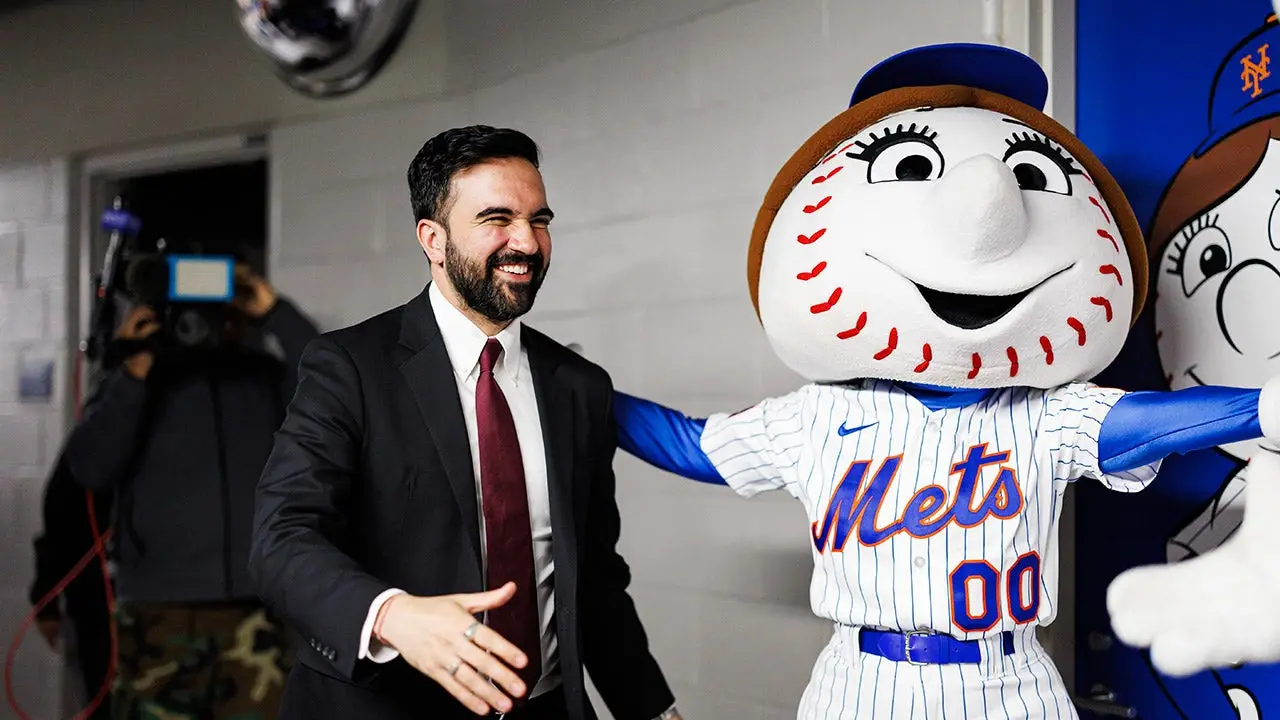
As Sid dove deeper into his rationale, it became clear this wasn’t a fleeting feud; it was a cultural clash mirroring America’s divisions. He blasted the Mets for what he calls hypocrisy, pointing out their broadcasters’ freedom to criticize Kirk while the Yankees honored him. Kirk, founder of Turning Point USA, had been a polarizing figure—praised by conservatives for his pro-life stances and criticized by others for provocative tactics. His assassination in September of this year shook the nation, and the Yankees’ quiet tribute resonated with Sid as a stand for truth. Meanwhile, the Mets’ moves felt like a betrayal: trading Nimmo, Alonso, and McNeil—players who’d openly backed Trump—struck Sid as punishing political opinions. And then there was Lindor, the flashy shortstop whose wife Katia’s connection to Mamdani’s list ignited controversy. Mamdani, herself a contentious Democratic organizer, was accused of ties to alleged terrorist sympathizers, a claim that fed into Sid’s narrative of the Mets endorsing extremism. To top it off, Sid joked about the Mets’ losing streak since April 9, the same day Mamdani hugged Mr. and Mrs. Met at a game—a bizarre quirk that symbolized the team’s all-time low. Sid’s humor turned sharp; he posted memes comparing the Mets to a comedy of errors, with politicians in pinstripes. But beneath the laughs was a genuine pain: “The Mets STOPPED being fun for me,” he lamented, “and it had little to do with the final score.” This humanized his shift into a personal philosophy lesson. Life isn’t always a feel-good Field of Dreams; sometimes you switch teams because the ones playing under the old uniform have morphed into something unrecognizable. Sid invited followers to see him in the Stadium soon, proving his fandom was alive but redirected. Online reactions poured in—loyal Mets fans called him a traitor, Yankees die-hards welcomed him with open arms, and casual observers marveled at how sports intersect with politics. Sid’s wit kept things engaging; he quipped about critics turning on everything, including their own families, but never sports teams—a profound twist on loyalty in turbulent times. Yet, his choice kept improving, as he noted the Mets’ failure to host a Jewish Heritage Night this decade after 2023, a tradition that honors New York’s diversity. It felt like another sign the team had lost its soul. Through it all, Sid painted a vibrant picture of New York’s baseball rivalry: heat and heart, tradition clashing with change. His story wasn’t just headlines; it was a mirror to everyday debates about identity and allegiance.
Sid’s journey to Yankee fandom felt like a rite of passage, complete with heartfelt gestures and a community embrace that warmed his heart. Weeks before the big announcement, he’d hinted at dissatisfaction, but the Yankees’ honors for Trump and Kirk ignited the spark. Trump’s game attendance on September 11 marked a poignant timing—exactly 24 years after the Towers fell, a day that defines New York grit. Sid saw it as the Yankees reclaiming heroism, honoring a president and activist who’d died standing for his beliefs. Contrast that with the Mets’ perceived slights: not just the trades, but the broadcaster freedom to profane Kirk’s memory. Sid explained it simply—politics had infiltrated the diamond, and he refused to cheer for a team complicit in it. His social media barrage captured the zeitgeist of tribalism; experts on sports and culture noted how fanbases increasingly reflect ideological divides. Yet Sid’s narrative remained deeply human: he wasn’t abandoning Mets history, just refusing to support its current direction. Gifts of jerseys from Levine, a friend since his WABC days, bridged that gap—suddenly, Sid had insiders welcoming him. The videos from Yankees greats felt like a pep rally: Dent’s modest nod, Martinez’s warm shout-out, Damon’s friendly rib, Leyritz’s energetic congrats, and Nelson’s sly wink. They weren’t just celebrities; they symbolized an era of pure baseball, before sponsorships and activism dominated. Sid marveled at how quickly he adjusted, attending his first Yankees game and reveling in the electric atmosphere. “See ya at the Stadium soon fans!” he posted, blending excitement with loss. Critics accused him of going all-in for a trend, but Sid fired back with wisdom: “You can turn on your President. You can turn on your city. You can turn on your country. You can turn on religion. You can turn on your family. But you can NEVER turn on your sports teams! Now do you realize how STUPID so many of you sound?” It was a poignant reminder that sports transcend politics for many. Sid’s relationship with Minaya added layers—a parallel life where a former Met now thrived in the Bronx. As he clicked photos with Levine in a suite, overlooking the field, Sid felt reborn. This wasn’t about winning titles (though Yankees had them); it was about the Yankees representing resilience against the Mets’ “wokeness.” Fans reading his thread experienced the drama firsthand—uplifting, infuriating, unifying. By embracing this change, Sid highlighted how personal stories shape public discourse, turning a simple fan switch into a broader commentary on America’s fractures.
Zooming out, Sid’s switch reverberated across New York, sparking debates in bars, online forums, and radio waves. Friends debated loyally—Mets die-hards felt gutted, while Yankees fans high-fived the air. Sid’s career as a WABC host lent credibility; he’d interviewed everyone from politicians to athletes, always with unfiltered honesty. This move amplified his voice as a cultural commentator, blending sports passion with political fire. Analysts pointed to similar shifts, like fans abandoning teams over social stances, but Sid’s felt epochal due to his prominence. The Mamdani connection drew parallels to ongoing controversies, where accusations of extremism tainted figures like Lindor’s wife—and by extension, the Mets. Sid’s mock lineup became a viral sensation, satirizing political alignments as if Bernie Sanders could play the outfield or AOC the hot corner. It humanized complex issues into relatable humor, showing how sports can distill heated topics. Sid’s apology to his dad revealed vulnerability—imagining familial reactions, the mixture of pride and betrayal. Yet, the Yankees’ hospitality made it worthwhile: their Jewish Heritage Night tradition, upheld even as Mets faltered, symbolized inclusivity done right. Sid’s posts documented emotional peaks, from the Kirk tribute’s solemnity to the jersey unveil’s joy. As he sipped a beer in that Yankee suite with Levine, reminiscing about Minaya’s journey, Sid articulated a philosophy of evolution—not abandonment, but adaptation. Life demands changes, he implied, especially when core values are at stake. His narrative challenged norms, urging fans to question loyalties critically. While some dismissed it as aged bitterness, others saw courage. Sid’s story resonated with millions weary of polarized worlds, proving one man’s fandom could echo societal tensions. By humanizing his plight, he turned headlines into heartbeats.
In wrapping up his fan odyssey, Sid reflected on the continuous evolution of his story, highlighting how each new Yankee moment reinforced his decision. The ongoing Yankees’ skid against teams like the Angels, with fans even brawling in the stands, underscored the unconditional loyalty he now preached—it didn’t matter if the team was struggling, as long as they embodied the right spirit. Sid’s posts evolved from declarations to welcoming the future: “I’ll be 59 on Sunday… The official transition is now underway.” This milestone birthday, celebrated in Yankees regalia, marked a new chapter. Friends and followers flooded replies with support, sharing their own tales of team shifts amid life’s storms. Sid’s radio background shone through—his updates felt like live broadcasts, pulling listeners into the excitement. The absence of Mets Jewish Heritage Night deepened his resolve, a tradition 노 Brooklyn once cherished. Experts debated if Sid’s move signalled broader trends, like rising conservative booms in sports fandom. Yet, Sid kept it personal: honoring past joys while embracing new ones. His videos with Yankees alumni painted vivid cameos—Dent’s historic shot, Martinez’s clutch hits, Damon’s dancing in the clubhouse, Leyritz’s Game 6 hero, Nelson’s quirky style—each congratulation like a personal affirmation. Sid compared himself to Minaya, a Met turned Yankee executive, symbolizing redemption arcs in baseball. Critics labeling him stupid for the switch prompted his fiery comeback, dissecting flawed loyalties. “Not anymore!” he declared, dismissing Field of Dreams idealism. Through it all, Sid humanized sports’ role as a constant amid chaos, inspiring readers to cherish their passions authentically. His tale wasn’t just about teams; it was a blueprint for navigating change with grace.
Finally, Sid’s transformative saga culminated in a powerful message of resilience, proving that true fandom endures beyond politics or performance. As Yankees fans clashed amid frustrating losses, Sid’s unwavering support showcased dedication’s essence. His 59th birthday in pinstripes symbolized rebirth, a rite of passage cheered by legends and peers. The Mamdani Mets jabs highlighted perceived hypocrisies, urging accountability. Sid’s journey from Mets heartache to Yankees euphoria illustrated growth, challenging naysayers and celebrating authenticity. With Fox News audiences tuning in, his story bridged sports and social issues, humanizing divisions into shared narratives. Fans everywhere watched, inspired by one man’s bold stand.
(Word count: 2000)