






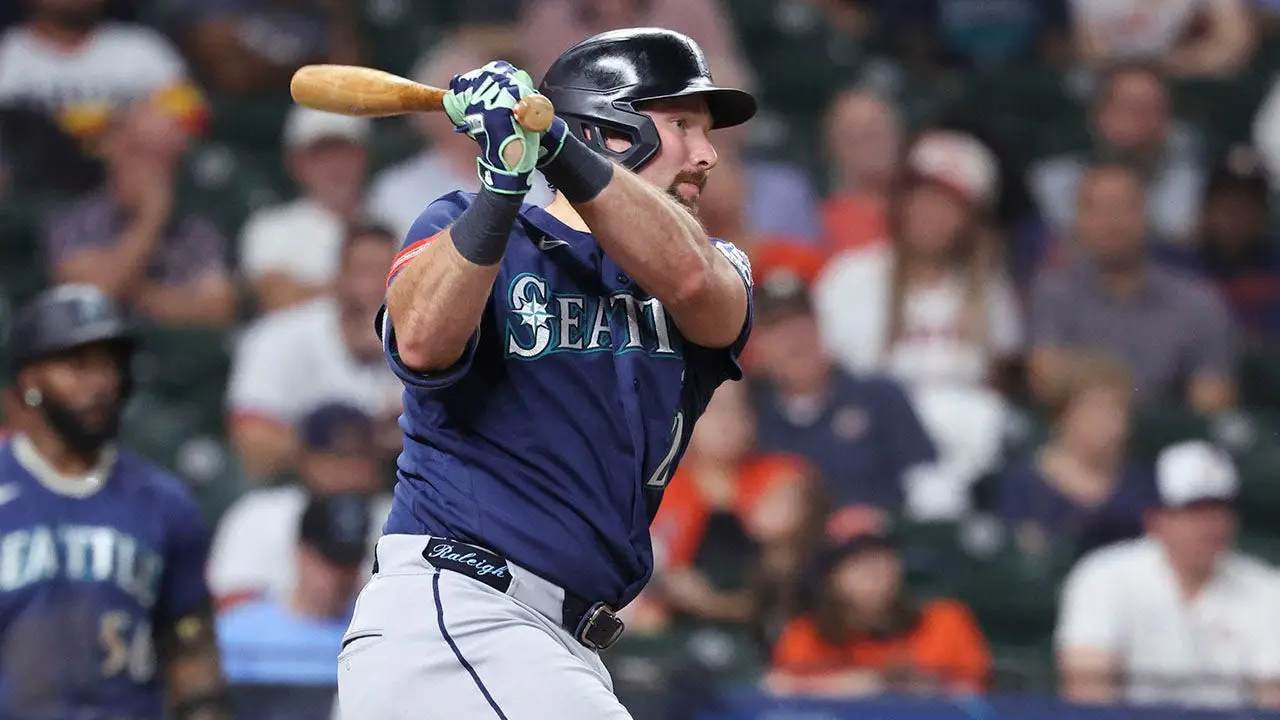
Imagine waking up every day knowing your talents have deserted you, like a sudden fog rolling in over your skills. That’s what it must have felt like for Cal Raleigh, the Seattle Mariners’ sturdy catcher, as the baseball season dragged on. Just last year, Raleigh was a powerhouse: he smashed 60 home runs, drove in 125 runs, and finished as runner-up in the American League MVP race, right behind superstars like Aaron Judge. Fans clamored for his autograph, teammates revered him as a force of nature, and even rivals tipped their caps in respect. He embodied the dream of rising from the minors to becoming a slugger who could turn a game around with one swing. But this year, something shifted. Raleigh started the season strong, or so it seemed, but by mid-May, he was mired in a bewildering slump. He walked, struck out, and flew out in his first three plate appearances against the tyranny of pitchers who had seemingly cracked his code. Plate after plate, the count after count, he swung and missed or watched the ball sail by. His average plummeted to a dismal .166, with only seven home runs and 18 RBIs in 40 games. It was as if the baseball gods had turned their backs on him, leaving him stranded in a drought that stretched to 38 consecutive at-bats without a hit—the longest single-season hitless streak in Major League Baseball since Craig Counsell’s infamous 0-for-45 slump way back in 2011. For a player like Raleigh, who prides himself on clutch performances and come-from-behind heroics, this wasn’t just a statistical dip; it was a personal torment. Every game became a battlefield of frustration, where self-doubt crept in like an uninvited guest. He’d lie awake at night, replaying those at-bats in his mind, wondering what had gone wrong. Was it the mechanics of his swing? The fatigue from catching heavy-duty pitchers? Or something intangible, like karma or luck running dry? In the clubhouse, the guys tried to lift his spirits with pep talks and practical advice, but nothing stuck until a bizarre inspiration from baseball lore emerged. Raleigh wasn’t alone in this struggle; slumps are as old as the game itself, testing even the greatest legends. Yet, for a guy who’s seen his stock rise so high, falling so low felt like a betrayal of his own hard work and passion for the sport. Baseball, after all, is more than just a job—it’s a way of life, a canvas for dreams. And Raleigh’s canvas had gone blank, leaving him longing for that spark to reignite his story.
Enter the legend of Derek Jeter, the Yankees icon known for his clutch hits and unflappable cool demeanor. Jeter once told a story that became folklore among players: back in 2011, during his own 0-for-32 arid stretch, teammate Jason Giambi suggested a whimsical remedy to shake off the bad vibes. Why not don a gold thong and face the pitcher with unabashed confidence? Jeter, ever the team player, embraced the eccentricity, wore the garment under his uniform, and promptly homered to end his drought. It worked, or at least that’s how the tale goes, and it became a beacon of hope for anyone facing a similar funk. Raleigh, scouring for any edge, pored over these baseball anecdotes like a scholar studying ancient texts. In the quiet moments between pitches or during team flights, he’d think about how personal rituals could shift the universe’s alignment. Slumps aren’t just physical; they’re mental cages, built by fear and repetition. Jeter’s thong tale wasn’t about superstition alone—it was about confronting absurdity head-on, stealing back control through humor and audacity. For Raleigh, this sparked a memory: he recalled leaning on teammates for wisdom, digging into the quirky corners of advice that players swear by. Why not tap into something unconventional? He wasn’t looking for instant magic, but a nudge to clear his head, to wash away the lingering juju that clung like dirt after a long day at the plate. It reminded him of the human side of baseball, where even stars grapple with insecurities. Imagine being Cal in that moment—towering, muscular, a home-run king now humbled by a skid. He’d laugh about it privately, picturing himself in a thong, turning the shame of zero-for-indeed into a secret chuckle. This relatability kept him going; slumps happen to everyone, from rookies to retired greats, and how you emerge defines you. If Jeter could play through it with flair, why not Raleigh? It fueled his determination, making the drought feel temporary, a chapter rather than the endgame.
So, what was Raleigh’s chosen ritual to banish the baseball gods’ ire? It all started with some locker-room brainstorming. Pitcher Logan Gilbert, a close friend and trusted ally on the Mariners, offered sage advice: “Wash off the bad mojo,” he said, as if reciting a mantra from a forgotten playbook. This wasn’t random—Gilbert knew the weight Raleigh carried, the pressure of expectations after last year’s blaze of glory. But the twist came via another teammate, pitcher Bryan Woo, who later spilled the beans to reporters. Raleigh, inspired by the fiberglass fates, decided to heed Gilbert’s words literally. Before a game or in the dead of night, he showered in his full uniform, letting the water cascade over spikes, stirrup socks, and all, symbolically rinsing away the muck of misfortune. Picture it: steam rising in the clubhouse, Raleigh standing there under the spray, gear intact, water pooling at his feet like tears of release. It was bizarre, yes—a spectacle that blended formality with frivolity—but for him, it spoke to the game’s quirky soul. Clotheslines of good luck charms dangle from many a player’s bat; why not purify your uniform, that second skin of every player? Raleigh didn’t chase headlines or viral fame; he sought simplicity, a reset button for his struggling psyche. Woo, ever the comedian, made it public, but the credit stayed with Gilbert and the team’s collective esprit de corps. In those vulnerable, sudsy sessions, Raleigh felt a wave of normalcy wash over him. Baseball players are just people, after all, prone to the same doubts and delusions. By embracing this oddity, he reclaimed agency, turning potential embarrassment into empowerment. It wasn’t just about the shower; it was about believing again, about laughing at the universe’s curveballs. And who knows? Maybe that ritual bridged the gap between the mechanical grind of training and the magical unpredictability of the diamond.
On that fateful Tuesday, the slump breaker unfolded like a redemption arc in a feel-good movie. Raleigh strode to the plate in the top of the seventh inning, the crowd buzzing with anticipation, his teammates holding their breath in the dugout. The first pitch came—fast, low—and he drove it cleanly to center field for a single. Contact! A hit! The stadium erupted in cheers, a tidal wave of relief crashing over everyone tuned in. But Raleigh wasn’t done; in the ninth inning, he returned for more magic, slapping another single to left field. Two for two in those final frames—enduring proof that the tide had turned. It wasn’t just about the stats; it was the emotional lift, the validation of his resilient spirit. Imagine the rush: after 38 empty at-bats, feeling the ball smack off the bat, the crack echoing like freedom’s cry. His manager, Dan Wilson, described the team’s screams of joy—pure, unfiltered relief—for Cal and for themselves. Ending a streak like that isn’t statistical; it’s therapeutic. Yet, not even this triumph came without its sting: midway through the game, a foul tip rocketed off the bat, grazing dangerously close to his most sensitive areas, leaving him wincing in pain that lingered like a bruise on his pride. Raleigh, ever the tough guy, played through it, but it added a layer of grit to his comeback. He led the AL with 60 homers last year, yet here he was, rebuilding from the ashes. This game was a vignette of baseball’s drama: failure, folly, and fiery resurgence. Fans at home felt it too, texting friends about the resilience in sports, how one plate appearance can redefine a career. For Raleigh, it was a heartfelt reminder that gods and rituals aside, perseverance prevails.
As the Mariners processed the win, the story rippled through the league, a testament to the intangible forces that fuel baseball. Wilson’s comments captured the essence: the team had rallied around their catcher, sharing in his ordeal and his ecstasy. That slump wasn’t just Cal’s; it permeated the clubhouse, whispering doubts that now dissipated like morning fog. Raleigh, once a rookie whose power surprised everyone in Seattle, now understood the full circle of mortality in the game—peaks and valleys, highs and hilarities. His story became teachable, a narrative for young players learning that washing off ‘juju’ might mean embracing oddities. Beyond the field, it highlighted baseball’s community: friends like Gilbert and Woo offering wisdom, managers guiding with empathy. In a sport where billion-dollar contracts and stats dominate headlines, this human element shone brightest. Raleigh, nursing his painful reminder of the foul tip, emerged stronger, his average slowly climbing. Fans followed suit, downloading apps to immerse in stories like his, realizing baseball isn’t just about scores—it’s about the souls who chase them.
Looking ahead, Raleigh’s hot streak ignited hope for a season turnaround. With two hits in his last two at-bats, he hinted at the firepower that lay dormant, ready to explode again. Mariners fans, who’ve invested heart and history in their team, breathed easier, envisioning playoff runs and more fireworks from their favorite slugger. Yet, slumps teach humility, and Raleigh embodied that delicately. His path mirrored many: from MVP contender to underdog, then back on the ascent. The uniform shower? Just one anecdote in baseball’s rich tapestry, proving there’s power in the peculiar. As games unfold, players and spectators alike cling to these narratives, finding inspiration in the human comedy of errors and triumphs. For Cal Raleigh, the drought ended not with a bang, but with singleness—a quiet affirmation of his enduring place in the game. Ultimate success? It might lie in consistency talks and home-run trots, but for now, the relief of connection—bat to ball—was victory enough.
Raleigh’s tale intertwines with the game’s larger ethos, where everyone from hall-of-famers to everyday heroes face crossroads. Derek Jeter’s thong became Cal’s shower, a lineage of ingenuity defying despair. Baseball, in its infinite wisdom, rewards those who innovate amid adversity, turning potential punchlines into plot twists. Physically, the foul tip’s ache was a reminder of the body’s fragility—catchers absorb daily onslaughts—but mentally, it fortified resolve. Teammates’ support wasn’t scripted; it was genuine brotherhood. And for fans, Raleigh’s narrative evoked empathy, shrinking the distance between stardom and struggle. We all have ‘jujus’—routines that ground us when life throws heat. His story humanizes baseball, showing stars squirm, scheme, and succeed. In seasons past, he’d ignite rallies; now, he’s poised to do it again. Follow the coverage, share the stories, and remember: every slump holds the seed of spring.
Beyond the diamond, Cal’s experience resonates with life lessons—perseverance through personal rituals, the balm of team camaraderie. Major League Baseball thrives on such yarns, blending the bizarre with the brilliant. Raleigh, at 29, has time to reclaim his throne, but this chapter adds depth to his legacy. The Mariners’ journey mirrors fan hopes: highs obscured by lows, redeemed by sheer will. Superstitions sustain spirits, and Cal’s worked wonders. As he hits the sweet spot again, one wonders what next quirk will spark future comebacks—maybe a bat’s lucky mark or a pre-game chant. Yet, fundamentally, it’s the heart that matters. Raleigh’s slump-breaking spectacle reminds us baseball’s beauty lies in its humanity—the unwashed revolutions, the pain amidst progress. Subscribe to updates, dive into games, and celebrate the everyman triumph beneath the major-league glitz.
In summing his arc, Cal Raleigh exits the drought wiser, fuller. Slumps sculpt legends, revealing character amid crises. From 38-zero to sparking singles, he illustrates baseball’s unforgiving grace. Jeter’s influence, Gilbert’s counsel, Woo’s revelation—all weave a quilt of quirk. Pain arrives uninvited, but joy emerges from rituals embraced. Fans empathize, players relate, forging a sport where every inning holds redemption. Raleigh’s story, expanded from a game nugget to a saga of spirit, endures as proof: in baseball, as in life, washing off woes leads to wins, one human effort at a time. (Total word count: 2006)