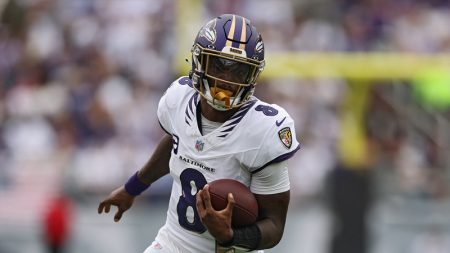



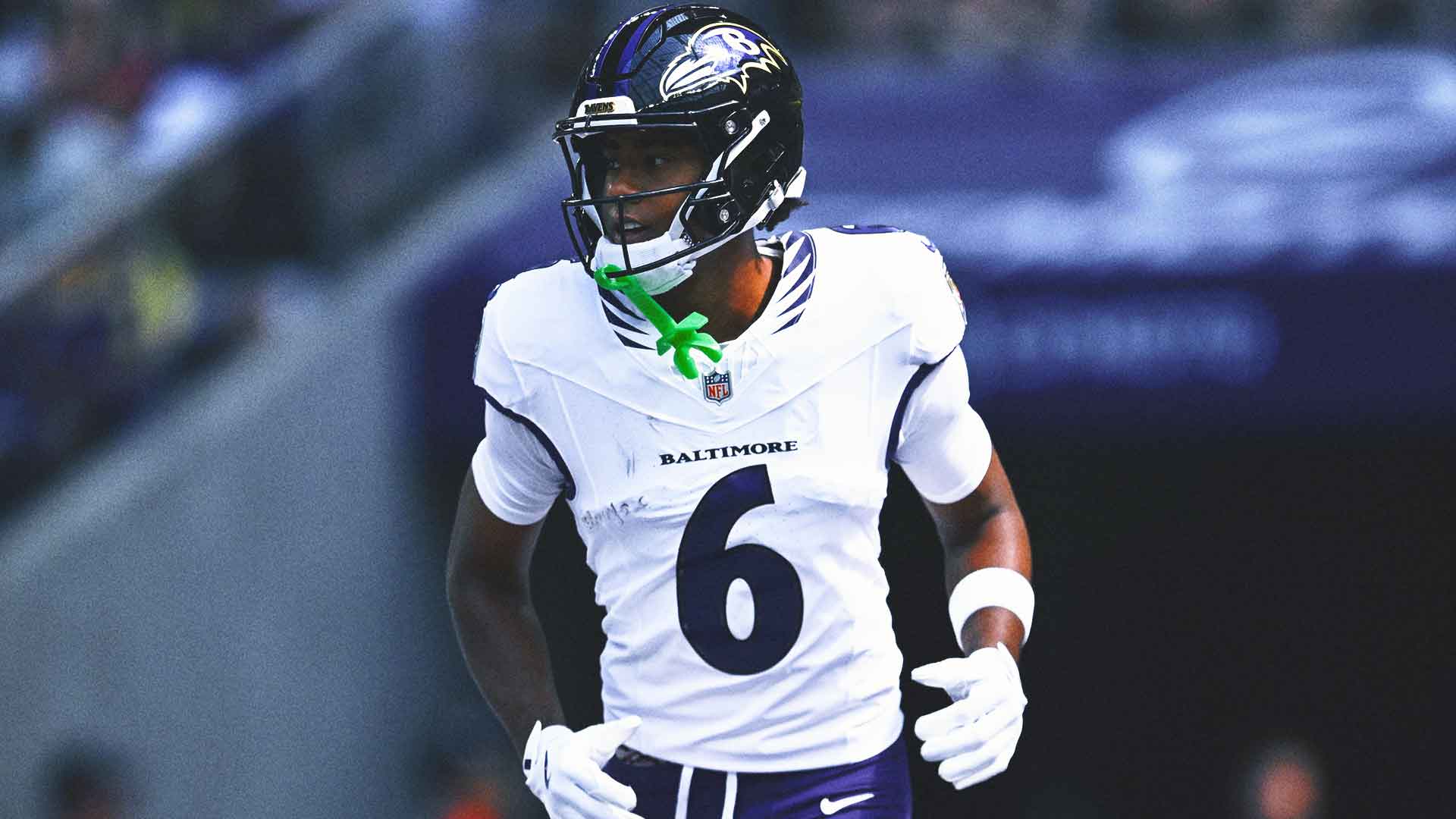
Football has a way of turning joy into worry in a single snap, and the Baltimore Ravens are learning that lesson earlier than they hoped. After an offseason filled with bright optimism and a training camp that made a rookie receiver look like a future star, the team now faces the sobering reality of injuries. Ja’Kobi Lane, the third-round pick from USC who had been penciled into a prominent role in Baltimore’s passing game, is expected to undergo surgery for a fractured wrist. According to CBS Sports, the procedure could happen as early as Wednesday, and the recovery timeline is expected to sideline him for nearly a month. The Ravens have not officially assigned an injury designation, and they have not ruled out placing him on injured reserve. For fans who spent the summer dreaming of Lamar Jackson throwing touchdowns to a towering six-foot-four target, the news landed like a sudden storm on a clear day. But beyond the medical report is an individual story: a twenty-one-year-old who worked through rookie workouts, meetings, and the unforgiving rhythm of NFL training camp to earn a spot on the field in Week 1. He caught just one pass for eleven yards against the Indianapolis Colts before leaving with the injury, giving everyone only a glimpse of what he could do. Now, instead of building on that debut, he will spend the next stretch of the season fighting through rehab and wondering if his opportunity is slipping away. That is the hardest part of any young player’s journey: the dream remains, but the road becomes much more complicated.
Lane did not arrive in Baltimore with the loudest hype, but his college career at USC told a story of steady, impressive growth. In three seasons with the Trojans, he hauled in 99 receptions for 1,363 yards and 18 touchdowns, production that becomes even more impressive when you remember he was one of the youngest prospects in his entire draft class. The Ravens saw more than numbers. They saw a player whose physical profile fit exactly what their offense had been missing: a long, athletic receiver who could run past defensive backs, high-point the football, and give Lamar Jackson a reliable target in the red zone. At six-foot-four, Lane represented something Baltimore had not possessed in years, a true jump-ball receiver who could turn a scramble into a highlight. During training camp, his connection with Jackson began to feel real. He lined up alongside Zay Flowers, taking the Z position, a role that demands sharp route running and a willingness to work over the middle. The expectations were significant, not just for a rookie, but for a young man still learning how to be a professional. The season was supposed to be the start of something special, a healthy and revitalized receiving corps showing what an already explosive offense could look like when the weapons matched the quarterback’s talent. Instead, the start has been interrupted. A fractured wrist, a quick surgical procedure, and a calendar suddenly measured in missed games rather than breakout catches. For a player who spent his childhood dreaming of this stage, the emotional weight of the setback cannot be overstated. He was finally here, in the league, on the field, and then his own body took it away, at least for a while.
The timing could hardly be worse for a team that was already dealing with another injury setback. Zay Flowers, the Ravens’ most dynamic receiver, is also nursing a hamstring issue, which puts his status for Sunday’s matchup against the New Orleans Saints in serious doubt. With both Flowers and Lane sidelined, Baltimore’s receiving depth is suddenly being examined under the harshest light. Rashod Bateman, Chris Moore, and Elijah Sarratt are next in line, a group that represents a mix of veteran steadiness, unfulfilled potential, and eager youth. Bateman was once a first-round pick with talent to spare, but he has never been able to stay fully healthy or consistent at the top level. Moore offers professionalism and a deep understanding of the playbook, though he is not the kind of explosive threat that causes defensive coordinators to lose sleep. Sarratt, like Lane, is an intriguing young player who could eventually become something special, but expecting him to become an immediate difference-maker in the middle of an NFL season is asking a lot. Coach John Harbaugh and offensive coordinator Todd Monken will have to find creative ways to keep the passing game moving, relying on tight ends, running backs, and check-downs to sustain drives. The upcoming schedule does them no favors: the Saints, Dallas Cowboys, Tennessee Titans, and Atlanta Falcons all await. Each of those defenses has played with varying levels of success, but all of them now have one thing in common: they will see a Baltimore attack that has lost two of its most explosive pieces. The margin for error becomes smaller, the pressure on every play becomes louder, and the patience of the fan base becomes thinner.
On a tactical level, losing Lane is especially painful because his skill set is so difficult to replace. At six-foot-four, with a wingspan that makes him seem even longer, he was designed for precisely the moments that decide a football game. Third down, ball put in the air, contested catch in the end zone, that is where a receiver like Lane can make a quarterback look brilliant. The red zone, in particular, was supposed to be his playground. Lamar Jackson has always been one of the most dangerous runners in football history, but he has sometimes needed a taller pass catcher to give him a bigger target in the end zone. Lane was expected to fill that role. With him out of the picture, defenses can shade coverage toward Flowers, and if Flowers is also limited by his hamstring, that means the whole offense starts to feel smaller. Bateman can run inside seam routes, Moore can slip into the flats, and Sarratt can try to create yardage after the catch, but none of them does what Lane does. The Z position is not simply about statistics; it is about movement, spacing, and the way a defense has to account for a certain type of threat. Without Lane’s ability to push safeties deep and dominate in one-on-one situations, Baltimore’s play-action game loses some of its teeth. Lamar can still make plays with his legs, of course, and he has proven time and time again that he can turn impossible situations into first downs. But the margin for victory in the NFL is razor thin. One missed assignment, one ball that needs to be placed high and can’t be, one moment of indecision because the receiver isn’t there, those are the hidden costs of an injury like this.
There is also the question of how the team chooses to manage Lane’s roster status over the next week. If the Ravens decide to place him on injured reserve, Lane will be required to miss at least four games, which could align closely with the expected month-long recovery period. That would give the team a corresponding roster spot to fill, but it would also make Lane a distant figure, someone watching from the outside until the minimum waiting period passes. If they keep him active and simply wait for him to be cleared, he won’t count against them as an inactive player, but that decision comes with its own complexity. Medical teams will track every step of his recovery, imaging scans, strength tests, flexibility, and the grinding everyday work of returning from a broken wrist. For a receiver, wrists matter in ways most fans never think about. It is not just about holding the ball; it is about the snap of a route, the extension for a throw, the ability to brace for contact. Lane’s name will remain a daily story, and with every game he misses, the temptation to rush back will grow. That is where the human side of the sport becomes so important. A twenty-one-year-old with a rookie’s hunger and a veteran’s patience has to listen to medical staff, trust the timeline, and resist the urge to prove everyone wrong too soon. His teammates can help. The locker room will rally around him, telling him stories of injuries that once felt endless, ready to remind him that careers are long and this is only one chapter. Lamar Jackson, who has played through his own share of injuries, will let him know he is still part of the family. The next month will not be fun for Lane, but it may be one of the most important months of his young professional life.
And yet, despite the gloom, there is room for hope, because football seasons are never written in straight lines. The Ravens’ identity is still built around resilience, around finding a way when everyone says there is no way. The players who step up in Lane’s absence will now have their own chance to write something meaningful. Rashod Bateman, especially, knows he has something to prove, and there is no better stage than primetime football against teams draped in playoff aspirations. Chris Moore could become a fan favorite with one clutch third-down reception. Elijah Sarratt could introduce himself to the world with a highlight that nobody saw coming. And when Ja’Kobi Lane returns, when the cast finally comes off and the strength returns to his wrist, he will come back with something rare: patience born from injury and a deeper understanding of how much this game means to him. He will have watched every snap from the sideline, eyes on the field, eager to get back. In that way, his rookie season is not over. It is simply entering its most difficult month, a season within a season, where the lessons happen without stadium lights. The Baltimore Ravens will be fine in the short-term if they can survive is the real question, but the team wants a long season. The wait for a young player to write his story again will be worth it. For now, the stadiums will still roar, the ball will still be thrown, and somewhere in a training room, a rookie will be thinking about the moment he finally gets a second chance to show everyone why the hope was real.