


Paragraph 1:
There are big football players, and then there are players who redefine what it means to be big. Chauncey Gooden, a 380-pound sophomore at the University of Colorado, belongs in the second category. Listed as a left guard on the Buffaloes’ roster, Gooden has quietly become something far more unusual: a legitimate two-way player in the trenches. His primary job is protecting quarterback Julian Lewis, anchoring the interior of an offensive line that has undergone a major renovation under Coach Deion Sanders’ new system. But when the field shortens near the goal line and inches become more important than yards, Gooden is dispatched to the defensive line to clog the middle, use his massive 6-foot-3 frame, and turn what was once a routine running play into a wall of flesh and force. In Colorado’s season-opening, nail-biting 14-13 comeback victory over Georgia Tech, Gooden played 65 offensive snaps and seven defensive snaps. That might not sound like a lot on defense, but for a player carrying that much weight, seven extra snaps in short-yardage situations can feel like seven quarters. According to research provided by the school, Gooden was the only interior offensive lineman in Division I football to play both ways in Week 1. By Wednesday, he had been named the Outland Trophy national player of the week for his performance at the line of scrimmage. It was a fitting honor for a player who spends his Saturdays doing the unglamorous but essential work that wins championships, and who does it while wearing two hats instead of one.
Paragraph 2:
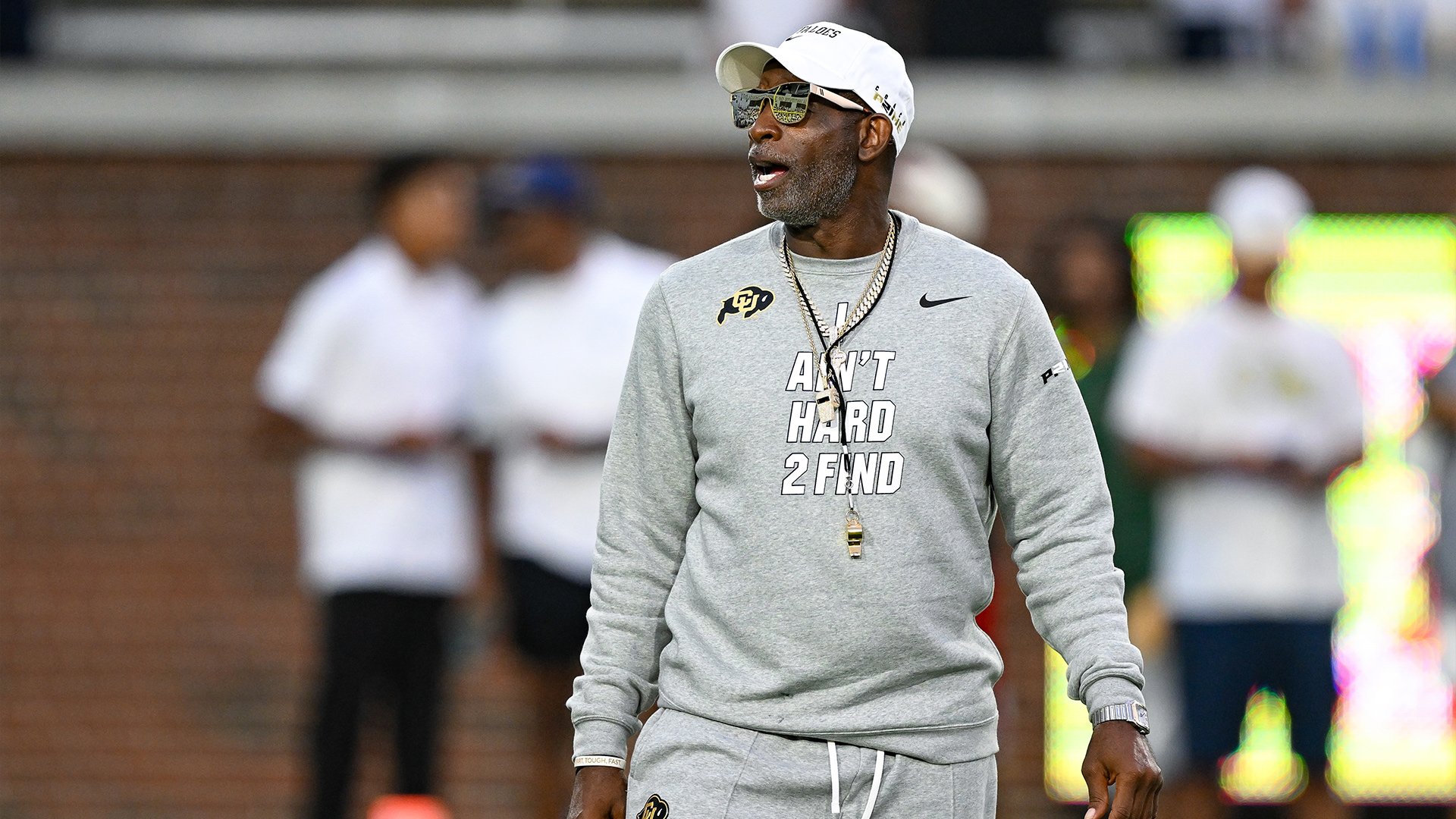
The path to becoming Colorado’s version of Travis Hunter — only in the interior line — did not come from lobbying or grandstanding. Gooden says there was no real campaign to earn a defensive role, no long speech to Coach Prime about wanting to make highlight tackles or chase down ball carriers. It was simply a matter of proving he could dominate one side of the ball at an elite level first. Once that was established, the opportunity arrived in a more casual way. “Coach Prime just gave me the opportunity, like, ‘Chauncey, what can you do on that D-line?’” Gooden recalled. “I was like, ‘Coach, I can go over here and show you now.’ So I went over there. I was just causing havoc and being myself and things like that. Next thing you know, he just trusted me to throw me in there.” For Sanders, there is a strict code when it comes to two-way players. You don’t ask for the privilege; you earn it through demonstrated excellence. “You’d be a fool to just tell me ‘I want to play both ways.’ I should know that coming in,” Sanders said before Colorado’s home opener against Weber State. “When I recruited you, I should have known that’s part of it. You can’t just approach me and say, ‘I want to play both ways.’ Then I’m going to say, ‘I want to see you play one way really good. Let’s do that first.’ That’s mainly the criteria.” The standard was set by Hunter himself, who spent his first spring in Boulder primarily as a receiver before he earned snaps at cornerback. Only after dominating one side was he given the green light to moonlight on the other. Sanders pointed to other Buffaloes like Isaiah Hardge and Tyler Brown who have also embodied this dual-threat philosophy. For Gooden, being mentioned in the same sentence as Hunter, the 2024 Heisman Trophy winner now with the Jacksonville Jaguars, is both humbling and astonishing. Hunter averaged roughly 120 snaps per game during that historic season, a workload that Gooden says he can barely fathom. “Best player to do that,” Gooden said. “The fact that I can do what he did even in the trenches, it’s just remarkable.”
Paragraph 3:
On the field, Gooden’s impact is felt on both sides of the ball, and the game against Georgia Tech offered a snapshot of just how valuable he has become. Defensively, he inserted himself into a front that limited the Yellow Jackets to just 51 rushing yards, a suffocating performance that allowed the Buffaloes to survive despite a sluggish offensive showing for most of the afternoon. On offense, Colorado leaned on the run game in a way the program hasn’t under Sanders, rushing 49 times for 183 yards. That’s the most carries the Buffaloes have had in any single game during the Sanders era, and it was no accident. New offensive coordinator Brennan Marion installed what is already being called a “Go-Go” offense, a scheme that prizes physicality, space, and the ability to attack downhill. It is, by all accounts, a dream for offensive linemen who want to feel the joy of knocking defenders off the ball rather than sitting back in pass protection every down. “We can play free and physical,” Gooden said, summing up the appeal in just five words. For a player his size, that freedom is more than a stylistic preference. It’s a release. The defensive snaps, meanwhile, give Gooden a chance to channel a different kind of aggression. He has become a situational weapon, entering the game on goal-to-go situations and short-yardage downs where his sheer bulk can collapse the pocket or stuff a gap. It’s a niche role that does not require him to play every down on defense, but it does require him to be ready at a moment’s notice, with enough energy left in his legs to fire off the ball and take on double teams. Against Georgia Tech, he did exactly that, and the coaching staff took notice.
Paragraph 4:
Preparing to play both sides of the ball at 380 pounds is not just about lifting weights and learning plays; it is about conditioning, mental stamina, and faith in the coaching staff. Gooden spent training camp improving his endurance, and he learned an unforgettable lesson in motivation courtesy of Coach Prime. At one point during camp, Sanders made Gooden a deal: if the young lineman went all-out during a particular portion of practice, the team would skip conditioning drills that day. Gooden, who wanted nothing more than to avoid the grind of post-practice running, took the challenge personally. “So I go out there, and I pancake two people straight,” Gooden said, describing how he drove his defensive teammates into the turf. The effort was undeniable, and Sanders made sure to let the big lineman know he had seen it. But there was a catch: the conditioning was not canceled. “We still ended up doing conditioning that day,” Gooden said with a laugh. “We had a long conversation about that after practice.” Far from feeling betrayed, Gooden says he understands exactly what Sanders is doing. The ploy was never about skipping a workout; it was about unlocking the level of intensity Gooden would need to handle two jobs on Saturdays. “I trust Coach Prime and what he’s got to do for me,” Gooden said. That trust has been built over time. Gooden saw action in the final four games last season, a stretch that came after a difficult 3-9 campaign. Although the team struggled, Gooden’s individual growth became clear, and by the end of the year there was little doubt he would be a cornerstone of the offensive line for years to come. Now, with a new offensive system and bigger responsibilities, he is exactly where he hopes to be.
Paragraph 5:
There is more to Gooden’s story than what happens between the lines on Saturday afternoons. Before arriving at Colorado, he played at Lipscomb Academy in Nashville, a school that, despite not being a traditional football factory, gave him access to some of the greatest teachers the game has ever known. At Lipscomb, Gooden worked at times with Pro Football Hall of Fame offensive lineman Kevin Mawae and with Super Bowl-winning quarterback Trent Dilfer, who later became a youth quarterback coach and trainer. These influences helped foster a level of discipline in Gooden that now serves him well in the pressure cooker of Boulder. Mawae, whose own NFL career was defined by impeccable technique and toughness, helped shape Gooden’s understanding of what it takes to win in the trenches — not just with brute force, but with leverage, footwork, and preparation. Dilfer, meanwhile, brought a quarterback’s perspective to the meeting room, helping Gooden understand how an offensive lineman’s decisions directly affect the man behind center. That awareness is what allows Gooden to keep Julian Lewis clean in the pocket, and it is also what allows him to switch mindsets when Sanders sends him to the other side of the ball. He is not merely a block of granite who can push people around; he is a thoughtful player who knows that the same principles of leverage and anticipation apply whether he is protecting a passer or plugging a gap. All of that experience has produced a player who carries himself with a quiet confidence that is rare for a sophomore. You do not have to be the loudest man in the room if you are consistently making plays that leave your coaches shaking their heads.
Paragraph 6:
As Colorado prepares to host Weber State at home on Saturday afternoon, with a chance to improve to 2-0, Gooden’s role is only likely to grow. The Buffaloes have a more aggressive offensive identity than they did a year ago, and in close games, his defensive responsibilities could become even more meaningful. The trust that Sanders has placed in him is not given lightly; it comes after months of proving that he can handle the workload, the physical strain, and the mental preparation required to be elite on one side, much less two. For Gooden, the recognition is nice, but not the point. He says Coach Prime has told him to be himself, to embrace the player he has become and stop worrying about what anyone else expects. “Coach Prime told me to just be me out there on that field. Be that dawg,” Gooden said. “He just brings me the confidence to be able to go out there and get the job done.” The result is a player who is part offensive lineman, part defensive tackle, all intensity, and still only a sophomore with room to grow. In an era when specialization often wins out over versatility, Chauncey Gooden is a throwback to the old days when the toughest athletes simply found a way to get onto the field and stay there. He is not the Heisman Trophy winner Hunter was, but he occupies his own unique corner of Colorado football lore. Teammates see a mountain of a man who moves with surprising quickness; opponents see a problem that cannot be solved by a single blocker. Coaches see a young player who has earned every extra snap, every honor, and every ounce of trust. And for the fans who came to Boulder to watch a new brand of Buffaloes football, Gooden is one more reason to believe that the program is building something special. The Go-Go offense needs its hammers. And for Colorado, Chauncey Gooden has become the biggest, most important hammer of all.