




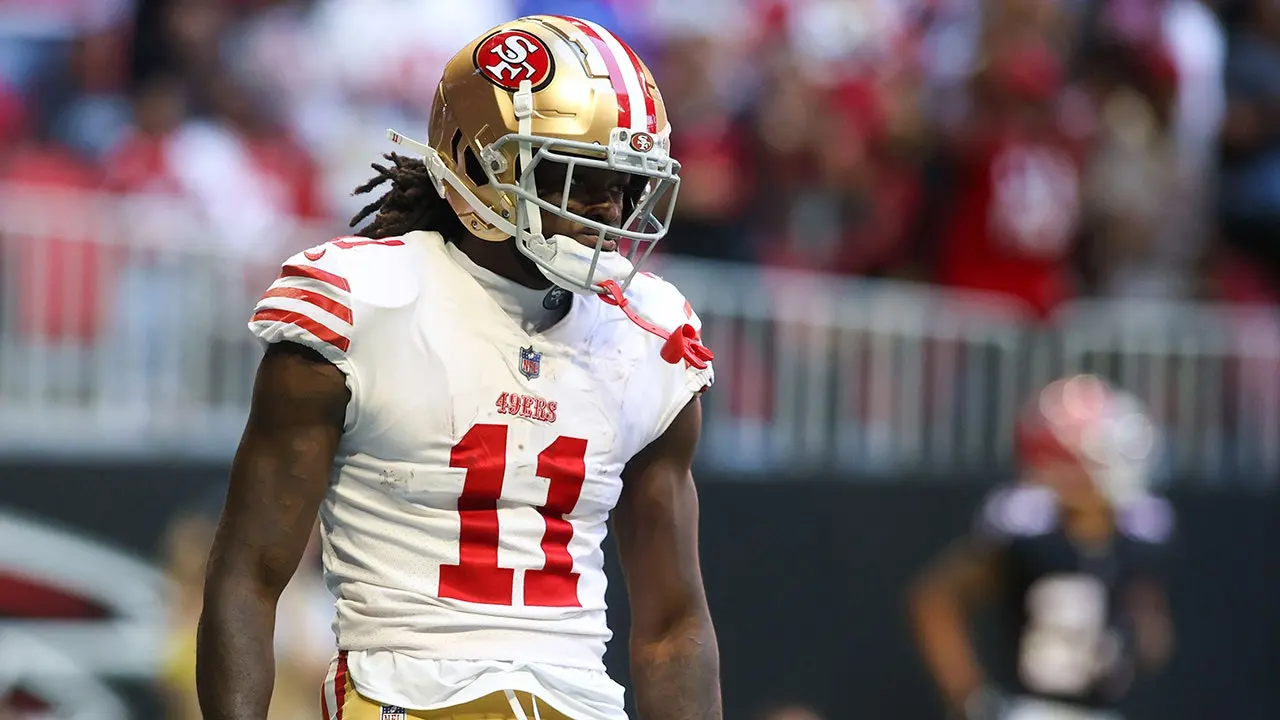
The trajectory of a professional athlete is often defined by a delicate balance between immense physical triumph and profound vulnerability, a reality that San Francisco 49ers wide receiver Brandon Aiyuk is currently experiencing in the most turbulent way possible. Just a year ago, Aiyuk was ascending to the absolute pinnacle of his profession, cementing his status as one of the elite pass-catchers in the National Football League. His spectacular 2023 campaign, characterized by 75 receptions, 1,342 yards, and seven touchdowns, showcased a player of rare fluidity, route-running precision, and explosive playmaking ability. This stellar performance earned him a life-altering four-year, $120 million contract extension, a deal meant to secure his future and anchor him as a cornerstone of the 49ers’ championship aspirations. Yet, the brutal reality of football intervened in October 2024, when a devastating ACL tear cut his season short after just seven games. What was supposed to be a triumphant victory lap instead transformed into a grueling, isolating road of rehabilitation—a physical and emotional crucible that has seemingly unraveled the young star’s connection to his team, his sport, and his own career.
The isolation that accompanies a season-ending injury can do strange things to an athlete’s psyche, particularly when the business side of the sport clashes with the harsh realities of physical recovery. For Aiyuk, the tension with the 49ers organization escalated dramatically when the front office took the aggressive step of voiding his guaranteed salary for the 2026 season. The team’s decision stemmed from Aiyuk’s alleged failure to fulfill mandated obligations regarding his ACL rehabilitation program. In the high-stakes world of the NFL, a voided guarantee is a severe disciplinary measure, signaling a profound breakdown in trust between player and franchise. For an injured athlete, whose identity is entirely wrapped up in physical performance, being penalized during rehab can feel like a betrayal, sparking feelings of defensiveness and alienation. Rather than focusing quietly on his recovery, Aiyuk appeared to retreat into a digital fortress of frustration, using his public platforms to express a growing discontent that has increasingly alienated him from the very organization that invested so heavily in his talents.
This escalating drama has caught the attention of NFL observers and former players alike, most notably Carolina Panthers legend and five-time Pro Bowler Steve Smith. Known for his fierce competitiveness and unfiltered honesty, Smith recently offered a remarkably empathetic yet candid perspective on Aiyuk’s current predicament. Speaking on OutKick’s “Don’t @ Me with Dan Dakich,” Smith admitted that he, like many fans, has “no damn idea” what is going on in the 28-year-old’s head. Smith confessed that he had contemplated tweeting about the situation multiple times but held back because he refused to join the chorus of critics eager to kick a player while he was down. Smith’s commentary shifted the focus from simple condemnation to a deeper, more human exploration of Aiyuk’s state of mind, suggesting that the wide receiver is suffering from a fundamental disconnect between his current reality and his personal expectations. “There’s obviously something going on in his heart that’s not aligning with what his picture is seeing of how his career is starting to go,” Smith observed, capturing the quiet tragedy of a young man watching his dreams slip away.
The evidence of this internal struggle has manifested in a series of highly erratic off-field behaviors and bizarre social media activity that suggest a player crying out for attention or perhaps simply struggling to cope under immense pressure. Aiyuk was recently charged with a California misdemeanor offense of exhibition of speed after filming himself speeding on a public road near the 49ers’ team headquarters. On social media, his behavior has been even more chaotic; he posted Instagram stories suggesting a desire to play for the Washington Commanders, only to ignite a public online feud with his former Arizona State teammate and Commanders rookie quarterback Jayden Daniels, effectively burning that bridge before it was even built. Furthermore, Aiyuk took veiled shots at his head coach, Kyle Shanahan, on social media following a car accident. These incidents paint a picture of a young man acting out impulsively, seemingly burning down his professional relationships in real-time, a pattern of behavior that Steve Smith directly characterized as self-sabotage.
Steve Smith’s primary concern is that without immediate intervention, Aiyuk will permanently damage his standing in a league that, while historically forgiving of talent, eventually runs out of patience. Smith emphasized the critical need for a stabilizing presence in Aiyuk’s inner circle—someone who can sit the young receiver down, cut through the noise, and help him identify his true, long-term goals. The NFL is a business with a notoriously short memory, and while teams have tolerated egregious behavior from star players in the past, a combination of injury, perceived lack of dedication to rehab, and public insubordination can quickly render even a $120 million player expendable. Smith expressed a genuine, heartfelt hope that Aiyuk can find a way to course-correct before he finds himself cast aside, warning of the bitter reality of looking back at a promising career in the rearview mirror while staring at a future without football through the front windshield.
Ultimately, the story of Brandon Aiyuk is not just about a contract dispute, an injury, or a series of ill-advised social media posts; it is a deeply human story about the fragility of success and the immense pressure placed on young athletes. Behind the multimillion-dollar contracts and the highlight-reel catches are human beings who are susceptible to frustration, fear, and poor judgment when their livelihoods and identities are suddenly threatened by physical injury. For Aiyuk to reclaim his narrative and resurrect his promising career, he must transition away from the defensive, combative stance he has adopted over the past year. He needs to heal not just his torn ACL, but also the fractured relationships with his coaches, teammates, and the San Francisco front office. Whether he ever plays another down in the NFL remains an open question, but the hope shared by Steve Smith and football fans everywhere is that Aiyuk can find the guidance and inner peace necessary to step back from the edge of self-sabotage and realize the immense potential that lies within him.