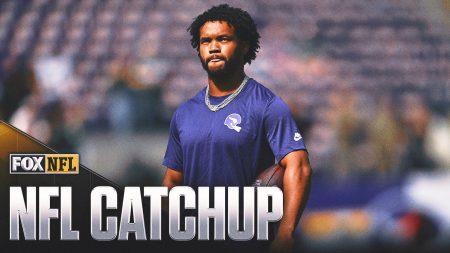






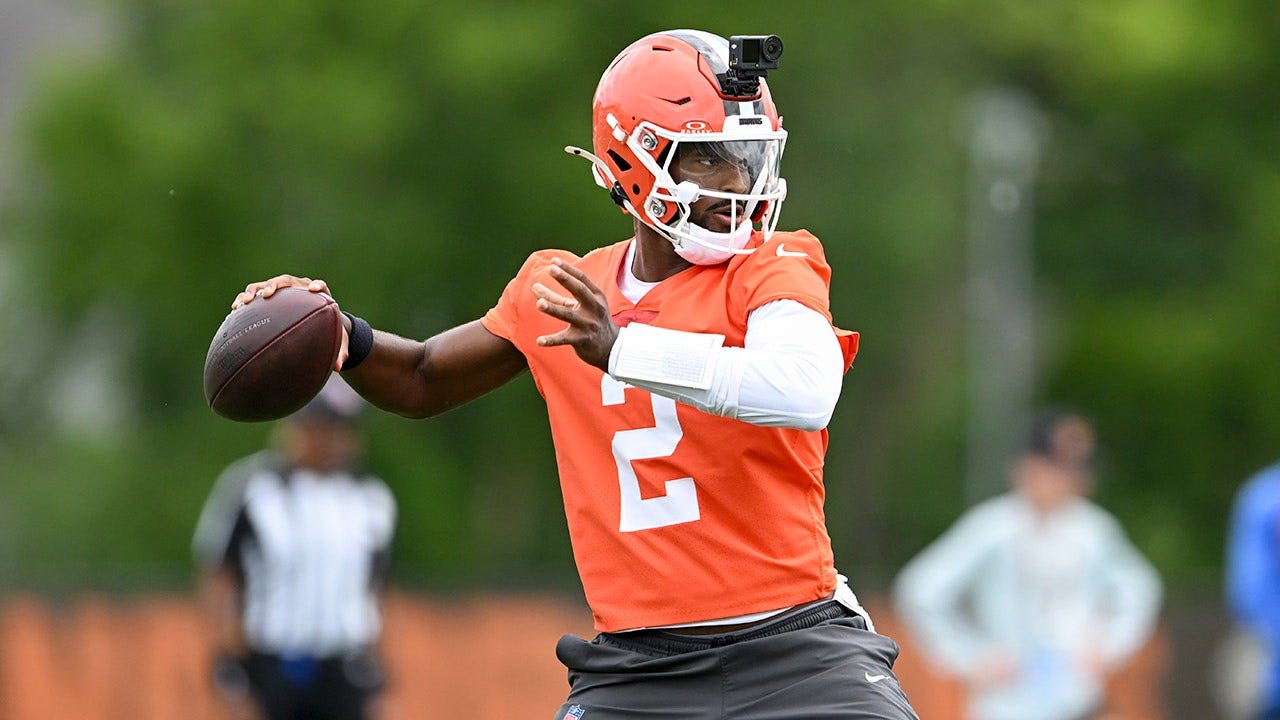
The leap from the collegiate ranks to the unforgiving arena of the National Football League is often described as a baptism by fire, but for Cleveland Browns quarterback Shedeur Sanders, his introduction to the professional ranks has been nothing short of a profound psychological and physical trial. After a roller-coaster rookie campaign in 2025 that featured fleeting moments of absolute brilliance contrasted against jarring rookie struggles, Sanders entered the 2026 offseason hoping to build a strong foundation for his future. Instead, he was handed a sobering dose of reality by the very league he aspires to conquer. Upon the release of The Athletic’s highly anticipated 2026 NFL quarterback tier list—a comprehensive survey reflecting the unfiltered opinions of fifty influential league executives and coaches—Sanders found himself anchored to the absolute bottom of the rankings, occupying the 35th spot out of 35 qualified signal-callers. For a young athlete who has spent his entire life under the intense, protective, and often magnifying spotlight of his legendary family name, this public demotion was more than just a statistical footnote; it was a glaring, collective vote of no confidence from the gatekeepers of professional football. The evaluation process in the NFL is notoriously cold and transactional, stripping away collegiate hype, social media influence, and marketing appeal to focus solely on the brutal tape. For Sanders, the transition from being a celebrated college icon to the lowest-rated starting-caliber quarterback in the NFL represents a massive hurdle, forcing him to confront the vast chasm between raw athletic potential and the refined, hyper-efficient execution required to survive at the highest level of the sport. This ranking serves as a stark reminder that in the NFL, respect is not inherited or given based on pedigree; it must be systematically engineered on the gridiron, pass by pass, decision by decision, under the watchful, hyper-critical eyes of defensive coordinators who make their living exposing the slightest hint of vulnerability in young quarterbacks.
The specific criticisms leveled against Sanders by these anonymous league decision-makers were not merely critical; they were devastatingly personal and professional indictments of his current skill set. One unnamed defensive coordinator delivered a quote that reverberated through sports talk radio and locker rooms across the country, candidly stating that he would “sleep like a baby” if his defense got to prepare for and play against Sanders every week. Such a comment, while perhaps exaggerated for dramatic effect, reveals a deep-seated lack of fear among opposing strategists, which is the ultimate death knell for an NFL quarterback’s reputation. To make matters worse, a high-ranking league executive pointed to a fundamental flaw in Sanders’ mechanical output, asserting that the young quarterback is “inaccurate at all three levels” of the passing game, while concluding that there remains a massive, seemingly insurmountable gap between Sanders’ current output and competent, baseline NFL quarterback play. The survey data itself paints an incredibly bleak picture of how the league views his potential: out of fifty ballots cast, Sanders received a solitary, pitying Tier 3 vote, while thirty-seven voters relegated him to Tier 4, and twelve cast him down into the depths of Tier 5. Coaches dissected his tape with a scalpel, describing him as a heavy-footed pocket passer who struggles to operate “on time,” frequently failing to read through basic coverage progressions before the pocket collapses around him. While some evaluators conceded that his thicker frame makes him surprisingly difficult to bring down in the pocket, the consensus remained dismissive, with another defensive coordinator bluntly concluding that no professional team should ever lose a football game to a quarterback playing the way Sanders did in his rookie year. These words carry a unique sting because they attack not just his physical tools, but his football intelligence, mental processing speed, and fundamental viability as an NFL leader—critiques that would test the resolve of even the most seasoned veteran.
To understand how Shedeur Sanders arrived at this critical juncture, one must look back at the chaotic and pressurized environment of his 2025 rookie season with the Cleveland Browns. Thrust into the starting lineup for the final six games of the season after winning a highly publicized mid-season battle that culminated in an emotional, hard-fought debut victory against the Las Vegas Raiders, Sanders was immediately forced to sink or swim in the deep end of the AFC North. While that initial victory sparked temporary euphoria and endless media buzz, the subsequent weeks proved to be a grueling masterclass in the realities of NFL defenses. Over his six starts, Sanders accumulated exactly 1,400 passing yards and threw seven touchdowns, but these modest successes were heavily overshadowed by a costly ten interceptions and a highly concerning 56.6% completion rate. In a modern NFL where passing efficiency is the golden standard, completing barely over half of your passes while turning the ball over nearly twice as often as you score is a recipe for team failure and offensive stagnation. The Browns’ front office and coaching staff were left frustrated by his inability to sustain drives, his tendency to hold onto the ball too long in search of the big play, and his frequent miscommunications with his receiving corps. Playing quarterback in Cleveland has historically been one of the most volatile and unforgiving jobs in professional sports, a position haunted by the ghosts of dozens of failed starters who arrived with high hopes only to be broken by the cold winds of Lake Erie and the relentless pressure of a desperate fan base. For Sanders, the pressure was compounded tenfold by his high-profile background, meaning every missed read, every forced interception, and every sluggish step out of the pocket was analyzed frame-by-frame on national television, turning his development into a public spectacle rather than a quiet, constructive learning process.
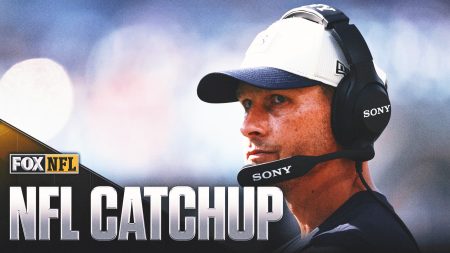
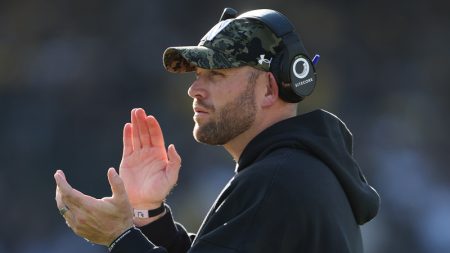
Despite the grim nature of his current ranking and the statistical setbacks of his rookie year, a glimmer of hope remains for Sanders in the form of Cleveland’s newly appointed head coach, Todd Monken. Known throughout the football world as an innovative, highly demanding, and offensive-minded strategist, Monken represents a crucial lifeline and a potential “great reset” for a quarterback desperately in need of structural discipline and elite coaching. One league voter highlighted this potential synergy, drawing a direct parallel between Monken’s arrival in Cleveland and the transformative impact offensive mastermind Ben Johnson had on Jared Goff’s career in Detroit or Justin Fields’ trajectory in Chicago. Monken’s impressive track record—most notably his highly successful tenure coordinating a dynamic, multi-faceted offense for Lamar Jackson in Baltimore—suggests that he possesses the unique ability to tailor an offensive system to a quarterback’s natural strengths while systematically iron-cladding their weaknesses. However, this partnership will only bear fruit if Sanders is willing to undergo a profound personal and professional evolution. As the anonymous voter wisely pointed out, for this relationship to work, Shedeur must fully invest in the unglamorous, behind-the-scenes work of being a professional quarterback: spending endless hours in the film room, mastering the intricate language of Monken’s playbook, memorizing his pre-snap protection adjustments, and learning how to efficiently command the huddle. Last season, Sanders frequently struggled with the basic mechanics of running an NFL offense, often looking flustered while trying to get the play call in and align his teammates before the play clock expired. If he can utilize Monken’s tough-love mentorship to eliminate these elementary mistakes, improve his mental processing, and commit to playing structured, “on-time” football, there is still an undeniable, tantalizing upside that could allow him to shock the evaluators who have so quickly written him off.
The path to redemption for Sanders is far from guaranteed, however, as he finds himself locked in a fierce, high-stakes quarterback competition at the Browns’ training camp. This is not a developmental laboratory where Shedeur will be handed snaps out of patience; it is a cutthroat battleground featuring a crowded quarterback room that includes a highly paid, highly motivated veteran in Deshaun Watson and an intriguing, ambitious challenger in Dillon Gabriel. Watson, who ranked only slightly better than Sanders at 31st on The Athletic’s tier list, is entering a critical career crossroads of his own as he seeks to bounce back from a devastating, season-ending Achilles injury suffered during the 2024 campaign. Despite his massive, fully guaranteed contract, Watson’s grip on the starting job has never been more tenuous, and his presence adds an intense layer of organizational pressure and financial drama to the position group. Meanwhile, Monken has been fiercely unwavering in his public stance all offseason, repeatedly declaring that the starting job is completely up for grabs and that practice repetitions will be distributed based on merit rather than draft pedigree or salary cap figures. This democratic approach creates an electric, highly competitive atmosphere at training camp, where every single throw, pre-snap read, and situational decision is scrutinized by a coaching staff that has zero personal sentimentality toward any of the competitors. For Sanders, this means he cannot afford a single day of complacency; he must out-work, out-study, and out-perform a former pro-bowler fighting for his career survival and a hungry newcomer looking to seize a golden opportunity, all while operating under the intense gaze of a fan base that is utterly exhausted by mediocrity and demanding immediate, winning results.
The ultimate test of Shedeur Sanders’ character, resilience, and growth will begin to unfold in earnest on August 15th, when the Cleveland Browns travel to face the Chicago Bears in their highly anticipated preseason opener. This game will mark the first live-action opportunity for Sanders to demonstrate whether the scathing criticisms of the NFL’s coaching elite have broken his confidence or served as the ultimate fuel to ignite his professional fire. Playing quarterback in the NFL is as much a test of psychological fortitude as it is of physical talent, and the great ones are often forged in the fires of early-career adversity and public humiliation. Sanders has a rare opportunity to rewrite his narrative, to prove that his rookie struggles were merely the necessary growing pains of a young player adjusting to the fastest game on earth, rather than a permanent indictment of his limitations. As he steps onto the field in Chicago, he will be carrying the weight of his family’s immense legacy, the hopes of a passionate Cleveland fan base, and the silent, burning desire to make fifty NFL executives and coaches eat their words. The journey from the bottom of a tier list to the pinnacle of NFL success is a long, arduous climb filled with setbacks, but it is a journey that has been made before by players with far less natural talent and far fewer resources than Shedeur Sanders. Whether he collapses under the crushing weight of the expectations or rises above the noise to become the franchise savior the Browns have desperately sought for decades remains the most compelling human drama of the upcoming NFL season, and the answers will begin to reveal themselves one snap at a time.