


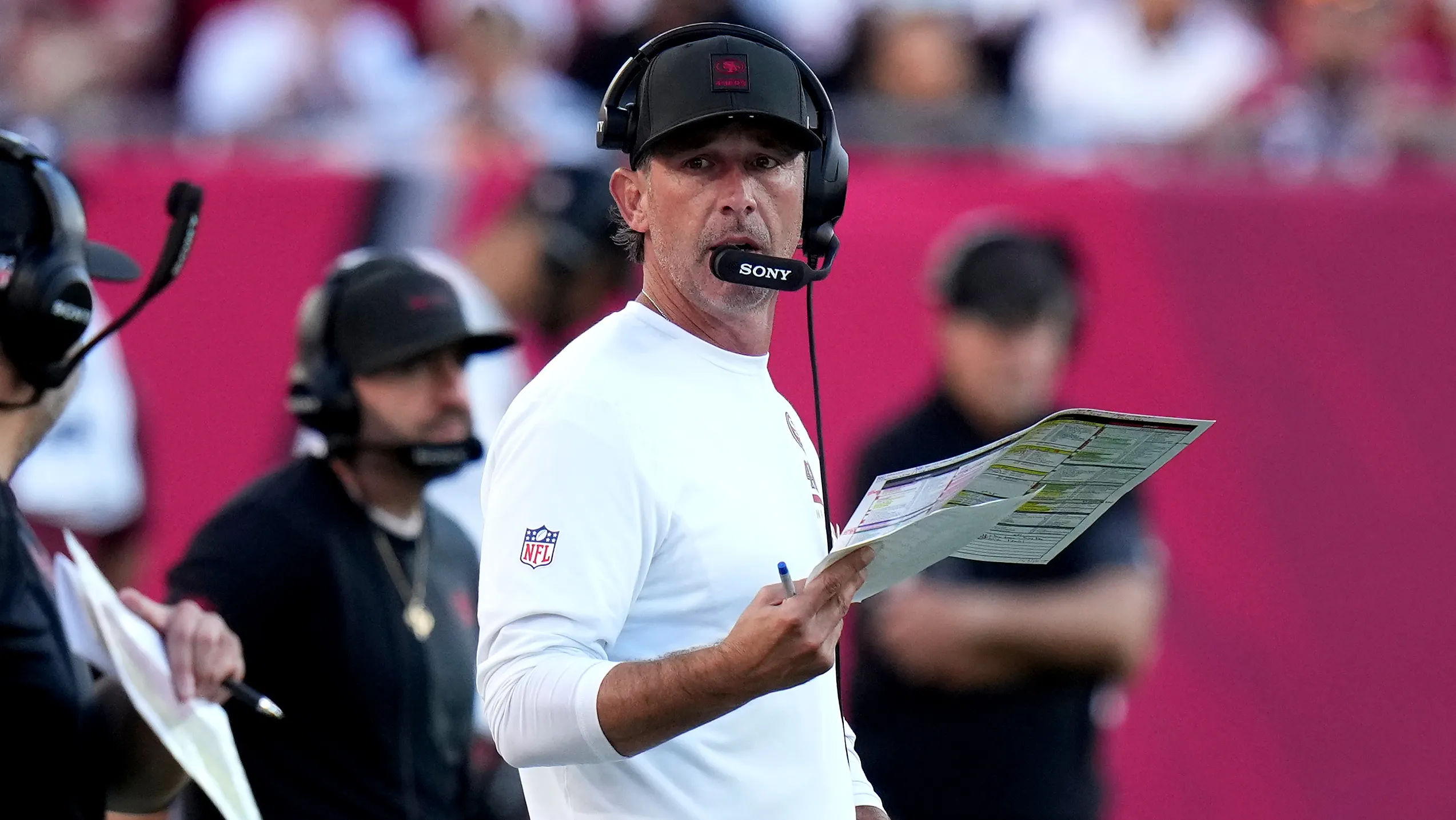
For San Francisco 49ers head coach Kyle Shanahan, the road back to the football field has been paved with physical pain, deep introspection, and a jarring confrontation with his own mortality. Stepping up to the microphone for his first press conference since a devastating July car crash, Shanahan presented a starkly different physical image than the meticulously composed, stoic figure NFL fans are accustomed to seeing on Sundays. The brutal collision left him with an agonizing list of injuries: broken ribs, a fractured nose, a broken left hand, severe facial lacerations, and a significant concussion. Even as the stitches were finally removed from his face, the physical evidence of the trauma remained written across his body, with a cast still encasing his hand and the quiet, heavy fatigue of a brain injury lingering in his eyes. It was a humbling sight that immediately humanized one of the league’s most brilliant tactical minds, serving as a powerful reminder that behind the high-stakes pressure and glamorous exterior of professional sports, coaches are just as fragile and susceptible to life-altering tragedies as anyone else.
Despite the intense physical toll of his recovery, Shanahan used the press conference to announce his defiant return to the sidelines for the 49ers’ preseason opener against the Tennessee Titans. This decision represents a major milestone, not just for the team’s preparations, but for Shanahan’s own psychological journey of reclaiming normalcy. Throughout the early weeks of training camp, his absence was deeply felt, as he was physically unable to engage in the high-energy, hands-on style of coaching that has defined his successful tenure in San Francisco. Standing before reporters, he made it clear that while he is far from one hundred percent, his commitment to his players and the organization drove him to push through the discomfort. His return to the field with a cast and a healing brain is a testament to the quiet resilience required of leaders in moments of crisis, signaling to his locker room that he is ready to stand with them, even when he is at his most vulnerable.
The most gripping portion of Shanahan’s address focused on the mechanics of the crash itself, offering a remarkably candid look at a split-second mistake that nearly cost him his life. A long-time advocate and owner of Tesla vehicles, Shanahan confessed that he had grown incredibly comfortable over the past nine years relying on the brand’s Autopilot feature, often driving at moderate speeds with a complete, perhaps naive, sense of security. The illusion of safety shattered instantly when he dropped his cell phone and made the fateful decision to turn around and retrieve it from the back seat, completely taking his eyes off the road. What happened next remains a blur—whether the Autopilot system suffered a technical malfunction or his own physical shifting accidentally disengaged the feature is still unknown—but the result was a horrific, head-on collision. In an era where public figures rarely take accountability, Shanahan refused to blame the technology, choosing instead to shoulder the entirety of the blame for allowing complacency to override basic driving safety.
This near-fatal error has profoundly transformed Shanahan’s perspective on the relationship between humans and artificial intelligence, prompting him to share his story as a cautionary tale for a society increasingly reliant on automation. He explained that his experience served as a harsh but invaluable lesson about the dangers of treating autonomous driving features as a replacement for human vigilance. Shanahan now describes driving a modern vehicle as an active “partnership” rather than a passive handoff, emphasizing that no matter how advanced a computer system is, the ultimate responsibility for human life rests squarely with the person behind the wheel. He harbor no ill will toward Tesla or Elon Musk, but he hopes that his public vulnerability will serve as an eye-opening example for others who find themselves drifting into the same dangerous habits. For Shanahan, the crash was a brutal wake-up call that he believes will ultimately save his own life, or the lives of others, by permanently shifting how he approaches the daily responsibility of driving.
Beyond the physical scars and the lessons in road safety, the crash has forced a monumental shift in how Shanahan understands the silent epidemic of concussions in the NFL. Like the vast majority of coaches in a highly competitive, fast-paced league, Shanahan previously viewed head injuries through an objective, administrative lens, relying entirely on team doctors and standardized league protocols to determine when a player was fit to return to play. However, experiencing the terrifying reality of a traumatic brain injury firsthand has completely demolished that clinical detachment. He spoke openly about the psychological terror of the recovery process, describing the agonizing fear of not knowing if his brain would ever function normally again or if he would ever truly feel like himself. Shanahan admitted that terms like “mild concussion” are often just empty words that fail to convey the deeply unique and isolating struggle each individual goes through, fostering in him a profound, newly discovered empathy for his players when they are forced into the league’s concussion protocol.
As he prepares to guide the 49ers through another grueling season, Shanahan continues to quietly battle the persistent lingering effects of his head trauma, specifically chronic headaches and overwhelming fatigue. He vividly recalled the early days of his recovery when the sheer volume of an NFL environment was physically unbearable, noting with a touch of dry humor that the driving classic rock of AC/DC blasting over the training camp speakers caused immense pain, forcing him to favor smoother hip-hop tracks as his brain slowly healed. While his sensitivity to noise has thankfully subsided, the daily struggle with exhaustion and head pain serves as a constant, humbling reminder of the invisible injuries his players routinely risk on the gridiron. By opening up about his struggles, Shanahan has bridged the gap between coach and player in a deeply human way, transforming a terrifying personal disaster into a powerful source of empathy, understanding, and compassionate leadership that will undoubtedly shape the culture of the San Francisco 49ers for years to come.